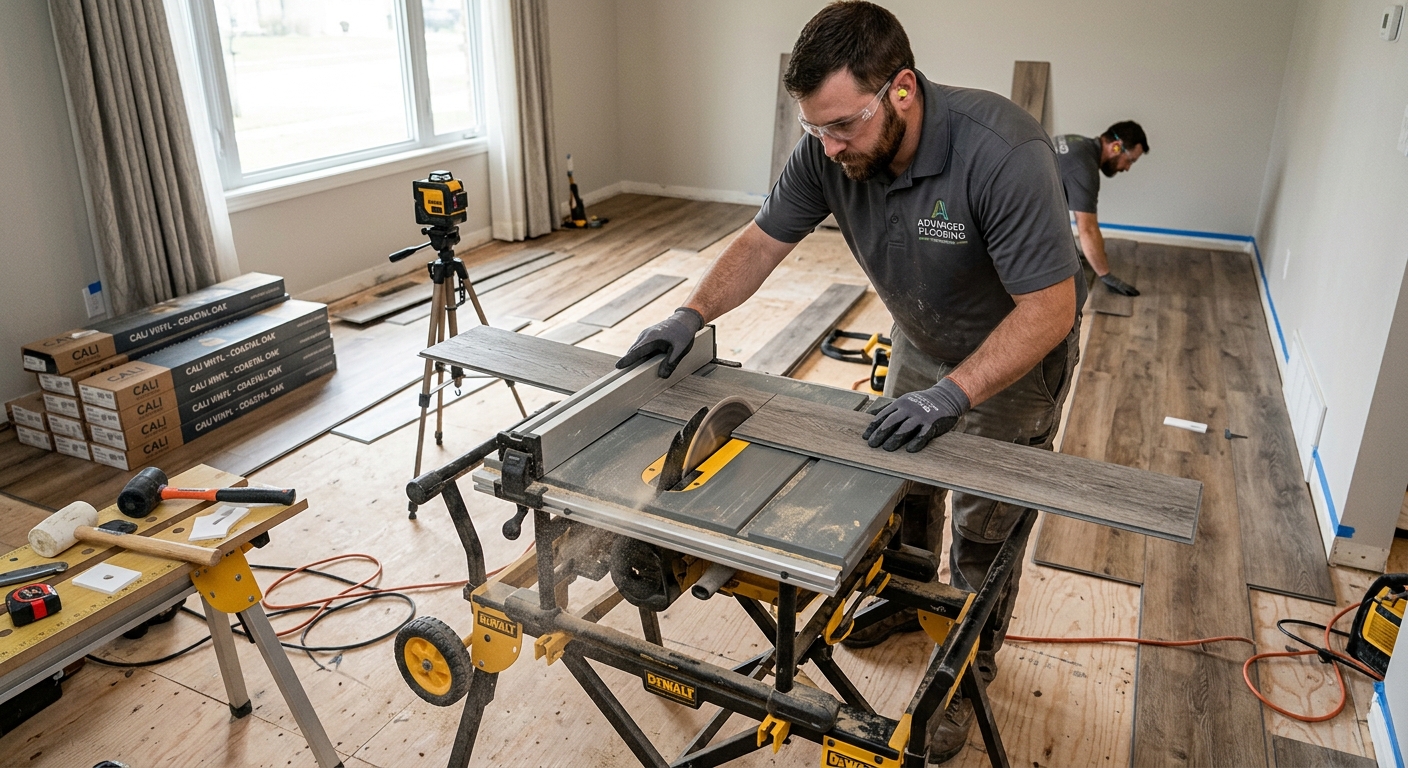
Flooring options and costs in Capitol Hill
In Capitol Hill, Alberta, your flooring choice is tightly linked to how much moisture moves through the building season to season. With a population of 4,670 (Statistics Canada, 2021 Census), the Calgary region has steady contractor availability, but pricing still swings depending on how much prep your subfloor needs and how sensitive the material is to humidity. Calgary’s dry-cold prairie climate brings big indoor humidity shifts, and that can move planks and seams even when you do everything “by the book.” In many older homes around the neighbourhoods near 14 Street NW and the surrounding inner-city streets, you’ll also see older underlayments and uneven plywood—meaning levelling, patching, and sometimes crack isolation or underlayment upgrades can be a real line item rather than an afterthought.
Basements in the broader Calgary area commonly get moisture migration through slab edges and concrete, so below-grade installs typically favour engineered wood, luxury vinyl plank (LVP) or SPC over traditional ¾-inch solid hardwood. Overhead, radiant in-floor heating is increasingly common, and colder-season comfort goals often push homeowners toward materials that tolerate temperature swings better. If you’re comparing options, use the “all-in” mindset: material, removal/disposal, transitions, and any stair work can easily change the total by several thousand dollars on a typical mid-size project.
Below are realistic starting ranges per square foot for Capitol Hill homes, then we’ll break down what moves those numbers up or down in the next section.
| Type |
Best Room |
Moisture Resistance |
Lifespan |
Price per sq ft |
| Solid hardwood (nail-down, above grade only) |
Main floor living spaces |
Low to moderate (humidity sensitive; not for basements) |
25–50 years |
$10–$15 |
| Engineered hardwood (float or glue, above + on-grade) |
Main floor living, hallways |
Moderate to high (more stable than solid wood) |
20–30 years |
$9–$13 |
| Laminate (click-lock, above-grade) |
Bedrooms, dining rooms |
Low to moderate (spills can still damage edges) |
10–20 years |
$4–$7 |
| Luxury vinyl plank / LVP (waterproof, any level) |
Kitchen and finished basements |
High (waterproof; vapour-tolerant when installed correctly) |
15–25 years |
$5–$9 |
| Porcelain / ceramic tile |
Kitchen, bathrooms, entry |
High (best for wet areas; still needs a flat substrate) |
25–50 years |
$8–$12 |
| Carpet (broadloom or modular tile) |
Bedrooms and stairs |
Low (avoid in damp areas) |
8–15 years |
$6–$10 |
Prices are estimates only and vary by project scope, site access and material selection.
What affects the price of flooring in Capitol Hill
It’s common to see quotes for the “same” flooring job differ by 30–50% across Calgary and surrounding Alberta communities because the hidden drivers aren’t the product—they’re the prep and the risk. In a dry, cold prairie climate with big humidity swings, solid hardwood expands and contracts with indoor moisture, and it’s not a basement-friendly choice. That limitation changes what your contractor includes: an engineered wood or LVP/SPC system is often the safer path, but the exact build-up (vapour strategy, underlayment, transitions) still affects labour time. Cold-season comfort also matters: rooms over radiant heat in Alberta frequently rule out most solid hardwood and some laminate, pushing homeowners toward engineered or vinyl systems designed for temperature cycling.
Older housing stock in the Calgary region frequently needs subfloor levelling or repair—especially where plywood is aged, nails have popped, or concrete is not consistently flat. Levelling and repair can add roughly $1–$4 per sq ft depending on how out-of-level the surfaces are. For example, a 600 sq ft basement finished space can see an extra $600–$2,400 just to get the substrate flat enough for tile or to prevent telegraphing with vinyl. Tile is particularly sensitive: if the floor isn’t flat, contractors typically budget crack isolation membrane or additional patch/level compounds.
Concrete budget examples that commonly show up in Capitol Hill: (1) swapping from laminate at about $4–$7 per sq ft to LVP at roughly $5–$9 is often worth it when a basement is involved or when spills are likely; (2) adding stair nosing and transitions can move the project total by several hundred to over a thousand dollars even when the main-floor footage seems modest; and (3) if removal/disposal is required, that labour isn’t optional in most estimates.
| Price Factor |
Why It Matters |
Cost Impact |
| Room area in sq ft |
Material quantities and labour time scale directly with square footage |
Large range; can shift totals by thousands on bigger homes |
| Subfloor condition |
Levelling, patching, and repairs are often needed in older Calgary-area homes |
Typically adds about $1–$4 per sq ft where needed |
| Moisture / below-grade install |
Solid hardwood performs poorly below grade; moisture migration must be managed |
May add prep and changes materials toward engineered or LVP/SPC |
| Material choice |
Solid vs. engineered vs. LVP vs. tile have different installation systems and tolerances |
Solid wood generally costs more than laminate; tile often sits mid-to-high |
| Removal and disposal of existing flooring |
Demo creates labour and disposal fees |
Can add a few hundred to over a thousand depending on layers |
| Stair nosing / transitions |
Stairs are labour-intensive and are frequently charged per step or per linear foot |
Often a hidden driver on projects spanning multiple levels |
| Radiant heat compatibility |
Some products can’t handle continuous temperature cycling |
May require selecting engineered or vinyl; can change underlay costs |
| Installation method |
Float vs. glue-down vs. nail-down affects labour time and required prep |
Glue-down and tile installs typically increase labour and material for prep |
Permits & regulations in Alberta
In Alberta, installing flooring itself generally does not require a building permit. What often does trigger permit requirements is the related work that flooring contractors (or their partners) might coordinate—specifically structural subfloor repair, moisture remediation that affects building components, or changes to any in-floor heating circuitry. If you’re repairing subfloor framing, altering structural elements, or touching electrical wiring for radiant systems, that’s where homeowners need to pause and confirm the right approvals and trades.
In condos around the Calgary area, the bigger day-to-day restriction is usually the corporation’s sound transmission requirements. Many buildings reference underlay that supports STC/IIC targets, especially on upper floors where hard surfaces can amplify impact noise. Before installing hardwood or tile above grade in a multi-unit building, review your condo declaration and ask the board/management for written approval—don’t rely on “we’ve done this before” alone.
Step-by-step in Capitol Hill: first, ask for the contractor’s Alberta licence/registration information and verify it through the appropriate public registry before work starts. Next, request a certificate of insurance with liability coverage that matches your project value and ensure it names you correctly as an additional interested party when applicable. Then confirm their WSIB/WCB coverage—look for proof of active coverage on their paperwork (not just verbal confirmation). Finally, get everything in writing: scope, warranty terms, start/end dates, and whether disposal and any required patch/level materials are included. That’s how you protect yourself if something goes wrong on a humidity-sensitive installation.
Best flooring for each room in your Capitol Hill home
Choosing the right flooring by room helps you avoid the “cheap product, expensive fix” cycle that humidity swings and Alberta weather can create. In Capitol Hill homes, living and dining areas take daily traffic but usually don’t face direct water exposure. That’s where engineered hardwood or higher-quality laminate often makes sense: you get a warm look with better stability than solid wood. For bedrooms, carpet remains a strong choice because it improves comfort and sound dampening, which matters on resale and in day-to-day family life.
Kitchens in Calgary are different: spills, water from cleaning, and tracked-in moisture are regular. Luxury vinyl plank (LVP) or large-format porcelain tile are the most forgiving options because they handle wet cleanup well and resist staining. Basements are the key decision point. In finished basements, LVP is usually the clear winner—fully waterproof and generally safer over in-slab or above-slab radiant systems than traditional solid hardwood, and more tolerant of below-grade moisture conditions. Bathrooms should be porcelain or ceramic tile only, with proper underlayment/setting methods and grout that’s maintained.
Radiant heat compatibility also matters. If you have in-floor heating, solid hardwood is often limited by manufacturer guidance, and many laminates can be sensitive to temperature cycling. A practical example: if your living/dining space is 500 sq ft, upgrading from a laminate rate around $4–$7 per sq ft to engineered hardwood around $9–$13 per sq ft may be justified if you want longer lifespan and better stability through seasonal humidity swings—while keeping basement areas on LVP to avoid future cupping or separation risks.
| Room |
Best Material |
Why |
Moisture Risk |
Price Band per sq ft |
| Living / dining room |
Engineered hardwood |
Warm feel with better stability through Calgary’s humidity swings |
Low to moderate |
$9–$13 |
| Master bedroom |
Carpet or engineered hardwood |
Carpet adds comfort and sound control; engineered gives a cleaner look |
Low |
$6–$10 |
| Secondary bedrooms |
Carpet |
Good traffic comfort for kids and day-to-day wear |
Low |
$6–$10 |
| Kitchen |
Luxury vinyl plank (LVP) or porcelain tile |
Easy cleanup and better tolerance for spills and splashes |
Moderate to high |
$5–$12 |
| Basement (finished) |
LVP (waterproof) / SPC |
Designed for below-grade moisture tolerance and seasonal movement control |
Moderate to high |
$5–$9 |
| Bathroom |
Porcelain or ceramic tile |
Best long-term wet area performance and simple maintenance |
High |
$8–$12 |
How to choose a flooring contractor in Capitol Hill
Start by verifying Alberta credentials properly, not just with a friendly pitch. Ask for the contractor’s Alberta licence/registration details (where applicable), liability insurance certificate, and proof of WSIB/WCB coverage. You can usually confirm coverage by requesting a current clearance letter or coverage proof directly from the contractor’s insurance/coverage documentation. Then look at the certificate: the insurer, policy number, expiry date, and that the coverage is active for the work period. For workmanship protection, ensure they carry liability appropriate for residential renovations and that the policy aligns with the type of flooring and labour they’re performing.
Next, request 2–3 itemised written quotes—not a single “lump sum” with vague allowances. A strong quote breaks out labour and materials (including underlayment/vapour barriers where required), removal and disposal, subfloor prep/levelling, and any stair work or transitions. Read exclusions carefully: disposal included or not, patch/level compound allowance amount, and whether they’ll handle door trims and undercutting. Also ask about permits: flooring usually doesn’t need one, but electrical or structural repairs might. Confirm warranty terms: workmanship warranty length, product/manufacturer warranty duration, and whether warranties transfer if you sell.
For payment, never pay more than 10–15% upfront. Hold back the remainder until completion and walkthrough. Get a start date and estimated completion date in writing so you can plan around Alberta’s colder-season scheduling and humidity control needs.
- Ask for a written scope that lists prep materials (patch/level compound, underlay/vapour barrier) and who supplies them.
- Confirm liability insurance limits and expiry date on the certificate before signing.
- Request WSIB/WCB proof (clearance letter or coverage statement) and verify it’s current.
- Get the quote in itemised sections: demo, prep, underlay, flooring supply, install, trim/transition work.
- Clarify removal: what’s included, how many layers, and where debris is disposed.
- Check flatness expectations in writing, especially for tile installations.
- Confirm stair details: nosing type, per-step charge, and matching transitions.
- Ask whether they do site acclimation for engineered/LVP products (important in dry-cold seasons).
- Verify warranty: workmanship terms, exclusions, and whether it’s registered or documented.
- Payment schedule: confirm upfront cap (10–15%) and a holdback at substantial completion.
- Request a project timeline with start, milestones, and cleanup responsibility.
- Look for a clear change-order process if you add rooms or upgrade materials.
Red flags to watch for in Capitol Hill: vague quotes without subfloor prep details, refusing to provide insurance/WSIB proof, asking for large upfront payments beyond 10–15%, skipping written timelines, and bundling stairs/transitions as an unspecified allowance that later “surprises” the total.
Frequently asked questions — flooring in Capitol Hill
How do I choose flooring for humidity in Capitol Hill?
Capitol Hill homes feel humidity swings through the year, so the “best” choice depends on whether you’re above grade or below grade. For basements, avoid traditional ¾-inch solid hardwood—solid wood moves too much and doesn’t handle below-grade moisture conditions well. In Calgary’s dry-cold climate, engineered hardwood is usually the safer wood option for main floors, while luxury vinyl plank (LVP) or SPC is the most forgiving for finished basements because it’s waterproof and dimensionally stable when installed correctly. If you’re living on a main level with large seasonal changes, laminate can work, but keep it away from high-splash zones and ensure good underlay and careful sealing at seams. If you want a hard upgrade, budgeting for engineered at roughly $9–$13 per sq ft can be a practical balance versus solid.
Do condos restrict hard flooring?
Yes—often. In Alberta condo buildings (including many around the Calgary area), the restriction is typically about sound transmission. The corporation’s rules may require specific underlay and may set targets like STC/IIC for hard flooring on upper levels. Before you install hardwood, tile, or even some vinyl systems, review the condo declaration and ask for written board approval. Don’t assume “standard underlay” will satisfy the requirement; management may ask for product documentation. This is particularly important because hard flooring can increase impact noise, and boards frequently enforce compliance during and after renovations. If you’re unsure, ask your contractor to provide underlay product specs and installation details for your unit’s location and subfloor type, then submit that with your request. In most cases, paperwork and correct underlay beat any late remediation costs.
How do I compare flooring quotes?
Compare quotes like a builder: break them into labour and materials, and verify what’s included in prep. Ask each contractor to show costs for removal and disposal, subfloor levelling/repair allowances, underlayment/vapour barriers, transitions, and stair work. If one quote includes levelling and the other doesn’t, totals will differ—even if the flooring price looks similar. Also check whether tile pricing includes crack isolation membrane and flatness prep; tile is sensitive to uneven substrates. Finally, confirm warranty terms and payment schedule. A quote that’s lower because it’s using a thinner underlayment or skipping prep often ends up more expensive when you account for repairs. For context, laminate or vinyl plank often land in very different ranges—laminate might be closer to $4–$7 per sq ft while waterproof LVP is commonly closer to $5–$9 per sq ft. The right comparison comes down to the full install system, not just the surface material.
Can I install flooring over existing tile in Capitol Hill?
Sometimes, but it depends on the tile condition, flatness, and the product you’re installing. In practice, contractors usually avoid “over tile” installs when the surface is cracked, uneven, or when height transitions would become unworkable at doorways and stairs. For new flooring like LVP/SPC or laminate, an additional underlayment or a flattening system may be required to correct minor irregularities, and proper vapour strategy matters—especially in basements where moisture migration through concrete can be an issue. For tile itself, you can’t expect new flooring to succeed if the existing tile is loose or rocking. The best approach is a flatness test and inspection before deciding. If flatness is poor, removing the tile may be the safest path, even though it costs more upfront. In Capitol Hill, that prep decision is often the difference between a smooth install and future joint or click-lock failures.
What is the best flooring for a high-traffic area in Capitol Hill?
High-traffic areas need durability, ease of cleaning, and resistance to Alberta’s seasonal movement. For many families in Capitol Hill, luxury vinyl plank (LVP) is a strong option for hallways and main-floor flow because it’s durable and waterproof enough to handle everyday spills without panicking about edges. If you prefer a wood look, engineered hardwood can also work well when installed with proper prep and humidity-friendly methods. Carpet can be comfortable, but it shows wear sooner and requires more maintenance in busy zones, especially near entryways. For wet or splash-prone areas like near exterior doors or kitchens, porcelain/ceramic tile is typically the most dependable long-term surface and stands up to scrubbing and moisture. Price-wise, you might budget around $5–$9 per sq ft for LVP in a typical install versus roughly $8–$12 per sq ft for tile, with the tile install often increasing prep expectations due to flatness requirements.
How do I prepare my subfloor before new flooring?
Subfloor prep is where the success or failure usually comes from in Alberta, because humidity and temperature changes amplify imperfections. For any install, start with inspection: check for loose boards, popped nails, spongy spots, cracks, and evidence of moisture migration in basements. Contractors should measure flatness (especially for tile) and then address the issues before any flooring goes down. That may include levelling compounds, patching, replacing damaged plywood, sanding high spots, and correcting transitions between rooms. For moisture concerns below grade, the solution is typically product-specific—LVP/SPC and engineered systems need the right vapour strategy, while solid hardwood is generally avoided. Also confirm acclimation: engineered wood and vinyl should be allowed to adjust to indoor conditions to reduce movement after installation. In older Calgary-area homes, it’s common for levelling/repair to add about $1–$4 per sq ft depending on how far out the substrate is. A good contractor will show the plan and allowance up front in the quote.