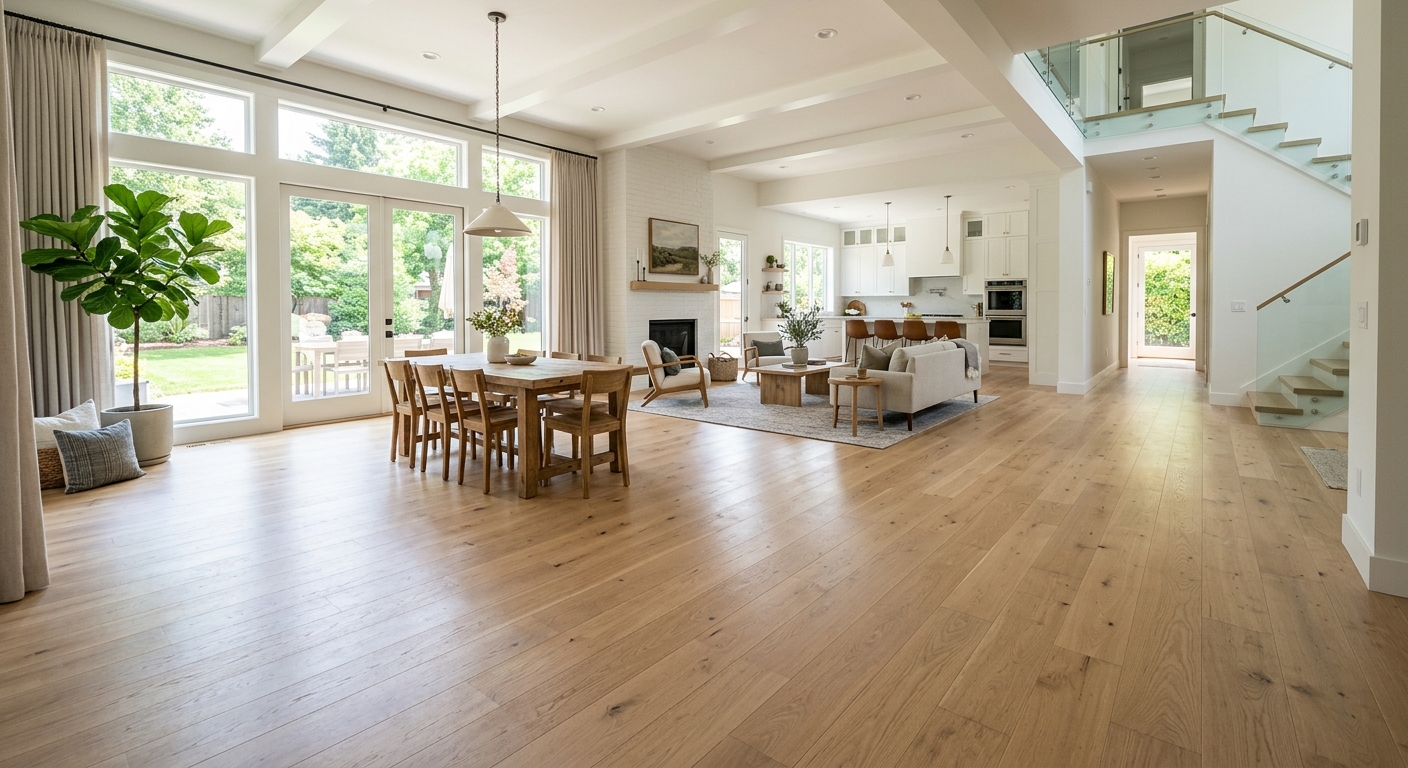
Flooring options and costs in Larkspur
Larkspur, Alberta is a small community in the Calgary economic region, and flooring choices here tend to be shaped by two realities: a dry, cold prairie climate and lots of seasonal humidity swings. The 2021 Census put Larkspur’s population at 4,988 (Statistics Canada, 2021 Census), and while that doesn’t tell you construction age directly, it does reflect a market where trades availability is typically more limited than in Calgary proper—so scheduling and access (driveway length, staging space, and stair runs) can affect your quote. Just as importantly, older housing in southern Alberta often needs extra prep before new flooring goes down. In practice, that means subfloor levelling, patching, and sometimes crack isolation measures—commonly adding roughly $1–$3 per sq ft on many reno scopes.
Contractors in the Calgary area also price with climate in mind. Basements in the surrounding communities frequently have moisture migration through concrete, so below-grade installs usually favour engineered wood, luxury vinyl plank (LVP) or SPC over traditional ¾-inch solid hardwood. Those products expand and contract less with humidity changes and are generally safer over in-slab heat or hydronic radiant systems than solid oak. If you’re located in the Larkspur area near established schools and older pockets of housing, expect especially high demand for durable family flooring—materials that can handle winter dryness, spring swings, and everyday traffic. With that in mind, here’s a practical cost comparison to help you line up options for your home, then we’ll break down what drives the numbers.
| Type |
Best Room |
Moisture Resistance |
Lifespan |
Price per sq ft |
| Solid hardwood (nail-down, above grade only) |
Main floors with stable humidity |
Low (not for basements or slab) |
30+ years with proper humidity control |
$10–$15 |
| Engineered hardwood (float or glue, above + on-grade) |
Living rooms, hallways, primary bedrooms |
Medium to high (better dimensional stability) |
20–30 years |
$9–$14 |
| Laminate (click-lock, above-grade) |
Bedrooms and living areas (dry use) |
Low to medium (water has to be wiped fast) |
10–20 years |
$3–$7 |
| Luxury vinyl plank / LVP (waterproof, any level) |
Kitchens, mudrooms, finished basements |
High (water-resistant to waterproof systems) |
15–25 years |
$5–$9 |
| Porcelain / ceramic tile |
Bathrooms, entries, wet areas |
Very high (when installed with correct underlayment) |
25+ years |
$6–$12 |
| Carpet (broadloom or modular tile) |
Bedrooms and home offices |
Low (must manage spills; not for basements) |
8–15 years depending on fibre and traffic |
$4–$8 |
Prices are estimates only and vary by project scope, site access and material selection.
What affects the price of flooring in Larkspur
Even when two homeowners in the Calgary region request “the same” flooring, quotes can vary by 30–50% because the cost is driven by prep, moisture control, and finishing details—not just the box price of the product. In Larkspur and surrounding communities, the dry-cold prairie climate causes pronounced indoor humidity swings. Solid hardwood responds to those changes; it can cup or gap if the installation is not on stable conditions and kept within an appropriate indoor range. That’s why solid wood often ends up costing more overall on renos: it can be ruled out for basements and many slab-on-grade scenarios, forcing homeowners toward engineered hardwood or LVP/SPC where moisture risk is lower.
Below-grade moisture is another technical cost driver. Concrete can “push” vapour into slab systems, and basements with inconsistent concrete levels frequently need levelling compound, patching, and sometimes crack isolation membranes. In many older homes, the subfloor is not flat enough for tile—so levelling and prep can add about $1–$4 per sq ft, depending on how far out of level things are. For example, if you choose tile at roughly $6–$12 per sq ft, the total may climb when the installer has to prep high spots and address substrate conditions; meanwhile, choosing LVP at about $5–$9 per sq ft often avoids some of that sensitivity to flatness because the system tolerates minor irregularities better.
Two practical Larkspur examples I see often: first, homes with aged plywood and transitions between rooms can require smoothing layers to avoid “steps” at doorways. Second, families finishing a basement typically budget for moisture-minded products and may pay more at the start (engineered or LVP) but save on rework compared with attempting solid hardwood over concrete. Finally, radiant heat compatibility matters in Alberta—colder-season comfort is popular, and that can eliminate some solid hardwood and certain laminate underlay setups.
| Price Factor |
Why It Matters |
Cost Impact |
| Room area in sq ft |
Materials scale with square footage; labour scales with prep and cuts |
Major driver (often the largest line item) |
| Subfloor condition — levelling or repair needed before install |
Inconsistent concrete or aged plywood affects flatness and end results |
Typically adds about $1–$4/sq ft in older homes |
| Moisture / below-grade install — rules out solid hardwood |
Basements and slab systems require stable, moisture-tolerant products |
May shift you from $10–$15 to LVP/SPC pricing, or add moisture mitigation |
| Material choice — solid vs. engineered vs. LVP vs. tile |
Different products require different underlayments and install methods |
Can swing total by 20–40% depending on what’s selected |
| Removal and disposal of existing flooring |
Demo time, hauling, and subfloor cleaning add labour and truck costs |
Often 5–20% of total, higher with heavy tile or multiple layers |
| Stair nosing / transitions — charged per step or per linear foot |
Stairs and transitions require more cutting, measuring, and finishes |
Commonly adds a noticeable premium on renos |
| Radiant heat compatibility — limits material options |
Some adhesives and flooring types react poorly to heat cycles |
May add for compatible underlay/adhesives, or change product selection |
| Installation method — float vs. glue-down vs. nail-down |
Labour time and substrate requirements differ by method |
Nail-down/prime substrates can cost more when flatness is poor |
Permits & regulations in Alberta
In Alberta, a permit is typically not required for the flooring installation itself. For most Larkspur and Calgary-area homeowners, that means you can plan the install without a building permit—assuming the work is limited to replacing finished floor coverings and standard subfloor preparation. However, associated work can trigger permit requirements, and the details matter.
What often does require a permit includes electrical work tied to moisture mitigation components or in-floor heating circuits (for example, work that alters or adds heating wiring or controls). If you’re doing structural subfloor repair that changes load-bearing components, that can also move into permit territory depending on scope and how it’s engineered. For condominiums, building regulations aren’t “permits” in the typical sense, but they are enforceable: many condo corporations restrict flooring sound transmission on upper floors, and require specific underlay and flooring type to meet acoustic requirements (often referenced through sound ratings such as STC/IIC). Before installing hardwood or tile on an above-grade condominium unit, request written board approval and follow the condo’s installation standard.
To verify a contractor in Larkspur, start by checking licensing status (confirm they’re properly registered for the work they say they do) and ask for a current certificate of insurance (liability) and proof of WSIB/WCB coverage. Then, request a clearance letter where applicable for their coverage status. A reputable contractor should provide these documents quickly, and they should match the company name on the quote and invoice.
Best flooring for each room in your Larkspur home
Choosing the right floor in your Larkspur home comes down to moisture exposure, daily traffic, and comfort—plus how your home’s basement and slab behave through Alberta seasons. In living and dining areas, engineered hardwood is a strong balance: it offers the look of wood while handling humidity swings better than solid hardwood. For primary bedrooms, carpet is still hard to beat for comfort and sound absorption, especially during cold winter mornings. If you prefer a hard surface, engineered hardwood can work there too, provided your subfloor is properly prepped and the indoor humidity is managed.
For kitchens, LVP is often the practical winner because spills happen, and waterproof systems make cleanup easier. If you want a premium finish, large-format porcelain tile is also excellent for water resistance and durability—just note tile is less forgiving if the substrate isn’t flat, so levelling can be a budget item. Basements (finished) are where climate rules the decision: fully waterproof LVP is usually the clearest choice because it tolerates moisture vapour conditions better than solid wood and most laminate. Bathrooms should be porcelain or ceramic tile only, with proper underlayment and sealing practices.
Radiant heat compatibility is increasingly common in Alberta builds, so for rooms over in-floor heating, choose products rated for that use and follow the installer’s temperature and acclimation steps. As a dollar example, moving from a mid-range laminate at about $3–$7 per sq ft to LVP at about $5–$9 per sq ft in a basement can be justified because it reduces moisture risk without spending the higher upfront cost of tile (often $6–$12 per sq ft) and avoids many of tile’s flatness sensitivities.
| Room |
Best Material |
Why |
Moisture Risk |
Price Band per sq ft |
| Living / dining room |
Engineered hardwood |
Warm feel, wood look, better stability through Alberta humidity swings |
Low to medium (protect from spills; manage indoor RH) |
$9–$14 |
| Master bedroom |
Carpet or engineered hardwood |
Carpet offers comfort and quiet; engineered hardwood gives a cleaner, longer-term finish |
Low (normal daily moisture only) |
$4–$14 |
| Secondary bedrooms |
Carpet (durable fibre) or laminate |
Good value; easy to live with for kids and everyday movement |
Low to medium (address spills quickly) |
$3–$8 |
| Kitchen |
Luxury vinyl plank (LVP) or porcelain tile |
LVP handles drops and splashes; tile is ideal for heavy cleaning routines |
Medium (wet messes and periodic flooding risk) |
$5–$12 |
| Basement (finished) |
Luxury vinyl plank (waterproof) |
Best match for below-grade moisture conditions and slab vapour concerns |
High (vapour and seasonal humidity changes) |
$5–$9 |
| Bathroom |
Porcelain / ceramic tile |
Non-porous surface when properly installed; long service life |
Very high (ongoing wet exposure) |
$6–$12 |
How to choose a flooring contractor in Larkspur
Start with verification, not promises. In Alberta, ask the contractor to provide proof of liability insurance and proof of WSIB/WCB coverage (as applicable) before work begins. To check coverage, look for a current certificate of insurance from their insurer and confirm the company name matches the quote and invoice. For WSIB/WCB, request their clearance letter or proof of coverage documentation and keep a copy with your paperwork. If they can’t provide these documents quickly, that’s a practical red flag—especially in a climate where failed installs can lead to expensive moisture-related callbacks.
Next, get 2–3 itemised written quotes. You want a breakdown that separates labour, subfloor prep/levelling, underlay or membrane, stair work, and demolition/disposal. Avoid quotes that only show a single lump-sum number with no scope details. Read what’s excluded: removal of old underlay, patching or crack repair, baseboards/trim reinstall, moving appliances, permit handling (if any related electrical or heating work is needed), and whether disposal fees are included. Ask about warranty terms: workmanship warranty length and what triggers a claim, plus the manufacturer warranty for the product (and whether it’s transferable to you).
For payment, don’t pay more than about 10–15% upfront. Use a holdback until the job is complete and you’ve done a final walkthrough. Finally, ask for a written start date and completion estimate. In Larkspur’s area market, a clear timeline helps prevent half-finished transitions, especially when waiting on levelling materials or trim stock.
- Provide a current certificate of liability insurance with matching company name.
- Show WSIB/WCB coverage and a clearance letter or proof document.
- Quote includes labour + materials line items (not just total cost).
- Scope clearly states what’s included for levelling/patching.
- Removal and disposal of existing flooring are listed separately.
- Stair nosing and transitions are priced per step/linear foot if applicable.
- Underlay and any moisture membranes are specified by product name.
- Acclimation requirements for wood or engineered products are included.
- Warranty details are written (workmanship + manufacturer, and transferability).
- Payment schedule caps upfront at 10–15% and includes a holdback.
- Job schedule includes start date and a realistic completion window.
- Change-order process is described before work begins.
In Larkspur, four common red flags: (1) they won’t provide insurance and WCB/WSIB proof, (2) their quote skips prep/levelling details even when floors are old or out of level, (3) they rush into solid hardwood in a basement or slab situation without discussing moisture stability, and (4) they ask for large upfront payments or refuse to put the timeline and warranty terms in writing.
Frequently asked questions — flooring in Larkspur
Can I install hardwood over concrete?
In many Larkspur homes, “hardwood over concrete” needs a clearer answer. Traditional ¾-inch solid hardwood is generally not recommended over concrete because it moves with humidity and typically requires a nail-down setup above grade; over slab, moisture vapour and temperature swings can lead to cupping, gaps, or failed adhesion. If your goal is a wood look on slab, homeowners in the Calgary region usually do better with engineered hardwood systems that are designed for on-grade or appropriate slab conditions, using the right underlayment and sometimes glue-down methods. For moisture-sensitive below-grade areas, LVP or SPC is commonly safer. In most cases, we also check flatness; if you’re levelling a poor slab, that prep can be a budget line even before you pick a product.
How long does flooring installation take?
Timeline in Alberta depends on square footage, subfloor condition, and whether there’s demo and stair work. For a typical mid-size reno in the Larkspur area, a clean “rip-and-replace” above-grade install of LVP or laminate can often be done in a few days once materials arrive. If levelling and patching are needed—common in older Calgary-region homes—expect additional time because the floor must cure and be ready for the new system. Tile is slower because of layout, set time, grouting, and sometimes crack isolation details. For reference, if you’re comparing cost bands, moving from laminate around $3–$7 to tile around $6–$12 often brings both different costs and different schedules.
What flooring works with radiant heat?
Radiant heat compatibility is a must in Alberta when hydronic in-floor systems are present. Many solid hardwood installs are limited because heat cycles can dry the wood and create movement, so contractors often avoid it or require special product requirements and strict humidity control. Engineered hardwood is usually the better wood option when the manufacturer confirms it’s compatible and the installation method (glue-down vs. floating) matches the product specs. Laminate can also work, but only with the correct underlay and product approvals for radiant heat. LVP/SPC is frequently selected because it handles temperature cycling better when installed per the manufacturer’s requirements. Whatever you choose, the contractor should follow an acclimation and temperature-ramping plan before and after install.
Engineered vs solid hardwood — what's the difference?
Solid hardwood is a single piece of wood (commonly ¾-inch), installed above grade with nailing (or specialized methods) and it’s very sensitive to moisture and humidity swings. Engineered hardwood is made in layers (a real wood veneer on top with stable backing), so it changes shape less across Alberta’s dry-cold seasonal swings. That makes engineered products more suitable for on-grade installations and many reno scenarios where the subfloor isn’t perfect. In basements, moisture conditions are a bigger concern; even engineered can be limited depending on vapour control and site conditions, which is why many homeowners in the Calgary region go with waterproof LVP instead. For pricing, engineered hardwood typically lands closer to $9–$14, while solid hardwood is often higher, around $10–$15, particularly once prep and humidity-stable conditions are accounted for.
Do I need to level my subfloor first?
Often, yes—especially in Alberta homes with older plywood, uneven concrete, or transitions between rooms. Levelling matters because it impacts how the flooring performs and how it looks: clicking joints can open in laminate, floating floors can flex, and tile can crack or show lippage if the substrate is too uneven. In Calgary-area housing stock, prep needs are common, and basements with inconsistent concrete frequently need patching and levelling compound. Many installs in the region budget roughly $1–$4 per sq ft for levelling/repair depending on how out of level the surface is. LVP can sometimes tolerate minor irregularities better than tile, but it still benefits from solid prep. The best approach is to have the installer check flatness before you commit to a finish.
What's the most durable flooring for pets and kids?
For pets and kids in Larkspur, durability is about more than scratch resistance—it’s also about stain control, spill handling, and installation stability through Alberta climate swings. Waterproof LVP is often the practical top pick because accidents are frequent and cleanup is straightforward; quality products are designed to handle moisture exposure without the same risk wood has. If you want maximum spill resistance in wet areas, porcelain/ceramic tile is also very durable and easy to sanitize, though it can be harder underfoot and more sensitive to substrate flatness. Carpet can be durable with the right fibre and padding, but it’s more vulnerable to lingering moisture and odours if spills aren’t addressed quickly—especially if you’re considering a basement. In cost planning terms, LVP typically sits around $5–$9 per sq ft, while tile is commonly around $6–$12, and both choices often outperform wood in moisture-prone spaces.