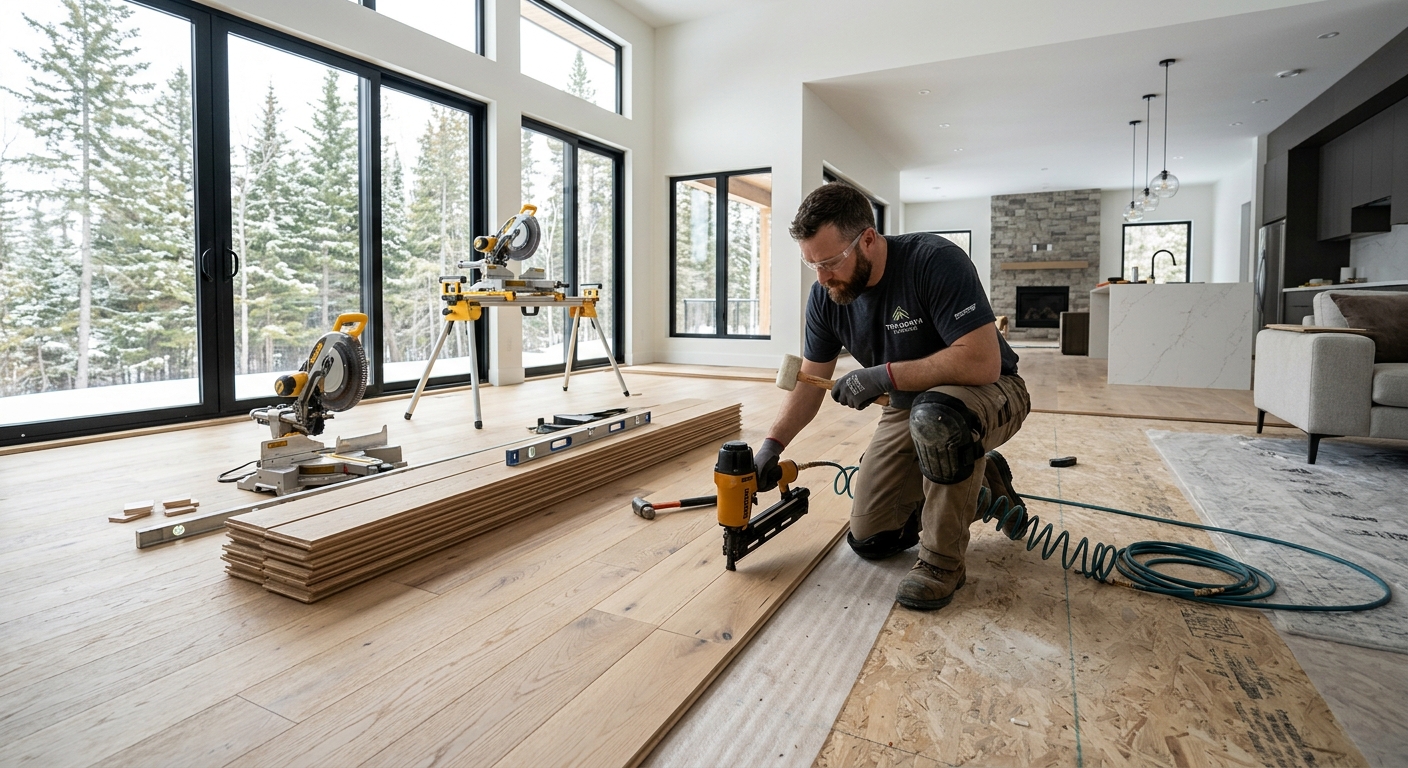
Flooring options and costs in Spruce Cliff
Spruce Cliff, Alberta homeowners usually get surprised by how quickly flooring costs add up, even when the room size is the same. With older Calgary-area housing stock, many projects start with a subfloor that’s out of level or uneven, which can mean levelling/repair before any new finish goes down. In the Calgary economic region, population is 4,195 (Statistics Canada, 2021 Census), and the local contractor market is active enough that you’ll often see several pricing options—but the cheapest quote can omit the preparation work that keeps floors flat and quiet. In practice, levelling steps can add roughly $1–$4 per sq ft depending on how out-of-flat the concrete or plywood is, and tile is especially sensitive to flatness.
Calgary’s dry, cold prairie climate brings large seasonal humidity swings. That means solid hardwood will expand and contract with moisture changes, and it’s a poor fit for below-grade areas where moisture vapour can migrate through concrete. For Spruce Cliff basements, engineered hardwood or luxury vinyl plank (LVP/SPC) are usually the safer choice because they’re more dimensionally stable and better suited to moisture-prone installs. If you’re near the busy corridors of 17 Avenue SW or the Bow River area, expect steady demand for practical family flooring—especially LVP/SPC and engineered wood—because trades schedule efficiently when homeowners are ready to start.
Below is a realistic comparison of common flooring types you’ll hear about in Spruce Cliff, with typical material pricing per square foot to help you anchor your budget before you compare quotes.
| Type |
Best Room |
Moisture Resistance |
Lifespan |
Price per sq ft |
Price Range |
| Solid hardwood (nail-down, above grade only) |
Living / dining (above grade) |
Low to moderate (humidity-sensitive) |
25–40 years |
$8–$15 |
$8,–$15, |
| Engineered hardwood (float or glue, above + on-grade) |
Living / dining, bedrooms |
Moderate to high (more stable) |
20–35 years |
$9–$14 |
$9,–$14, |
| Laminate (click-lock, above-grade) |
Bedrooms, living areas |
Low to moderate (edge swelling if wet) |
12–25 years |
$3–$7 |
$3,–$7, |
| Luxury vinyl plank / LVP (waterproof, any level) |
Basements, kitchens, main floors |
High (waterproof cores available) |
15–25 years |
$4–$8 |
$4,–$8, |
| Porcelain / ceramic tile |
Bathrooms, kitchens, entries |
Very high (grout still matters) |
30+ years |
$6–$12 |
$6,–$12, |
| Carpet (broadloom or modular tile) |
Bedrooms, stairs (comfort-focused) |
Moderate (avoid long-term wetting) |
7–15 years |
$3–$6 |
$3,–$6, |
Prices are estimates only and vary by project scope, site access and material selection.
What affects the price of flooring in Spruce Cliff
Even when two homeowners in Spruce Cliff choose “the same” flooring, quotes in Calgary can differ by 30–50% because the hidden variables aren’t the finish—they’re the preparation, subfloor condition, and how the product handles moisture and heat. A contractor pricing a floating LVP job over a flat slab will be very different from one who must level a tired plywood subfloor, isolate cracks, and rebuild transitions around stairs.
Technically, Calgary’s indoor humidity swings are the big driver. Solid hardwood expands and contracts with relative humidity, so it’s not typically recommended over concrete or in below-grade basements. That’s why below-grade installs usually lean to engineered hardwood or waterproof LVP/SPC, which remain dimensionally more stable. If your home has in-floor radiant heat (common in new builds and upgrades in Alberta), that can also narrow product choices—solid oak is often ruled out or limited, while many engineered floors and LVP products are designed to tolerate temperature cycling.
Older regional housing stock frequently needs subfloor levelling or repair. In practice, that prep can add about $1–$4 per sq ft, and if the room transitions into older adjacent finishes, you may also see extra labour for transitions and stair nosings. Concrete examples: a 600 sq ft basement with moisture-prone concrete often budgets LVP/SPC plus vapour-aware underlay and floor prep, while a second-floor ceramic tile job can require crack isolation membrane and extra labour for flatness. That same difference shows up in price bands: homeowners sometimes move from a $3–$7 laminate budget to a $8–$15 hardwood/engineered plan once they factor in levelling and correct installation method.
| Price Factor |
Why It Matters |
Cost Impact |
| Room area in sq ft |
Materials scale with square footage and labour often includes minimum charges. |
Generally 10%–40% of total variance between small and large jobs. |
| Subfloor condition |
Levelling compound, patching, or replacing damaged plywood/underlayment affects install success. |
Commonly adds $1–$4 per sq ft; can be higher on severely uneven surfaces. |
| Moisture / below-grade install |
Below-grade moisture vapour can damage solid wood and certain laminate edges. |
May require waterproof flooring (e.g., LVP/SPC) and improved prep. |
| Material choice |
Solid hardwood, engineered, LVP, laminate, and tile all have different tolerance and system requirements. |
Typically shifts project budgets by material band (e.g., tile $6–$12 vs. laminate/vinyl $3–$7). |
| Removal and disposal of existing flooring |
Demolition, haul-away, and preparing the slab or subfloor add labour and mess-control costs. |
Often 5%–20% of total job cost depending on what’s being removed. |
| Stair nosing / transitions |
Stair trim and transitions are precision work, usually priced per step or per linear foot. |
Can add $150–$600+ per staircase, depending on materials and quantity. |
| Radiant heat compatibility |
Some materials are not meant for temperature cycling or require specific underlays. |
May increase cost if you select compatible engineered or LVP systems. |
| Installation method |
Float vs. glue-down vs. nail-down changes labour intensity and allowable subfloor tolerances. |
Nail-down/flatness requirements can raise labour; glue-down and membrane installs add cost. |
Permits & regulations in Alberta
In Alberta, the flooring installation itself typically does not require a building permit. However, related work can trigger permitting—especially when you’re altering structure, moisture systems, or electrical components. For example, subfloor structural repair (major framing changes), moisture remediation that involves changing drainage or waterproofing systems, or work that ties into in-floor heating circuits can involve permits and inspections. If you’re modifying electrical baseboards or radiant heating components, that can require an electrical permit through a licensed electrical contractor.
For condominiums in Spruce Cliff, the building corporation’s rules matter just as much as provincial permitting. Many require specific underlay for sound transmission (STC/IIC considerations) and may restrict the type of hard flooring on upper levels. Before you buy material, request board approval in writing if you plan to install hardwood or tile above another unit. Even when permits aren’t required, condo bylaws and declarations can effectively control what you’re allowed to do.
Step-by-step, here’s how a homeowner in Spruce Cliff can verify a contractor: (1) Check the contractor’s Alberta licensing status using the appropriate online provincial registry/search tools relevant to the trade they claim; (2) Ask for a current certificate of liability insurance and confirm it covers flooring installation work; (3) Verify WSIB/WCB coverage—request a clearance letter or proof number (the contractor should provide it without pushing back); (4) Confirm the warranty terms in writing before scheduling start dates.
Best flooring for each room in your Spruce Cliff home
Choosing the right flooring in Spruce Cliff comes down to matching moisture exposure, traffic, and underfoot comfort to a product that tolerates Calgary’s indoor humidity swings. In living and dining rooms, engineered hardwood or high-quality laminate are common because they give a warmer feel than tile, while still being more forgiving than 3/4-inch solid over fluctuating indoor moisture. For master bedrooms, carpet is often the comfort winner—plus it dampens sound in the Canadian winter months when homes feel quieter. If you prefer hard surfaces, engineered hardwood is a stronger long-term bet than solid hardwood for most typical humidity cycles.
Kitchens benefit from luxury vinyl plank (LVP) or large-format porcelain tile. LVP handles spills and occasional water exposure better without the grout maintenance that tile requires, and porcelain resists staining and is ideal around sinks and high-traffic areas. Basements are where Spruce Cliff homeowners most often change their plan: fully waterproof LVP (or LVP/SPC) is usually the clear winner because it stands up to moisture vapour from concrete that solid wood and many laminate systems can’t tolerate. Bathrooms should be porcelain or ceramic tile only, with the right underlayment and proper waterproofing at wet transitions.
Radiant heat compatibility is also a real deciding factor in Alberta. If you have in-floor heat, talk to your installer about compatible underlays and the product’s temperature limits. A practical budget example: upgrading from laminate in a 500 sq ft main-floor area (often $3–$7 per sq ft) to engineered hardwood ($8–$15 per sq ft) can be justified if you’re also replacing uneven underlayment and want a floor that’s more stable through seasonal humidity swings.
| Room |
Best Material |
Why |
Moisture Risk |
Price Band per sq ft |
| Living / dining room |
Engineered hardwood |
Warm look with improved stability versus solid hardwood through seasonal humidity swings. |
Low (above grade, controlled indoor moisture) |
$8–$15 |
| Master bedroom |
Carpet or engineered hardwood |
Carpet adds comfort and sound absorption; engineered hardwood is durable without the humidity sensitivity of solid. |
Low |
$3–$7 (carpet options vary) / $8–$15 (engineered) |
| Secondary bedrooms |
Laminate (better quality) or carpet |
Laminate is budget-friendly and wears well; carpet is best for comfort and quieter rooms. |
Low |
$3–$7 |
| Kitchen |
LVP or porcelain tile |
LVP is waterproof and easy for spills; tile offers maximum stain resistance and long wear. |
Moderate (spills, humidity near cooking) |
$4–$8 (LVP) / $6–$12 (tile) |
| Basement (finished) |
LVP (waterproof) |
Best match for below-grade moisture migration through concrete; more stable than laminate and solid. |
High |
$4–$8 |
| Bathroom |
Porcelain / ceramic tile |
Non-porous surface approach; works with proper waterproofing details at transitions. |
High |
$6–$12 |
How to choose a flooring contractor in Spruce Cliff
In Spruce Cliff, the fastest way to avoid cost blowouts is to qualify your contractor before you sign. Start with Alberta licensing and coverage. Ask for their liability insurance certificate (confirm it’s current and specifically covers flooring installation work), and request WSIB/WCB clearance or proof of account coverage. A reputable flooring contractor will provide documentation promptly—if they can’t, treat it as a risk.
Next, get 2–3 itemised written quotes that break down labour and materials. You want to see what’s included for subfloor prep, underlay/membranes, removal and disposal, trim/transition work, and any stair nosing. Avoid comparing only the total number—compare the scope. Confirm whether permits (if any related work triggers them) are included, whether the quote includes floor levelling, and whether they’re responsible for cleaning up and hauling debris.
Warranty matters too: get the workmanship warranty length in writing, and understand the manufacturer’s product warranty terms (and whether it’s transferable if you sell your home). Payment schedules should be conservative. Never pay more than 10%–15% upfront; hold back funds until key milestones are complete and final inspection is done. Finally, ask for a firm start date and completion estimate in writing, including how weather and cure times will be handled for levelling compounds or tile setting.
- Provide a current Alberta licence/registration reference relevant to their trade (ask for the exact number).
- Show a current certificate of liability insurance for flooring work.
- Provide WSIB/WCB clearance or proof of coverage before scheduling.
- Give 2–3 itemised quotes with labour, materials, and allowances separated.
- Spell out what’s excluded (e.g., patching beyond a limit, subfloor replacement thresholds).
- Confirm whether underlayment, vapour barriers, or crack isolation membranes are included when needed.
- List disposal/haul-away costs explicitly for your existing flooring and underlay.
- Clarify stair work and transitions pricing (per step or per linear foot).
- Confirm the product acclimation process and installation conditions (temperature/humidity targets).
- Request the workmanship warranty terms and the exact duration.
- Ask how the manufacturer warranty is handled if you change scope or switch materials.
- Agree on a payment schedule with a final holdback until punch-list items are complete.
Red flags in Spruce Cliff: (1) quotes that omit subfloor levelling/flatness allowances for tile; (2) promises to install solid hardwood in basements without addressing moisture vapour; (3) refusal to provide insurance/WSIB/WCB documentation; (4) a “lump sum” quote with vague inclusions; (5) asking for large upfront deposits beyond 15% or no written timeline.
Frequently asked questions — flooring in Spruce Cliff
Do I need to level my subfloor first?
Often, yes—especially in Spruce Cliff where older main floors and basement concrete can be uneven. Whether you “must” level depends on the finish and flatness tolerance the manufacturer requires. For tile, flatness is critical: even small dips can cause cracked grout lines or lippage. For engineered hardwood or LVP, minor imperfections may be acceptable, but uneven subfloors can still lead to squeaks, movement at seams, or premature wear. Contractors typically measure the floor with straightedges and determine whether levelling compound/patching is needed. Budget-wise, levelling/repair commonly adds about $1–$4 per sq ft in Alberta. If you see a tile quote in the $6–$12 per sq ft band that doesn’t mention levelling or crack isolation, ask what’s excluded before you proceed.
What's the most durable flooring for pets and kids?
For most homes in Spruce Cliff, waterproof LVP/SPC is the practical top choice because it handles spills, stays stable with humidity swings, and resists day-to-day scuffs better than laminate. If you’re considering hard flooring above grade, engineered hardwood is also a strong option when installed correctly and kept within the product’s humidity expectations; solid hardwood can be more sensitive. For budget comparisons, laminate often sits around $3–$7 per sq ft, while LVP commonly lands higher, roughly $4–$8 per sq ft, and that difference is usually justified by better moisture tolerance and easier cleanup. If you expect frequent wet messes from play or accidents, don’t compromise on moisture resistance—especially if the layout includes a basement. Always ask for the specific wear layer rating (for LVP) or thickness/finish warranty details (for engineered).
How do I choose flooring for humidity in Spruce Cliff?
Start by separating above-grade from below-grade. In Spruce Cliff and the wider Calgary region, seasonal humidity swings are large, and below-grade moisture vapour can migrate through concrete. That’s why solid hardwood is generally limited to above-grade installations and isn’t recommended for basements. Engineered hardwood and waterproof LVP/SPC handle humidity and temperature changes far better because they’re dimensionally more stable. Laminate can work above grade, but water at edges is where problems start. If you’re installing over radiant heat, confirm temperature limits and use the required underlay system—some materials can dry or expand beyond what’s acceptable. Cost-wise, you’ll often see homeowners move from a laminate budget in the $3–$7 per sq ft range to LVP in the $4–$8 per sq ft range to reduce risk. It’s cheaper than replacing buckled seams later.
Do condos restrict hard flooring?
Yes, many condos restrict hard flooring on upper floors because of sound transmission. In Alberta, even when a permit isn’t required for the flooring itself, condo corporations can require specific underlay and may limit the type of flooring to maintain STC/IIC performance. Before installing engineered hardwood, LVP, or tile in a multi-unit building, request approval in writing and provide the underlay/product details the board asks for. If you’re on an upper level, the wrong underlay can lead to non-compliance, delays, or forced rework—which defeats the purpose of saving money up front. Also confirm transition heights at doorways and stairways; condo plans may have constraints that affect how thick a system can be. Because rules vary building-to-building, treat condo approval as part of your project scope, not an afterthought.
How do I compare flooring quotes?
Compare itemised scope, not just the total. In Spruce Cliff, two quotes can look similar until you notice one includes subfloor levelling, vapour management (especially below grade), and stair/trim reinstallation while the other leaves those as “extras.” Ask for a line-by-line breakdown: removal and disposal, prep/levelling, underlayment or membranes, material allowance, labour rate, and transitions. Confirm whether stair nosing is priced per step, and whether trim reinstall is included. Make sure warranties are stated: workmanship warranty length, product/manufacturer warranty details, and whether the warranty transfers to a new owner if you sell. A practical example: if one contractor offers tile in the $6–$12 per sq ft band but doesn’t mention crack isolation membrane and levelling, you may pay more later. Finally, keep payment terms conservative—no more than 10%–15% upfront with a holdback until completion.
Can I install flooring over existing tile in Spruce Cliff?
Sometimes, but it depends on what you’re installing and how sound/flat the existing tile is. Over existing ceramic or porcelain tile, many contractors prefer removal because any unevenness carries through and can telegraph through floating floors. If the tile is well-bonded, very flat, and at the right height for door clearances, you may be able to install engineered hardwood or LVP on a suitable prep system. However, LVP performance will still depend on flatness tolerances, and tile grout lines may require specific smoothing/level preparation. For tile-over-tile, adding thickness can affect transitions, stair heights, and even condo requirements. Also consider moisture: in basements or on slabs with moisture issues, the right vapour control strategy matters more than the “over tile” shortcut. Ask for a measured flatness check and a detailed prep plan; a cheaper quote that skips this can lead to failures or warranty disputes.