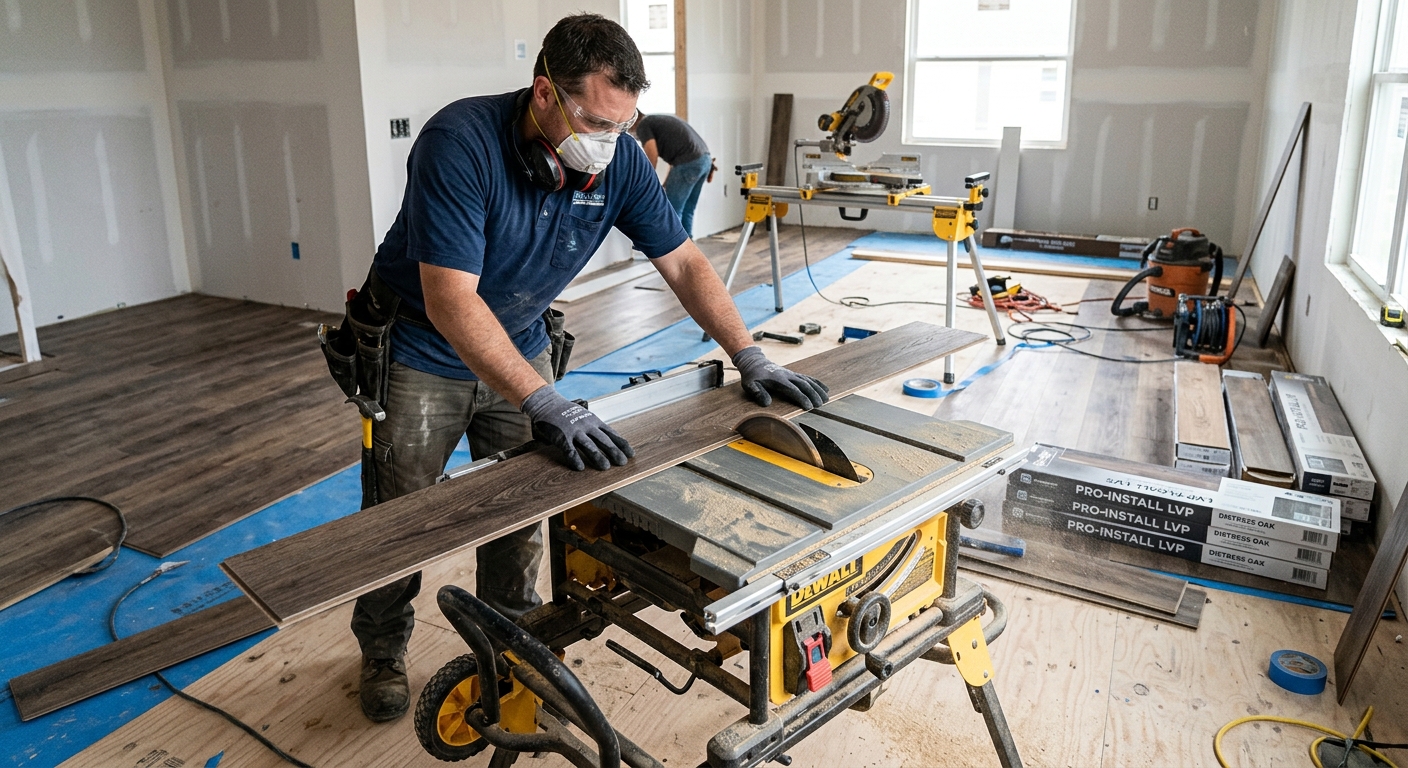
Flooring options and costs in Port Coquitlam
Port Coquitlam homeowners typically start by comparing looks, comfort, and total installed price—and in this market those choices are tightly linked to the local housing stock. With 32.9% of homes built before 1981 (Statistics Canada, 2021 Census), many properties have older plywood or uneven subfloors that need levelling or spot repair before any new surface can sit flat and stay warrantied. In real projects, that “prep” step often adds material and labour time, and it’s common to see roughly $1–$3 per sq ft added to account for levelling compounds, patching, and patch sanding.
In the Lower Mainland–Southwest, the wet, marine climate creates humidity swings in winter and shoulder seasons. That matters because solid hardwood expands and contracts with moisture and temperature, so it’s generally limited to above-grade installations with proper acclimation and expansion gaps. Basements and slab-on-grade areas often need flooring systems that tolerate minor moisture movement; that’s why engineered wood and luxury vinyl plank (LVP) are so commonly specified for those levels. Where radiant heat is present (in newer builds), the same climate pressure pushes people toward products that can handle gentle heat without cupping.
Trades are especially busy around central Port Coquitlam and the older neighbourhoods with more pre-1981 housing, where subfloor prep and moisture testing are frequently part of the scope. From there, it’s easiest to compare options in a simple range table.
| Type |
Best Room |
Moisture Resistance |
Lifespan |
Price per sq ft |
| Solid hardwood (nail-down, above grade only) |
Living / dining, bedrooms |
Low to moderate (must stay above grade) |
30–60 years |
$9,00 – $18,00 |
| Engineered hardwood (float or glue, above + on-grade) |
Living / dining, bedrooms |
Moderate (better tolerance to humidity) |
20–40 years |
$9,00 – $16,00 |
| Laminate (click-lock, above-grade) |
Living areas, bedrooms |
Low to moderate (avoid standing water) |
15–25 years |
$4,00 – $10,00 |
| Luxury vinyl plank / LVP (waterproof, any level) |
Kitchen, basement (finished) |
High (waterproof core) |
15–25 years |
$4,00 – $10,00 |
| Porcelain / ceramic tile |
Kitchen, bathrooms, foyers |
Very high (tile is waterproof; grout/installation matter) |
25–50 years |
$10,00 – $20,00 |
| Carpet (broadloom or modular tile) |
Bedrooms, stairs with comfort focus |
Low (needs careful moisture control) |
8–15 years |
$4,00 – $8,00 |
Prices are estimates only and vary by project scope, site access and material selection.
What affects the price of flooring in Port Coquitlam
In Port Coquitlam and across the Lower Mainland–Southwest, two quotes for the “same” flooring can differ by 30–50% because the hidden work is often different. One contractor may include subfloor levelling, moisture mitigation, and proper underlay, while another may quote assuming the existing base is flat and dry. Labour is also a major driver here—Greater Vancouver trades are among the highest in Canada—so differences in crew size, scheduling, and how much prep they plan for can swing totals quickly.
Technically, indoor humidity swings and below-grade moisture are the key cost drivers in this region. Solid hardwood moves with humidity—so it generally can’t be installed on slabs or below grade, and it requires meticulous acclimation and gap spacing. That’s why engineered hardwood and LVP are far more forgiving for on-grade and basement work. Colder inland pockets and newer builds with radiant heat also influence what’s realistic: most solid hardwood and some laminate products aren’t ideal over radiant systems, which can require engineered wood, tile, or higher-spec engineered/LVP options.
Older regional housing stock frequently needs subfloor levelling or repair. For many Port Coquitlam basements and main floors, that prep can add roughly $1–$4 per sq ft before you even choose a finish. For example, choosing laminate in the $4,00 – $10,00 band may look cheaper, but if levelling and moisture protection bring the labour close to engineered hardwood, the “savings” can shrink. Conversely, LVP in the $4,00 – $10,00 band can be a better value when moisture issues would otherwise push you into more expensive remediation for carpet or limit hardwood.
| Price Factor |
Why It Matters |
Cost Impact |
| Room area in sq ft |
Materials (boards/tile/underlay) and labour scale with square footage |
Typically the biggest driver; small rooms can cost proportionally more |
| Subfloor condition — levelling or repair needed before install |
Old plywood/concrete often needs patching, grinding, or self-levelling to keep floors flat |
Often adds about $1–$4 per sq ft in older homes |
| Moisture / below-grade install — rules out solid hardwood |
Marine humidity and below-grade moisture movement require moisture barrier strategies |
May add testing/barrier material; can change the whole product choice |
| Material choice — solid vs. engineered vs. LVP vs. tile |
Higher-performance cores, thicker wear layers, and tile setup change material and labour time |
Hardwood/tile usually run higher than laminate/LVP |
| Removal and disposal of existing flooring |
Demo time, hauling, and any asbestos-risk handling where applicable |
Can add several hundred dollars for typical single-level projects |
| Stair nosing / transitions — charged per step or per linear foot |
Transitions are labour-intensive and require correct profiles for expansion and height matching |
Often increases cost meaningfully in multi-level homes |
| Radiant heat compatibility — limits material options |
Only certain flooring systems tolerate heat without excessive movement or warranty issues |
May shift you from solid hardwood to engineered/tile/LVP rated for radiant |
| Installation method — float vs. glue-down vs. nail-down |
Methods change subfloor prep, labour time, and sometimes required primers/adhesives |
Glue-down and nail-down typically cost more than straightforward floating |
Permits & regulations in British Columbia
In British Columbia, flooring installation itself generally does not require a building permit. A typical nail-down hardwood, click-lock laminate, or LVP installation is considered finishing work and is usually exempt from permits. However, some related work commonly triggers permit requirements—especially when you’re changing electrical or structural systems. For example, if you’re installing or modifying in-floor heating circuits (electrical work), you may need electrical permits, and the work must be done by the appropriate qualified trades. If you discover structural subfloor failures and the scope becomes repair that affects the building’s structural integrity, that can also pull in permitting and inspections depending on the nature of the repair.
For condominium units, building rules matter as much as permits. Many strata corporations regulate sound transmission (often referencing STC/IIC performance) and require specific underlay systems under hard surface flooring, particularly on upper floors. Before you install hardwood or tile above grade in a multi-unit building, review your condo declaration and ask the board for written approval if their rules require it. That step can prevent expensive redo work later.
To verify a contractor in Port Coquitlam, start with their business licence (and check that they operate locally under the correct business name), then confirm liability insurance. Ask for a current certificate of insurance naming you as an additional insured where applicable, and request evidence of coverage for workers—commonly satisfied through WSIB/WCB documentation. Finally, get a written contract and confirm they carry the exact coverage relevant to flooring installation and any subfloor/underlayment work they’re performing.
Best flooring for each room in your Port Coquitlam home
Choosing the right flooring for each room in Port Coquitlam is largely about matching performance to moisture exposure, foot traffic, and comfort needs in a wet, marine climate. In living and dining areas, engineered hardwood or a high-quality laminate can deliver that warm “wood look” while better tolerating humidity than solid wood. For the master bedroom, carpet is still a strong choice for comfort and sound absorption—especially in older homes where you may prefer a forgiving surface under everyday foot traffic.
In kitchens, moisture and spills are the rule, so luxury vinyl plank (LVP) with a waterproof core—or large-format porcelain tile—are the practical winners for easy cleaning and water tolerance. Basements are where the Lower Mainland–Southwest climate really shows up: moisture vapour and occasional water movement can affect below-grade materials. LVP is the clear choice for a finished basement because it’s waterproof and handles minor subfloor moisture movement far better than solid hardwood and most laminate. Bathrooms should be porcelain or ceramic tile only; it’s the most reliable approach for wet areas, assuming proper installation practices.
If your home has radiant heating, material selection gets more specific: engineered wood, LVP designed for radiant, and tile are usually the safest matches, while most solid hardwood needs very careful specification. To put costs in perspective, laminate often falls in the $4,00 – $10,00 band, but if you need extensive levelling and extra underlay, the gap versus engineered hardwood may shrink—making engineered a better long-term value when humidity and warranties are considered.
| Room |
Best Material |
Why |
Moisture Risk |
Price Band per sq ft |
| Living / dining room |
Engineered hardwood |
Warm look with better humidity tolerance than solid; good durability for daily traffic |
Low to moderate (manage indoor humidity) |
$9,00 – $16,00 |
| Master bedroom |
Carpet or engineered hardwood |
Carpet adds comfort and sound dampening; engineered offers a cleaner, easier-care option |
Low (keep air dry and avoid leaks) |
$4,00 – $16,00 |
| Secondary bedrooms |
Laminate |
Cost-effective, easy to maintain, and holds up to typical family wear when installed on a flat base |
Low to moderate (avoid standing water) |
$4,00 – $10,00 |
| Kitchen |
Luxury vinyl plank (LVP) or porcelain tile |
LVP is waterproof and forgiving for spills; tile handles water and heat exceptionally well |
Moderate to high (spills and sink/refrigerator leaks) |
$4,00 – $20,00 |
| Basement (finished) |
Luxury vinyl plank (LVP) |
Waterproof core tolerates moisture vapour and below-grade realities better than wood |
High (vapour movement and seasonal humidity) |
$4,00 – $10,00 |
| Bathroom |
Porcelain / ceramic tile |
Best wet-area performance; long service life when properly installed |
Very high |
$10,00 – $20,00 |
How to choose a flooring contractor in Port Coquitlam
Start by verifying credentials the right way—especially in a market like Port Coquitlam where older homes and moisture issues can expand the scope. In British Columbia, confirm the contractor can legally work in your area and that their liability insurance is current. Ask for a certificate of insurance before work begins and review the coverage limits. Also request documentation showing workers’ compensation coverage (WSIB/WCB) so you’re not left responsible if a worker is injured on your property. If they can’t provide these documents promptly, that’s your first red flag.
Next, get 2–3 itemised written quotes, not lump sums. A solid quote breaks down labour and materials (including underlay, moisture barrier, levelling compound, transitions, and disposal). Read exclusions line by line: is subfloor levelling included, or only “as required”? Is permit work included if electrical or other related work is triggered? Is demolition and disposal included, or will you be billed separately for hauling?
Warranty matters in this climate. Ask for the workmanship warranty length and whether it’s transferable if you sell. Also confirm the manufacturer warranty terms: do they require acclimation, specific underlay, or proof that the subfloor is within moisture limits? For payment, never pay more than 10–15% upfront; hold back a portion until the job is completed and cleaned. Finally, require a start date and completion estimate in writing, with contingencies for subfloor surprises (common in homes built before 1981, when levelling is often needed).
- Ask for proof of liability insurance and show you the certificate before the contract is signed.
- Confirm WSIB/WCB coverage for the crew (request documentation, not verbal assurances).
- Get 2–3 itemised quotes with a labour/material breakdown and clear exclusions.
- Require subfloor prep to be spelled out: levelling height tolerance, patching, and sanding/grinding.
- If the job includes basements or slab areas, require a moisture plan (barrier, testing, product choice).
- Check what underlay is included (especially for laminate) and whether it matches the product warranty.
- Ensure transitions and stair nosing are quoted per step or per linear foot, not “allowance” only.
- Ask whether removal and disposal are included and where debris will be hauled.
- Confirm acclimation time and jobsite humidity/temperature conditions before installation starts.
- Review the warranty: workmanship term, what voids it, and whether it’s transferable.
- Agree on payment schedule: 10–15% upfront max; holdback until the walkthrough is done.
- Request a written timeline with start date, completion target, and what triggers delays.
Red flags I commonly see in Port Coquitlam include: quoting hardwood over a basement slab without a moisture plan, refusing to itemise labour vs materials, not providing insurance/WSIB/WCB documentation, vague scope language like “prep as needed” with no allowance, and asking for large upfront payments beyond 10–15%.
Frequently asked questions — flooring in Port Coquitlam
What is luxury vinyl plank and is it worth it in Port Coquitlam?
Luxury vinyl plank (LVP) is a layered floor with a waterproof core designed to resist moisture and everyday spills. In Port Coquitlam’s Lower Mainland–Southwest climate—where winter humidity and occasional below-grade moisture vapour are common—LVP is often worth it because it performs well in basements and kitchens without the movement issues that can affect solid hardwood. For pricing, LVP commonly lands in the $4,00 – $10,00 range depending on thickness, wear layer, and underlay requirements. The value is highest when your subfloor is less-than-perfect or when you want a waterproof option that won’t restrict you the way laminate or solid wood might. The key is choosing an installation method and underlayment that match the manufacturer warranty.
How much does flooring cost in Port Coquitlam?
Flooring cost in Port Coquitlam depends on product type, total square footage, and how much subfloor prep your home needs. As a starting point, hardwood typically falls around $9–$18 per sq ft, laminate/LVP often sit near $4–$10 per sq ft, and tile is commonly $10–$20 per sq ft. Carpet installation is often quoted around $4–$8 per sq ft depending on material and whether stairs are involved. Where 32.9% of homes were built before 1981 (Statistics Canada, 2021 Census), levelling and patch repair can add meaningfully to labour time—commonly about $1–$4 per sq ft in older homes that need work to get flat and ready. That’s why two quotes can look different even when the flooring “type” is the same.
Hardwood vs laminate vs vinyl plank — which is best?
There isn’t one “best” for every room in Port Coquitlam; the best choice depends on moisture exposure and your tolerance for seasonal movement. Solid hardwood is beautiful, but in British Columbia’s wet marine climate it’s usually limited to above-grade areas with good indoor humidity control. Engineered hardwood is a strong middle ground—more tolerant than solid. Laminate is often the lowest-cost look for above-grade rooms, but it’s not waterproof and can struggle if spills reach the seams. LVP is the most forgiving choice for kitchens and basements because it’s waterproof and better suited to moisture vapour and minor subfloor imperfections. If you’re deciding between budgets, remember laminate/LVP often overlap in cost within the $4,00 – $10,00 range, and the “best” tends to be the one that matches the room’s risk profile.
What flooring is best for a Port Coquitlam basement?
For most Port Coquitlam basements—especially those with slab-on-grade or any history of dampness—the best practical choice is usually LVP with a waterproof core. The Lower Mainland–Southwest climate can drive humidity swings, and concrete can allow moisture movement (often as vapour), which can affect solid hardwood and many laminate installations. Tile can also work very well in basements, but it’s typically higher in cost and labour. Carpet is sometimes avoided unless the space is consistently dry, because it can trap moisture and take longer to recover after any leak. In most “finished basement” scenarios, LVP offers the strongest mix of moisture tolerance and realistic service life, generally in the $4,00 – $10,00 per sq ft band. A proper moisture barrier plan and flat subfloor still matter—LVP isn’t magic, but it’s the right category for the job.
Can I install hardwood over concrete?
It depends on the type of hardwood and the condition of the concrete. Solid hardwood is generally a poor fit for concrete in this region because it’s sensitive to moisture movement and seasonal humidity changes. For most concrete slabs in British Columbia, engineered hardwood is the more appropriate choice—either glue-down (where specified by the manufacturer and when moisture readings allow) or floating where the system is designed for it. The contractor should assess subfloor moisture and prepare the slab correctly, including any required primers or moisture barriers, before installing. If you’re planning hardwood over concrete in Port Coquitlam, I recommend you specifically ask about moisture testing, product suitability for slab installation, and how the contractor will protect the warranty. This is one of the most common spots where an inexpensive quote can become expensive after the real conditions are uncovered.
How long does flooring installation take?
Installation time varies mainly by room count, total square footage, product type, and how much prep is required. LVP and laminate typically install faster than tile because tile requires layout, mortar beds/thinset, and curing time. Hardwood installation can take longer due to acclimation, precise layout, and nail-down/glue-down steps. In a typical Port Coquitlam home, a single main-floor room might take about 1–3 days, while multiple areas or stair work can add more time, especially if transitions, levelling, or removal are included. If your home is older (many were built before 1981), expect extra time for levelling and subfloor repair where needed (Statistics Canada, 2021 Census). Always ask your contractor for a start date, a completion estimate, and a written plan that accounts for subfloor surprises and required cure/acclimation periods.