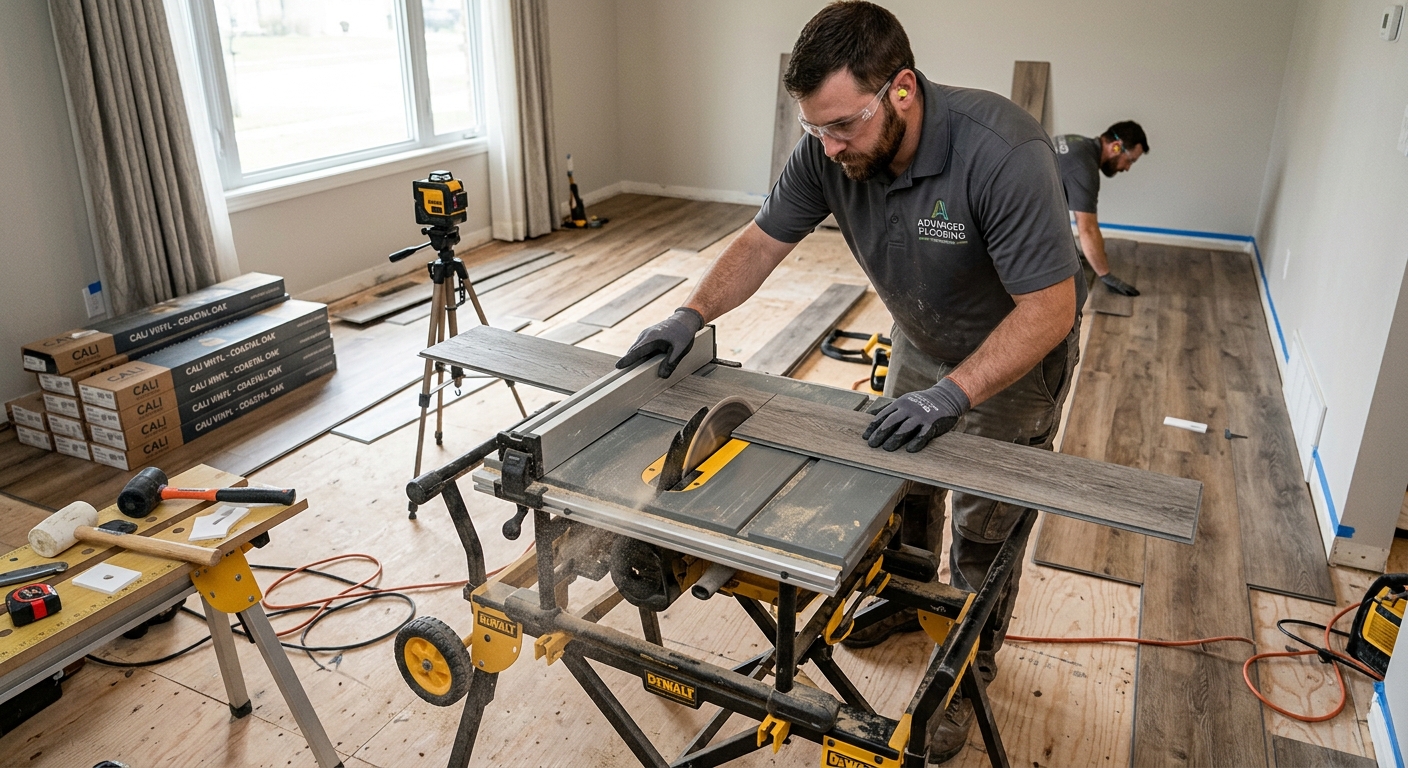
Flooring options and costs in Port Moody
Port Moody homeowners usually start their flooring search by weighing comfort, durability, and resale—and the “right” choice depends heavily on how the Lower Mainland–Southwest climate behaves inside your home. With a population of 33,535 (Statistics Canada, 2021 Census), Port Moody has plenty of local competition, but the labour demand can spike in older neighbourhoods where homes were built in earlier eras. In fact, 33.1% of local dwellings were built before 1981 (Statistics Canada, 2021 Census), which often means uneven plywood or aged concrete that needs levelling, smoothing, and sometimes a moisture barrier before new flooring goes in. That prep work is a major reason two quotes for “the same floor” can still land far apart.
The marine climate also drives costs through indoor humidity swings—especially in winter and shoulder seasons. Solid hardwood is popular above grade, but it must be installed with proper expansion gaps and controlled indoor humidity. For below-grade areas or slab-on-grade, we generally avoid solid hardwood because it reacts to moisture wicking through concrete. Engineered wood and luxury vinyl plank (LVP) handle those humidity and minor temperature changes far better, and they’re becoming increasingly common in Port Moody basements and finished lower levels.
In areas like the Newport Village / Moody Centre corridor, we often see a blend of condo upgrades and detached-home renovations, so waterproofing and sound-friendly underlay choices matter just as much as material cost. Next, here’s a practical comparison to anchor your budgeting before you review any written quotes.
| Type |
Best Room |
Moisture Resistance |
Lifespan |
Price per sq ft |
| Solid hardwood (nail-down, above grade only) |
Main living areas (above grade) |
Low to moderate (humidity-sensitive) |
25–60 years |
$9,00 – $18,00 |
| Engineered hardwood (float or glue, above + on-grade) |
Living/dining, bedrooms |
Moderate (better with humidity control) |
20–40 years |
$10,00 – $17,00 |
| Laminate (click-lock, above-grade) |
Bedrooms, hallways (dry zones) |
Moderate (not for frequent standing water) |
10–25 years |
$4,50 – $10,00 |
| Luxury vinyl plank / LVP (waterproof, any level) |
Kitchen, basement (finished), entry |
High (waterproof core) |
15–25 years |
$6,50 – $12,00 |
| Porcelain / ceramic tile |
Bathrooms, kitchens, entries |
Very high (proper grout + membrane) |
30+ years |
$10,00 – $20,00 |
| Carpet (broadloom or modular tile) |
Bedrooms, stairs (comfort/sound) |
Low to moderate (protect from spills) |
8–15 years |
$7,00 – $13,00 |
Prices are estimates only and vary by project scope, site access and material selection.
What affects the price of flooring in Port Moody
In Port Moody and across the Lower Mainland–Southwest, the same “typical” flooring job can swing by 30–50% between quotes. The biggest reason isn’t the brand—it’s what your contractor includes: subfloor testing, levelling or resurfacing, moisture mitigation, removal/disposal, and how transitions/stairs are handled. In older homes (and many in Port Moody were built before 1981), uneven subfloors are common, so levelling may be necessary to get a flat, long-lasting installation. If levelling wasn’t included in the first quote, you’ll pay for it later—often after product pricing has already been locked in.
Technical factors are also cost drivers. Indoor humidity swings in the Lower Mainland–Southwest make solid hardwood respond to seasonal changes; it cannot be installed over concrete in basements and generally performs poorly where moisture vapour is a concern. Engineered hardwood and LVP handle humidity far better, and LVP is specifically designed for waterproof installs on any level. Colder inland pockets and homes with radiant heating push material selection too: solid hardwood needs careful spec and acclimation, while many laminates need temperature-rated underlays. Older regional housing stock frequently needs subfloor repair, adding roughly $1–$4 per sq ft to project budgets depending on what’s wrong and how much smoothing is required.
Concrete examples we see often in Port Moody: (1) A basement conversion on slab might add prep and a vapour-aware underlayment approach, which can raise a “vinyl” quote even though LVP material is economical—because labour and surface prep are the real cost. (2) A hardwood install on a living area with a dated subfloor might still look straightforward, but levelling and underlayment details can shift a project from the lower side of the range (near $9–$18/sq ft for hardwood) to the upper side once surface work is added. (3) Tile over uneven plywood can become labour-intensive quickly, while LVP often tolerates minor imperfections better when paired with the right underlay.
| Price Factor |
Why It Matters |
Cost Impact |
| Room area in sq ft |
Material is sold per square foot and labour scales with square footage. |
Direct; larger areas often reduce per-sq-ft labour efficiency cost. |
| Subfloor condition |
Levelling, patching, or replacing damaged subfloorboards is essential for a flat finish. |
Commonly adds about $1–$4 per sq ft when smoothing/repair is needed. |
| Moisture / below-grade install |
Basements and slab areas require moisture-aware systems. |
Can eliminate solid hardwood; engineered or LVP typically costs more upfront but avoids failure risk. |
| Material choice |
Solid wood, engineered wood, LVP, and tile differ in material cost and install complexity. |
Hardwood often sits around the higher end (roughly $9–$18/sq ft installed); LVP/lb broadens mid-range bands (about $4–$10/sq ft for laminate/vinyl plank depending on scope). |
| Removal and disposal of existing flooring |
Old flooring removal can be dusty, time-consuming, and sometimes hides damage. |
Not included in many “low” quotes; can noticeably raise total cost. |
| Stair nosing / transitions |
Stairs and custom edges require more labour and special finishing materials. |
Charged per step or per linear foot; can add a meaningful premium to small jobs. |
| Radiant heat compatibility |
Not all floors tolerate radiant heat cycles without gapping/movement issues. |
May require engineered wood, higher-spec laminate, tile, or specific underlay adjustments. |
| Installation method |
Float vs. glue-down vs. nail-down affects labour time and subfloor prep. |
Glue-down often requires additional prep and moisture control; nail-down demands stable above-grade conditions. |
Permits & regulations in British Columbia
In British Columbia, a standard flooring installation usually does not require a building permit—meaning swapping carpet, installing laminate over an approved underlay, laying tile with proper underlayment, or installing engineered wood over an approved base typically proceeds without a permit. However, associated work can trigger permitting. If your project includes electrical work (for example, installing or modifying in-floor heating circuits, or changes tied to a heating system), that electrical component generally requires the proper permit and licensed work. If your contractor is addressing structural subfloor repairs beyond “surface patching,” or handling moisture remediation that involves repairing building envelope issues, that scope may also require additional trade coordination and documentation.
In condominiums, separate rules apply: the corporation’s bylaws and sound transmission requirements (commonly discussed in terms of STC/IIC) can restrict flooring choices and underlay thickness—especially for hard flooring on upper floors. Always review the condo declaration and ask for board approval in writing before installing hardwood or tile above grade in a multi-unit building.
To verify a Port Moody flooring contractor, homeowners should: (1) confirm their active BC business/labour authorization using the contractor licensing/registry information available online; (2) request a Certificate of Insurance showing general liability coverage and ensure it’s current; (3) verify workplace coverage (WSIB/WCB) through documentation they provide; (4) ask for a clearance letter if needed for your site requirements; and (5) confirm any subcontractors are covered under the same insurance and coverage documentation.
Best flooring for each room in your Port Moody home
Choosing flooring room-by-room in Port Moody means matching material performance to moisture exposure, foot traffic, and comfort expectations in a wet, marine climate. Living and dining areas do well with engineered hardwood or high-quality laminate: they bring warmth and a consistent look, while engineered construction tolerates the humidity swings of the Lower Mainland–Southwest better than solid hardwood. For master bedrooms, carpet is hard to beat for comfort and sound absorption—especially in homes with bedrooms located on quieter upper levels. If you want hard flooring, engineered hardwood is usually the more stable choice.
In kitchens, we typically recommend luxury vinyl plank (LVP) for quick cleanup and water tolerance, or large-format porcelain tile for durability and spill-proof performance. Basements (especially finished ones) are where LVP usually wins: it’s waterproof and handles the moisture vapour and below-grade conditions that can cause cupping or gapping in solid wood and many laminate setups. Bathrooms should be porcelain or ceramic tile only, with the right underlayment system and grout practices.
Radiant heating is increasingly popular in BC new builds and renovations, but it changes the “best” list. Engineered wood, tile, and many temperature-rated LVP options tend to be the safer pairings, while solid hardwood requires careful installation and product specification to manage movement. As a budgeting example: if you’re choosing between laminate and LVP for a kitchen-entry zone, laminate might look cheaper in the $4–$10/sq ft band, but LVP often justifies the extra cost where spills and humidity are more frequent—because replacement and subfloor repair risk drops when water doesn’t soak in.
| Room |
Best Material |
Why |
Moisture Risk |
Price Band per sq ft |
| Living / dining room |
Engineered hardwood |
Warm look with better humidity stability for Port Moody’s seasonal swings. |
Low to moderate (above grade, controlled indoor humidity helps). |
$10,00 – $17,00 |
| Master bedroom |
Carpet or engineered hardwood |
Comfort and sound absorption (carpet) or stable hard flooring (engineered). |
Low (keep spills cleaned quickly). |
$7,00 – $15,00 |
| Secondary bedrooms |
Carpet |
Budget-friendly comfort, softer acoustics, easier on dropped toys. |
Low (above grade). |
$7,00 – $13,00 |
| Kitchen |
Luxury vinyl plank (LVP) |
Water-resistant, forgiving underfoot, and easier daily maintenance. |
Moderate to high (spills, sink splash, occasional leaks). |
$6,50 – $12,00 |
| Basement (finished) |
Luxury vinyl plank (LVP) |
Waterproof core suited to below-grade humidity and moisture vapour control. |
High (common in Lower Mainland basements). |
$6,50 – $12,00 |
| Bathroom |
Porcelain / ceramic tile |
Non-porous finish with long wear life when installed with the right system. |
Very high (direct water exposure). |
$10,00 – $20,00 |
How to choose a flooring contractor in Port Moody
Choosing a flooring contractor in Port Moody is mostly about proof: proof they’re properly licensed/authorized to operate in BC, proof their insurance is current, and proof their installation approach matches your subfloor and moisture conditions. Start by requesting their BC licence/authorization details and checking them through the online registry information they provide. Next, ask for a current Certificate of Insurance (general liability). For coverage, ask whether they carry WSIB/WCB for employees and request documentation you can keep with your records. If they can’t provide insurance paperwork promptly, that’s usually a sign to keep looking.
Then get 2–3 written itemised quotes, not just a single lump sum. The best quotes break down labour vs. materials and list the allowance for underlayment, moisture barriers, levelling compounds, transitions, stair work, and removal/disposal. Carefully read the scope: is disposal included? Are permits required for any electrical work in your plan? If you’re removing existing flooring, confirm how it’s handled and whether the quote includes subfloor patching or only “install and trim.”
Warranty matters too: look for a clear workmanship warranty period and confirm the product manufacturer warranty coverage and conditions. Ask whether the warranty is transferable if you sell the home. For payment, keep it conservative—never more than 10–15% upfront; use a holdback until the job is complete and you’ve confirmed the finished floor quality. Also request a start date and a completion estimate in writing so you can plan around trades like painting and drywall touch-ups.
- Ask for BC licence/authorization details and verify them.
- Request Certificate of Insurance and confirm coverage limits and effective dates.
- Verify WSIB/WCB coverage with documentation for employees (request clearance letter if required).
- Get 2–3 itemised quotes: labour, materials, underlay/barrier, levelling, transitions, stairs.
- Confirm whether moisture testing and subfloor flattening are included.
- Check what’s excluded (subfloor replacement, mould remediation, baseboard removal, permits for electrical).
- Ensure stair labour and nosing/trim are quoted per step or per linear foot.
- Confirm disposal/recycling of old flooring is included, especially for carpet/tile.
- Review warranty: workmanship length, who covers it, and product warranty terms.
- Ask about acclimation requirements for engineered wood/hardwood and jobsite humidity targets.
- Use a payment schedule with a 10–15% maximum deposit and a holdback until completion.
- Get an install timeline (start date and estimated finish) in writing.
Red flags we see in Port Moody: contractors who won’t provide insurance/coverage documents, quotes that skip subfloor condition and moisture scope, “too-good-to-be-true” pricing with no allowance breakdown for levelling/underlayment, vague warranty language (no workmanship terms), or refusing to put timelines and inclusions/exclusions in writing.
Frequently asked questions — flooring in Port Moody
How do I compare flooring quotes?
Start by comparing apples to apples in Port Moody: the same floor type is not the same scope. Ask each contractor to quote the same product grade and thickness, the same underlayment/moisture barrier system, and the same subfloor prep plan. Look for an itemised breakdown of labour, removal and disposal, transitions, and stairs—those are common “hidden” cost differences that can move totals by 30–50%. Confirm whether they include levelling/flattening, since older Port Moody homes (33.1% built before 1981, Statistics Canada, 2021 Census) often need more prep than newer builds. Use price bands as a reality check: installed hardwood commonly lands in the $9–$18/sq ft range, while LVP and laminate are often closer to $4–$10/sq ft depending on grade.
Can I install flooring over existing tile in Port Moody?
Sometimes, yes—but only if the tile is solid, level, and well adhered, and the height and transitions work out. In Port Moody, we typically assess whether the existing tile has any loose sections or significant lippage. For floating floors, you’d still need an appropriate underlayment strategy; many systems require a flat, stable base before installation. If tile is cracked, uneven, or lifting, skipping removal can lead to future movement, joint separation, and squeaks. Also consider moisture: if the tile is in a wet area or has a history of moisture issues, the safest long-term approach is to address the cause first. Ask your contractor whether they’re preparing the surface with grinding/level patching (included or excluded), and confirm the recommended method in writing.
What is the best flooring for a high-traffic area in Port Moody?
For high-traffic areas in Port Moody—entryways, main hallways, and living areas—the best choice usually balances wear layer durability with moisture tolerance. Luxury vinyl plank (LVP) is a common winner because it’s waterproof and handles the Lower Mainland–Southwest humidity swings better than many laminate setups, reducing failure risk near doors and kitchens. If you prefer a hard, classic look, engineered hardwood can work well above grade when installed with proper acclimation and expansion gaps. Carpet can also be durable if you choose a strong fibre and padding, but it’s more sensitive to spills and long-term staining. As a budget reality check, LVP often fits within a $6,50–$12,00/sq ft installed band, while engineered hardwood may land around $10–$17/sq ft depending on product and subfloor prep.
How do I prepare my subfloor before new flooring?
Good subfloor prep is what prevents callbacks. In Port Moody, the usual steps include checking flatness (not just “looks straight”), removing loose material, and repairing damaged spots. If you have squeaks, we address fastener issues or patch/replace subfloor sections as needed. For moisture-prone areas (especially basements and any slab-on-grade areas), preparation often includes moisture barrier planning and selecting flooring that can handle humidity vapour. If a contractor is quoting hardwood, remind them that solid hardwood is not appropriate for below-grade moisture environments; engineered or LVP is safer for those conditions. Older homes built before 1981 (Statistics Canada, 2021 Census) frequently require levelling compounds or underlayment transitions, commonly adding about $1–$4 per sq ft depending on how much correction is needed.
Is cork or bamboo flooring a good choice in Port Moody?
Cork can be comfortable and forgiving underfoot, and it’s dimensionally more stable than some natural materials—but it’s still sensitive to standing water and high humidity at the subfloor. In Port Moody’s wet, marine climate, the key question is where you want to install it. For above-grade rooms with controlled indoor humidity, cork can be a reasonable choice if the product is designed for your installation type and traffic level. Bamboo is similar: many bamboo floors behave like hardwood once installed, meaning solid versions are humidity-sensitive and generally not ideal below grade. If you’re considering either option for a basement or slab area, discuss engineered alternatives or waterproof flooring because below-grade moisture vapour is the common problem in the Lower Mainland–Southwest. A contractor should also specify acclimation requirements and underlayment/bond method in writing.
What is the difference between floating and glued-down flooring?
Floating flooring is installed to “float” over an underlayment; boards lock together (often click-lock) and do not bond directly to the subfloor. Glued-down flooring bonds directly to the subfloor using an adhesive, which can improve stability on some surfaces but requires strict moisture conditions and careful surface prep. In Port Moody, the decision depends on your subfloor and room moisture risk. For example, below-grade or slab-on-grade environments are usually better matched with systems designed for humidity control—often engineered or LVP—rather than solid hardwood. Floating floors can tolerate certain movements better, but they still need a stable, flat base. Glued-down installs are unforgiving if the subfloor is not properly level and moisture-appropriate. Always ask your contractor which method they’re using and whether they’ve tested/verified moisture and flatness before installation.