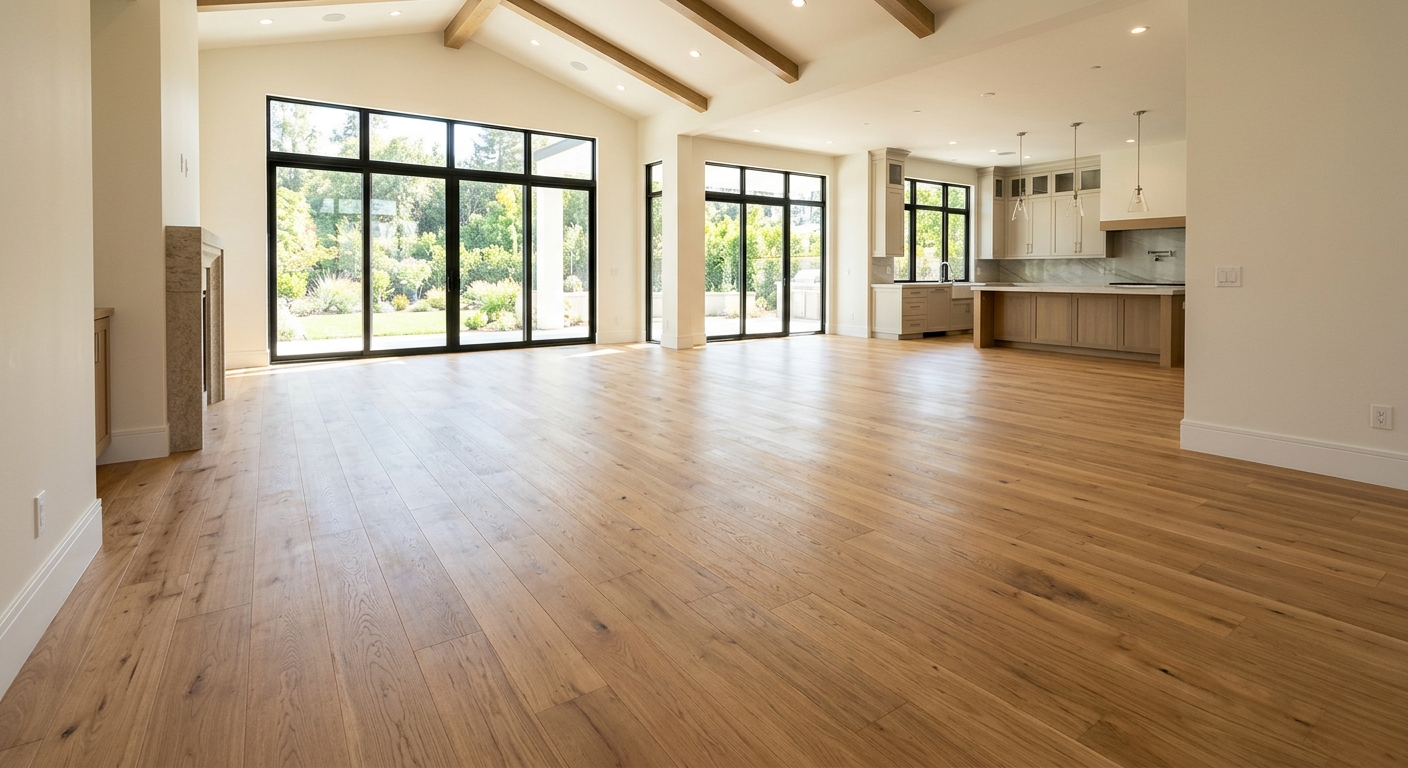
Flooring options and costs in Elora
Elora is a smaller community (population 7,800 in 2021, Statistics Canada, 2021 Census), but it sits in the same renovation-and-new-build pressure cooker as the broader Toronto area. That matters because labour demand and material logistics in the Toronto economic region push pricing and availability. In practical terms, many Elora homes see wide indoor humidity swings between seasons, which is a big reason we steer most homeowners toward engineered hardwood or luxury vinyl plank (LVP) instead of traditional solid hardwood—especially on floors above concrete and in homes that are prone to moisture. Solid looks fantastic, but it moves more with humidity and can be risky in basements and over concrete slabs.
Cost also depends on housing age and prep needs. A lot of older stock in the Toronto area often requires subfloor levelling, plywood replacement, or moisture mitigation before install; when that work is needed, it can add a meaningful line item even if you choose a mid-range product (for example, laminate or LVP). If you’re renovating in a busier pocket like downtown Elora and you’re coordinating access around established streets and parking limits, we also see scheduling and jobsite constraints that can affect labour totals.
Below is a realistic guide to material-and-install price ranges per square foot for common flooring types, so you can compare quotes apples-to-apples before we talk about your exact measurements and subfloor conditions.
| Type |
Best Room |
Moisture Resistance |
Lifespan |
Price per sq ft |
| Solid hardwood (nail-down, above grade only) |
Living / dining (above grade) |
Low to moderate (reacts to humidity) |
25–50 years |
$9 – $18 |
| Engineered hardwood (float or glue, above + on-grade) |
Living / dining; hallways |
Moderate to high (humidity-tolerant) |
20–35 years |
$10 – $17 |
| Laminate (click-lock, above-grade) |
Living / bedrooms (above grade) |
Low to moderate (water-proofing varies) |
10–25 years |
$4 – $9 |
| Luxury vinyl plank / LVP (waterproof, any level) |
Kitchen; finished basement |
High (waterproof cores) |
15–25 years |
$5 – $12 |
| Porcelain / ceramic tile |
Kitchen; bathrooms |
Very high (glazed surface) |
25–50 years |
$12 – $25 |
| Carpet (broadloom or modular tile) |
Bedrooms; stairs (comfort) |
Low (resists minor spills; not a “wet room” material) |
8–15 years |
$5 – $11 |
Prices are estimates only and vary by project scope, site access and material selection.
What affects the price of flooring in Elora
In Elora and the wider Toronto area, the same flooring “type” can land in very different budget ranges. It’s not unusual to see 30–50% swings between quotes for what looks like a comparable job—because the real drivers are subfloor condition, moisture risk, and how much labour prep is required before the finish flooring goes down. Toronto-area homes frequently involve older construction details that need levelling, plywood replacement, or moisture mitigation before install, and that work is where many estimates diverge.
Technically, Toronto’s climate patterns translate into indoor humidity swings across seasons. That matters most for solid hardwood: it expands and contracts with moisture and can’t be glued or floated over concrete, and it performs poorly in basements where conditions are more variable. Engineered hardwood and LVP handle humidity far better and are designed for above-grade and, in the case of LVP, below-grade installations. In colder parts of the region and in new custom builds, radiant floor heating is also common; it tends to pair better with engineered wood, tile, and certain vinyl systems than with traditional solid hardwood. Material choice can also shift the budget into different price bands—moving from laminate/vinyl plank at roughly $4 – $9 up to engineered or higher-end hardwood around $9 – $18—but only if the prep and subfloor conditions are ready for that finish.
Here are a few concrete Elora examples we see often: (1) an older raised-joist floor that’s out of plane by a few millimetres may require self-levelling or patchwork, adding cost even if the finish is mid-range; (2) a basement with a history of dampness typically pushes homeowners to waterproof LVP, which avoids the additional moisture mitigation steps you’d need to make solid wood workable; and (3) homes with in-floor heating require installer attention to heat-expansion clearances, which can raise labour time but prevents premature failure.
| Price Factor |
Why It Matters |
Cost Impact |
| Room area in sq ft |
Directly affects materials, underlay, and labour hours |
Higher area = better material spread, but total $ increases |
| Subfloor condition — levelling or repair needed before install |
Uneven or damaged substrates can cause squeaks, gaps, or failed locks |
Often adds a meaningful line item; can increase costs by several dollars per sq ft |
| Moisture / below-grade install — rules out solid hardwood |
Moisture affects dimensional stability and warranties |
Switching to engineered or waterproof LVP can prevent expensive rework |
| Material choice — solid vs. engineered vs. LVP vs. tile |
Different products have different installation complexity and wear layers |
Can move the finished cost from about $4 – $9 up toward $12 – $25 |
| Removal and disposal of existing flooring |
Old flooring, tack strips, and disposal fees add time |
May be priced per sq ft or per job; can noticeably change total |
| Stair nosing / transitions — charged per step or per linear foot |
Transitions are labour-intensive and impact trim/material yield |
Often increases the budget even if floor area is modest |
| Radiant heat compatibility — limits material options |
Heat cycling changes how products expand and how underlayment performs |
May add product-specific underlay and extra installation steps |
| Installation method — float vs. glue-down vs. nail-down |
Different methods require different adhesives, fastening, or moisture control |
Nail-down and glue-down can be more labour/time intensive |
Permits & regulations in Ontario
In Ontario, the flooring installation itself typically does not require a building permit. What can require permits is the work that’s associated with flooring, especially when you’re modifying structure, addressing moisture through substantive changes, or interacting with electrical systems.
Examples of work that may require permits include: structural subfloor repair that involves significant alterations; moisture remediation that includes electrical drying systems; and in-floor heating circuit work (electrical connections, modifications to circuits, or thermostat wiring). In other words, if the job is purely removing flooring, levelling a subfloor, installing underlay and the finish surface, you’re usually in the “no permit” lane—though permits become relevant when electrical or structural scope expands.
For condominiums in the Elora/Toronto market, regulations are often about the building’s rules rather than government permits: the corporation’s sound-transmission requirements (STC/IIC) and underlay specifications can restrict what you can install and where. Always check the condo declaration and request written approval before starting, especially for hardwood or tile on upper floors.
To verify your contractor, follow a step-by-step routine: (1) ask for their Ontario business information and confirm they’re operating legitimately; (2) request a certificate of liability insurance and verify it’s current and covers your project; (3) confirm WSIB/WCB coverage where applicable—your contractor should be able to provide documentation; and (4) ensure you get a written scope and warranty terms that match the licence/coverage you were shown. If anything is missing, pause and ask for it before work begins.
Best flooring for each room in your Elora home
Choosing the right flooring for Elora means matching materials to moisture, traffic, and comfort—while respecting Ontario’s humidity swings and the way many local homes are built. In living and dining areas, most homeowners want a warmer look without the risk of excessive movement. That’s why engineered hardwood or a high-quality laminate often wins: it balances appearance with stability through seasonal changes. For master bedrooms, carpet remains a strong choice where comfort and sound absorption matter most, but if you prefer a hard surface, engineered hardwood is usually the safer “upgrade” compared with traditional solid.
Kitchens are different: spills, wet mopping, and dropped dishes are common. Luxury vinyl plank (LVP) or large-format porcelain tile is the practical route—LVP for easy maintenance and forgiving subfloor tolerance, porcelain tile for a durable, fully water-resistant surface. Basements in the Elora area often face higher moisture vapour exposure and temperature variation; that’s where waterproof LVP is the clear winner for finished spaces. Solid hardwood and most standard laminate are risky here unless your contractor has verified moisture conditions and the product system is specifically rated for below-grade.
Bathrooms should be porcelain or ceramic tile only, with proper waterproofing and grout management. If you’re adding radiant floor heating—common in new Ontario builds—the material should be selected for heat compatibility. Engineered wood, tile, and specific vinyl products are typically better choices than traditional solid hardwood due to expansion and heat-cycling considerations.
For a real budget comparison: if a kitchen renovation moves from laminate at roughly $4 – $9 to LVP closer to $5 – $12, the added cost often pays back in fewer moisture-related callbacks and easier cleanup—especially in households that use the space daily.
| Room |
Best Material |
Why |
Moisture Risk |
Price Band per sq ft |
| Living / dining room |
Engineered hardwood |
Warm look with better stability through seasonal humidity |
Low to moderate (depends on humidity control) |
$9 – $18 |
| Master bedroom |
Carpet or engineered hardwood |
Comfort and sound reduction; engineered option for easy care |
Low (avoid moisture only if there’s a leak history) |
$5 – $11 |
| Secondary bedrooms |
Laminate or engineered hardwood |
Good durability for families; engineered if you want a longer life |
Low to moderate |
$4 – $9 |
| Kitchen |
Luxury vinyl plank (LVP) or porcelain tile |
Handles spills and frequent cleaning; LVP is forgiving on subfloors |
Moderate to high (spills and wet mopping) |
$12 – $25 |
| Basement (finished) |
LVP (waterproof) |
Designed for below-grade conditions and moisture vapour exposure |
High (vapour and seasonal variability) |
$5 – $12 |
| Bathroom |
Porcelain / ceramic tile |
Best long-term water resistance when installed with correct practices |
High (direct splash and humidity) |
$12 – $25 |
How to choose a flooring contractor in Elora
When you’re hiring a flooring contractor in Elora, start with verification and documentation. Ask for their Ontario business details, a current certificate of liability insurance, and proof of WSIB/WCB coverage (where applicable). You’re looking for coverage that matches the type of work they’ll be doing on your site; if they can’t provide documentation, don’t “assume” they’re covered. Next, get 2–3 itemised written quotes—not just a lump sum. A good quote breaks out labour, materials, underlay/adhesives, levelling/repair, removal and disposal, and any stair or transition work per step or linear foot.
Read the scope carefully for what’s excluded: is subfloor levelling included if the floor is out of plane? Is moisture mitigation included if vapour is present? Is permit handling included if electrical scope is required for in-floor heating upgrades? Confirm disposal is included if you’re removing existing flooring, and understand how offcuts and waste are calculated.
Warranty is another key differentiator. A reputable installer provides a clear workmanship warranty (how long, what it covers, and the process for claims). Also check whether the manufacturer warranty requires specific installation methods and whether it’s transferable to the next homeowner. For payment, never pay more than about 10–15% upfront; hold back funds until the job is complete and you’ve done a final walkthrough. Finally, request a start date and a completion estimate in writing so scheduling conflicts don’t turn into hidden labour add-ons.
- Request itemised quotes with labour and materials separated (including underlay, adhesives and levelling compounds).
- Confirm whether removal/disposal of old flooring is included and how debris will be managed.
- Ask if stair nosing, quarter-round, reducers and transitions are priced per step or per linear foot.
- Verify liability insurance is current and covers your address/project type.
- Confirm WSIB/WCB coverage (where applicable) and ask for documentation before work starts.
- Check workmanship warranty length and what voids it (e.g., missed acclimation, improper humidity control).
- Ensure product installation requirements are followed (underlay type, moisture barriers, fastening patterns).
- Ask how they test and address moisture on concrete slabs or below-grade floors.
- Get clarity on subfloor responsibility: do they level/repair or only “install over whatever exists”?
- Review payment schedule: keep upfront to 10–15% and hold back until completion.
- Demand a written start date, realistic timeline, and daily work hours if there are access constraints.
- Confirm cleanup standards at the end of each day (especially important in high-traffic Elora areas).
Red flags in Elora: a contractor who won’t provide itemised pricing, “can’t say” whether they’re insured/WSIB-covered, a quote that omits subfloor prep but still assumes a perfect install, no written warranty terms, or pressure to pay most of the balance before anything is installed.
Frequently asked questions — flooring in Elora
How do I compare flooring quotes?
Start by lining up the details, not just the totals. For Elora-area homes, make sure each quote lists the same product specifications (thickness, wear layer for LVP, grade for engineered hardwood) and the same subfloor prep scope. Ask whether levelling and patching are included, because Toronto-area housing often needs plywood repair or moisture mitigation before new flooring goes down. Compare labour rates and whether removal/disposal is included. Also check transitions and stairs: many differences hide in stair nosing and reducers priced per step or linear foot. If one quote uses a thinner underlay or skips moisture checks, the low price may be misleading. As a rough anchor, laminate/vinyl plank projects often land around $4 – $9 per sq ft, while porcelain tile is commonly higher (about $12 – $25 per sq ft).
Can I install flooring over existing tile in Elora?
Sometimes, yes—but it depends on the condition of the tile and the type of flooring you’re installing. For LVP, many systems can be installed over tile if the surface is clean, flat, and well-bonded, but uneven grout lines or cracked tile can telegraph into the new floor. For engineered hardwood or laminate, you usually need a flat, stable substrate; tile can be acceptable in principle, but you may still need grinding/patching or a self-levelling underlayment system to meet the manufacturer’s flatness requirements. If you’re considering tile-to-tile, it’s typically possible to install new tile over sound tile, but the contractor must confirm bond and substrate conditions. In Ontario’s humidity swings, proper substrate flatness matters for locking systems. A contractor should assess moisture and adhesion and explain whether your quote includes prep work, not just the finish installation.
What is the best flooring for a high-traffic area in Elora?
For high-traffic areas, durability and easy maintenance matter most in Elora homes exposed to seasonal humidity swings. Engineered hardwood is a strong option for main living areas when the installation is above grade or on-grade with correct prep, because it’s more dimensionally stable than solid wood. If you want maximum practicality (especially for spills and frequent cleaning), LVP is usually the top choice—look for waterproof systems and a wear layer rated for heavy use. Laminate can work well too, but it’s more sensitive to moisture at seams, so we steer homeowners carefully on how “wet” the lifestyle is. In many Toronto-area renos, basements and entry paths benefit from LVP because below-grade moisture is a real factor. As a cost reference, a durable LVP install frequently sits around $5 – $12 per sq ft, while engineered hardwood typically trends higher at about $9 – $18 per sq ft depending on the product and prep.
How do I prepare my subfloor before new flooring?
Good preparation is what protects the finish and preserves warranties. In Elora (and the broader Toronto market), the most common prep issues are uneven surfaces, damaged plywood, and moisture or vapour concerns—especially over concrete or in basements. The correct approach depends on the flooring type: click-lock laminate usually requires a flat substrate and an appropriate underlay; engineered hardwood needs the correct fastening/glue method and moisture-compatible substrates; and waterproof LVP still needs flatness and proper moisture mitigation, even though it handles moisture far better than solid wood. Ask your contractor what they’ll measure (flatness, moisture conditions) and what they’ll repair (levelling compound, plywood replacement, patching, and where barriers are used). If your quote includes only installation and not levelling/repair, you may be paying twice. Older regional housing stock can add roughly $1 – $4 per sq ft in prep when repairs are needed.
Is cork or bamboo flooring a good choice in Elora?
Cork can be comfortable underfoot and provides sound damping, but it’s still a material that can be affected by moisture if the installation system isn’t moisture-stable. Bamboo is generally harder than many softwoods, but it’s still prone to humidity movement depending on whether it’s engineered, its backing system, and where it’s installed. In Elora/Ontario conditions with indoor humidity swings, the bigger question is not only hardness—it’s moisture stability and installation method. For example, cork and bamboo should generally be treated like “humidity-sensitive” choices unless you’re using a product system explicitly rated for your application (above grade vs on grade vs below grade, and whether it uses a waterproof top layer). If you have a basement or you’re installing over concrete, homeowners often get better long-term peace of mind with engineered hardwood or waterproof LVP. If you want cork/bamboo, ask for the manufacturer’s installation spec and humidity/moisture limits in writing before you commit.
What is the difference between floating and glued-down flooring?
Floating floors are installed without permanently bonding the planks to the subfloor; they typically use click-lock systems and “float” over an underlay. Because they’re not rigidly fixed, they can handle minor subfloor variations better and often install faster—but they still require a flat, stable base. Glued-down flooring is permanently bonded to the subfloor using adhesive, which can improve stability and reduce movement, but it increases prep demands and time. In Ontario’s humidity swings, the installation method affects how the floor moves and how the warranty is applied. Over concrete or in moisture-prone areas, the correct product system matters more than the name “hardwood vs wood-look.” For example, engineered hardwood may be installed as a float or glue-down depending on the product. LVP can also be installed with different methods, but waterproof cores are designed to better tolerate below-grade moisture conditions compared with traditional solid hardwood.