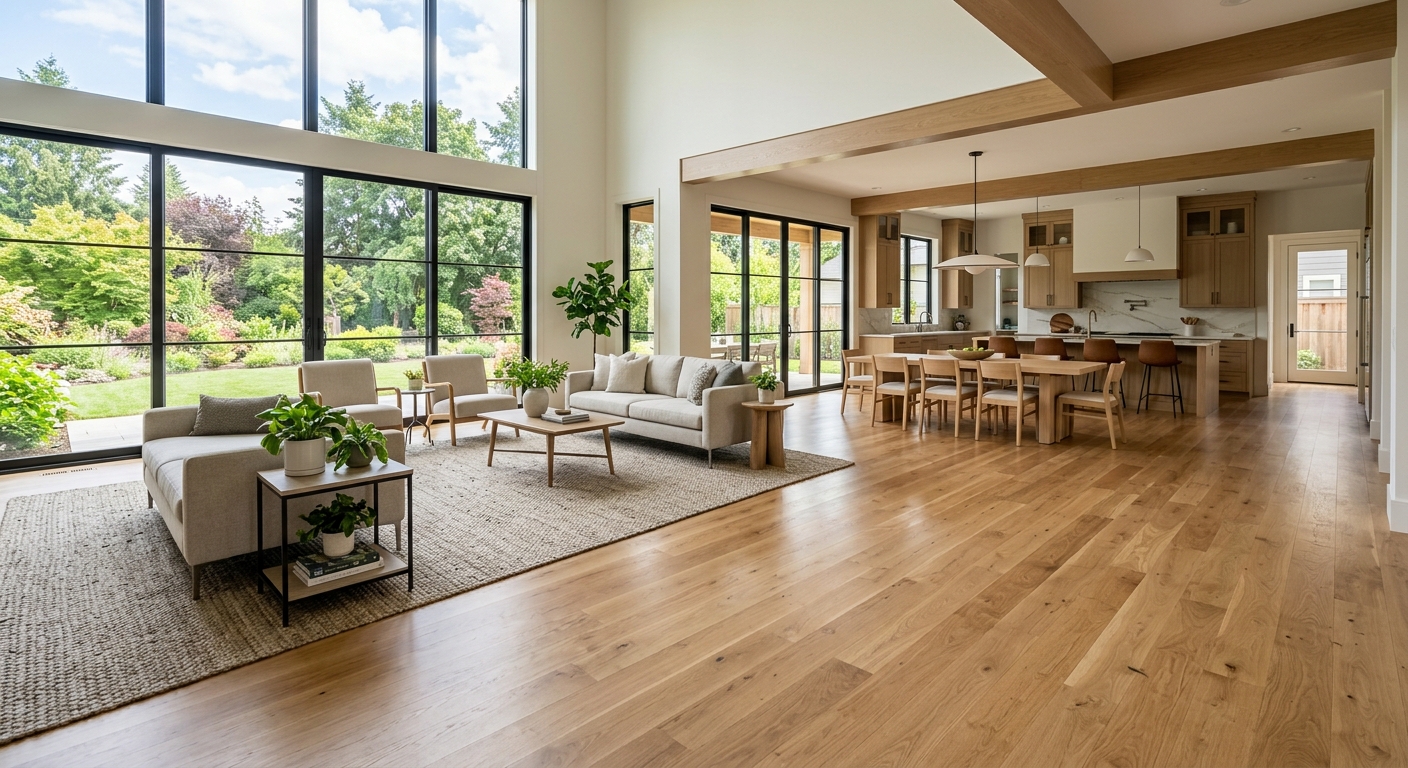
Flooring options and costs in Walkerton
In Walkerton, the right flooring choice is mostly about matching materials to how your home actually behaves through the seasons. With a population of 4,724 (Statistics Canada, 2021 Census), the local trade market is smaller than the GTA, so you’ll often see more pricing differences tied to contractor availability, scheduling, and how much prep work your subfloor needs. Walkerton’s older housing stock is common in the surrounding area and many projects still require levelling or repairs before any new surface can go down—especially when plywood needs replacement or when floors have dips. In Toronto-area homes, that kind of prep can quietly add several dollars per square foot even when the finished material looks “mid-range.”
Cost in the Toronto economic region is also shaped by indoor humidity swings across the year. Solid hardwood can look stunning, but it expands and contracts more with moisture changes, and it’s not a good fit over concrete or in basements. That’s why engineered hardwood and luxury vinyl plank (LVP) are the most frequently recommended options: they’re more dimensionally stable and better suited to below-grade or higher-humidity installs. If your Walkerton home has radiant floor heating (increasingly common in newer builds), you’ll want materials that tolerate heat cycling—engineered wood, tile, and many LVP products usually pair well, while traditional solid hardwood often doesn’t.
One area where we see steady demand for renovations is the Walkerton downtown/core and the older residential blocks just outside it, where homeowners commonly update flooring after kitchen or main-floor refreshes. From there, it’s easier to estimate your options—see the comparison table for typical per-square-foot ranges and what rooms each type performs best in.
| Type |
Best Room |
Moisture Resistance |
Lifespan |
Price per sq ft |
| Solid hardwood (nail-down, above grade only) |
Main living areas (above-grade) |
Low–moderate (humidity sensitive) |
25–60 years |
$9–$18 |
| Engineered hardwood (float or glue, above + on-grade) |
Main floor, hallways |
Moderate–high (more stable) |
20–35 years |
$8–$16 |
| Laminate (click-lock, above-grade) |
Bedrooms, low-splash areas |
Low–moderate (water can swell edges) |
10–25 years |
$4–$9 |
| Luxury vinyl plank / LVP (waterproof, any level) |
Kitchen, entry, finished basement |
High (waterproof core) |
15–25 years |
$5–$12 |
| Porcelain / ceramic tile |
Kitchen, bathrooms, entry |
Very high (waterproof when installed properly) |
30–50 years |
$12–$25 |
| Carpet (broadloom or modular tile) |
Bedrooms, stairs |
Moderate (needs good moisture management) |
7–15 years |
$5–$11 |
Prices are estimates only and vary by project scope, site access and material selection.
What affects the price of flooring in Walkerton
Two homeowners in the Toronto economic region can get very different quotes for “the same” floor—often by 30–50%—because the pricing reflects not only the material, but the amount of on-site preparation and the complexity of the install. In Walkerton, contractors may come from farther within the region depending on scheduling, which can also shift labour costs and timelines. The technical reasons behind these differences are usually predictable once you know what to ask.
First, indoor humidity swings are a major driver here. Solid hardwood expands and contracts with seasonal moisture, so it can’t be glued or floated over concrete and it performs poorly in basements. Engineered hardwood and luxury vinyl plank handle humidity better and are made for higher-moisture environments, including many below-grade situations. Second, colder weather and the growing use of radiant heat in newer Ontario homes influence what materials are appropriate—solid hardwood often gets excluded because of heat/expansion considerations, while engineered wood, tile, and many LVP products are typically more compatible.
Third, older housing stock frequently needs subfloor levelling or repair. If plywood is damaged, has voids, or your slab is uneven, the prep work can add roughly $1–$4 per square foot before the “finished” floor even starts. For example, a 300 sq ft living-area install might land near the laminate/vinyl plank band (often $4–$9 per sq ft), but if levelling and moisture mitigation are needed, the overall cost can creep upward toward the mid-range. Conversely, choosing LVP for a finished basement can reduce risk and avoid the higher prep time that comes with solid hardwood over concrete.
In Walkerton, we also see price changes based on layout: narrow hallways and many transitions increase labour, while open-concept rooms usually lower cost per square foot. The key is that the subfloor and moisture story determines whether you stay in the “budget” band (laminate/LVP) or pay for “premium-stability” installs with engineered wood or tile.
| Price Factor |
Why It Matters |
Cost Impact |
| Room area in sq ft |
Material and labour scale with surface area. |
Direct driver; bigger areas often reduce per-sq-ft labour. |
| Subfloor condition — levelling or repair needed before install |
Uneven boards, damaged plywood, or weak spots must be corrected for a flat floor. |
Can add roughly $1–$4 per sq ft for levelling/repair. |
| Moisture / below-grade install — rules out solid hardwood |
Humidity and vapour migration affect wood stability and many laminate edge joints. |
May require mitigation materials and a different product choice (engineered/LVP). |
| Material choice — solid vs. engineered vs. LVP vs. tile |
Different assemblies have different material price points and installation requirements. |
Solid hardwood and tile usually price higher than laminate/LVP. |
| Removal and disposal of existing flooring |
Old underlay, glued carpet, or damaged boards increase demolition labour. |
Often adds a noticeable fixed amount plus disposal fees. |
| Stair nosing / transitions |
Stairs and transitions are detail work—cutting, finishing, and aligning edges. |
Charged per step or per linear foot; commonly increases the total project. |
| Radiant heat compatibility — limits material options |
Some products tolerate heat cycling better than others. |
May require specific engineered/tile/LVP options and installation specs. |
| Installation method — float vs. glue-down vs. nail-down |
Assembly affects prep, adhesive/labour time, and troubleshooting. |
Glue-down and nail-down typically cost more than simple floating installs. |
Permits & regulations in Ontario
In Ontario, installing new flooring by itself generally does not require a building permit—replacing a subfloor surface, putting down laminate, engineered hardwood, LVP, or tile as a surface finish is typically considered finish work. Where permits can enter the picture is when flooring projects overlap with regulated systems or structural changes. For example, if you’re doing electrical work related to radiant floor heating circuits (wiring, modifications to circuits, or altering how in-floor heating is powered), that work often triggers electrical permitting requirements. Similarly, significant structural subfloor changes—like major structural repairs, load-bearing modifications, or substantial reconstruction—can require permits depending on scope.
For condo owners in Ontario, the bigger hurdle is usually the building rules rather than city permitting: sound transmission requirements (STC/IIC) often restrict underlay and installation methods for hard flooring on upper floors. Before you buy materials, request board approval in writing and confirm the required underlay or acoustic system for your specific unit.
To verify a Walkerton contractor before signing: (1) check their Ontario licence status using the relevant provincial contractor registry tools available online (search the contractor name/business number and verify they’re in good standing); (2) ask for a current certificate of liability insurance and confirm the coverage limits match your project scope; and (3) request proof of WSIB/WCB coverage where applicable (and get it in writing—either the clearance letter or the insurer/coverage documentation). A reputable installer will provide these quickly, with dates and project-specific details.
Best flooring for each room in your Walkerton home
Choosing flooring by room is the fastest way to get a durable result in Walkerton. Because the Toronto-area climate brings indoor humidity swings, you want materials that handle seasonal change without buckling or edge swelling. Living and dining rooms get a lot of everyday wear and sound transfer, so engineered hardwood or high-quality laminate are strong picks—warm underfoot, good appearance, and generally less fussy than solid wood. In bedrooms, you can prioritize comfort: carpet (including modular carpet tile on some layouts) helps with softness and sound dampening, though it needs normal care and prompt spot cleaning.
Kitchens are a different story—spills, wet mopping, and traffic are normal. Luxury vinyl plank (LVP) is often the practical choice because it’s waterproof and forgiving with minor accidents. If you want a “forever” look, large-format porcelain or ceramic tile provides excellent water resistance and is easy to clean, though it’s harder underfoot. Basements should be planned for below-grade realities: LVP is the clear winner in most finished basements because it’s designed to handle moisture vapour and humidity that can challenge solid wood and many laminate installs.
Bathrooms should stay in tile territory—porcelain or ceramic—so you’re not relying on joints and edges that can be stressed by standing water. If your home uses radiant floor heating (common in newer Ontario builds), engineered wood, tile, and many LVP products are usually compatible, while traditional solid hardwood often isn’t. For example, in a 250 sq ft finished basement, moving from laminate (roughly $4–$9 per sq ft) to LVP (often $5–$12 per sq ft) can be worth it because it reduces moisture risk and callbacks—so the extra cost is buying peace of mind and a better long-term outcome.
Use the table below as a practical starting point, then align it with your subfloor condition and whether the area is above- or below-grade.
| Room |
Best Material |
Why |
Moisture Risk |
Price Band per sq ft |
| Living / dining room |
Engineered hardwood |
Warm appearance with better dimensional stability than solid wood. |
Low–moderate (manage indoor humidity) |
$8–$16 |
| Master bedroom |
Carpet or engineered hardwood |
Carpet adds comfort and sound absorption; engineered keeps it more stable. |
Low |
$5–$11 |
| Secondary bedrooms |
Laminate or engineered hardwood |
Durable, easier maintenance for kids’ traffic and moving furniture. |
Low–moderate |
$4–$14 |
| Kitchen |
Luxury vinyl plank (LVP) or porcelain tile |
Handles spills and wet mopping; tile offers a very long service life. |
Moderate |
$5–$25 |
| Basement (finished) |
Luxury vinyl plank (LVP) |
Waterproof core and better tolerance for below-grade humidity conditions. |
High |
$5–$12 |
| Bathroom |
Porcelain / ceramic tile |
Waterproof when properly installed with correct underlayment and sealing. |
Very high |
$12–$25 |
How to choose a flooring contractor in Walkerton
In Walkerton and the surrounding Ontario market, the best flooring contractors stand out by how clearly they document their work before they ever start. Start by verifying Ontario compliance and coverage: request proof of licensing/registration where applicable, and ask for a current certificate of liability insurance. For worker protection, confirm WSIB/WCB coverage (or clearance documentation) so you’re not exposed if an installer is injured on your property. Don’t accept “we’re covered” as a verbal promise—get copies and confirm the dates.
Next, get 2–3 itemised written quotes. You want a line-by-line breakdown for labour and materials—product price per square foot, underlay/adhesives, subfloor preparation (levelling, plywood replacement), removal/disposal, and stairs/transitions. Avoid lump-sum quotes that don’t show scope. Read the proposal: what’s excluded (old underlay removal, floor smoothing/feathering, minor drywall touch-ups, trim undercutting), is there a moisture mitigation allowance, and is permit/paperwork included if radiant heating circuits or electrical work are part of the project? A good contractor will explain what they can’t guarantee due to existing subfloor conditions.
Finally, treat the contract like a checklist. Confirm the workmanship warranty length and whether it’s tied to the original purchaser or transferable. Keep payment schedules safe: never pay more than 10–15% upfront, and hold back a portion until the job is complete and you’ve inspected the floor. Ask for a specific start date and completion estimate in writing so delays don’t become your problem.
- Provide WSIB/WCB clearance or proof of coverage in writing (not just an insurance card photo).
- Share a current certificate of liability insurance with policy dates and coverage limits.
- Confirm licensing/registration status for the business using the Ontario online registry tools.
- Use itemised quotes: labour, underlay/adhesives, prep/levelling, removal/disposal, stairs and transitions.
- Ask how they measure moisture and what they do if moisture issues are found.
- Verify subfloor flatness expectations and the plan for levelling/plywood repair.
- Clarify exclusions: what they won’t move, what they won’t repair, and who handles disposal.
- Confirm underlayment/foam type for laminate/LVP so it matches the manufacturer’s specs.
- Ask for transition details at doorways, stairs, and between rooms (and whether nosing is included).
- Get start date, staged completion dates, and final inspection timing in writing.
- Confirm warranty terms: workmanship warranty length plus manufacturer warranty coverage.
- Payment schedule: 10–15% upfront max; holdback until completion and punch-list items are done.
Red flags we commonly see in Walkerton: (1) quotes that skip subfloor prep details but assume “it’ll be fine”; (2) no moisture plan for basements or concrete; (3) refusing to provide insurance/WSIB/WCB documents; (4) only offering a lump-sum price with no breakdown for stairs and transitions; and (5) asking for large upfront payments or pressuring you to sign before the scope is clear.
Frequently asked questions — flooring in Walkerton
How long does flooring installation take?
Install time depends on room count, subfloor condition, and how much prep is required—especially in Walkerton where older areas often need levelling or repair before flooring can perform well. A single room (around 200–300 sq ft) can sometimes be done in about 1–2 days for straightforward installs, while multi-room projects typically take longer because we stagger prep, underlayment, and transition work. If you’re doing engineered hardwood or LVP over existing surfaces, prep can still be the deciding factor: plywood replacement or feather-levelling can add days. To avoid surprises, ask your contractor for a written schedule and a specific “prep phase” timeline, not just an end date.
What flooring works with radiant heat?
For radiant floor heating in Ontario, the best compatibility usually comes from materials that can handle heat cycling without excessive movement. Engineered hardwood is commonly used because it’s more dimensionally stable than solid hardwood; porcelain/ceramic tile is also a dependable option; and many LVP products are designed to tolerate radiant heat when installed with the manufacturer-approved underlayment (or none, depending on the product). Traditional solid hardwood is more commonly restricted due to expansion and contraction risks. If radiant heating is involved, confirm the product’s installation guidelines in writing—your contractor should also explain acclimation time before install and how they’ll manage transitions and expansion gaps.
Engineered vs solid hardwood — what's the difference?
Solid hardwood is one continuous piece of real wood and it’s most reliable above-grade where indoor humidity is stable. Engineered hardwood is built in layers (a stable core with a real wood top), which makes it much better suited to Toronto-area humidity swings and certain on-grade installs. In Walkerton basements, solid hardwood is risky because of moisture vapour and the way wood can move; engineered typically performs better, but it still depends on the subfloor and moisture conditions. Price-wise, hardwood projects generally fall into the higher band—solid commonly aligns with about $9–$18 per sq ft, while engineered often lands slightly lower to mid-range depending on product quality. The best choice comes down to grade (above vs below), your concrete situation, and how the contractor handles subfloor flatness.
Do I need to level my subfloor first?
Often, yes—levelness and flatness are critical for a long-lasting floor, but what you need depends on your current subfloor. For floating floors (many laminate and some engineered installs), uneven areas can cause movement, squeaks, and joint stress. For tile, lippage and crack risk rise when the base is not properly prepared. In older Ontario homes, subfloor levelling or plywood repair is a frequent line item; it can add roughly $1–$4 per sq ft when smoothing or replacement is required. A good contractor will measure flatness, explain what minimum standard they’re aiming for, and outline exactly how they’ll correct problem areas before flooring goes down.
What's the most durable flooring for pets and kids?
For pets and kids in Walkerton, durability is usually about impact resistance, scratch resistance, and how the floor handles accidents. Luxury vinyl plank (LVP) is a top pick because it’s waterproof and typically recovers better from minor spills than laminate—especially helpful during busy seasons when tracking water and grit happens. Carpet can work in bedrooms for comfort and sound absorption, but it’s harder to keep looking clean if there are frequent accidents. Tile is also very durable (porcelain/ceramic), though it’s harder underfoot. In practical budgeting, LVP commonly sits around the $5–$12 per sq ft band, while carpet often lands about $5–$11 per sq ft. If you anticipate lots of moisture or frequent messes, LVP is usually the safer bet than solid wood or most laminate.
How do I choose flooring for humidity in Walkerton?
Humidity is the make-or-break factor in this region. Walkerton homes experience indoor humidity swings throughout the year, and Toronto-area conditions often magnify the problem in basements or over concrete. If the area is above grade, engineered hardwood or quality laminate can be a good balance, provided the subfloor is well prepared and the installation follows manufacturer specifications. If it’s below grade or you have moisture history, LVP is usually the most forgiving because waterproof products handle moisture vapour far better than solid hardwood. Solid hardwood should generally stay out of basements and away from concrete slabs due to movement risk. A smart approach is to discuss moisture testing and mitigation during your quote, and choose materials accordingly—often reducing cost risk later versus paying to replace a floor that fails early.