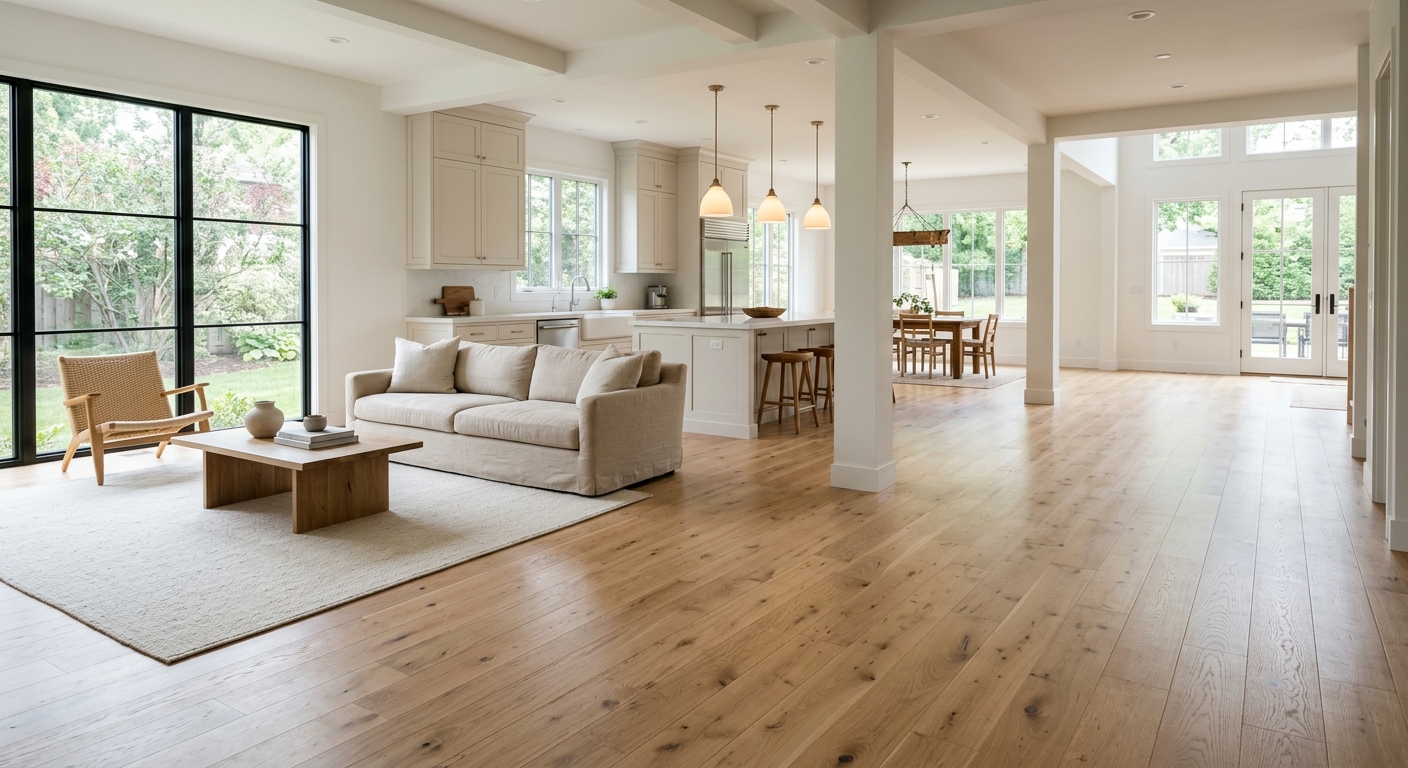
Flooring options and costs in Drumheller
Drumheller homeowners typically shop for flooring with one priority in mind: performance through Alberta’s indoor humidity swings. With a population of 7,909 (Statistics Canada, 2021 Census) and 70.9% of households owning their homes, many projects are renovations in lived-in houses—not just new builds. That matters because 62.6% of Drumheller homes were built before 1981 (Statistics Canada, 2021 Census), and older subfloors often need attention (levelling compound, patching, or even plywood/OSB overlays) before any finish can be installed to a proper flatness tolerance. In practice, that prep is a major reason you may see a $2–$4 per sq ft difference in quotes for the “same” material.
In the Lethbridge–Medicine Hat economic region, contractors commonly price moisture management as a core scope item. Basements and concrete slabs can run cooler and slightly damp, and finished basements are a big part of the local market. That’s why engineered hardwood and luxury vinyl plank (LVP) are frequently chosen over solid hardwood for on-grade and below-grade work: they handle seasonal humidity changes better and tolerate minor subfloor movement.
Another local cost driver is in-floor heating compatibility. Many newer or renovated homes use radiant heat, and that can narrow material options—solid hardwood often needs stricter controls, while most quality engineered products and many LVP lines are radiant-ready. In Drumheller, labour demand tends to be especially strong around the downtown and Heritage Springs area where turnover and renovations are common. With those drivers in mind, here’s a practical cost comparison to help you budget before you get site measurements.
| Type |
Best Room |
Moisture Resistance |
Lifespan |
Price per sq ft |
| Solid hardwood (nail-down, above grade only) |
Living rooms, hallways (no basement) |
Low to medium (not ideal on concrete/below grade) |
25–60 years |
$10–$18 |
| Engineered hardwood (float or glue, above + on-grade) |
Main floors, some on-grade areas |
Medium to high (more stable than solid) |
20–40 years |
$10–$18 |
| Laminate (click-lock, above-grade) |
Living rooms, bedrooms |
Low to medium (needs prompt dry-up) |
10–25 years |
$4–$9 |
| Luxury vinyl plank / LVP (waterproof, any level) |
Kitchen, hallways, finished basements |
High (waterproof cores) |
15–25 years |
$4–$9 |
| Porcelain / ceramic tile |
Kitchen, bathrooms, entries |
Very high (with proper grout/seal as needed) |
25–50 years |
$12–$22 |
| Carpet (broadloom or modular tile) |
Bedrooms, stairs, rec rooms |
Medium to low (avoid damp basements unless well-managed) |
8–15 years |
$4–$10 |
Prices are estimates only and vary by project scope, site access and material selection.
What affects the price of flooring in Drumheller
In Drumheller (and across Alberta), two quotes for the same floor can vary by 30–50% because the hidden work is different. You might be comparing just a material-and-labour “surface” quote, versus a true scope that includes moisture testing, subfloor levelling, underlayment, and proper transitions. In the Lethbridge–Medicine Hat region, humidity swings and below-grade moisture are the key technical drivers, and they directly influence what floor systems are recommended—and what prep costs show up on your invoice.
Solid hardwood is the most sensitive to Alberta’s indoor humidity changes. It expands and contracts, so it typically can’t be installed over concrete or used for basements without strict temperature and humidity control. That’s why solid wood often gets priced with fewer compatible options, while engineered hardwood and waterproof LVP can be installed where moisture risk is higher. For radiant heat homes, colder temperatures also influence system selection: many solid hardwoods and some laminate lines are not ideal over in-floor heating without product-specific allowances.
Older regional housing stock built before 1981 (62.6% in Drumheller) frequently needs subfloor levelling or repair before finish installation. That prep can add roughly $1–$4 per sq ft depending on whether it’s minor patching or a full plywood/OSB overlay. For example, switching from a straightforward click-lock laminate budget (often in the $4–$9 per sq ft band) to an engineered hardwood system (commonly in the $10–$18 per sq ft band) may be justified when the room has unevenness, a radiant heating zone, or you want a more stable floor over the long term.
Concrete examples you’ll actually see in Drumheller: if the basement slab requires a moisture mitigation step, LVP can reduce risk compared with laminate; if existing flooring is glued-down, removal and disposal becomes more labour-intensive and can narrow the gap between “cheap” and “properly prepped” options. Those scope differences are why your total can land far above or below the initial ballpark.
| Price Factor |
Why It Matters |
Cost Impact |
| Room area in sq ft |
Material and labour both scale with coverage and waste |
Small rooms can cost more per sq ft due to demarcations and trips |
| Subfloor condition |
Levelling and repair must meet flatness before finishes |
Often +$1–$4 per sq ft in older homes |
| Moisture / below-grade install |
Determines flooring system and whether barriers/testing are required |
May add a mitigation step or change the product choice |
| Material choice |
Solid vs. engineered vs. LVP vs. tile have different installation requirements |
Can move you from the $4–$9 band into the $10–$18 or $12–$22 bands |
| Removal and disposal of existing flooring |
How it was installed affects time and disposal fees |
Can be a major swing item for glue-down or tile |
| Stair nosing / transitions |
Custom trims and each step increase labour and trim waste |
Typically priced per step or linear foot |
| Radiant heat compatibility |
Limits which products and underlayments are acceptable |
May increase cost by restricting “budget” options |
| Installation method |
Float vs. glue-down vs. nail-down changes labour, adhesives and prep |
Can change totals by 10–20% or more on some layouts |
Permits & regulations in Alberta
In Alberta, flooring installation itself typically does not require a building permit. If you’re only replacing finish materials (carpet, laminate, LVP, engineered hardwood, or tile) over an existing sound subfloor, it’s usually considered normal renovation work without a permit.
Permits can come into play when flooring projects involve associated work. For example, structural subfloor repair (major framing or structural changes), moisture remediation systems that require specialized treatment beyond standard preparation, or work tied to in-floor heating circuits and any electrical components may require permits through the electrical process. In multi-unit buildings, condo rules can also become the “go/no-go” factor even if a municipal permit isn’t required. Many condominiums require specific underlay systems to meet sound transmission expectations (STC/IIC) and may restrict installing hard flooring on upper floors without board-approved details.
Step-by-step: (1) ask your contractor for their Alberta licence/business details and confirm the information they provide; (2) request a Certificate of Insurance showing general liability coverage, and confirm it’s active for your project date range; (3) verify their WSIB/WCB coverage (clearance letter or account verification is commonly provided); (4) ensure the quote identifies what’s included—subfloor prep, underlay, moisture testing/mitigation—before you sign.
For Drumheller condos or townhomes, also request written approval before starting hard flooring on above-grade units, especially where sound control is regulated by the corporation’s rules.
Best flooring for each room in your Drumheller home
Choosing the right flooring for Drumheller means matching the product to each room’s moisture, traffic and comfort needs—while considering Alberta’s humidity swings and the practical realities of local basements and slabs. In living and dining areas, engineered hardwood and high-quality laminate are popular because they keep rooms warm and look “finished” without the same dimensional sensitivity issues as solid wood. In the master bedroom, carpet remains a top comfort choice: it adds softness underfoot and helps absorb sound, which is useful in older homes where ceilings and subflooring weren’t built for modern quietness expectations.
Kitchens are where waterproof performance pays off. Luxury vinyl plank (LVP) or large-format porcelain tile typically wins due to splashes, frequent wet mops and quick cleanup. For basements (especially finished ones, which are common in this market), LVP is usually the clear winner: it’s designed to handle moisture vapour and below-grade conditions better than solid hardwood and most laminate, which can swell at edges if moisture gets trapped.
Bathrooms should be porcelain or ceramic tile because it’s highly water-resistant and tolerates repeated wetting. If your home has radiant heat over a main floor or basement, confirm radiant compatibility with the product and underlay. Many LVP options are radiant-friendly, while solid hardwood often has stricter requirements. In terms of cost, it can be worth it to move from a lower laminate band (often $4–$9 per sq ft) to LVP or engineered hardwood when your subfloor is uneven, you need better moisture tolerance, or you want a longer service life—otherwise you may pay twice for repairs or replacement sooner than planned.
| Room |
Best Material |
Why |
Moisture Risk |
Price Band per sq ft |
| Living / dining room |
Engineered hardwood |
Warm look with better stability for Alberta’s humidity swings |
Low (manage indoor RH and use proper underlay) |
$10–$18 |
| Master bedroom |
Carpet or engineered hardwood |
Carpet adds comfort; engineered hardwood keeps a cleaner feel |
Low (unless basement-adjacent or humid) |
$4–$10 |
| Secondary bedrooms |
Laminate or carpet |
Budget-friendly wear; easier maintenance for daily life |
Low to medium |
$4–$9 |
| Kitchen |
Luxury vinyl plank (LVP) or porcelain tile |
Handles spills and frequent cleaning with less concern for moisture |
Medium (spills and wet mops) |
$4–$22 |
| Basement (finished) |
Luxury vinyl plank (waterproof) |
Best tolerance for slab and below-grade moisture conditions |
High (cooler, damp-prone slabs) |
$4–$9 |
| Bathroom |
Porcelain / ceramic tile |
Water-resistant surface designed for wet areas |
Very high (repeated wetting) |
$12–$22 |
How to choose a flooring contractor in Drumheller
Start with verification. In Alberta, ask the contractor for (1) proof of business legitimacy and licensing details where applicable, (2) Certificate of Insurance for general liability (and any coverage that matches your job risk), and (3) WSIB/WCB coverage—often provided as a clearance letter or account verification. Don’t accept “we’re covered” as a statement; request the documentation and confirm it aligns with your project dates.
Next, get 2–3 itemised, written quotes with a clear breakdown: labour, materials, underlayment, adhesives (if glue-down), subfloor prep (levelling/patching), transitions/stair nosing, and removal/disposal. Avoid lump sums that don’t spell out exclusions. For Drumheller’s older housing stock (many homes built before 1981), subfloor prep can be the biggest hidden variable, so ensure the quote states what they will do if the slab/subfloor is out of tolerance.
Warranty matters in workmanship and product coverage. Ask for the workmanship warranty length and whether it’s transferable if you sell your home. Confirm the manufacturer warranty terms (and what voids coverage, such as improper installation or incompatible underlay). For payment schedule, a practical rule is: never pay more than 10–15% upfront; hold back the balance until the job is complete and you’ve completed a walkthrough. Finally, timeline: get a start date and completion estimate in writing, including cure/conditioning time for adhesives or any levelling products.
- Ask how they measure floor flatness before ordering materials.
- Confirm they include moisture testing/assessment where required for slabs or below-grade areas.
- Require an itemised quote (no “all-in” numbers without line items).
- Check that stair nosings and transitions are priced per step or per linear foot, with quantities shown.
- Make sure removal and disposal are included if you expect them.
- Verify underlay/foam selections for your specific product and radiant heat needs.
- Confirm transitions at doorways and between rooms are included, not “extra”.
- Ask what happens if subfloor repairs reveal additional work.
- Get the workmanship warranty in writing (not only on a brochure).
- Review the payment schedule and keep a holdback until complete.
- Ensure the crew and supervisor are identified on the quote.
- Ask for cleanup and dust control procedures during prep.
Red flags I commonly see with flooring contractors in Drumheller include: refusing to put the scope in writing, giving only a lump-sum without subfloor prep details, dismissing moisture concerns on basements (“it’ll be fine”), offering unrealistically low pricing that doesn’t include removal/disposal, and asking for most of the money upfront.
Frequently asked questions — flooring in Drumheller
What is luxury vinyl plank and is it worth it in Drumheller?
Luxury vinyl plank (LVP) is a layered, resilient flooring designed to handle household spills and everyday traffic. In Drumheller and the wider Lethbridge–Medicine Hat region, LVP often makes sense because basements and concrete slabs can feel cooler and can hold onto moisture, leading to edge swelling in some floating products. Many LVP products are waterproof, which means they’re more forgiving if humidity swings or if you get occasional dampness from below-grade conditions. Cost-wise, LVP commonly lands in the $4–$9 per sq ft band, which is competitive versus engineered hardwood in the $10–$18 band. If you want one floor system that works for main level and finished basements, LVP is usually the practical choice.
How much does flooring cost in Drumheller?
Typical installed pricing varies by material and how much prep is needed, but you can plan around the local bands for Drumheller. Hardwood projects often budget in the $10–$18 per sq ft range depending on solid vs. engineered and what’s required for subfloor prep. Laminate and LVP are commonly budgeted in the $4–$9 per sq ft band, while porcelain/ceramic tile tends to land in the $12–$22 per sq ft band. Carpet installation often sits around the $4–$10 band. The reason your quote may move up or down is usually scope: older homes (62.6% built before 1981) often require levelling or repairs first, and moisture management in basements can add cost.
Hardwood vs laminate vs vinyl plank — which is best?
There isn’t one “best” for every Drumheller room; it depends on moisture, radiant heat, and how your house behaves. Solid hardwood is beautiful but is generally best for above-grade use; it’s sensitive to humidity and usually isn’t recommended over concrete or in basements. Engineered hardwood is a stronger middle ground for many main-floor renovations because it’s more dimensionally stable. Laminate is budget-friendly (often in the $4–$9 per sq ft band) but it can be less forgiving if water gets into seams or edges. Vinyl plank (LVP) usually provides the most moisture protection and is frequently recommended for finished basements in this region. If you’re choosing for a whole-house approach, LVP often wins on practicality; for a premium “wood” feel, engineered hardwood is commonly worth the step up.
What flooring is best for a Drumheller basement?
For most finished basements in Drumheller, waterproof LVP is the safest, most cost-predictable choice. Below-grade areas can be cooler and can experience moisture vapour, and even well-kept basements can have humidity swings. Solid hardwood and many laminate products can struggle if moisture reaches seams or edges—leading to cupping, separation, or swelling. Tile can work well too, but it has a higher cost band and involves substrate prep for a flat installation surface. If you’re upgrading a basement in a home built before 1981, plan for potential subfloor levelling or patching before the new floor goes down, which can impact your total budget. A good contractor will assess the slab/subfloor and choose an installation method that matches the moisture reality, not just the product brochure.
Can I install hardwood over concrete?
In many Drumheller homes, installing solid hardwood over concrete is not the ideal route because concrete can retain moisture and is temperature-stable in a way that can stress solid wood. Solid hardwood is typically intended for above-grade applications with stricter humidity control. Engineered hardwood is often the more realistic option when working near concrete slabs because it’s more stable than solid. Even then, you’ll need proper subfloor evaluation, correct underlayment/adhesive system if required, and sometimes moisture testing or mitigation depending on conditions. If your home has radiant heat, also confirm the product is radiant-compatible and follow the manufacturer’s installation requirements. Always ask your contractor how they’ll manage moisture and what specific hardwood system they’re proposing for your slab.
How long does flooring installation take?
Installation time in Alberta usually depends on room size, product type, and prep complexity—especially in older Drumheller housing where levelling or subfloor repair may be needed. For a straightforward main-floor install with good subfloor conditions, a smaller area can be done in a couple of days, while whole-floor jobs may take several days to a week. If there’s significant levelling compound work, adhesive cure times, or moisture mitigation steps in a basement, the schedule extends. Tile generally takes longer due to layout, thin-set setting and grouting, while click-lock laminate and many LVP installs can be faster once prep is complete. Get a written timeline from your contractor before you start, including when materials arrive and when cure/conditioning steps occur.