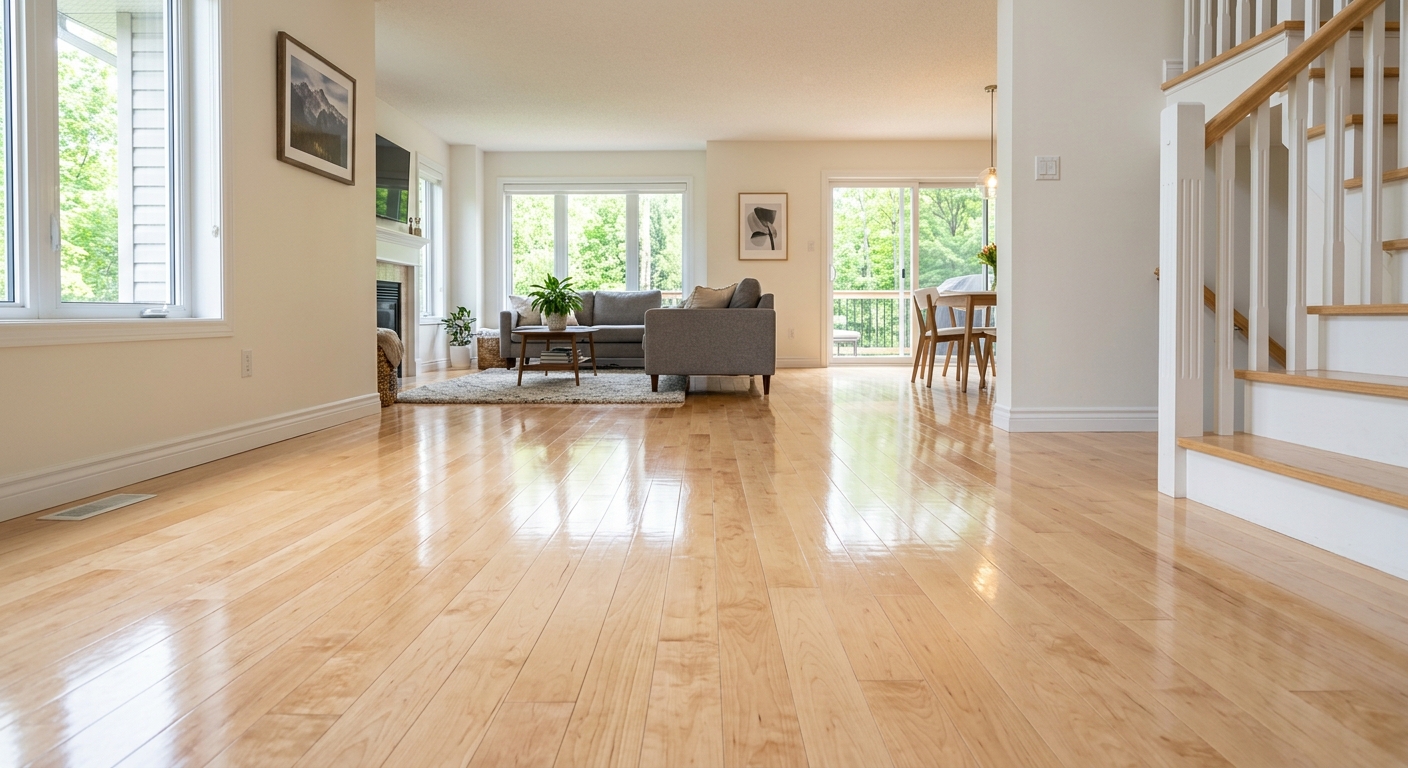
Flooring options and costs in Grande Prairie
Grande Prairie homeowners typically start their flooring decision around comfort first, then durability—and the final price comes down to how well the material handles local conditions. With 64,141 residents and 16,305 homeowner households (Statistics Canada, 2021 Census), many projects are full-home refreshes, not just a single-room upgrade. That matters because room-by-room installs change labour time, trim/transition count, and the amount of subfloor prep. It also affects cost when you’re working around older housing: 26.9% of homes in the area were built before 1981 (Statistics Canada, 2021 Census), which commonly means the subfloor may need levelling, patching, or reinforcement before flooring goes down—often adding several dollars per square foot to get everything flat and stable.
In the Athabasca–Grande Prairie–Peace River region, seasonal humidity swings and basement moisture are real cost drivers. Solid hardwood can expand and contract noticeably with humidity and performs poorly in below-grade spaces, so contractors more often steer clients toward engineered wood and luxury vinyl plank (LVP) for practical longevity. Cold-weather comfort is another factor: in homes with radiant heat, not every product is compatible, which can narrow the best options and influence labour sequencing. Trades demand is especially steady around family-heavy neighbourhoods like Prairie Mall and the newer southside areas, where many homeowners are renovating for everyday use and resale appeal.
Use the comparison table below as a grounded starting point for what you’ll typically budget for installed material and basic installation.
| Type |
Best Room |
Moisture Resistance |
Lifespan |
Price per sq ft |
| Solid hardwood (nail-down, above grade only) |
Living / dining on main floor |
Low to moderate (humidity sensitive) |
20–40 years (proper conditions) |
$10–$20 |
| Engineered hardwood (float or glue, above + on-grade) |
Living / dining, bedrooms |
Moderate to high (more stable) |
15–30 years |
$12–$21 |
| Laminate (click-lock, above-grade) |
Bedrooms, hallways |
Low to moderate (water can damage edges) |
10–20 years |
$4–$12 |
| Luxury vinyl plank / LVP (waterproof, any level) |
Main floor and finished basements |
High (waterproof core) |
15–25 years |
$6–$15 |
| Porcelain / ceramic tile |
Kitchen, bathrooms, foyers |
High (waterproof when set properly) |
25–50 years |
$12–$25 |
| Carpet (broadloom or modular tile) |
Bedrooms, media rooms |
Low to moderate (needs dry maintenance) |
7–15 years |
$5–$13 |
Prices are estimates only and vary by project scope, site access and material selection.
What affects the price of flooring in Grande Prairie
In Athabasca–Grande Prairie–Peace River, two quotes for what looks like the same flooring can swing by 30–50% because the hidden work is different. The biggest technical difference is how the floor is prepared for moisture and movement, especially across main floors that experience seasonal indoor humidity swings and basements that may hold more vapour. Solid hardwood expands and contracts with humidity, so it’s typically not suited for basements and can’t be installed over most concrete as a glued or floated “anywhere” solution. Engineered hardwood and luxury vinyl plank (LVP) handle humidity better and are the go-to options when you want consistent performance, including in below-grade spaces.
Cold-weather comfort and radiant heat compatibility also affect both material choice and labour sequencing. Where radiant heat is installed, some solid hardwood and a number of laminate products are limited or require specific underlay and acclimation steps; that can increase prep time. Another common driver in older Grande Prairie homes is the subfloor: homes built before 1981 frequently show unevenness or weakened sections that need levelling compound, patching, or repair. That kind of prep commonly adds roughly $1–$4 per square foot depending on how extensive the corrections are.
Concrete examples from local installs: (1) finishing a basement often pushes you toward LVP rather than laminate—so although laminate can start in the $4–$12 range, LVP may come out higher (often $6–$15) once you factor in its waterproof performance and the extra moisture considerations on site; (2) levelling a wavy subfloor before tile can add time and labour, because porcelain is unforgiving—tile pricing in this market typically sits around $12–$25 per square foot, but the prep can move the final number toward the top end.
| Price Factor |
Why It Matters |
Cost Impact |
| Room area in sq ft |
Materials and flooring labour scale with total surface |
Smaller jobs often cost proportionally more; larger jobs typically reduce per-sq-ft labour |
| Subfloor condition |
Levelling or repair may be required before install |
Often adds about $1–$4 per sq ft in older homes |
| Moisture / below-grade install |
Rules out solid hardwood and certain laminate/underlay setups |
Can shift the project to engineered/LVP and add vapour-related prep |
| Material choice |
Solid vs. engineered vs. LVP vs. tile differ in stability and complexity |
Solid hardwood can price closer to $10–$20; tile often $12–$25; LVP typically $6–$15 |
| Removal and disposal of existing flooring |
Old flooring affects labour time and disposal fees |
Generally increases quote vs. “install over” scenarios |
| Stair nosing / transitions |
Transitions are labour-intensive and often priced per step or per linear foot |
Can materially raise the total even if square footage is modest |
| Radiant heat compatibility |
Limits eligible flooring and underlay options |
May increase costs if special product/underlay is needed |
| Installation method |
Float, glue-down, and nail-down each require different prep and labour |
Glue-down and nail-down typically cost more than simple click/float installs |
Permits & regulations in Alberta
In Alberta, installing new flooring itself generally does not require a building permit. Where permits can come into play is when the flooring project includes associated work that touches electrical or structural systems. For example, electrical permits may be required if your scope includes in-floor heating wiring modifications, new thermostat wiring, or other electrical circuit changes tied to radiant heating. Similarly, if the project includes structural subfloor repair beyond cosmetic patching—such as significant framing adjustments or load-bearing repairs—your contractor may need to coordinate with the appropriate permitting pathway.
Condominiums add another layer: even if the work itself doesn’t require a permit, the condo corporation’s rules on sound transmission (often referenced through STC/IIC-type expectations) can restrict underlay choices and require specific products for upper floors. Before installing hardwood or tile above-grade in a multi-unit building, review your condo declaration and ask the board/management for written approval where required.
To verify a contractor in Grande Prairie, start with their Alberta licence details (via the relevant online public listings used for contractor credentials), then confirm liability insurance and request proof of WSIB/WCB coverage. Ask for: (1) a current certificate of insurance, (2) confirmation of coverage clearance (or clearance letter if they provide one), and (3) the exact scope they quoted in writing. Clear documentation protects you if something shifts during subfloor prep or if moisture mitigation is discovered mid-job.
Best flooring for each room in your Grande Prairie home
Grande Prairie homes experience cold winters, thaw cycles, and indoor humidity changes, so the “best” flooring is the one that matches the room’s moisture exposure, traffic, and comfort needs—not just the look. For living and dining areas, engineered hardwood or a high-quality laminate often hits the balance of warmth, appearance, and practicality; engineered is typically more stable during humidity swings than solid wood. In a master bedroom, carpet remains popular for comfort and sound control, but engineered hardwood is a strong option if allergies or pets drive you toward harder surfaces.
In kitchens, choose luxury vinyl plank (LVP) or large-format porcelain tile. LVP is waterproof and handles splashes and occasional standing water more reliably than laminate, which is sensitive at seams and edges. For basements (especially in Grande Prairie where vapour can be an issue), LVP is usually the clear winner because it can tolerate the moisture environment better than solid hardwood and most laminate setups. Bathrooms should be porcelain or ceramic tile only, assuming proper waterproofing practices at the wet areas. If your home has in-floor heating, look for radiant-compatible flooring options and confirm the correct subfloor prep and installation method—this can be a difference-maker for both comfort and warranty coverage.
Where price differences are justified: if a basement is $4–$12 per square foot for laminate on paper, but you add moisture mitigation and risk edge swelling, the better-value LVP range of about $6–$15 per square foot can protect your investment. Similarly, tile at $12–$25 can be worth it in bathrooms because longevity and waterproof performance often outperform cheaper materials over time.
| Room |
Best Material |
Why |
Moisture Risk |
Price Band per sq ft |
| Living / dining room |
Engineered hardwood |
Warm feel with better humidity stability than solid |
Low to moderate (humidity swings) |
$12–$21 |
| Master bedroom |
Carpet or engineered hardwood |
Comfort and quiet living; engineered holds up well for daily wear |
Low |
$5–$13 |
| Secondary bedrooms |
Laminate or engineered hardwood |
Good durability for kids’ traffic; engineered adds stability if humidity varies |
Low |
$4–$17 |
| Kitchen |
Luxury vinyl plank (LVP) or porcelain tile |
LVP is waterproof and easy to clean; tile handles spills long-term |
Moderate (spills and wet work) |
$6–$25 |
| Basement (finished) |
LVP (waterproof) |
Best match for below-grade moisture/vapour realities |
Moderate to high (vapour exposure) |
$6–$15 |
| Bathroom |
Porcelain / ceramic tile |
Waterproof surface when installed correctly; long service life |
High |
$12–$25 |
How to choose a flooring contractor in Grande Prairie
Choosing the right contractor in Grande Prairie starts with verifying credentials and coverage. In Alberta, confirm they have the appropriate business licensing for their category of work, then ask for proof of liability insurance and WSIB/WCB coverage. To check, request their insurance certificate (showing your address/contract as applicable) and a current WSIB/WCB clearance letter or equivalent verification. If they can’t provide documentation quickly, treat it as a serious warning sign.
Next, get 2–3 itemised written quotes—not a single lump sum. A good estimate breaks labour and materials out separately (including underlay, transition strips, underlayment/vapour mitigation if needed, and stair work). Read what’s excluded: disposal fees, any subfloor levelling requirements triggered by discovery, and whether permit work (for example, electrical changes tied to radiant systems) is included or billed separately. Clarify timelines in writing with a start date and completion estimate, and confirm access conditions (parking, path clearances, and whether dust control is included).
Warranty should be explicit: ask for the workmanship warranty length, the product/manufacturer warranty terms, and whether it’s transferable to you as the homeowner. Payment schedules should protect you—never pay more than about 10–15% upfront, and hold back funds until key milestones are complete and you’ve done your walkthrough. For projects involving older pre-1981 homes, make sure the quote accounts for potential subfloor unevenness; otherwise, you may face change orders once the existing floor is removed.
- Provide a written scope with room-by-room square footage and allowance items
- Show materials specs (grade, thickness, underlay type, vapour barrier/mitigation if applicable)
- List labour line items separately from material line items
- Confirm disposal and dumpster fees are included (or state the exact exclusion)
- Detail stair nosing/transitions pricing (per step or per linear foot)
- State how moisture issues are assessed (and what happens if extra prep is needed)
- Include a clear timeline: start date, duration, and completion target
- Require jobsite protections (floor protection, dust control) in the written scope
- Provide proof of liability insurance and WSIB/WCB coverage before work begins
- Explain acclimation steps for wood products in Grande Prairie’s winter conditions
- Confirm warranty coverage: workmanship + manufacturer, and any limits
- Use a payment schedule with a holdback until final walkthrough acceptance
Red flags specific to flooring installs in Grande Prairie: (1) quoting “hardwood in basements” without a moisture plan, (2) refusing to itemise removal, disposal, and transitions, (3) vague warranty language (no written workmanship term), (4) no proof of WSIB/WCB/liability coverage, and (5) insisting on a large upfront payment or only accepting verbal estimates.
Frequently asked questions — flooring in Grande Prairie
What is the best flooring for a high-traffic area in Grande Prairie?
For high-traffic areas in Grande Prairie—like entryways, main hallways, and the living zone—luxury vinyl plank (LVP) and porcelain/ceramic tile are usually the most forgiving choices. LVP is waterproof and handles the day-to-day mix of slush, tracked-in moisture, and temperature swings better than laminate; it’s also typically faster to install than tile. If you prefer a quieter feel, a commercial-grade carpet can work, but you’ll want a tougher backing and prompt stain response. Price-wise, LVP often lands around $6–$15 per sq ft installed in this market, while tile is commonly $12–$25. The best pick depends on whether your area gets frequent standing water (tile wins) or mostly tracked moisture (LVP often wins).
How do I prepare my subfloor before new flooring?
Good subfloor prep is what prevents squeaks, bouncing, and early wear. In Grande Prairie, preparation usually starts with flattening and checking for movement—especially in older homes where built-up layers, dips, or weakened sections can show up once the old flooring comes off. A contractor should inspect for moisture/vapour issues, check fastener conditions (if wood subfloor), and determine whether you need patching/levelling compound or localized repairs. For tile, the surface must meet flatness requirements; for floating floors, unevenness can stress locking systems. Expect that if your home has pre-1981 characteristics, there may be additional labour and patch work—often adding roughly $1–$4 per sq ft when levelling/repair is extensive. Ask your contractor to document findings and explain what’s included vs. what triggers a change order.
Is cork or bamboo flooring a good choice in Grande Prairie?
Cork and bamboo can look great, but in Grande Prairie they’re often more sensitive to moisture and indoor climate swings than homeowners expect. Cork is more forgiving than many hardwoods in terms of comfort and sound, yet it still needs a stable indoor environment, and below-grade moisture is a problem. Bamboo is usually installed similarly to hardwood (depending on product type), so you must watch humidity-related movement; solid versions are especially tricky for basements. If you want these materials’ look, consider higher-quality engineered formats that are explicitly recommended for your installation type and talk to your contractor about radiant heat compatibility if applicable. In practice, many homeowners choose engineered hardwood or LVP for reliability: engineered hardwood commonly carries pricing in the $12–$21 range, while waterproof LVP is typically $6–$15—often the more cost-stable path when basements or vapour are on the table.
What is the difference between floating and glued-down flooring?
Floating flooring typically “locks” together and rests over an underlay without being permanently bonded to the subfloor. This is common with click-lock laminate and many engineered or LVP products. Glued-down flooring is adhered directly to the substrate (often concrete or wood subfloor) using the manufacturer’s specified adhesive system. Floating installs can be quicker and forgiving of minor irregularities (as long as flatness requirements are met), but they still require a good underlay and appropriate vapour mitigation. Glued-down methods can improve stability and reduce some movement, but they require stricter moisture/adhesive conditions and careful surface prep. In Grande Prairie’s climate, your decision should be driven by the room and moisture profile: in basements and below-grade spaces, LVP floating/waterproof systems are typically safer than any approach that assumes low moisture exposure.
What flooring holds up best to pets in a Grande Prairie home?
For pets, the “best” flooring in Grande Prairie is usually the one that’s waterproof, scratch-resistant, and easy to maintain—because accidents and daily tracking happen year-round. Waterproof LVP is a top choice since it can handle spills and cleaning without swelling, and it’s generally more forgiving than wood when moisture is introduced. Choose a quality wear layer and a thicker plank if your pets are active. Tile is also excellent for durability and cleaning, but it can be harder on joints and is colder without radiant heat or area rugs. Carpet can work for comfort, but pet nails and odours require prompt cleaning and careful selection of carpet style and padding. Pricing typically reflects this: LVP is often $6–$15 per sq ft, while tile is commonly $12–$25. If your home has a finished basement, LVP’s waterproofing often beats pet-related concerns more consistently.
How do I fix squeaky floors in my Grande Prairie home?
Squeaks usually come from movement between subfloor layers, loosened fasteners, or gaps created by seasonal humidity changes. In Grande Prairie, where indoor moisture shifts with winter heating and seasonal humidity swings, squeaks can worsen if the subfloor isn’t solid. The first step is identifying where the noise originates: underfoot near joists, along seams, or where the subfloor panels meet. Often, fixing squeaks means re-fastening (adding screws where appropriate) or addressing a loose underlayment layer—work that should happen before new flooring. If squeaks are discovered during prep, a reputable contractor will include the repair plan in the scope or clarify how it will be handled as an add-on. Once you cover everything with new flooring, squeaks can be harder to diagnose. For homeowners with older pre-1981 construction characteristics, it’s especially worth doing a thorough subfloor check before installing engineered hardwood, laminate, or LVP.