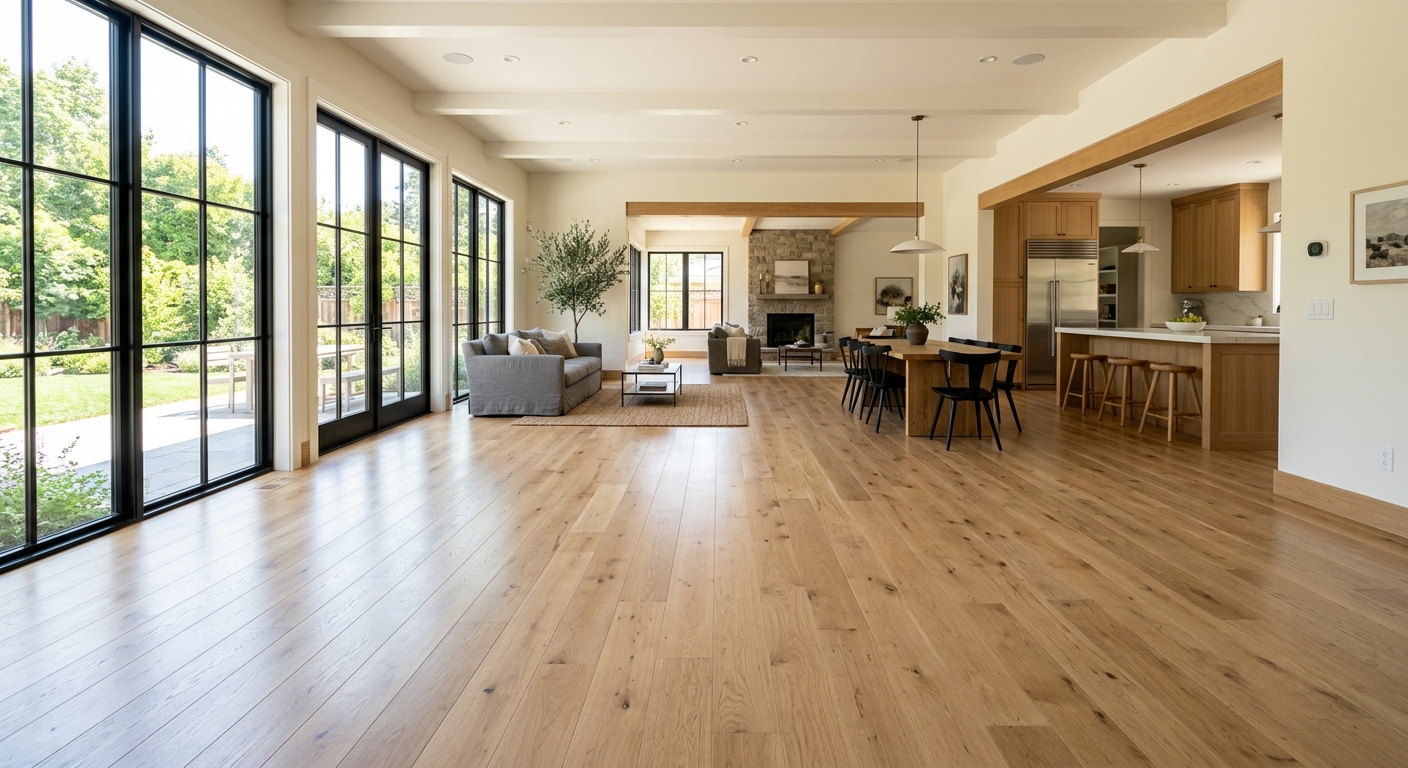
Flooring options and costs in McKenzie Lake
In McKenzie Lake, choosing new flooring is often less about “what looks best” and more about matching the material to Alberta’s dry, cold prairie swings—especially when winters are long and indoor humidity can swing quickly. With a 2021 population of 13,290 (Statistics Canada, 2021 Census), the Calgary region has steady contractor availability, but pricing still depends heavily on job complexity and material stability. One reason homeowners see wide quote ranges is that many local houses aren’t brand-new; older housing stock commonly needs subfloor levelling or repairs before a flat, warranty-grade installation is possible. In practice, that prep can add roughly $1–$4 per sq ft (and sometimes more on very uneven sections), particularly where concrete has moisture migration concerns or where there are aged plywood transitions between rooms.
Calgary-area basements also influence what’s smart to install. In the region, below-grade moisture migration through slab or foundation systems makes solid hardwood a high-risk choice for most basement projects. Engineered hardwood and waterproof LVP/SPC are generally more dimensionally stable and handle the Calgary temperature swings better. Tile is durable and water-friendly for kitchens and baths, but it’s also sensitive to flatness—so levelling and crack isolation membranes are commonly budgeted.
Trades are especially busy in family-oriented pockets like the newer residential areas around the McKenzie Lake neighbourhood growth corridor, where homeowners frequently upgrade living spaces before moving in or after completing basement development. Below is a quick cost-and-performance comparison to help you map quotes to the right material category before you compare labour line items.
| Type |
Best Room |
Moisture Resistance |
Lifespan |
Price per sq ft |
| Solid hardwood (nail-down, above grade only) |
Living / dining (dry areas) |
Low (not recommended below grade) |
25–60 years |
$8 – $15 |
| Engineered hardwood (float or glue, above + on-grade) |
Main floor & bedrooms |
Medium to high (better with humidity swings) |
20–40 years |
$7 – $13 |
| Laminate (click-lock, above-grade) |
Living rooms & hallways |
Medium (OK on-grade; avoid long-standing water) |
10–25 years |
$3 – $7 |
| Luxury vinyl plank / LVP (waterproof, any level) |
Kitchen, main floor, basement |
High (waterproof core) |
15–25 years |
$4 – $9 |
| Porcelain / ceramic tile |
Bathrooms & wet areas |
Very high (water resistant) |
25–50 years |
$6 – $12 |
| Carpet (broadloom or modular tile) |
Bedrooms |
Low to medium (avoid basements unless well-controlled) |
8–15 years |
$5 – $10 |
Prices are estimates only and vary by project scope, site access and material selection.
What affects the price of flooring in McKenzie Lake
In McKenzie Lake and across Calgary’s surrounding communities, the same “replace flooring in X sq ft” job can come in 30–50% apart because quotes usually reflect different prep levels, different product tiers, and different installation methods. Even when the material brand is similar, labour changes when your subfloor is out of level, when there’s an existing floor that must be removed carefully, or when the contractor needs to manage transitions around doorways and stair openings. Calgary’s dry, cold prairie climate also amplifies the importance of humidity control and acclimation, and that influences both material selection and installation steps.
Technically, indoor humidity swings matter. Solid hardwood expands and contracts with moisture; it also generally cannot be glued or floated over concrete and performs poorly in basements where below-grade moisture vapour is a concern. For that reason, homeowners in this region often shift to engineered hardwood or waterproof LVP/SPC for basements. Where radiant heat is present—common in modern builds—contractors may steer you away from most solid hardwood and some laminate products, which can restrict the install methods and product compatibility. Older regional housing stock frequently requires subfloor levelling or repair; that’s where you see concrete dollar impacts, often in the $1–$4 per sq ft range, and it can be more if there are multiple transition planes or damaged plywood areas.
For two real-world examples: (1) a main-floor replacement on a relatively flat plywood subfloor might land in the laminate/vinyl range, while (2) a basement with uneven concrete and moisture risk typically pushes the budget toward LVP/SPC, plus levelling prep. If you compare a $3–$7 laminate scenario to an engineered hardwood choice that sits closer to $7–$13 per sq ft, the materials may only explain part of the gap—the rest is often prep, underlayment, transitions, and disposal.
| Price Factor |
Why It Matters |
Cost Impact |
| Room area in sq ft |
Materials and labour scale directly with coverage and waste |
Baseline driver (often the biggest line item) |
| Subfloor condition |
Levelling, smoothing, sistering, or patching may be required |
Often adds about $1–$4 per sq ft in older homes |
| Moisture / below-grade install |
Determines acceptable products and whether vapour barriers are needed |
Solid hardwood may be ruled out; engineered/LVP typically used |
| Material choice |
Solid vs engineered vs LVP vs tile changes installation complexity |
Can shift by roughly $3–$8+ per sq ft depending on tier |
| Removal and disposal of existing flooring |
Breakout time, haul-away fees, and hazardous material handling (if present) |
Often a significant labour and dump-cost component |
| Stair nosing / transitions |
Custom pieces per step and extra cuts for doorways/angles |
Usually charged per step or per linear foot |
| Radiant heat compatibility |
Restricts options and requires correct underlayment/build-up |
May increase product and installation labour |
| Installation method |
Float, glue-down, or nail-down affects prep, adhesive, and timing |
Can change labour intensity and drying/acclimation steps |
Permits & regulations in Alberta
In Alberta, flooring installation itself usually does not require a building permit. If you’re simply removing an existing floor and installing new flooring over an appropriate, sound subfloor, that’s typically a scope contractors can handle without permits. However, associated work can change the permit picture. For example, electrical permits may be triggered if the project involves in-floor heating components that require circuit work, panel changes, or modifications to wiring. Structural subfloor repair can also raise the need for additional approvals if it crosses into load-bearing or engineering-related territory, particularly where there are significant framing changes.
In condominiums, even when permits aren’t required, building rules are often just as important. Many condo corporations restrict hard-surface flooring on upper floors due to sound transmission. That means you may need to use a specified underlay and follow requirements related to STC/IIC performance before installation. Always review the condo declaration and request board approval in writing if you’re planning hardwood or tile above grade in a multi-unit building.
To verify a contractor in McKenzie Lake: (1) confirm their Alberta business registration details (as applicable) and look for trade licensing credentials where required by their work scope; (2) request a certificate of liability insurance with current dates and adequate coverage; (3) ask for proof of WSIB/WCB coverage; and (4) obtain a clearance letter if required. Before any install begins, make sure those documents match the legal business name on the quote and contract.
Best flooring for each room in your McKenzie Lake home
Picking the “right” flooring in McKenzie Lake comes down to three things: moisture exposure, foot traffic, and comfort under Alberta’s temperature swings. Living and dining areas are often best served by engineered hardwood or high-quality laminate because they provide warmth and a stable feel when indoor humidity fluctuates through winter and summer. For master bedrooms, carpet is still a practical choice: it adds comfort, absorbs sound, and reduces the echo you can hear in homes with hard surfaces.
Kitchens usually benefit from luxury vinyl plank (LVP) or large-format porcelain tile. LVP is waterproof and easier to recover from everyday spills, while tile handles water extremely well and can look “finished” for years. In basements, waterproof LVP/SPC is usually the clear winner in this region because below-grade moisture vapour and occasional condensation are common concerns; solid hardwood and most laminate are not designed for those conditions. Bathrooms should be porcelain or ceramic tile—because water resistance, grout detailing, and slip resistance are central to long-term performance.
If your home has radiant heat (growing in Alberta new builds and some upgrades), talk to your contractor about compatibility before you choose a product. Many solid hardwood options are limited over radiant systems, while engineered products specifically rated for radiant can work well, and certain LVP systems are also approved when installed with the correct build-up. As a concrete budget example: if you compare $3–$7 per sq ft laminate versus $4–$9 per sq ft LVP for a basement, the extra material cost can be justified when you factor in moisture risk reduction—because the cheaper floor choice often fails first in below-grade conditions.
| Room |
Best Material |
Why |
Moisture Risk |
Price Band per sq ft |
| Living / dining room |
Engineered hardwood |
Warm feel with better stability than solid in humidity swings |
Low |
$7 – $13 |
| Master bedroom |
Carpet |
Comfort underfoot and sound absorption |
Low |
$5 – $10 |
| Secondary bedrooms |
Laminate or carpet |
Laminate for easy care; carpet for softness in kid-heavy areas |
Low to medium |
$3 – $10 |
| Kitchen |
Luxury vinyl plank (LVP) or porcelain tile |
Spill-friendly, durable finish for busy households |
Medium to high |
$4 – $12 |
| Basement (finished) |
LVP / SPC (waterproof core) |
Handles below-grade moisture and vapour fluctuations better |
High |
$4 – $9 |
| Bathroom |
Porcelain / ceramic tile |
Best long-term water performance and easy cleaning |
Very high |
$6 – $12 |
How to choose a flooring contractor in McKenzie Lake
Start by verifying credentials and coverage. In Alberta, you should ask your contractor for proof of liability insurance and WSIB/WCB coverage (and ensure the certificate is current). If the contractor can’t provide documentation up front, that’s a major warning sign—flooring jobs involve moving heavy materials, cutting planks and tile, and working in occupied homes where slips and property damage can happen. For licensing, request details about any trade certifications that apply to their scope (especially if they’re doing related subfloor repair or electrical-adjacent radiant work). Look up the business and confirm the legal entity matches the quote, then keep copies of insurance and any clearance letter.
Next, get 2–3 itemised written quotes instead of lump sums. You want labour and materials broken out, including underlay/vapour barrier details, levelling compound, transition pieces, stair nosing, and removal/disposal. Read exclusions carefully: ask whether dust control is included, whether they’re responsible for patching and smoothing, and whether the quote includes permit work if radiant electrical tie-ins are part of the job. Warranty clarity matters too: confirm the workmanship warranty length, product warranty coverage, and whether the warranty is transferable to you if you sell the home.
For payment schedule, keep it conservative—never pay more than 10–15% upfront. Hold back the remainder until the work is complete and you’ve reviewed the final walkthrough. Finally, get the start date and estimated completion timeline in writing so you can plan around winter scheduling and material delivery delays common in the Calgary market.
- Ask for a written scope: removal, levelling, underlayment/vapour barrier, transitions, and stair work.
- Get proof of liability insurance and current WSIB/WCB coverage before the first day on site.
- Request itemised pricing (materials vs labour) and waste allowances per room.
- Confirm acclimation steps for engineered, laminate, and LVP in Alberta indoor conditions.
- Ask how they handle out-of-level floors (feather finish, self-levelling, patching).
- Verify dust control and clean-up responsibilities, including stairs and trim surfaces.
- Confirm disposal/haul-away is included and how many dumpsters or dump fees apply.
- Ask whether baseboards/trim are reinstalled by them or if you’re paying separately.
- Confirm transition plans at doorways (T-mold/threshold/reducers) and stair nosings.
- Get warranty details in writing: workmanship duration and what voids it.
- Confirm product selection is final before ordering (no substitutions without approval).
- Set a payment schedule with a holdback until the final walkthrough is complete.
Common red flags in McKenzie Lake include: (1) quotes that don’t specify underlayment/vapour barrier details or levelling requirements; (2) inability to produce insurance/WSIB/WCB paperwork; (3) “too good to be true” pricing on tile where crack isolation/flatness is missing; (4) pressure to pay the full amount upfront; and (5) vague timelines with no written start/completion date.
Frequently asked questions — flooring in McKenzie Lake
How long does flooring installation take?
In McKenzie Lake, most flooring projects run faster than homeowners expect, but prep is what controls the schedule. If your subfloor is already flat and dry, a typical main-floor LVP or laminate install can move quickly—often within a few days per small area—because the click-lock boards reduce downtime. Tile usually takes longer because it demands careful layout, thinset curing, grout timelines, and sometimes additional levelling or crack isolation membrane work. Basements often add extra time for moisture-safe build-up and proper levelling, even if the material is waterproof. Delivery and acclimation can also add a day or two. As a budgeting reality check, labour differences show up too: carpet installation is commonly lower on a per-day basis, while tile and stair work tend to extend timelines—so plan accordingly if you’re targeting a move-in date.
What flooring works with radiant heat?
For radiant heat in Alberta (including Calgary-area builds and upgrades near McKenzie Lake), compatibility is the deciding factor. Many solid hardwood options are limited because they’re sensitive to heat-induced moisture and movement; contractors often recommend engineered hardwood or specific products rated for radiant systems. LVP can work well when the manufacturer explicitly approves radiant heat and when the install uses the correct underlayment/build-up—especially important because dry prairie winters can exaggerate dimensional changes. Laminate may also be approved in some cases, but not all brands and thicknesses are suitable. The safest approach is to ask your contractor to confirm the exact product model and provide written radiant-heat compatibility guidance. If the job involves any electrical circuit work for the radiant system, that associated electrical work may require permits—so confirm the scope in the contract before installation starts.
Engineered vs solid hardwood — what's the difference?
Solid hardwood is typically installed nail-down and is best kept above grade in homes where humidity stays relatively stable. In McKenzie Lake’s dry, cold prairie climate, humidity swings can still cause movement in solid boards; that’s one reason solid is generally avoided in basements or any area with below-grade moisture vapour risk. Engineered hardwood has multiple layers, usually with a stable core, so it tolerates humidity changes better and can be installed float or glue-down on approved subfloors. That makes engineered a common choice for Calgary-area main floors when homeowners want the look of hardwood without the same level of basement risk. Price-wise, you’ll commonly see engineered hardwood in the $7–$13 per sq ft range versus solid at about $8–$15 per sq ft. The real difference is how each system handles your home’s moisture conditions and how the contractor prepares the subfloor for long-term warranty coverage.
Do I need to level my subfloor first?
Often, yes—especially for tile and large-format surfaces. If a floor is out of level, finished flooring can show gaps, rocking, early wear, or joint failures. In older Calgary-area housing stock, uneven plywood or inconsistent concrete slabs can require patching, smoothing, or levelling compound; in McKenzie Lake projects, this is commonly budgeted at roughly $1–$4 per sq ft depending on how out-of-level the surface is. For click-lock LVP/laminate, minor unevenness can sometimes be tolerated with proper underlayment, but too much variance still causes joint stress. Tile is less forgiving: flatness is critical for thinset coverage and grout longevity. The best way to decide is to ask your contractor to check flatness and explain what corrective steps they’ll take before they set tile or start flooring. A good quote will describe levelling (or explicitly state it’s not required) rather than leaving it vague.
What's the most durable flooring for pets and kids?
For pets and kids in Alberta, durability is about both surface wear and real-life mess handling. Waterproof LVP/SPC is often the most practical “all-rounder” for high-traffic areas because it’s resistant to spills and easy to clean after accidents—an advantage in McKenzie Lake when busy households track in moisture from boots. Laminate can be durable too, but water exposure is riskier if spills aren’t cleaned quickly. Carpet is comfortable for kids, but it’s harder to manage with pets if you deal with frequent stains; in basements, it can also create extra moisture-management challenges. Tile is extremely tough and can be pet-friendly if you choose textured/safety-rated finishes, but it’s unforgiving if the subfloor isn’t flat. Cost-wise, LVP commonly sits around $4–$9 per sq ft, while laminate is often $3–$7 per sq ft and tile around $6–$12 per sq ft—so the “best” choice depends on whether you prioritise waterproof practicality or maximum scratch resistance.
How do I choose flooring for humidity in McKenzie Lake?
Humidity in McKenzie Lake matters because Alberta’s winters are dry and heating changes indoor moisture fast, which can cause dimensional movement in some materials. For below-grade areas, the bigger issue is moisture vapour migration through concrete, which is why solid hardwood is typically avoided in basements. Engineered hardwood is usually a safer hardwood option above grade because it tolerates humidity swings better, while waterproof LVP/SPC is typically the safest for any level when you want protection from spills and moisture-related issues. Laminate can work above grade, but it’s not as forgiving with long-standing water. A practical approach is to match the material to the risk: use tile for bathrooms, LVP for kitchens and basements, and engineered or laminate for main living areas. Also ask contractors about acclimation and the specific underlay/vapour barrier they’ll use—those steps are often where performance is won or lost. In many Calgary-area homes, older subfloors also require levelling or repair, and that can be the difference between a floor that holds up and one that fails early.