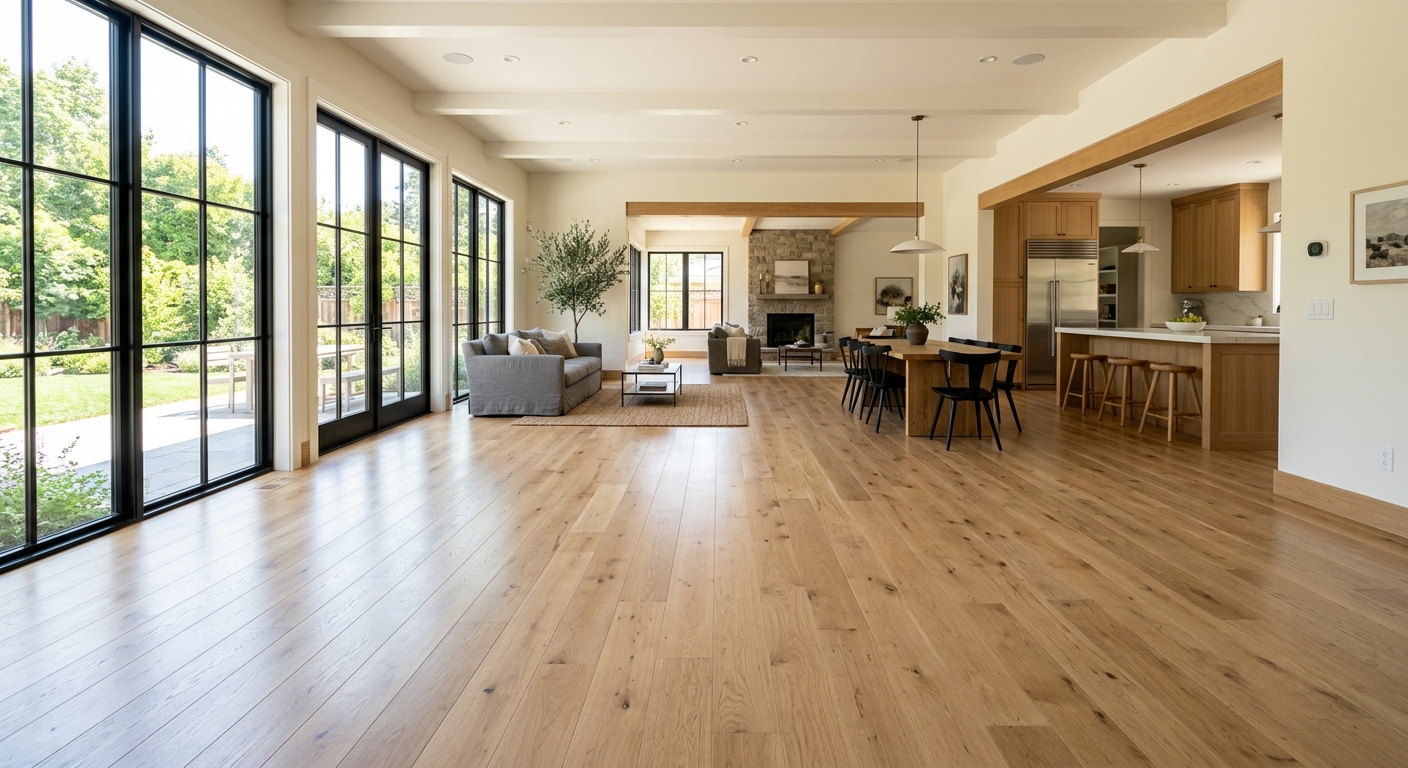
Flooring options and costs in Pincher Creek
Pincher Creek homeowners typically start comparing flooring options by price per square foot, but the real cost picture is shaped by the age and condition of local homes. With 69.2% of dwellings built before 1981, many projects begin with subfloor checks, levelling, or repairs before any new finish is installed—work that can add meaningful labour and prep materials. At the same time, Lethbridge–Medicine Hat homes see wide indoor humidity swings and a higher share of finished basements, so moisture management is a core cost driver in flooring choice. Contractors in the Pincher Creek area often recommend engineered hardwood or luxury vinyl plank (LVP) over solid hardwood for below-grade or slab areas because these products are more dimensionally stable when basement air is cooler and damp. That stability matters for both performance and warranty acceptance.
Another local cost variable is demand. In and around the downtown/centre-town core of Pincher Creek, renovations are common in older houses where people replace worn carpet and update kitchens and main-floor living areas—so scheduling and material lead times can influence the final installed price. If you’re also tying into radiant heat (more common in newer renovations across the region), product compatibility affects what can be installed over the heat system without risking gaps or failure. For most homeowners, that’s why quotes can vary even when the “same” room size is listed.
Below are realistic provincial-tier price bands you can use to sanity-check estimates before you compare quotes side-by-side.
| Type |
Best Room |
Moisture Resistance |
Lifespan |
Price per sq ft |
| Solid hardwood (nail-down, above grade only) |
Living / dining (dry, stable humidity) |
Low–moderate (not for basements or slabs) |
25–50 years |
$10–$18 |
| Engineered hardwood (float or glue, above + on-grade) |
Living areas, main floor bedrooms |
Moderate–high (better with humidity swings) |
20–40 years |
$10–$16 |
| Laminate (click-lock, above-grade) |
Bedrooms, hallways |
Moderate (avoid long-standing moisture) |
10–25 years |
$4–$9 |
| Luxury vinyl plank / LVP (waterproof, any level) |
Kitchen, hallways, finished basements |
High (waterproof core) |
15–25 years |
$4–$9 |
| Porcelain / ceramic tile |
Bathrooms, entryways, kitchens |
Very high (surface waterproofing) |
25–50 years |
$12–$22 |
| Carpet (broadloom or modular tile) |
Bedrooms, stairs (comfort/sound) |
Low–moderate (needs dry subfloor) |
8–15 years |
$4–$10 |
Prices are estimates only and vary by project scope, site access and material selection.
What affects the price of flooring in Pincher Creek
Even for the same room size, Pincher Creek flooring quotes can land 30–50% apart across the Lethbridge–Medicine Hat region and within Alberta because the quote depends on prep, moisture management, and how difficult the subfloor is to bring “to spec.” The biggest technical drivers here are indoor humidity swings and below-grade moisture. Solid hardwood expands and contracts with humidity, so it cannot be glued or floated over concrete and performs poorly in basements. Engineered hardwood and LVP are far more forgiving in humidity changes, which is why they’re common choices where basements are finished.
Colder winters also affect product compatibility. Many homeowners plan renovations around radiant heat, which increasingly shows up in Alberta’s upgraded homes. Radiant heat compatibility rules out most solid hardwood and some laminate options, and it also means the install method and underlayment matter more than homeowners expect. On older housing stock (69.2% built before 1981), uneven or aging subfloors often require levelling compound, new plywood/OSB overlay, or remediation of problem areas. That kind of correction can move your material spend and labour spend; as a rule of thumb, it can add roughly $1–$4 per square foot depending on how extensive the repairs are.
Concrete examples from Pincher Creek: if you’re replacing carpet in a main-floor living room and the plywood is flat, you might stay closer to the laminate/LVP price band (for instance, $4–$9 per square foot for materials). If the same home also needs basement slab prep and moisture testing, the “flooring cost” becomes mostly prep + installation—often pushing you toward engineered hardwood or waterproof LVP pricing logic. Finally, if you choose tile, expect the cost to climb within the $12–$22 per square foot band because substrate prep, thinset, and labour are more involved than click-lock installs.
| Price Factor |
Why It Matters |
Cost Impact |
| Room area in sq ft |
Material and labour scale directly with square footage |
Low to high; larger areas reduce complexity-per-sq-ft |
| Subfloor condition |
Levelling/repair needed before finish flooring goes down |
Can add $1–$4 per sq ft on older homes |
| Moisture / below-grade install |
Rules out solid hardwood and complicates slab/wood prep |
Often shifts you to engineered hardwood or LVP |
| Material choice |
Solid vs engineered vs LVP vs tile changes labour intensity and warranty risk |
Moves you between roughly $4–$9, $10–$18, and $12–$22 bands |
| Removal and disposal of existing flooring |
Time, hauling, and handling of underpad/adhesives |
Can materially affect the “installed” total |
| Stair nosing / transitions |
Transitions require accuracy and finishing details |
Charged per step or per linear foot; adds quickly on multi-level homes |
| Radiant heat compatibility |
Limits products and requires correct underlay/thickness |
May increase costs by selecting compatible engineered/LVP/tile systems |
| Installation method |
Float, glue-down, or nail-down affects substrate prep and labour time |
Glue-down and tile installs typically cost more than click-lock |
Permits & regulations in Alberta
In Alberta, installing flooring by itself usually does not require a building permit. You typically do not need permits to lay laminate, LVP, carpet, engineered hardwood, or tile as a finish replacement—provided you’re not altering structure. However, permits can come into play when the flooring project includes related work such as electrical or significant building-envelope changes.
Common examples of work that may require permits include: modifications to electrical circuits for in-floor heating controls, any electrical work tied to radiant heat components, and structural subfloor repairs that involve substantial framing or load-bearing adjustments (if the job scope goes beyond simple patching/leveling). If you’re dealing with moisture remediation that includes mechanical systems or plumbing changes, that can also trigger permit requirements depending on what’s being altered.
In condos, the building corporation’s rules on sound transmission are important. Upper-floor installs of hard flooring can be restricted or require specific underlay for sound (STC/IIC) performance. Always review the condo declaration and get board approval in writing before installing hardwood or tile above grade in a multi-unit building.
For a homeowner in Pincher Creek, verify your contractor by checking (1) Alberta licensing/registration where applicable for their trade scope, (2) liability insurance certificate naming you as an additional insured if required, and (3) WSIB/WCB clearance letter for their workers (or confirmation they’re registered/covered). Ask for the documents up front and confirm dates match your install window.
Best flooring for each room in your Pincher Creek home
Choosing the right flooring in Pincher Creek means matching the material to each room’s moisture exposure, traffic level, and comfort needs. For living and dining areas, many homeowners prefer engineered hardwood or a high-quality laminate: both give warmth underfoot and good durability for daily traffic while handling seasonal humidity swings better than solid hardwood. In a master bedroom, carpet is often the most comfortable choice for cold mornings, and it also helps with sound—especially in older homes where floors can transmit noise. If you want a harder surface, engineered hardwood is usually the safer “upgrade” than solid in a climate where humidity can move significantly through the year.
For kitchens, LVP (waterproof) or large-format porcelain tile are top picks because they tolerate spills, frequent cleaning, and the occasional wet cleaning of floors. In finished basements, LVP is the clear winner: it’s fully waterproof and performs better on cool, damp concrete and below-grade assemblies than solid wood or many laminate products. Bathrooms should be porcelain or ceramic tile only, since they’re designed for frequent wetting and they’re easier to keep properly sealed.
Radiant heat compatibility matters across the home, particularly in zones where renovations commonly add or upgrade in-floor heating. Many engineered hardwood and most quality LVP systems are compatible when installed with the right underlayment and acclimation, while solid hardwood typically needs stricter controls and is often avoided. As a dollar example, if LVP lands closer to the $4–$9 per square foot band in your quote, upgrading to tile may move you toward $12–$22 per square foot—worth it in bathrooms and entry areas where moisture exposure is highest, but not always justified in bedrooms.
| Room |
Best Material |
Why |
Moisture Risk |
Price Band per sq ft |
| Living / dining room |
Engineered hardwood |
Warm look, handles humidity swings better than solid |
Low (dry, stable) |
$10–$16 |
| Master bedroom |
Carpet (or engineered hardwood if you prefer hard surface) |
Comfort, sound absorption, forgiving underfoot |
Low–moderate (avoid damp subfloors) |
$4–$10 |
| Secondary bedrooms |
Laminate (click-lock) or LVP (if moisture-prone areas) |
Budget-friendly durability; easier maintenance than carpet |
Low–moderate |
$4–$9 |
| Kitchen |
Luxury vinyl plank (LVP) or porcelain tile |
Spill resistance and cleaning ease; tile adds ultimate durability |
Moderate (spills and wet cleaning) |
$4–$22 |
| Basement (finished) |
Luxury vinyl plank (LVP) |
Waterproof core and more stability over cool/damp subfloors |
High (below-grade moisture vapour) |
$4–$9 |
| Bathroom |
Porcelain / ceramic tile |
Designed for frequent wetting and long service life |
Very high |
$12–$22 |
How to choose a flooring contractor in Pincher Creek
Start by confirming your Pincher Creek contractor is properly set up for the type of work they’ll do. Ask for their liability insurance certificate (and request you be listed as additionally insured if it’s required in your contract), and ensure they have current coverage for their workers via WSIB/WCB clearance documentation. If they don’t have clear proof or can’t provide documents quickly, treat that as a serious red flag—especially if subfloor repair or tile work is included.
Get 2–3 itemised written quotes, not one lump sum. Your quote should break out labour and materials separately (including underlayment, membranes/moisture barriers, transition pieces, and any levelling compound or plywood/OSB replacement). Scope clarity is critical: ask what’s excluded—mould remediation, hazardous adhesive removal, moving furniture, or additional floor height transitions. Also confirm whether disposal and hauling are included, and whether permits are required for any radiant heat or electrical adjustments.
Warranty matters in Alberta because moisture issues can be tied to prep. Look for a workmanship warranty (often covering installation defects) and the manufacturer warranty for the product, and ask whether warranties are transferable to future owners. For payment, use a conservative schedule: never pay more than about 10–15% upfront, and hold a portion until the job is fully complete and you’ve had time to inspect finishes. For timeline, request a start date and estimated completion window in writing.
- Ask to see their liability insurance certificate and confirm coverage matches your project dates.
- Request WSIB/WCB clearance (or documented confirmation of coverage/registration) for workers.
- Insist on 2–3 itemised quotes with labour and materials separated.
- Confirm moisture testing approach on concrete/wood subfloors (what they test and what happens if results aren’t met).
- Ensure the quote lists underlayment/membranes and specifies thickness where relevant.
- Ask whether they include levelling compound, patching, or plywood/OSB overlay if the subfloor is out of flatness.
- Clarify removal scope: what’s removed, how it’s disposed of, and whether recycling/hauling fees are included.
- Check transition pricing (stair nosing, T-mouldings, reducers) and whether it’s per step/linear foot.
- Confirm radiant heat compatibility for your chosen flooring and underlay system (and request the manufacturer’s installation guidance).
- Review warranty details: workmanship length, manufacturer warranty length, and whether warranties are transferable.
- Lock in schedule terms: start date, completion target, and what weather or site factors could delay work.
- Set a payment schedule with a holdback; avoid large upfront deposits.
In Pincher Creek, common contractor red flags include: refusing to itemise the quote (especially prep/levelling), promising basement/sheet-slab performance with solid hardwood, skipping moisture testing or underlay/membrane requirements, offering no written workmanship warranty, and asking for most of the payment upfront before any prep work is shown.
Frequently asked questions — flooring in Pincher Creek
How much does flooring cost in Pincher Creek?
In Pincher Creek, flooring budgets usually swing based on prep (subfloor levelling/repair, moisture management) and the material you choose. As a practical starting point, LVP and laminate often price in the $4–$9 per square foot range for the flooring portion, while engineered/solid hardwood typically lands closer to the $10–$18 band depending on product and installation method. Tile is commonly higher, often $12–$22 per square foot because substrate prep, thinset, and layout labour are more involved. If your home is older (69.2% of dwellings built before 1981), expect a higher chance of levelling or repairs, which can add a noticeable premium. For a homeowner, the best way to predict your installed cost is to ask for an itemised quote that separates materials from labour and clearly lists what prep work is included.
Hardwood vs laminate vs vinyl plank — which is best?
“Best” depends on where the flooring will go and how much moisture risk you have. In Pincher Creek and the Lethbridge–Medicine Hat region, wide indoor humidity swings and cooler, sometimes damp basements are real considerations. Solid hardwood looks great, but it’s usually limited to above-grade dry areas; it can expand/contract and it’s not a good choice over concrete slabs or in basements. Engineered hardwood and vinyl plank (LVP) handle humidity changes better, and LVP is the most forgiving choice for kitchens and finished basements because it’s waterproof. Laminate is budget-friendly and works well above grade, but prolonged moisture or below-grade conditions can lead to edge swelling. If you want a simple rule: bedrooms/living areas = engineered hardwood or laminate; kitchens/basements = LVP; basements with moisture concerns = LVP unless you confirm subfloor moisture and product requirements.
What flooring is best for a Pincher Creek basement?
For most Pincher Creek basements, LVP is the safest pick. Basements in this region often run cool and can be damp, and that environment creates risk for wood-based products if moisture vapour gets through. LVP’s waterproof core helps protect against spill and condensation issues, and it’s more dimensionally stable when humidity shifts through Alberta’s seasons. If you prefer a wood look, engineered hardwood can work on properly prepped, on-grade subfloors, but it’s still not the first choice for below-grade moisture-prone installations unless the contractor follows the manufacturer’s moisture requirements. Also, older homes (69.2% built before 1981) frequently have subfloor unevenness, so levelling or overlay may be needed before finish flooring. A good contractor should include moisture testing and explain how they’ll handle results rather than assuming a product will “just work.”
Can I install hardwood over concrete?
Generally, solid hardwood should not be installed over concrete. Solid hardwood is typically a nail-down product and requires an above-grade, stable humidity environment. For concrete slabs, you usually need a different approach—either switch to engineered hardwood (which is designed to be more stable) or choose LVP/tile. Even with engineered hardwood, your contractor should verify the slab condition and moisture levels, and use the correct system for the product (such as approved adhesives/underlay and moisture barriers where required). In Pincher Creek, where basement and slab conditions can be cooler and damp, skipping moisture testing is one of the fastest ways to end up with cupping, gapping, or warranty disputes. If your quote doesn’t mention moisture testing and compatible installation method, ask before you sign.
How long does flooring installation take?
Timelines depend on room count, material type, and how much prep work is required. A straightforward single-room click-lock install (laminate or LVP) can be relatively quick, while tile and glued or detailed transitions take longer due to layout, setting, and curing expectations. For homes built before 1981 in the area (69.2% of dwellings), the schedule can extend because levelling compound, repairs, or plywood/OSB overlay may be needed to get the subfloor flat. If radiant heat is included, installation sequencing and product acclimation can also add time because not all products are radiant-compatible. As a homeowner, ask your contractor for a written start date and completion estimate that includes prep days, not just “install days.”
What flooring works with radiant heat?
Many homeowners in Alberta choose radiant heat, and compatibility varies by product. In this region, the common “safe” categories are most LVP options and many quality engineered hardwood systems when installed with the manufacturer-approved underlayment and thickness requirements. Tile is also commonly used with radiant heat because it handles temperature transfer well (and tile itself has excellent stability). Solid hardwood is more limited: it needs stricter temperature and humidity controls to prevent expansion/contraction issues and it’s often avoided over radiant systems unless the product and install plan are specifically approved. Laminate compatibility can be more product-specific, so you need the manufacturer’s radiant heat guidance in writing. When you get quotes in Pincher Creek, ask whether the contractor will confirm radiant compatibility with the exact SKU you’re choosing—not just the category name—and include it in the proposal scope.