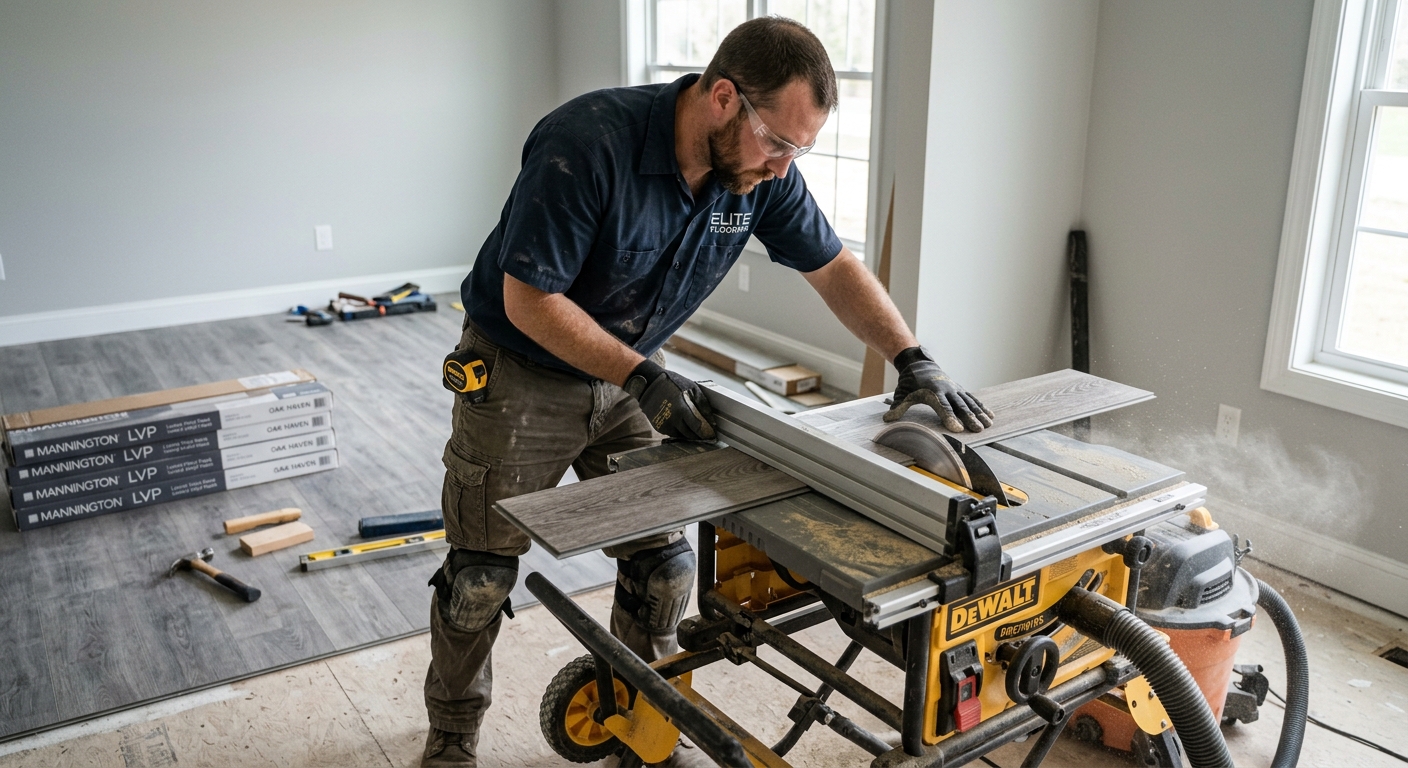
Flooring options and costs in Taber
Taber homeowners usually start by choosing between durability, comfort underfoot, and how well the material handles Lethbridge–Medicine Hat’s indoor humidity swings. With 53.3% of homes built before 1981 (Statistics Canada, 2021 Census), it’s common to run into uneven or older subfloors that need levelling compound, patching, or even new plywood before any finish goes down—especially if you’re covering a worn living-area surface or preparing for radiant heat. In practice, that prep work can add a noticeable premium on labour and materials before hardwood, vinyl, or tile installation begins.
Because basements and slabs in the region often run cooler and can feel damp, moisture management is a core cost driver. That’s why solid hardwood is typically limited to above-grade rooms with stable humidity, while engineered hardwood and luxury vinyl plank (LVP) are frequently chosen for on-grade and below-grade applications. You’ll also see wider pricing here due to installer availability and the added time required for moisture testing, underlayment selection, and subfloor upgrades on older stock.
Trade demand is strong in neighbourhoods such as North Taber, where many homes are routinely renovated to modernize kitchens and finished basements. Once the prep and moisture plan is set, the remaining price difference comes down to material type and installation method, which is why the table below uses realistic local price bands you can compare side-by-side.
| Type |
Best Room |
Moisture Resistance |
Lifespan |
Price per sq ft |
| Solid hardwood (nail-down, above grade only) |
Main floor living areas with stable humidity |
Low to moderate (requires dry, controlled indoor conditions) |
25–60 years (when installed correctly above grade) |
$10–$18 |
| Engineered hardwood (float or glue, above + on-grade) |
Living/dining, bedrooms, main floor corridors |
Moderate to high (more tolerant than solid over seasonal swings) |
20–40 years |
$10–$17 |
| Laminate (click-lock, above-grade) |
Bedrooms, hallways, low-risk zones (no flooding) |
Moderate (needs dry subfloors; seams can be vulnerable) |
10–25 years |
$4–$9 |
| Luxury vinyl plank / LVP (waterproof, any level) |
Kitchen, finished basements, entry areas |
High (waterproof core; better tolerance for humidity swings) |
15–25 years |
$5–$12 |
| Porcelain / ceramic tile |
Bathrooms, kitchens, laundry rooms |
High (tile itself resists water; subfloor prep still matters) |
25–50 years |
$12–$22 |
| Carpet (broadloom or modular tile) |
Bedrooms and family rooms |
Low to moderate (avoid for basements unless well controlled) |
8–15 years |
$6–$14 |
Prices are estimates only and vary by project scope, site access and material selection.
What affects the price of flooring in Taber
In Taber and across the Lethbridge–Medicine Hat economic region, flooring quotes for the same “look” can swing by 30–50% when prep, moisture requirements, and installation details change. A big reason is that the indoor environment in southern Alberta can swing—warm indoor air in winter can create dryness at times, while dampness can rise from basements and concrete slabs during seasonal transitions. Solid hardwood expands and contracts with humidity, so it’s not a good fit for many below-grade scenarios; it typically also can’t be installed directly over concrete. That’s why engineered hardwood and LVP (which are more dimensionally stable) are commonly priced as the practical solution for rooms where humidity control is harder.
Radiant heat compatibility also drives variation. If your Taber home has in-floor heating in a basement or main floor zone, many solid hardwood options are restricted, while many engineered products and LVP are designed to handle it better. In older homes (53.3% built before 1981), additional labour for levelling or subfloor repair is frequent—often adding roughly $1–$4 per sq ft depending on how much height correction is required. If you’re converting a finished basement, the moisture testing and underlayment/moisture-barrier steps can be the difference between a basic installation and a more complete “system” approach.
Concrete examples: (1) If a slab shows elevated moisture and you’re choosing tile, you may need extra membrane/underlayment prep and slower setting work. (2) If your living room has a lumpy subfloor, moving from an “easy” laminate install to engineered hardwood can require new plywood, which can narrow the price gap—especially if you were planning to pay for levelling anyway. Using the local bands, you might see hardwood in the $10–$18 range, while LVP is commonly closer to the $4–$9 material band; however, prep can make them converge on a final installed cost.
| Price Factor |
Why It Matters |
Cost Impact |
| Room area in sq ft |
Materials and labour scale directly with square footage |
Major; small rooms can cost more per sq ft due to minimum labour |
| Subfloor condition — levelling or repair needed before install |
Older Taber homes often require patching/plywood and self-levelling |
Typically +$1–$4 per sq ft when corrections are required |
| Moisture / below-grade install — rules out solid hardwood |
Moisture testing and barriers add steps and materials |
Can add a noticeable premium vs dry, above-grade installs |
| Material choice — solid vs. engineered vs. LVP vs. tile |
Different cores and underlay requirements change total system cost |
Wide spread; e.g., tile commonly in higher bands than LVP |
| Removal and disposal of existing flooring |
Demo effort depends on glued-down materials and waste handling |
Often adds a fixed labour + disposal charge |
| Stair nosing / transitions — charged per step or per linear foot |
Transitions take time and add trim/edge costs |
Moderate; especially in multi-floor homes |
| Radiant heat compatibility — limits material options |
Some products require specific installation specs or are not recommended |
Can shift you to engineered/LVP (higher or lower depending on product) |
| Installation method — float vs. glue-down vs. nail-down |
Labour intensity and prep requirements change |
Glueless/float is often faster; glue-down increases time and materials |
Permits & regulations in Alberta
In Alberta, installing new flooring itself usually does not require a building permit—whether you’re laying LVP, carpet, laminate, engineered hardwood, or tile. However, permits can become relevant when your flooring project includes “associated work” that touches electrical systems or structural elements. For example, if you’re modifying, adding, or repairing electrical circuits for radiant heating (in-floor heating systems), electrical work may require the proper electrical permit and inspection pathway. If you’re doing structural subfloor repair, major framing corrections, or moisture remediation involving significant system changes, you may also need additional approvals depending on scope.
In condominiums in Alberta, the corporation’s rules can be the real constraint. Sound transmission requirements (often referenced as STC/IIC targets) may restrict hard flooring on upper floors or require specific underlay and installation details. Always review your condo declaration and obtain board approval in writing before starting work—especially if you’re installing hardwood, tile, or other hard surfaces that can affect neighbours below.
To verify a contractor for your Taber project, check three things step-by-step: (1) Alberta licence status/eligibility for the specific work they perform (and whether the trade is required to be registered for their scope), (2) liability insurance—request a current certificate of insurance—and (3) WSIB/WCB coverage status for their workers. A reputable contractor should provide documentation quickly and clearly. For added safety, ask whether they can supply a clearance letter or proof of coverage directly to you for the dates of the project.
Best flooring for each room in your Taber home
Choosing the “best” flooring in Taber comes down to moisture exposure, traffic level, and how comfortable you want the floor to feel in winter. Living and dining rooms are typically great candidates for engineered hardwood or quality laminate: they deliver warmth without the strict humidity limits that solid hardwood faces over seasonal swings. In Alberta homes where radiant heat is popular, those product choices also matter—engineered hardwood and many LVP systems are generally better suited for radiant-compatible setups than solid hardwood.
For bedrooms, many homeowners prefer carpet for comfort and sound absorption, especially where foot traffic is lighter and you want a softer feel. If you want a hard surface in a bedroom, engineered hardwood is usually the safer bet than solid hardwood in homes where humidity fluctuates. Kitchens are where LVP or large-format porcelain tile often wins: spills are common, cleaning is frequent, and water resistance matters. For bathrooms, porcelain or ceramic tile is the practical standard because it’s designed to handle frequent wet cleaning and splashes.
Basements (finished) are where regional conditions really show up. LVP is usually the clear winner because it’s waterproof and tolerant of below-grade moisture management strategies; it’s also typically more forgiving if the subfloor is cooler. Solid hardwood and most laminate are more likely to run into problems in basements due to humidity and temperature behaviour over time. For example, it may cost more to install tile at $12–$22 per sq ft than LVP at $4–$9 per sq ft, but tile is justified in bathrooms; in basements, the “value” often shifts because moisture tolerance prevents costly replacements.
| Room |
Best Material |
Why |
Moisture Risk |
Price Band per sq ft |
| Living / dining room |
Engineered hardwood |
Warm feel, realistic stability for Taber’s humidity swings, good long-term value |
Low to moderate (depends on basement humidity migration) |
$10–$17 |
| Master bedroom |
Carpet or engineered hardwood |
Carpet adds comfort; engineered hardwood keeps a cleaner look with less maintenance |
Low (if well ventilated) |
$6–$14 |
| Secondary bedrooms |
Laminate (click-lock) or carpet |
Laminate offers easy care; carpet improves sound and warmth |
Low (avoid wet spills and wet-clean methods) |
$4–$11 |
| Kitchen |
Luxury vinyl plank (LVP) or porcelain tile |
LVP handles spills well; tile is durable and easy to clean |
Moderate (spills and sink area) |
$5–$22 |
| Basement (finished) |
Luxury vinyl plank (LVP) |
Waterproof core and better tolerance for cool, damp subfloor conditions |
High (below-grade moisture potential) |
$5–$12 |
| Bathroom |
Porcelain / ceramic tile |
Designed for wet cleaning; long service life when subfloor is properly prepped |
High |
$12–$22 |
How to choose a flooring contractor in Taber
Picking a contractor in Taber is mostly about checking proof, confirming scope, and making sure the quote reflects your home’s subfloor and moisture reality—not just the surface material. Start by verifying Alberta licensing or registration where applicable for the work they do. Next, request liability insurance documentation (a certificate of insurance) and verify WSIB/WCB coverage for their workers. If they can’t produce clear paperwork before work begins, treat that as a serious warning. A good flooring company will also be comfortable explaining what they do for moisture testing and subfloor preparation.
Then get 2–3 itemised written quotes with a labour + material breakdown. You should be able to see line items for removal/disposal, subfloor prep (levelling, patching, plywood), underlayment/moisture barrier, transitions, and stair work. Avoid lump sums that hide the real differences. Read exclusions carefully: ask whether permits are included if radiant heating electrical work triggers anything, whether subfloor remediation is included if the moisture test fails, and whether furniture moving and floor protection are part of the price.
Warranty matters too. Ask for the workmanship warranty length, whether the product manufacturer warranty is included, and if warranties are transferable to future owners. Payment schedules should be conservative: never pay more than 10–15% upfront, and hold a portion until the job is complete and clean-up is finished. Finally, insist on a written timeline with start date and completion estimate.
- Confirm they provide moisture-testing steps and document results when installing over slabs or below grade.
- Request the exact underlayment/moisture barrier plan for LVP, engineered, or tile.
- Make sure the quote lists transition pieces, stair nosing, and edge trims (if applicable).
- Verify liability insurance and WSIB/WCB clearance for their crew before installation day.
- Ask what happens if subfloor repairs exceed an agreed allowance (and how it’s priced).
- Check that the scope includes removal and disposal, or provide a clear credit if you handle it.
- Confirm whether floor levelling is included up to a specific maximum thickness.
- Get proof of product warranty registration instructions from the contractor.
- Request samples of the actual product and colour/grade being quoted.
- Ask whether the installer will acclimate LVP/hardwood materials before install (and how long).
- Review start date, estimated duration, and dust-control/cleanup plan in writing.
- Ensure the contract spells out change-order rules when conditions differ from the estimate.
In Taber, common red flags include: (1) quoting solid hardwood in a basement without addressing moisture and humidity controls, (2) refusing to provide itemised line items for prep and underlay, (3) collecting large deposits up front, (4) lacking proof of WSIB/WCB and liability insurance, and (5) skipping moisture testing when installing over concrete or below-grade areas.
Frequently asked questions — flooring in Taber
What's the most durable flooring for pets and kids?
For most Taber homes with pets and kids, luxury vinyl plank (LVP) is the top “durability per hassle” choice because it’s waterproof, handles typical spills and accidents, and is usually more resistant to dents than you’d expect from thinner floors. In many LVP installations, the overall system matters too: proper subfloor prep and correct underlayment reduce bounce, which helps protect joints and click-lock edges. Carpet can be comfortable, but it stains and holds odours faster unless you’re very proactive with cleanup. If you prefer hardwood, engineered hardwood is often the safer compromise versus solid hardwood when humidity swings are a concern. Budget-wise, many LVP options land around the $4–$9 band, while true tile and higher-end systems can move toward $12–$22 per sq ft.
How do I choose flooring for humidity in Taber?
Humidity is the main reason quotes in Taber can differ by a lot, especially for basements and rooms connected to them. Lethbridge–Medicine Hat properties often experience indoor humidity swings, and concrete or below-grade areas can stay cooler and feel damp. Solid hardwood is usually limited to above-grade installs because it expands and contracts with humidity and generally performs poorly in basements. Engineered hardwood and LVP are typically better tolerated because they’re more dimensionally stable and can work with moisture management strategies. If you have radiant heat, that also changes the product list—many solid hardwood options aren’t suitable unless strict requirements are met. For older housing stock (53.3% built before 1981), plan for levelling or subfloor repairs first, since uneven surfaces can worsen moisture-related issues.
Do condos restrict hard flooring?
Yes—often, in Alberta condo buildings the corporation’s rules can restrict or require specific installation details for hard flooring. The goal is usually to manage impact noise and sound transmission (STC/IIC requirements). That means even if you want engineered hardwood or tile, you may need approved underlay, a specific installation method, or a board approval process before work starts. In some buildings, the permitted products and underlay thickness are documented in the condo’s declaration or in board policies. Before you order materials, ask the corporation for written requirements and keep it in your project file. This is especially important in Taber because many homeowners renovated older units and discovered the board’s sound rules after purchasing materials.
How do I compare flooring quotes?
Compare quotes the way you’d compare a car—line item by line item, not just by total price. In Taber, the biggest quote differences usually come from subfloor prep (levelling/plywood), moisture testing and barriers, underlayment selection, removal/disposal, and transitions/stair work. Ask for an itemised breakdown that separates labour from materials and lists what’s included for cleanup and waste. Confirm whether the quote assumes a dry slab or includes remediation if moisture readings exceed spec. Also check product specs: the same “category” name can vary widely in wear layer, thickness, and installation requirements. As a price reference, if you’re choosing LVP you’ll often see totals tied to the $4–$9 band, while tile often aligns closer to $12–$22 per sq ft.
Can I install flooring over existing tile in Taber?
Sometimes, but it depends on the condition of the tile and what flooring you’re installing over it. If the existing tile is well-bonded, level, and not cracked or loose, some flooring types can be installed over it with the correct transition plan—often using a compatible underlayment system. However, tile adds height, which can affect door clearances and transition heights between rooms. For LVP, most installers still want a smooth, properly prepared surface and may require grinding high spots or adding a smoothing layer to meet flatness requirements. For engineered hardwood and laminate, the risk is that any movement or unevenness in the tile layer transfers through and affects joints. In basements, your moisture plan remains critical, even over tile. If your tile is loose or uneven, removal is often cheaper long-term than troubleshooting movement later.
What is the best flooring for a high-traffic area in Taber?
For high-traffic areas—entries, main corridors, and open living spaces—durability and joint stability matter more than looks alone. LVP is usually the practical winner because it’s waterproof, tolerates everyday spills, and handles seasonal humidity swings better than solid hardwood. If you want a more traditional look, engineered hardwood can work well when the subfloor is flat and moisture-tested, and when the installation follows product specs for humidity. Carpet can be used, but in high-traffic zones it wears faster and can trap grit that scratches backing over time. Tile is also extremely durable and easy to clean, but it requires excellent subfloor preparation and can be higher cost; local tile pricing commonly falls in the $12–$22 per sq ft range. The right choice in Taber often balances long-term wear with the moisture realities of older homes built before 1981 (Statistics Canada, 2021 Census).