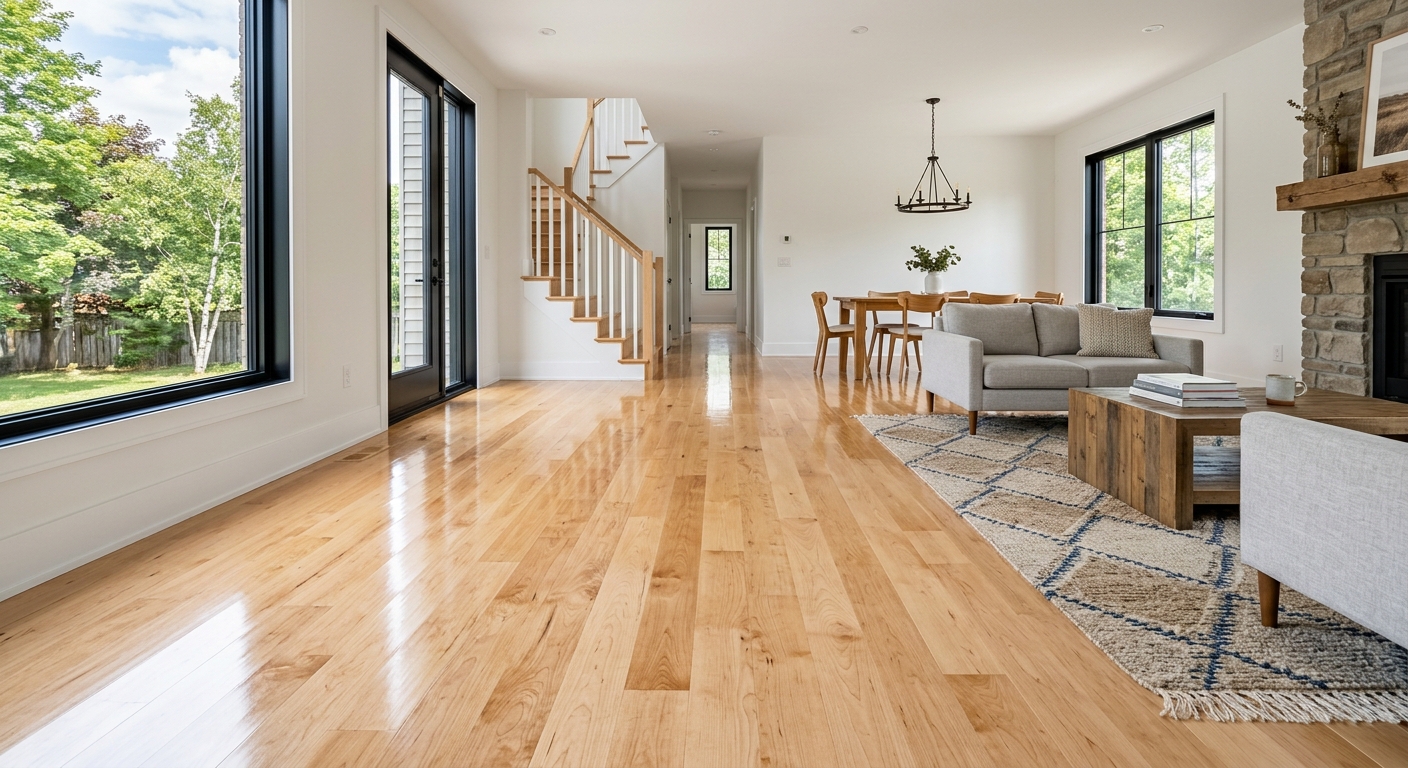
Flooring options and costs in Cadboro Bay
Cadboro Bay homeowners usually have plenty of choices, but the “right” one depends on where the flooring will live—especially in our Lower Mainland–Southwest, where indoor humidity swings can be noticeable in winter and the shoulder seasons. With a local population of about 4,000 people (Statistics Canada, 2021 Census), many projects are concentrated in established neighbourhood streets, and contractor scheduling can tighten when multiple homes start renovations at the same time.
One cost driver that shows up again and again here is older housing stock and uneven subfloors. In many Greater Victoria-style properties and older renovations around Cadboro Bay, you’ll often need subfloor levelling or repair before installing new materials—think $1–$3 per sq ft (and in more uneven areas, even higher depending on how much patching is required). That’s why two quotes for “the same floor” can differ: levelling and moisture prep are labour-heavy, and they’re sometimes discovered only after the existing flooring is removed.
Climate also matters. In the Lower Mainland–Southwest’s wet, marine conditions, moisture can wick through concrete in slab-on-grade areas, so we typically avoid solid hardwood below grade and recommend engineered wood or luxury vinyl plank (LVP) there. If you’re working over radiant heat (increasing in newer builds), it can further narrow the best options. All of this leads naturally into a practical apples-to-apples comparison in the table below.
| Type |
Best Room |
Moisture Resistance |
Lifespan |
Price per sq ft |
| Solid hardwood (nail-down, above grade only) |
Main living areas (not basements) |
Low below grade; sensitive to humidity swings |
25–50 years (with proper care) |
$9 – $18 |
| Engineered hardwood (float or glue, above + on-grade) |
Living rooms, bedrooms, hallways |
Medium to high with correct underlayment |
20–35 years |
$10 – $16 |
| Laminate (click-lock, above-grade) |
Bedrooms, dining rooms (dry areas) |
Medium; can swell if water sits |
10–25 years |
$4 – $10 |
| Luxury vinyl plank / LVP (waterproof, any level) |
Basements, kitchens, entryways |
High; waterproof core is forgiving |
15–25 years |
$5 – $12 |
| Porcelain / ceramic tile |
Bathrooms, kitchens, foyers |
High; excellent for wet conditions |
25–50 years |
$10 – $20 |
| Carpet (broadloom or modular tile) |
Bedrooms, stairs (comfort) |
Low to medium; needs dry, clean maintenance |
8–15 years |
$4 – $8 |
Prices are estimates only and vary by project scope, site access and material selection.
What affects the price of flooring in Cadboro Bay
In Cadboro Bay and across the Lower Mainland–Southwest, it’s common to see the same flooring “idea” come in 30–50% apart from one contractor to another. The material price might be similar, but the quote can change dramatically once you factor in moisture control prep, subfloor correction, and how the installer handles transitions, waste, and labour rate differences. In practice, labour is a major cost driver in Greater Vancouver, and that pressure flows into our market when trades are busy.
Technically, indoor humidity swings are a key issue. Solid hardwood expands and contracts with moisture—so it can’t be glued or floated over concrete in basement or slab-on-grade situations, and it performs poorly when vapour moves through the slab. Engineered hardwood and luxury vinyl plank (LVP) handle humidity far better because they’re built in layers (and some LVP uses a waterproof PVC core). If colder inland pockets or radiant heat are part of your home’s setup, radiant compatibility becomes another limiter: most solid hardwood needs careful specification, while LVP, tile, and many rated laminates are typically easier to match.
Older regional housing stock also plays a role. If the plywood is uneven, you may need levelling compound or replacement sections before install, commonly adding about $1–$4 per sq ft depending on how much correction is required. For example, an “engineered hardwood install” over a flat subfloor might land near the $10–$16 per sq ft range, but the same product over a subfloor that needs extensive patching can climb toward the top of the band. Likewise, LVP can look like a budget pick at $5–$12 per sq ft, but if stairs, tear-out, and flooring transitions are extensive, the total can narrow the price gap versus engineered wood.
| Price Factor |
Why It Matters |
Cost Impact |
| Room area in sq ft |
Materials and labour scale directly with square footage |
Higher total cost on larger areas; waste/trim becomes a larger line item |
| Subfloor condition — levelling or repair needed |
Uneven surfaces can cause hollow spots, movement, and early failure |
Often adds roughly $1–$3 per sq ft (sometimes more on heavily uneven floors) |
| Moisture / below-grade install — rules out solid hardwood |
Concrete moisture vapour and humidity swings can damage moisture-sensitive materials |
Can require engineered wood or LVP; solid hardwood below grade is usually avoided |
| Material choice — solid vs. engineered vs. LVP vs. tile |
Different build types respond differently to humidity and temperature |
Shifts you between typical bands (e.g., LVP often $5–$12; tile $10–$20) |
| Removal and disposal of existing flooring |
Demo takes labour time and adds disposal charges |
Often increases the project by several hundred to over $1,000 depending on layers |
| Stair nosing / transitions |
Transitions and stair components are custom-cut and labour intensive |
Charged per step or per linear foot; can materially affect the final total |
| Radiant heat compatibility |
Some materials must be rated and installed with correct gap/underlay rules |
May exclude solid hardwood and some laminate; can push you toward LVP/tile/engineered |
| Installation method — float vs. glue-down vs. nail-down |
Different methods require different prep, labour, and sometimes adhesives/underlay |
Glue-down and nail-down can be higher labour than floating, especially on uneven bases |
Permits & regulations in British Columbia
In British Columbia, flooring installation itself generally does not require a building permit. However, permits can come into play if your project includes related work that affects building services or structure. For example, if you’re repairing significant subfloor damage that involves structural changes, addressing moisture remediation that requires prescribed methods, or adding/altering in-floor heating circuits, those parts may require electrical or other approvals depending on what’s being modified. If you’re working in a multi-unit building (common around the broader Lower Mainland), condo rules on sound transmission (often discussed in terms of STC/IIC) can also restrict hard-surface installs unless you use an approved underlay system.
Here’s how a Cadboro Bay homeowner can verify a contractor properly, step-by-step:
- Ask for the contractor’s licence details and confirm coverage with the appropriate provincial/industry registry information they provide.
- Request a certificate of liability insurance (and verify the worksite/address coverage and policy dates).
- Confirm Workers’ Compensation coverage (WSIB/WCB) by asking for documentation or clearance letter.
- Get the quote and scope in writing, including what subfloor moisture checks or levelling prep will be done.
- If you’re in a condo, request board approval in writing before starting—especially for hardwood or tile on upper floors.
Finally, remember that the Lower Mainland–Southwest’s moisture conditions can drive extra prep work; a licensed, insured contractor is the best protection when the floor you see today isn’t the subfloor you’ll find after demo.
Best flooring for each room in your Cadboro Bay home
In Cadboro Bay, the “best” flooring matches three realities: moisture tolerance in our wet, marine climate, day-to-day comfort underfoot, and how your home’s subfloor behaves over seasons. Living and dining areas typically do best with engineered hardwood or high-quality laminate—both bring warmth without the same humidity sensitivity as solid hardwood. For bedrooms, carpet is hard to beat for comfort and sound, while engineered wood can also work well if your home stays consistently dry.
For the kitchen, go with luxury vinyl plank (LVP) or large-format porcelain tile. LVP’s waterproof core handles spills and everyday splashes well, and tile remains the top choice when cleaning and moisture resistance are priorities. In basements, the climate and construction matter most: LVP is the clear winner for finished below-grade spaces because it can handle minor vapour and moisture movement that solid hardwood and many laminates are not designed for. Bathrooms should be porcelain or ceramic tile only—no shortcuts on wet areas.
If your home has radiant heat (or you’re planning it), choose products rated for in-floor heating. In those situations, engineered hardwood and tile usually work well with the right installation specs, while many solid hardwood scenarios require more careful engineering. A quick pricing reality: if an engineered hardwood option lands around $10–$16 per sq ft and LVP is $5–$12 per sq ft, the extra cost is usually justified in main living areas where you want the look and warmth of wood and the subfloor is stable. In basements, that justification often flips, because LVP avoids the moisture limitations that can increase risk and rework.
| Room |
Best Material |
Why |
Moisture Risk |
Price Band per sq ft |
| Living / dining room |
Engineered hardwood |
Warm look, stable performance with proper underlay and humidity control |
Low to medium (manage indoor humidity swings) |
$10 – $16 |
| Master bedroom |
Carpet or engineered hardwood |
Carpet adds comfort and sound absorption; engineered wood balances style and stability |
Low |
$4 – $14 |
| Secondary bedrooms |
Laminate or carpet |
Laminate is cost-effective for dry rooms; carpet helps with noise |
Low |
$4 – $10 |
| Kitchen |
Luxury vinyl plank (LVP) or porcelain tile |
Easy cleaning; waterproof LVP and durable tile handle spills and traffic |
Medium (wet messes are common) |
$5 – $20 |
| Basement (finished) |
Luxury vinyl plank (LVP) |
Built for below-grade moisture tolerance; reduces risk compared with solid wood |
High (vapour/condensation risk) |
$5 – $12 |
| Bathroom |
Porcelain / ceramic tile |
Designed for wet areas; long life with correct underlayment and grout practices |
Very high |
$10 – $20 |
How to choose a flooring contractor in Cadboro Bay
Choosing the right contractor in Cadboro Bay starts with verifying British Columbia compliance and proof of coverage. Ask for their business licence information (as applicable), then request a certificate of liability insurance and confirm it’s active for the job dates and includes your worksite. Next, verify workers’ compensation coverage (WSIB/WCB) by asking for a clearance letter or current documentation—this matters because you do not want your household exposed if a worker gets hurt.
Then get 2–3 itemised written quotes. You want a breakdown that separates labour from materials (including underlay, adhesives, levelling/patching, transitions, and stair nosing). Avoid lump-sum quotes that don’t identify exclusions. Read the scope carefully for what’s not included: does the price include moving furniture, demo and disposal, subfloor moisture testing, levelling prep, and caulking/finishing? If permits or approvals are required for related electrical or condo sound rules, confirm who handles what and whether that cost is included.
Warranties should be specific. Look for a workmanship warranty length and ask whether it transfers if you sell your home. Confirm the product/manufacturer warranty terms as well. For payment schedules, never pay more than 10–15% upfront; hold back the remainder until the job is complete and you’ve confirmed punch-list items are addressed. Finally, ask for a start date and a realistic completion timeline in writing.
- Confirm documentation: liability insurance certificate with your job address.
- Verify WSIB/WCB clearance letter before work begins.
- Require a detailed, itemised quote (labour, materials, underlay, adhesives, levelling).
- Ask whether moisture testing or vapour-control steps are included for on-grade/basement areas.
- Check the scope for demo and disposal—how many layers will they remove?
- Ensure underlayment type is specified (especially for floating floors and sound control).
- Get transition/stair pricing defined (per step or per linear foot).
- Confirm radiant heat compatibility when relevant (and what products are permitted).
- Ask how they handle uneven subfloors (smoothing compound vs. subfloor repair).
- Require a written timeline and crew availability window.
- Review the warranty: workmanship length, product warranty, and transferability.
- Use a staged payment schedule; don’t front-load the project.
In Cadboro Bay, common red flags include: a quote that doesn’t mention subfloor prep or moisture considerations, refusing to provide proof of insurance/WSIB/WCB, a vague scope that excludes transitions or stair work without explanation, pushing for large upfront payments, and inconsistent product specs (no underlay/adhesive method stated for engineered or LVP).
Frequently asked questions — flooring in Cadboro Bay
What is the best flooring for a high-traffic area in Cadboro Bay?
For high-traffic areas in Cadboro Bay, the best balance is usually luxury vinyl plank (LVP) or engineered hardwood—depending on whether your space is on-grade/slab or above-grade. In homes where moisture can wick through concrete in winter, LVP’s waterproof core is a safer choice for entries, hallways, and even finished basements. If you want a wood look, engineered hardwood can handle everyday wear well and typically performs better than solid hardwood when installed with the correct underlayment and expansion-gap approach for the room. Pricing is also practical: you’ll often see LVP installed in the $5 – $12 per sq ft range, while engineered hardwood commonly sits around $10 – $16 per sq ft. Either way, proper subfloor prep and transition detailing matter as much as the material in our marine-climate homes.
How do I prepare my subfloor before new flooring?
Subfloor prep is where most Cadboro Bay flooring projects succeed or struggle—especially in the Lower Mainland–Southwest’s wet, marine climate where indoor humidity swings and below-grade moisture can show up. Start by having your installer check for flatness, not just “looks level.” Uneven plywood or concrete can require levelling or patching; older housing stock often needs repair and smoothing that commonly adds around $1–$4 per sq ft to the job depending on how much work is required. Next, confirm moisture conditions: for on-grade or basement areas, the installer should address moisture vapour management with the right system (and that’s one reason solid hardwood is usually avoided below grade). Finally, make sure any old adhesive, nails, or loose boards are removed/secured before installation, and that the subfloor is clean and properly acclimatized according to the product instructions.
Is cork or bamboo flooring a good choice in Cadboro Bay?
Cork and bamboo can look great, but they’re not my first pick for every Cadboro Bay situation because our British Columbia marine environment creates humidity swings and occasional moisture pressure from below in slab-on-grade homes. Cork is naturally comfortable and can dampen sound, yet it can still react to prolonged dampness, and it requires careful installation and moisture management. Bamboo varies widely in quality; some products behave like engineered options, while others can be more moisture-sensitive depending on the build and finish. If you want a natural product look, I usually steer homeowners toward engineered hardwood or carefully selected products rated for humidity exposure, especially for areas near basements or exterior-facing walls. If your installer can demonstrate that the exact product is rated for your installation conditions, it can be workable—otherwise, LVP around $5 – $12 per sq ft often provides similar comfort with less humidity risk.
What is the difference between floating and glued-down flooring?
Floating floors are installed so the planks click together and “float” over the subfloor using an underlay—there’s no direct adhesive bond to the concrete or plywood. Glued-down flooring is fixed in place with adhesive, creating a tighter bond but requiring stricter subfloor flatness and correct moisture-safe adhesive systems. In British Columbia, floating can be a great option for engineered and some laminate when the underlay system is correct, but it still depends on stable humidity conditions. For below-grade or on-grade situations with potential moisture vapour, the right choice is often LVP waterproof cores or engineered wood with appropriate moisture strategy, not a casual “either way.” The installation method also affects labour and prep time, which is one reason quotes can vary even when the material is similar.
What flooring holds up best to pets in a Cadboro Bay home?
For pet-heavy households in Cadboro Bay, durability usually comes down to scratch resistance, spill tolerance, and ease of cleaning. LVP is often the best performer because it’s waterproof and handles accidents without worrying about water swelling seams—particularly helpful in homes where moisture conditions vary seasonally. If you prefer a wood look, engineered hardwood can work very well, but you still need to manage spills quickly and ensure the product is installed correctly with compatible underlayment. Carpet is comfortable for pets, but it typically stains or holds odours more readily and can be harder to fully restore after repeated incidents. For most pet owners, LVP at around $5 – $12 per sq ft is a strong value, while engineered hardwood commonly ranges near $10 – $16 per sq ft. Regardless of material, choosing the right underlayment, trim, and transitions reduces edge lifting—an area pets can stress.
How do I fix squeaky floors in my Cadboro Bay home?
Squeaks usually come from movement: subfloor boards rubbing, joists flexing, or nails not fully securing the layers. In a Cadboro Bay home, the fix depends on what’s underneath—solid wood over joists behaves differently than flooring over concrete/slab. If squeaks exist before new flooring, many installers will address them during subfloor prep by tightening or replacing fasteners and correcting loose subfloor sections. Once the new floor is down, you may not be able to “reach” the source without lifting boards in problem areas, so it’s best to inspect before install. If you’re renovating, ask your contractor to include a quick assessment of squeaky zones and repair steps in the scope—this is usually cheaper than rework later. Also note: humidity swings in our region can change board movement slightly, so stable installation and flatness matter.