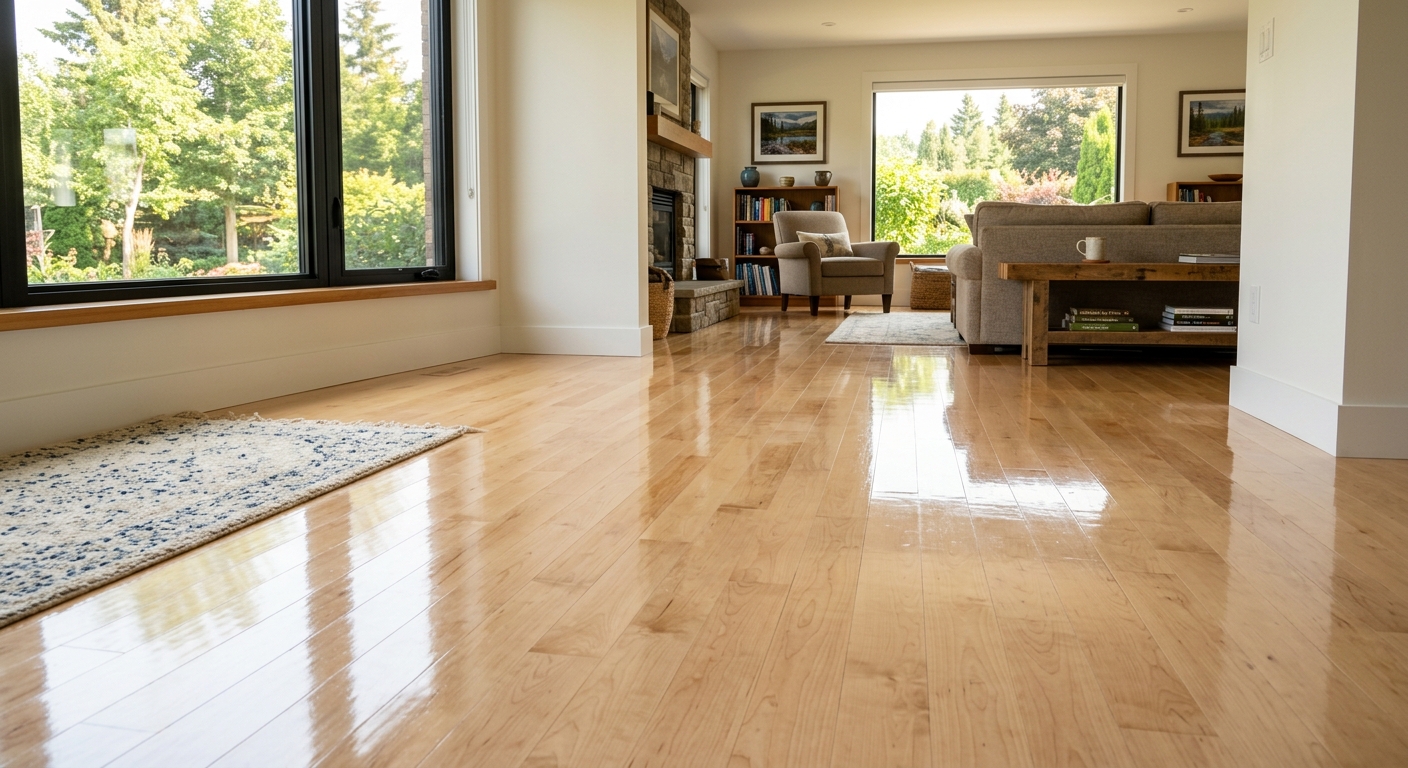
Flooring options and costs in Central Saanich
Central Saanich homeowners usually have good reasons for renovating: long-term comfort, improving resale appeal, and making older homes easier to live in year-round. With 46.4% of dwellings built before 1981 (Statistics Canada, 2021 Census), many projects start with subfloor checks—wavy plywood, uneven concrete, or missing underlayment—before any new flooring can go down. That’s one reason flooring quotes in this area can climb quickly when levelling, repair, or moisture management is required. You’ll also see many owner households in the 5,680 range (Statistics Canada, 2021 Census), which typically supports higher-end material choices rather than quick, temporary installs.
On Vancouver Island and the Coast, humidity swings are real: indoor relative humidity can drift outside the ideal 35–55% band, and damp basements are common. That affects labour because contractors spend more time on acclimation, subfloor moisture testing, and the right underlay/vapour-barrier system. It also affects material pricing choices: solid hardwood is limited (mostly main floors above grade), while engineered hardwood and luxury vinyl plank (LVP) are more dimensionally stable for on-grade and below-grade conditions with proper prep. In Central Saanich, demand is especially steady around North Saanich village-adjacent areas and the Sidney side of the community, where older houses and renovations pair frequently with moisture-smart upgrades.
Below is a practical cost comparison you can use to sanity-check estimates.
| Type |
Best Room |
Moisture Resistance |
Lifespan |
Price per sq ft |
| Solid hardwood (nail-down, above grade only) |
Main floor living areas |
Low to moderate (avoid basements/slabs) |
25–40 years |
$9,–$18 |
| Engineered hardwood (float or glue, above + on-grade) |
Living areas, bedrooms |
Moderate to high (with correct underlayment) |
20–35 years |
$10,–$17 |
| Laminate (click-lock, above-grade) |
Bedrooms, hallways |
Moderate (not for chronic moisture) |
10–25 years |
$5,–$10 |
| Luxury vinyl plank / LVP (waterproof, any level) |
Kitchen, basement (finished) |
High to waterproof (with seams properly done) |
15–25 years |
$6,–$12 |
| Porcelain / ceramic tile |
Bathrooms, kitchens, entries |
High (if substrate and membranes are correct) |
30+ years |
$12,–$25 |
| Carpet (broadloom or modular tile) |
Bedrooms, stairs (comfort-focused) |
Low to moderate (needs clean/dry conditions) |
8–15 years |
$4,–$9 |
Prices are estimates only and vary by project scope, site access and material selection.
What affects the price of flooring in Central Saanich
The same flooring type can cost noticeably different amounts across Vancouver Island and Coast—and that’s before you factor in personal preferences. It’s common to see 30–50% variation between quotes for similar square footage because subfloor prep, moisture risk, and the complexity of transitions (thresholds, stairs, and custom trims) change the labour time. Regional pricing is also influenced by where crews are coming from, how busy the season is, and the availability of specific underlayment/vapour systems. In Central Saanich, older housing stock (46.4% pre-1981) often means more levelling and patching, which can add meaningful labour and materials.
Technically, indoor humidity swings matter: solid hardwood expands and contracts with moisture, so it can cup or gap if the subfloor isn’t stable and the humidity isn’t controlled. Solid wood also performs poorly on concrete slabs and in damp basements. Engineered hardwood and LVP are built to handle more dimensional movement, so they’re typically the safer choices for moisture-prone areas on Vancouver Island. In colder pockets of the region where electric radiant floors are more common, you’ll usually see radiant-compatible options rise in popularity—many laminates, engineered woods, LVP, and tile work well with proper underlayment and temperature controls, but most solid hardwood installations are restricted.
Concrete examples: if your plywood is wavy, levelling can easily add around $1–$4 per sq ft in prep. If you’re converting a basement from concrete to LVP, vapour barrier detailing and perimeter sealing can be a little higher up front, but it avoids the higher risk of solid hardwood failure. On the pricing side, you might move from carpet at roughly $4–$9 per sq ft to tile at about $12–$25 per sq ft; the cost is often justified when you need wipe-clean surfaces and long service life in wet zones.
| Price Factor |
Why It Matters |
Cost Impact |
| Room area in sq ft |
Materials and labour scale directly with coverage and waste percentage |
Higher area = better unit pricing; smaller jobs cost more per sq ft |
| Subfloor condition — levelling or repair needed before install |
Older homes may need plywood patching, self-levelling, or grinding |
Common add of about $1–$4 per sq ft depending on severity |
| Moisture / below-grade install — rules out solid hardwood |
Basement and slab conditions require vapour control and stable products |
Often pushes you toward engineered hardwood or LVP; may increase prep time |
| Material choice — solid vs. engineered vs. LVP vs. tile |
Different products come with different installation systems and underlay needs |
Switching from laminate (~$5–$10) to tile (~$12–$25) can change the total significantly |
| Removal and disposal of existing flooring |
Time to demo, handle old adhesives, and manage landfill/disposal |
Can add hundreds to over a thousand dollars depending on thickness and access |
| Stair nosing / transitions — charged per step or per linear foot |
Stairs require custom-fit pieces and careful finishing |
Frequently one of the biggest “surprise” line items |
| Radiant heat compatibility — limits material options |
Not all underlays and coverings can handle temperature changes safely |
May increase material selection cost; sometimes reduces labour if system is standard |
| Installation method — float vs. glue-down vs. nail-down |
Method affects subfloor tolerance, work time, and tools |
Glue-down and nail-down typically require more prep and careful detailing |
Permits & regulations in British Columbia
In British Columbia, a typical flooring installation does not require a building permit. Replacing finished flooring over a sound, properly prepped subfloor is generally considered non-structural work. However, permit requirements can appear when the project expands beyond “just flooring.” For example, if your contractor needs to do electrical work related to in-floor heating circuits, you may need electrical permits and appropriate sign-off. If the scope involves substantial structural subfloor repair (for instance, correcting major deterioration that affects the building’s structure), the municipality or utility may require additional approvals depending on what’s being altered. In many common Central Saanich renovations, the flooring itself is straightforward—but it’s the underlying repairs and any heating electrical components that can change the compliance requirements.
For condominiums in BC, regulations often come from the building corporation rather than a permit system. Sound transmission requirements can restrict or require specific underlay, and hard flooring above grade may need an approved underlayment to meet building standards (STC/IIC). Before starting, check the condo declaration and request board approval in writing for any hard-surface flooring or tile installs in multi-unit buildings.
To verify a contractor in Central Saanich: (1) confirm their BC business licensing/registration where applicable via the provincial business registry tools; (2) ask for a certificate of insurance showing general liability coverage and ensure it matches the project start date; and (3) request proof of WSIB/WCB coverage for workers performing the install and prep work. If you’re comparing bids, ask whether they can provide clearance documentation (when applicable) and whether their insurance names you as the certificate holder or includes coverage endorsements relevant to the work.
Best flooring for each room in your Central Saanich home
Choosing flooring in Central Saanich is mostly about matching the material to the room’s moisture profile, traffic, and comfort needs—especially with Vancouver Island’s humid swings and older basements. For living and dining areas, engineered hardwood or a high-quality laminate often hits the balance of warmth and day-to-day durability without the tight restrictions that come with solid hardwood. In a master bedroom, many homeowners like carpet for softness and sound control, while engineered hardwood also works well if your humidity is managed and the subfloor is properly prepped.
The kitchen is where waterproofing wins: luxury vinyl plank (LVP) is a strong choice for spills and quick cleanup, and it pairs well with radiant heat in many systems when the product is rated for it. For bathrooms, porcelain or ceramic tile is the dependable route because it handles wet conditions and withstands cleaning chemicals better than most alternatives. Finished basements are a different story: LVP is usually the clear winner because it’s designed for moisture-prone environments and can be installed over vapour-controlled assemblies where solid wood and most laminate are risky.
Cost-wise, you can see the trade-offs quickly. If carpet is about $4–$9 per sq ft installed, upgrading to tile at roughly $12–$25 per sq ft makes sense in bathrooms where water exposure would otherwise shorten the life of softer coverings. Similarly, paying toward LVP instead of laminate can be justified when you have a basement family room or a ground-level entry where dampness is expected.
Below is a room-by-room match commonly used on Vancouver Island and the Coast, tuned for Central Saanich homes.
| Room |
Best Material |
Why |
Moisture Risk |
Price Band per sq ft |
| Living / dining room |
Engineered hardwood |
Warm look with better stability than solid wood under humidity swings |
Low to moderate (manage indoor humidity) |
$10,–$17 |
| Master bedroom |
Carpet or engineered hardwood |
Carpet adds comfort and sound absorption; engineered stays durable and warm |
Low (unless there’s a damp crawl/below-grade section) |
$4,–$17 |
| Secondary bedrooms |
Laminate (quality click-lock) or LVP |
Laminate is budget-friendly; LVP is tougher if kids track in moisture |
Low to moderate |
$5,–$12 |
| Kitchen |
Luxury vinyl plank (LVP) or large-format porcelain tile |
LVP handles spills; tile offers maximum cleanability and long life |
Moderate (spills and wet foot traffic) |
$6,–$25 |
| Basement (finished) |
LVP (waterproof) with vapour-control approach |
Best fit for chronic moisture risk and concrete/subfloor variability |
High (vapour and moisture management critical) |
$6,–$12 |
| Bathroom |
Porcelain / ceramic tile |
Designed for wet areas with correct membrane and grout detailing |
High (direct splashes and humidity) |
$12,–$25 |
How to choose a flooring contractor in Central Saanich
Choosing the right flooring contractor in Central Saanich comes down to verification and clarity. Start with credentials: in British Columbia, you want evidence of liability insurance for jobsite risk (damages to your home and property), and proof that the workers performing the work are covered by WSIB/WCB. Ask for a certificate of insurance and confirm the coverage dates align with your installation window. For WSIB/WCB, request documentation that names the contractor and covers the installing crew—not just the business in general. If a contractor hesitates to provide documents up front, that’s a major warning sign.
Next, get 2–3 itemised quotes. The best quotes break pricing into labour and materials (including underlayment, vapour barrier, adhesives/fasteners, levelling compounds, and transitions like stair nosings). Avoid lump-sum offers where “prep” is vague. Carefully review what’s excluded: will they handle removal and disposal, do they include subfloor testing and moisture precautions, and is permit-related electrical work included if radiant heating circuits are involved? Warranty terms matter too—separate workmanship warranty from product warranty, confirm the length, and ask whether it’s transferable if you sell the home.
For payment, don’t front-load the project: aim for no more than 10–15% upfront, then hold back an amount until punch-list items and final cleanup are complete. Finally, insist on a start date and realistic completion estimate in writing. In older Central Saanich homes, timing depends heavily on subfloor repairs and drying/curing times, so a precise schedule helps prevent surprises.
- Ask for BC insurance certificate and verify limits and coverage dates.
- Request WSIB/WCB clearance/proof for the specific installer crew.
- Get 2–3 quotes with labour and materials itemised separately.
- Confirm whether moisture testing and acclimation are included.
- Check what subfloor prep covers (levelling, grinding, patching, repairs).
- Make sure vapour barrier/underlayment is specified by product name.
- Clarify removal and disposal: is demo included, and where does waste go?
- Confirm stair work and transitions pricing per step or per linear foot.
- Ask for the exact installation method (float vs. glue-down vs. nail-down).
- Review warranty: workmanship duration, exclusions, and product warranty terms.
- Set payment schedule in writing with a holdback until final acceptance.
- Require a written start date and completion timeline, including curing/dry times.
In Central Saanich, common red flags include: vague “floor prep included” language with no scope details, refusal to provide insurance/WSIB/WCB documentation, quotes that don’t specify underlayment/vapour barrier, unrealistic schedules that ignore subfloor repair drying time, and warranties that only cover the product (not the installation workmanship).
Frequently asked questions — flooring in Central Saanich
Is cork or bamboo flooring a good choice in Central Saanich?
Cork and bamboo can work in Central Saanich, but they’re usually better for above-grade, stable rooms (like living areas and bedrooms) rather than basements. Vancouver Island humidity swings can still cause movement in some natural materials; the key is choosing the right construction (often engineered or properly sealed) and ensuring the subfloor is very flat and dry. For chronic moisture risk or concrete slabs, engineered hardwood or LVP generally performs more predictably. If you’re considering bamboo as a “solid” option, be cautious—solid wood is more sensitive to moisture changes, which is why many contractors prefer engineered wood or waterproof LVP for lower levels. If you want a natural feel, ask about a moisture-tested plan and warranty coverage that explicitly allows your intended installation area. (Statistics Canada, 2021 Census)
What is the difference between floating and glued-down flooring?
Floating floors “click” together and rest over an underlayment without being mechanically fastened to the subfloor. Glued-down floors are bonded to the subfloor using manufacturer-approved adhesive, which can improve stability on certain substrates but requires careful prep and correct cure times. In Central Saanich, floating installations are popular for LVP and many laminate products because they handle minor movement well when installed over the right underlay. Glued-down systems are often used for engineered hardwood in certain applications or when the manufacturer specifies it for performance. The right choice depends on your subfloor condition: if your plywood/concrete is uneven or moisture-prone, your contractor’s preparation plan and the product’s installation requirements matter more than the label “engineered” or “wood.”
What flooring holds up best to pets in a Central Saanich home?
For pets in Central Saanich, the practical winners are usually waterproof LVP and high-quality engineered hardwood with a wear layer suited to traffic. LVP is forgiving for accidents and quick cleanups, and it’s far safer for moisture conditions you might see in older homes or ground-level areas. If you choose engineered hardwood, look for a thicker wear layer and a finish designed for scratches; it can still be affected by wetness, so you’ll want prompt cleanup and good matting at entry points. Carpet can be comfortable for pets, but it can stain and holds odours if moisture persists—especially in basements. Budget-wise, many homeowners compare LVP at roughly $6–$12 per sq ft installed versus carpet at about $4–$9 per sq ft; with pets, the slightly higher LVP cost is often justified by easier maintenance and fewer moisture-related problems.
How do I fix squeaky floors in my Central Saanich home?
Squeaks usually come from movement between subfloor layers, or from fastening gaps where joists meet plywood/underlayment. Flooring replacement alone doesn’t always stop the noise, especially in older homes (46.4% built before 1981, Statistics Canada, 2021 Census) where fastening patterns and materials may be inconsistent. The typical fix is to identify the source—sometimes through inspection from below—and then re-secure the subfloor (screws/fasteners) and address any loose underlayment. Only after the substrate is stable should the new flooring go down. If you’re planning carpet, squeaks can reappear if the subfloor is unstable; for hard surfaces like LVP or engineered wood, the prep becomes even more important for a clean, flat install. Ask your contractor to include subfloor stabilization in the scope if squeaks are known before demo.
What is luxury vinyl plank and is it worth it in Central Saanich?
Luxury vinyl plank (LVP) is a synthetic flooring made for durability and moisture resistance, typically with a wear layer on top and a waterproof core. In Central Saanich—and across Vancouver Island and the Coast—it’s often “worth it” because the region’s humidity swings and the prevalence of older basements make waterproof performance valuable. LVP is generally a better fit than solid hardwood for below-grade spaces and for concrete slab situations where moisture management is critical. Many LVP products also come radiant-compatible (when paired with the right underlayment and temperature controls), which matters in BC homes with in-floor heating. Cost varies by wear layer and installation complexity, but many all-in projects land around $6–$12 per sq ft. If you’re choosing between laminate (~$5–$10) and LVP, the extra cost can pay back when your home has damp spots, frequent spills, or pet traffic.
How much does flooring cost in Central Saanich?
In Central Saanich, all-in installed flooring commonly falls within the practical British Columbia price bands. Carpet installation is often around $4–$9 per sq ft, laminate or vinyl plank typically around $5–$10 per sq ft, while tile projects can run about $12–$25 per sq ft. Hardwood and engineered hardwood are usually higher, with solid hardwood in the $9–$18 range and engineered hardwood often sitting in a similar upper tier depending on product and prep needs. The biggest swing usually isn’t the finish—it’s subfloor prep. In older homes, levelling and repair can add roughly $1–$4 per sq ft before flooring goes down. If you’re budgeting, treat the base band as your starting point and request a line-by-line scope so moisture testing, levelling, removal/disposal, and transitions are clearly priced.