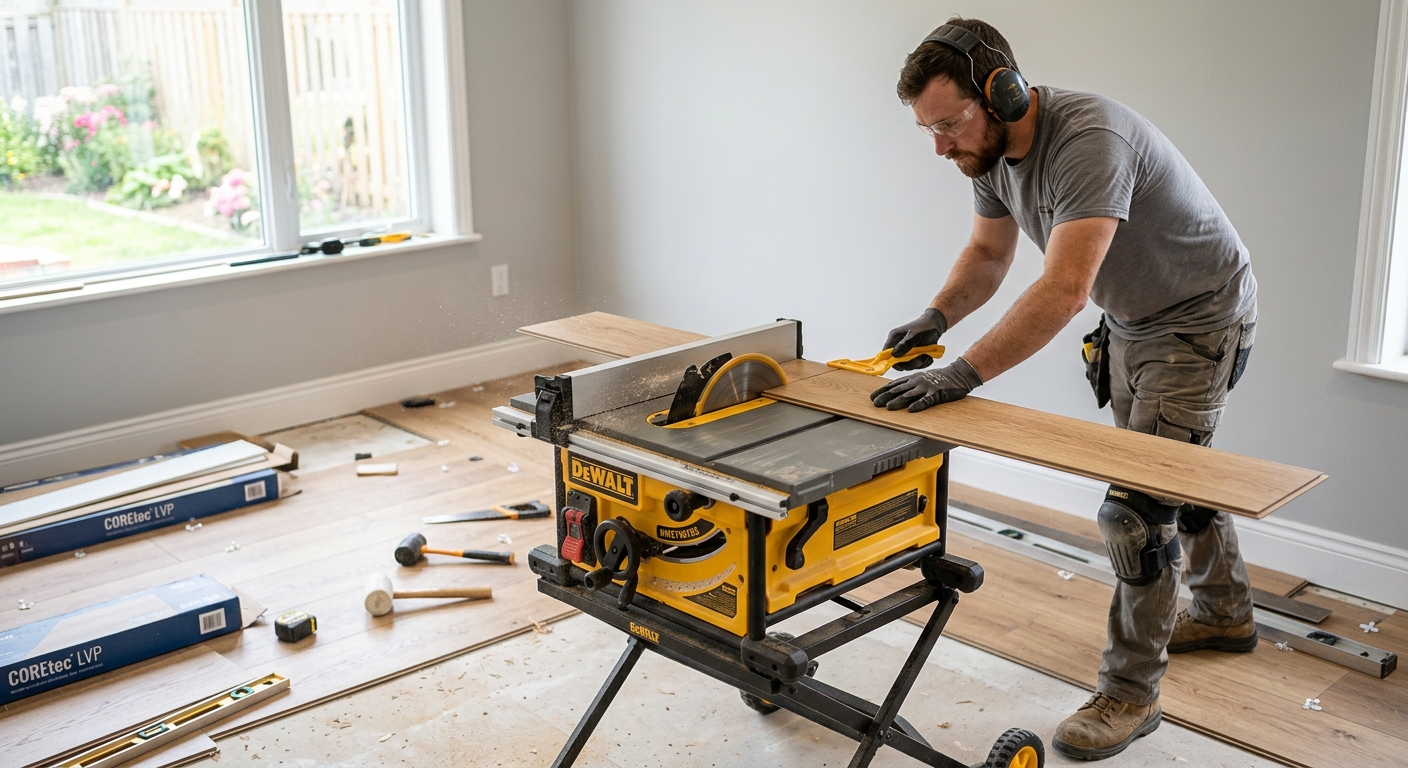
Flooring options and costs in Hammond
Hammond, British Columbia is a small community inside the wider Lower Mainland–Southwest market, and that matters for flooring pricing and product selection. With a population of 12,709 (Statistics Canada, 2021 Census), local contractors tend to concentrate schedules around the busier seasons, and you may see lead times when multiple neighbours are upgrading at once. Costs are also shaped by housing age: much of the surrounding Lower Mainland stock is older, which often means you’ll pay to level uneven plywood or address minor subfloor repairs before any new material goes down. In practice, that kind of prep commonly adds about $1–$3 per sq ft to a project budget.
The Lower Mainland–Southwest climate is wet and marine, with indoor humidity swings—especially in winter and shoulder months. In Hammond-area homes, moisture can wick through concrete slabs or rise from below grade, so we avoid solid hardwood below grade. Instead, engineered hardwood and luxury vinyl plank (LVP) handle humidity better due to their layered or PVC construction. For main living areas above grade, solid hardwood is still popular, but it must be specified with proper expansion gaps and realistic humidity control.
In Hammond, upgrades are especially common around the more established residential pockets where basements are finished and renovations are planned in phases. When moisture risk, subfloor condition, and installation method are included in the quote, you’ll see the real differences across flooring types—which is what the table below is designed to show.
| Type |
Best Room |
Moisture Resistance |
Lifespan |
Price per sq ft |
| Solid hardwood (nail-down, above grade only) |
Living rooms, dining rooms, hallways (above grade) |
Low to moderate (needs humidity control; not for basements) |
30–60 years |
$9,–$18 |
| Engineered hardwood (float or glue, above + on-grade) |
Living rooms, bedrooms, hallways (above or on-grade) |
Moderate to high (more stable with humidity swings) |
20–40 years |
$10,–$16 |
| Laminate (click-lock, above-grade) |
Secondary bedrooms, offices (above grade) |
Low to moderate (water-resistant top layer; poor with standing water) |
10–25 years |
$4,–$10 |
| Luxury vinyl plank / LVP (waterproof, any level) |
Kitchen, basements, main living areas |
High to waterproof (handles vapour and minor subfloor movement) |
15–30 years |
$5,–$10 |
| Porcelain / ceramic tile |
Kitchen, bathrooms, entryways |
Very high (best for wet zones) |
25–50 years |
$10,–$20 |
| Carpet (broadloom or modular tile) |
Bedrooms, stairs, rec rooms |
Moderate (can hold moisture if humidity is unmanaged) |
8–15 years |
$4,–$8 |
Prices are estimates only and vary by project scope, site access and material selection.
What affects the price of flooring in Hammond
If you get three quotes for the same room size in the Lower Mainland–Southwest, it’s not unusual to see differences of 30–50% across British Columbia. The biggest reason isn’t “luck”—it’s that each contractor may be including different amounts of prep, moisture protection, and labour complexity. In Hammond and nearby areas, the marine climate brings indoor humidity swings, and basements or slab-on-grade areas can also face below-grade moisture challenges. Those two factors directly change whether solid hardwood is even a sensible option. Solid hardwood expands and contracts with humidity; it can’t be glued or floated over concrete, and it performs poorly in basements. Engineered hardwood and LVP handle humidity much better and are more forgiving on on-grade or below-grade installs.
Temperature also matters where radiant heating is present. Colder pockets and newer builds increasingly use radiant systems, which makes material compatibility a key spec issue; most solid hardwood needs very careful installation conditions, and some laminate products aren’t rated for higher heat output. On top of that, older regional housing stock frequently needs levelling or repair. Even a simple levelling pass can add roughly $1–$4 per sq ft, especially when plywood is uneven or needs patching.
Two concrete examples I see often in Hammond: (1) a basement install where we need a moisture barrier and subfloor prep tends to push the project toward LVP—while solid hardwood quotes may look cheaper on paper, they often fail long-term in humid conditions; and (2) if your plan is to replace 600 sq ft of living space, choosing engineered hardwood ($10–$16 per sq ft band) over laminate ($4–$10 band) can be justified when you’re also paying for correct underlay, acclimation, and subfloor smoothing. The material upgrade can be the difference between a floor that stays flat and one that gapes.
| Price Factor |
Why It Matters |
Cost Impact |
| Room area in sq ft |
Directly impacts labour hours and amount of flooring, underlay, and adhesives |
Biggest driver; small rooms often have higher per-sq-ft installs |
| Subfloor condition — levelling or repair needed before install |
Uneven plywood or damaged concrete requires prep to prevent bounce and joint failure |
Often adds about $1–$4 per sq ft depending on severity |
| Moisture / below-grade install — rules out solid hardwood |
Moisture vapour and wicking through slab must be managed with the right system |
May increase cost by adding barriers, and it changes product choice |
| Material choice — solid vs. engineered vs. LVP vs. tile |
Stability, warranty conditions, and installation method differ by product type |
Can shift projects by $4–$12 per sq ft or more depending on specs |
| Removal and disposal of existing flooring |
Old flooring increases labour, affects schedule, and may require proper disposal |
Commonly adds a meaningful lump to the quote (varies by flooring type) |
| Stair nosing / transitions — charged per step or per linear foot |
Edges, treads, and transitions are time-consuming and require matching materials |
Can add several hundred dollars on typical staircases |
| Radiant heat compatibility — limits material options |
Some products can’t tolerate heat cycling without gapping or movement |
May increase costs by selecting an approved engineered/laminate/tile system |
| Installation method — float vs. glue-down vs. nail-down |
Different methods require different labour time, labour tools, and materials |
Can add cost where glue-down or nail-down is required |
Permits & regulations in British Columbia
In British Columbia, installing flooring itself typically does not require a building permit. For example, removing existing flooring and installing new hardwood, engineered wood, laminate, LVP, or tile as a finish surface is usually handled under standard trade work. That said, associated work can trigger permits depending on what you change behind the finish. If your project includes structural subfloor repair, moisture remediation that involves significant substrate modifications, or alterations that intersect electrical circuits (such as in-floor radiant heat wiring or controls), electrical permits may be required. In multi-unit buildings, condo bylaws and sound-transmission requirements become the “rule” you must follow—even when the install itself doesn’t require a municipal permit.
For step-by-step verification in Hammond, start with the contractor’s licensing status for the scope they’re advertising, then confirm they carry liability insurance and WCB coverage. Ask for a current Certificate of Insurance showing your contractor as the insured and, ideally, listing you as an additional insured if possible. For coverage proof, request documentation that demonstrates they have Worker’s Compensation coverage applicable to their employees (commonly shown in their WCB clearance letter). Finally, for condos, ask your contractor to provide the underlay plan and confirm they’ll follow the building’s declared sound requirements (STC/IIC considerations) in writing before installation—especially if you’re placing hardwood or tile on upper floors.
Best flooring for each room in your Hammond home
Choosing the right flooring in Hammond is mostly about matching the material to moisture exposure, traffic, and comfort—then fitting it to the Lower Mainland–Southwest climate reality. Indoor humidity swings can cause cupping and gapping in solid hardwood if your home’s humidity isn’t controlled. That’s why, in main living areas, I often steer homeowners toward engineered hardwood or a high-quality laminate with proper underlay—both balance warmth and durability with better dimensional stability.
For the kitchen, water and spills are frequent, so luxury vinyl plank (LVP) or large-format porcelain tile tends to perform best. LVP is forgiving if you get minor subfloor variations; porcelain handles wet cleanup and looks sharp in the damp shoulder-season kitchen traffic. In basements, the recommendation is simpler: LVP is the clear winner in Hammond-area homes because it’s waterproof and handles moisture vapour and below-grade installs far better than solid wood and most laminate. Bathrooms are porcelain or ceramic tile only—because wet zones demand it.
Where radiant heat is present, focus on radiant-approved materials: engineered hardwood, tile, and many LVP products are typically easier to spec correctly. Solid hardwood can work over radiant, but it requires careful product selection and strict installation conditions. If you’re deciding between options, here’s a realistic budgeting lens: moving from laminate ($4–$10 per sq ft band) to engineered hardwood ($10–$16 per sq ft band) can be worth it in living rooms when you’re also investing in subfloor smoothing, because a more stable floor performs better through seasonal humidity swings.
| Room |
Best Material |
Why |
Moisture Risk |
Price Band per sq ft |
| Living / dining room |
Engineered hardwood |
Warm feel with better stability for marine humidity swings |
Low to moderate (above grade) |
$10,–$16 |
| Master bedroom |
Carpet or engineered hardwood |
Carpet adds comfort and sound absorption; engineered stays stable |
Low |
$4,–$16 |
| Secondary bedrooms |
High-quality laminate |
Cost-effective, easy maintenance with the right underlay |
Low |
$4,–$10 |
| Kitchen |
Luxury vinyl plank (LVP) or porcelain tile |
Handles spills and frequent cleaning without worrying about vapour |
Moderate to high |
$5,–$20 |
| Basement (finished) |
Luxury vinyl plank (waterproof) |
Best match for below-grade moisture vapour and damp seasons |
High |
$5,–$10 |
| Bathroom |
Porcelain / ceramic tile |
Most reliable wet-zone surface for long-term durability |
High |
$10,–$20 |
How to choose a flooring contractor in Hammond
Picking the right flooring contractor in Hammond starts with proof, not promises. In British Columbia, verify their licensing status for the work they’re doing, then confirm they carry liability insurance so you’re protected if there’s property damage. Next, ask for Worker’s Compensation coverage proof (often provided as a WCB clearance letter). A contractor who can’t provide current documentation should be a concern—especially on jobs involving substrate prep, tile work, or any demolition where dust and debris management matter.
Then get 2–3 written, itemised quotes—not a single lump sum. The quote should separate labour and materials (flooring product, underlay, adhesives where applicable, moisture barrier systems, transition pieces, and removal/disposal). Read the scope carefully: confirm what’s included for disposal, whether subfloor levelling is part of the base price, and whether permits are included if electrical work or radiant wiring is part of the scope. Ask about warranties: workmanship warranty length, product warranty terms, and whether the warranty transfers to you if you sell.
For payment schedule, never pay more than about 10–15% upfront. Hold back a portion until the job is complete and you’ve done a walkthrough—this is where you verify transitions, edge details, and moisture barrier integration. Finally, request the timeline in writing: start date, installation duration, and a completion estimate. Reliable contractors schedule work around curing times, acclimation periods, and inspection steps.
- Ask for insurance certificate and confirm dates are current before signing.
- Request WCB/WCB clearance documentation for employee coverage.
- Get itemised labour vs. materials (including underlay, barriers, and transitions).
- Confirm exactly who removes and disposes of existing flooring and trim.
- State subfloor prep scope in writing (levelling/patching/moisture work).
- For basements, confirm the moisture approach (barrier system and product suitability).
- Verify acclimation requirements are included for wood/plank products.
- Ensure stair nosings and transitions are priced per step or per linear foot, not guessed.
- Ask for proof of past jobs in the Lower Mainland–Southwest climate (similar moisture conditions).
- Confirm warranty coverage: workmanship duration and whether it’s transferable.
- Use a payment schedule with a holdback until completion and cleanup are verified.
- Get a written start date and completion timeline that accounts for curing/acclimation.
Concrete red flags I see in the Hammond market: (1) quotes that don’t mention subfloor condition or moisture barriers for on-grade/basement installs, (2) hardwood “guarantees” over concrete without an engineered or approved system, (3) refusal to provide insurance/WCB proof, (4) a vague scope with no disposal or transition details, and (5) demanding a large upfront payment beyond 10–15%.
Frequently asked questions — flooring in Hammond
Hardwood vs laminate vs vinyl plank — which is best?
In Hammond and the Lower Mainland–Southwest, the “best” choice depends on moisture risk and where the flooring will be installed. Solid hardwood can be a great option above grade, but it reacts to humidity swings and generally should not be used in basements. Laminate is usually more budget-friendly (often in the $4–$10 per sq ft band), but it’s not as forgiving with standing water or high moisture vapour. Luxury vinyl plank (LVP) is typically the most adaptable for our wet, marine conditions because many products are waterproof and handle any level, including basements. If you’re comparing long-term performance, spending toward engineered or LVP often avoids costly callbacks from gapping or moisture-related failures.
What flooring is best for a Hammond basement?
For a Hammond basement, I recommend waterproof luxury vinyl plank (LVP) in most homes. The Lower Mainland–Southwest climate and many slab-on-grade or below-grade areas mean moisture vapour can be a real concern, and solid hardwood is simply not the right material for that environment. LVP’s waterproof surface and layered construction handle minor subfloor movement and damp conditions far better than laminate. In budget terms, LVP commonly sits around the $5–$10 per sq ft band, and the overall value improves when your contractor includes proper moisture preparation. If the basement is finished, also ensure the quote addresses underlayment compatibility and transitions to living areas.
Can I install hardwood over concrete?
Often, homeowners can’t install solid hardwood over concrete in a way that performs well long-term. Solid nail-down hardwood is generally designed for above-grade wood subfloors with proper nailing conditions, and it’s sensitive to humidity movement. If you have a concrete slab in Hammond, a better route is usually engineered hardwood—many installations are glue-down or floated with the correct underlayment system designed for concrete. This matters because Lower Mainland moisture can wick up through slab, creating conditions that cause solid wood to cup or gap. Before deciding, ask your contractor whether the product is rated for slab conditions and whether they’re including the right moisture barrier and acclimation plan.
How long does flooring installation take?
Timelines vary by room count, subfloor condition, and whether there’s moisture prep. For a straightforward above-grade install on a reasonably flat subfloor, installation can often be a few days, but you should also plan for acclimation time for wood products and any curing/setting time for adhesives (where glue-down systems are used). If your project needs levelling, patching, or moisture remediation—common in older Lower Mainland housing stock—expect additional days. In Hammond, scheduling can also be impacted by contractor availability because labour demand is high in the wider Lower Mainland–Southwest region. Ask for a written start date and completion estimate, including prep steps and any barrier installation.
What flooring works with radiant heat?
For radiant heating, the key is product approval and installation method—not just the style of flooring. In British Columbia, radiant is increasingly common in newer builds, and it influences which floors can handle heat cycling without excessive expansion or movement. Tile (porcelain/ceramic) is usually the most straightforward because it transfers heat effectively. Engineered hardwood is often the best wood option when the manufacturer approves radiant and specifies required installation conditions. Many LVP products are also compatible when they meet radiant requirements. Solid hardwood can work, but it requires careful specification and humidity control; otherwise you risk gaps or movement. Always confirm the radiant rating and product instructions are compatible before purchase.
Engineered vs solid hardwood — what's the difference?
The main difference is stability. Solid hardwood is one piece of real wood and can move with humidity, so it’s typically recommended for above-grade installations with controlled indoor moisture. Engineered hardwood is built in layers (a wood top with a stable core), which makes it more resistant to humidity swings and often better suited to on-grade situations. In Hammond’s Lower Mainland–Southwest climate, that stability can matter. Cost-wise, solid hardwood often falls in the $9–$18 per sq ft band, while engineered hardwood commonly lands around the $10–$16 range. If you’re deciding for a living area vs. a basement, engineered is usually the safer choice where humidity conditions are less predictable.