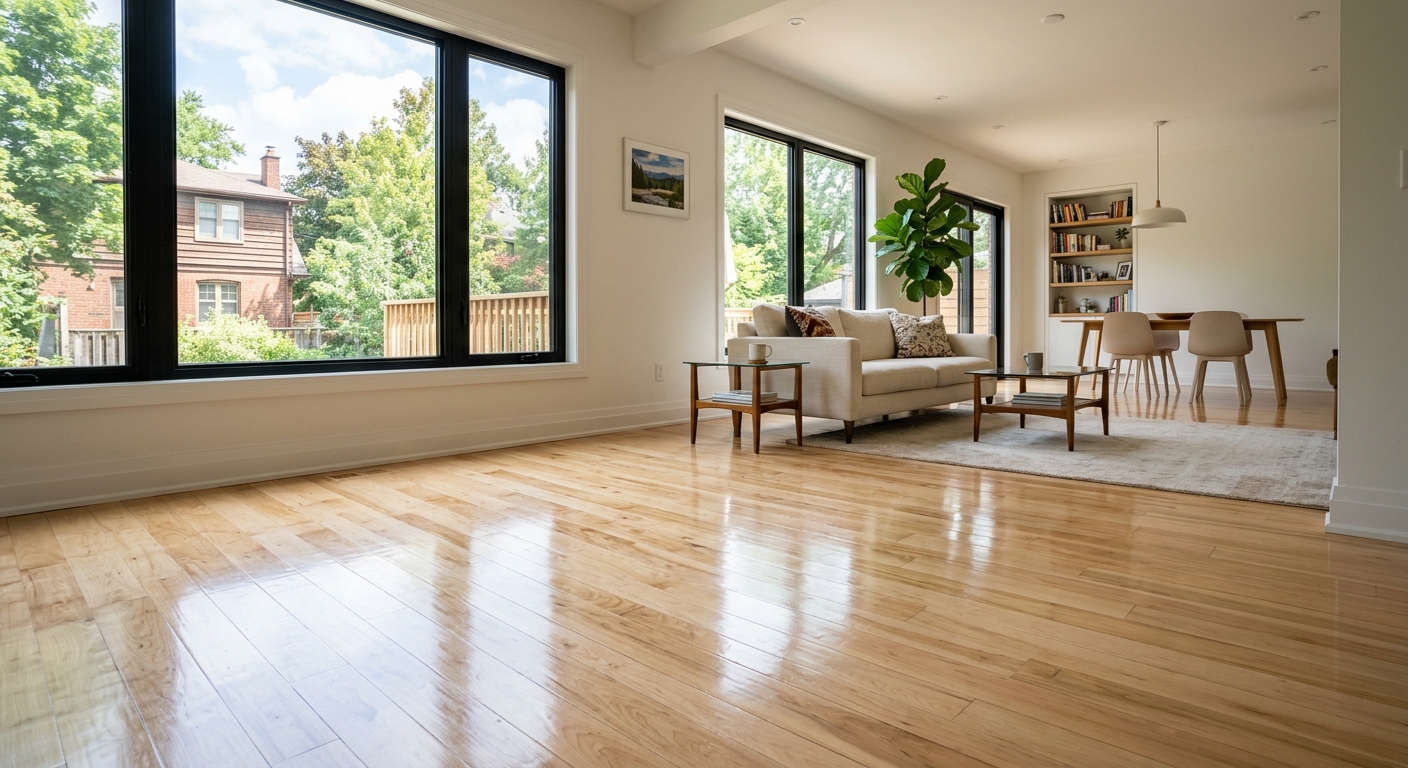
Flooring options and costs in East Sooke
East Sooke is a small community on the south end of Vancouver Island, and the local housing mix shows it. With a population of about 1,500 (Statistics Canada, 2021 Census), you’ll often notice fewer crews chasing work than in bigger centres—so scheduling can matter. A lot of homes here were built long ago, and older basements and crawlspaces can mean subfloor repairs or levelling before a new floor goes down. In practical terms, that prep work commonly adds roughly $1–$3 per sq ft in labour and materials before you even install the finish.
On Vancouver Island and the Coast, indoor humidity swings and coastal moisture are real cost drivers. Many basements have chronic dampness, and moisture can travel up through concrete slabs or through poorly sealed subfloors. That’s why solid hardwood is usually kept for main, above-grade rooms, while engineered hardwood and luxury vinyl plank (LVP) are more forgiving in the humidity-and-moisture conditions we see. If your home is in or near the East Sooke area where older properties are common, subfloor levelling and moisture management are especially in demand.
Because these conditions directly affect labour time, underlayment, and prep materials, two homeowners can receive very different totals for the “same” floor. The comparison table below is a realistic budget starting point for East Sooke.
| Type |
Best Room |
Moisture Resistance |
Lifespan |
Price per sq ft |
| Solid hardwood (nail-down, above grade only) |
Main floors (living/dining) |
Low to moderate (avoid basements) |
30–60 years |
$9 – $18 |
| Engineered hardwood (float or glue, above + on-grade) |
Living areas, hallways, some on-grade rooms |
Moderate to high with proper vapour control |
20–40 years |
$10 – $16 |
| Laminate (click-lock, above-grade) |
Bedrooms, living rooms (not chronic damp) |
Moderate (protect seams from standing water) |
10–25 years |
$5 – $10 |
| Luxury vinyl plank / LVP (waterproof, any level) |
Kitchen, entry, bathrooms-adjacent areas, basements |
High (waterproof surface) |
15–25 years |
$6 – $12 |
| Porcelain / ceramic tile |
Bathrooms, kitchens, wet areas |
Very high (with correct mortar/underlayment) |
30+ years |
$12 – $25 |
| Carpet (broadloom or modular tile) |
Bedrooms, stairs, home offices |
Low (needs dry subfloor) |
7–15 years |
$4 – $9 |
Prices are estimates only and vary by project scope, site access and material selection.
What affects the price of flooring in East Sooke
In East Sooke and across the Vancouver Island and Coast region, it’s common to see quotes for the same floor vary by 30–50%. The gap usually isn’t the flooring itself—it’s the prep, the moisture plan, and how each contractor prices access and labour. With older homes and many basements, subfloor condition is often the hidden cost. If you have wavy plywood or uneven concrete, levelling and repair can add about $1–$4 per sq ft before the finish material is installed.
Technical drivers are the big difference-makers. Indoor humidity swings make solid hardwood expand and contract; on Vancouver Island, that movement can show up as gapping or cupping if the wood is exposed to unstable moisture. Solid hardwood also cannot be glued or floated over concrete and is a poor fit for below-grade spaces—so contractors will steer you to engineered hardwood or LVP for moisture-sensitive areas. If you’re installing over in-floor radiant heat, colder regions and modern upgrades increasingly favour radiant-compatible options; many solid hardwood products and some laminates won’t be recommended without temperature-control details.
Here are a few local examples we frequently see in East Sooke: (1) Removing old carpet and pad can add time and disposal fees that push an LVP job up toward the higher end of the $6–$12/sq ft range. (2) Tile in a small bathroom can become expensive if subfloor flattening is needed—your tile budget ($12–$25/sq ft) can rise quickly with patching and underlayment. (3) A long hallway with many transitions can raise costs even when the square footage is moderate, because stair nosings and moulding are priced separately.
| Price Factor |
Why It Matters |
Cost Impact |
| Room area in sq ft |
Material quantity and labour hours scale with square footage |
Direct—small rooms can have higher per-sq-ft effectively |
| Subfloor condition |
Levelling/repair is often required in older Vancouver Island homes |
Commonly +$1 to $4 per sq ft before finish |
| Moisture / below-grade install |
Concrete and damp basements change the safest product choice |
Often swaps solid hardwood to engineered/LVP and adds vapour-control steps |
| Material choice |
Solid vs engineered vs LVP vs tile have different installation systems |
Can shift you across the regional bands (e.g., $5–$10 vs $12–$25) |
| Removal and disposal of existing flooring |
Old underlay, glue, and debris add labour and dump fees |
Can add several hundred dollars per room depending on condition |
| Stair nosing / transitions |
Stairs and transitions use extra labour and trims |
Charged per step or per linear foot—small areas can jump |
| Radiant heat compatibility |
Not all products tolerate temperature changes |
May require specific underlayment and a temperature-setup schedule |
| Installation method |
Float vs glue-down vs nail-down affects prep and labour time |
Glue-down and nail-down typically cost more where required |
Permits & regulations in British Columbia
In British Columbia, installing flooring itself usually does not require a building permit. Most surface-finish work—like installing engineered hardwood, LVP, laminate, carpet, or tile—falls under routine renovation. That said, flooring projects often overlap with other trades. If your plan includes structural subfloor repair (for example, replacing rotted subfloor members), moisture remediation steps that change how the structure is built-up, or work that ties into radiant heating components, permits may be triggered depending on scope—particularly where electrical circuits are affected.
For East Sooke homeowners in multi-unit buildings or condominiums, the bigger “rule” is typically the corporation’s by-laws around sound transmission. Hardwood and other hard flooring on upper floors often require specific underlay systems to meet sound expectations (STC/IIC). Before you install, review the condo declaration and request written board approval where required—especially for tile or hardwood installations.
To verify a contractor in BC step-by-step: (1) Check licensing and business information through the appropriate provincial registry sources listed on contractor websites and invoices; (2) ask for a current certificate of liability insurance and confirm the coverage dates and address listed match the job; (3) request clearance regarding workplace coverage (WSIB/WCB status) so you’re not left holding risk if someone gets hurt; and (4) keep the clearance letter and policy certificate on file before work begins. These checks are simple, and they protect you in a coastal climate where moisture-related prep disputes are common.
Best flooring for each room in your East Sooke home
Choosing flooring in East Sooke means matching comfort and durability to moisture exposure and daily traffic—without fighting Vancouver Island’s humidity swings. For living and dining rooms, engineered hardwood or high-quality laminate usually hits the sweet spot: warm underfoot, good wear, and fewer problems than solid wood if humidity shifts. If you want natural look and easier maintenance, engineered hardwood installed with proper vapour control is a common upgrade path.
For bedrooms, comfort matters. Many homeowners choose carpet for sound absorption and warmth, particularly in cooler months, or they choose engineered hardwood where allergies and cleaning preferences push them away from carpet. In kitchens, LVP is often the practical winner: waterproof surface performance and easier cleanup handle spills and frequent wet wiping. If you prefer a “forever” surface, large-format porcelain tile is also excellent—just plan for underlayment and subfloor prep.
Basements are where Vancouver Island realities show up. Finished basements typically do best with fully waterproof LVP. Solid wood and most laminate can struggle with chronic moisture vapour and below-grade conditions unless the moisture system is engineered correctly. For bathrooms, porcelain or ceramic tile only is the reliable choice. And if your home has radiant heat (or you’re upgrading), select radiant-compatible products and follow the temperature-control guidance so finishes perform as intended.
Example budgeting: If you’re comparing carpet at roughly $4–$9 per sq ft versus LVP at about $6–$12 per sq ft, the $1–$3 per sq ft difference is often justified in areas near exterior doors or damp-prone zones because it reduces the risk of odour, staining, and moisture-related replacement. The right choice isn’t just look—it’s moisture tolerance for your East Sooke home.
| Room |
Best Material |
Why |
Moisture Risk |
Price Band per sq ft |
| Living / dining room |
Engineered hardwood |
Warm feel, stable in coastal humidity, good daily durability |
Moderate (humidity swings, not wet zones) |
$10 – $16 |
| Master bedroom |
Carpet or engineered hardwood |
Carpet adds comfort and quiet; engineered offers easy cleaning |
Low to moderate |
$4 – $16 |
| Secondary bedrooms |
High-quality laminate |
Cost-effective, sturdy for kids and guests |
Low to moderate |
$5 – $10 |
| Kitchen |
Luxury vinyl plank (LVP) or porcelain tile |
LVP handles spills; tile handles water and long-term wear |
Moderate (spill risk, wet mopping) |
$6 – $25 |
| Basement (finished) |
LVP (waterproof) |
Best option for below-grade moisture tolerance and stability |
High (vapour and dampness risk) |
$6 – $12 |
| Bathroom |
Porcelain / ceramic tile |
Survives direct water exposure with correct installation |
Very high |
$12 – $25 |
How to choose a flooring contractor in East Sooke
When you hire a flooring contractor in East Sooke, start by confirming the basics in British Columbia before you discuss style or pricing. Ask for a current certificate of liability insurance (make sure it’s valid for the address and dates of your project) and request proof of workplace coverage (WSIB/WCB coverage or clearance documentation). A reputable contractor will provide these without pressure or vague answers.
Next, get 2–3 itemised written quotes—not a single lump sum. You want a breakdown that separates labour from materials, shows underlayment/vapour barrier allowances, and lists line items for removal/disposal, transitions, and stair work. Read the scope carefully: what is excluded (subfloor levelling, plywood replacement, flattening of dips, or moisture testing)? Is a permit required in your case and who pulls it? Is disposal included?
Warranty also matters. Confirm the workmanship warranty length and what it covers (often installation and substrate prep), and note the manufacturer warranty for the product. Ask if warranties are transferable if you sell the home.
Finally, payment schedule: never pay more than about 10–15% upfront. Use a holdback until completion and final walkthrough. For timeline, get a start date and estimated completion in writing so humidity-related moisture prep and drying time are properly planned.
- Verify liability insurance certificate is current and includes your project location.
- Request WSIB/WCB clearance (or coverage confirmation) in writing before work starts.
- Confirm the contractor’s licence/business details match the company name on the quote.
- Ask for an itemised quote: labour, materials, underlayment/vapour barrier, and disposal.
- Clarify what’s included in subfloor levelling and moisture-related prep.
- Require a written timeline: start date, milestone dates, and completion estimate.
- Check whether transitions, stair nosing, and mouldings are priced per step/linear foot.
- Confirm product grade and thickness (don’t accept “similar” without specs).
- Ask how radiant heat compatibility is handled (underlayment choice and temperature plan).
- Confirm warranty terms: workmanship length, product warranty, and any exclusions.
- Keep payments staged: small deposit only, progress payments, holdback on completion.
- Request photo examples of similar East Sooke moisture-prep installs (basements, slabs).
In East Sooke, a few red flags show up fast: (1) no moisture-subfloor discussion for basements or on-grade slabs, (2) refusing to provide insurance/WSIB/WCB clearance, (3) offering an all-in “no surprises” number with no scope details, (4) skipping levelling references and blaming “settling” for gaps, and (5) pushing for a large deposit upfront.
Frequently asked questions — flooring in East Sooke
How do I compare flooring quotes?
Start by comparing apples to apples for your East Sooke home. Ask for itemised quotes that separate labour, product, underlayment/vapour barrier, removal/disposal, transitions, and stair nosing. The biggest price differences across Vancouver Island and the Coast are often subfloor prep and moisture management, so make sure both quotes address your substrate condition (even a quick flatness check). Look for what’s excluded: if one quote includes levelling and the other doesn’t, the cheaper number can become expensive after the fact. Also confirm the exact product specs—plank thickness for LVP, wear layer for vinyl, and tile type/grade for porcelain. Finally, check warranty terms and the payment schedule, including any holdback until completion.
Can I install flooring over existing tile in East Sooke?
Sometimes, but it depends on the tile surface and your floor type. In many East Sooke renos, LVP can be installed over sound, well-bonded tile if the tile is properly level and you use the right underlayment approach for your product system. You usually must address grout ridges (they can telegraph and cause click-lock failures) and confirm there’s no rocking tile. For engineered hardwood, it’s more restrictive: the substrate must meet flatness requirements and moisture conditions, and concrete/over-tile situations are handled differently depending on the installation method. For carpet, tiling is rarely a good base without levelling—soft underlay can exaggerate unevenness. If tile is cracked or loose, removal is often the best long-term fix, even if it adds labour.
What is the best flooring for a high-traffic area in East Sooke?
For high-traffic zones in British Columbia homes—entries, hallways, and kitchens—LVP is usually the most practical balance of durability and moisture tolerance, especially if you deal with coastal humidity and wet shoes. Many homeowners choose LVP because it’s waterproof and generally tolerates the expansion/contraction issues that can affect solid hardwood in humidity swings. If you prefer a natural look, engineered hardwood is also durable, but you’ll want the right vapour control plan and good subfloor prep. Tile is the “toughest” surface-wise, but it’s typically higher budget: porcelain/ceramic commonly falls in the $12–$25 per sq ft band depending on installation demands. In carpeted areas, invest in higher-traffic nylon and ensure the subfloor stays dry—carpet doesn’t forgive moisture the way LVP does.
How do I prepare my subfloor before new flooring?
Subfloor prep is where East Sooke projects are won or lost, especially with older homes and older basements. The key steps are: (1) remove existing flooring and inspect for damage, rot, or moisture; (2) check flatness—wavy plywood and uneven concrete must be corrected so click-lock and planks don’t stress; (3) repair squeaks and structural issues before installing; and (4) address moisture with the correct vapour-control strategy for your floor type and installation method. Your contractor should also confirm whether your space needs a moisture test or enhanced vapour barrier, particularly on on-grade slabs and below-grade areas. Expect subfloor levelling and repair to commonly add about $1–$4 per sq ft when needed, which is why quotes can vary so much.
Is cork or bamboo flooring a good choice in East Sooke?
Cork and bamboo can be good-looking options, but in East Sooke you have to be picky about moisture risk. Cork is more forgiving underfoot and can handle minor humidity movement better than some natural woods, and it can offer sound dampening. However, most cork and bamboo still require a stable, dry subfloor and proper installation details, especially around exterior doors, bathroom-adjacent areas, and any below-grade spaces. For chronic dampness in basements, contractors typically prefer LVP because it’s waterproof and more dimensionally stable in the kind of coastal moisture conditions we see. If you love the look of cork/bamboo, consider installing it in above-grade rooms where humidity can be controlled within a comfortable range (often targeted around 35–55%).
What is the difference between floating and glued-down flooring?
Floating floors “click” together and rest on an underlayment, without being mechanically fastened to the subfloor. This is common with laminate and many floating engineered options, and it can simplify installation. However, floating floors still need a flat, clean, properly prepared subfloor and an underlay that matches the product’s requirements—especially on Vancouver Island where moisture swings are common. Glued-down flooring is bonded directly to the subfloor (common with certain engineered hardwood and some specialty systems), which can improve stability and feel when the substrate is well-prepped. It also makes moisture control more critical because bond failure or trapped moisture can ruin the install. If your project involves radiant heat, ask which method your chosen product supports and what underlayment it requires.