Flooring options and costs in Pemberton Heights
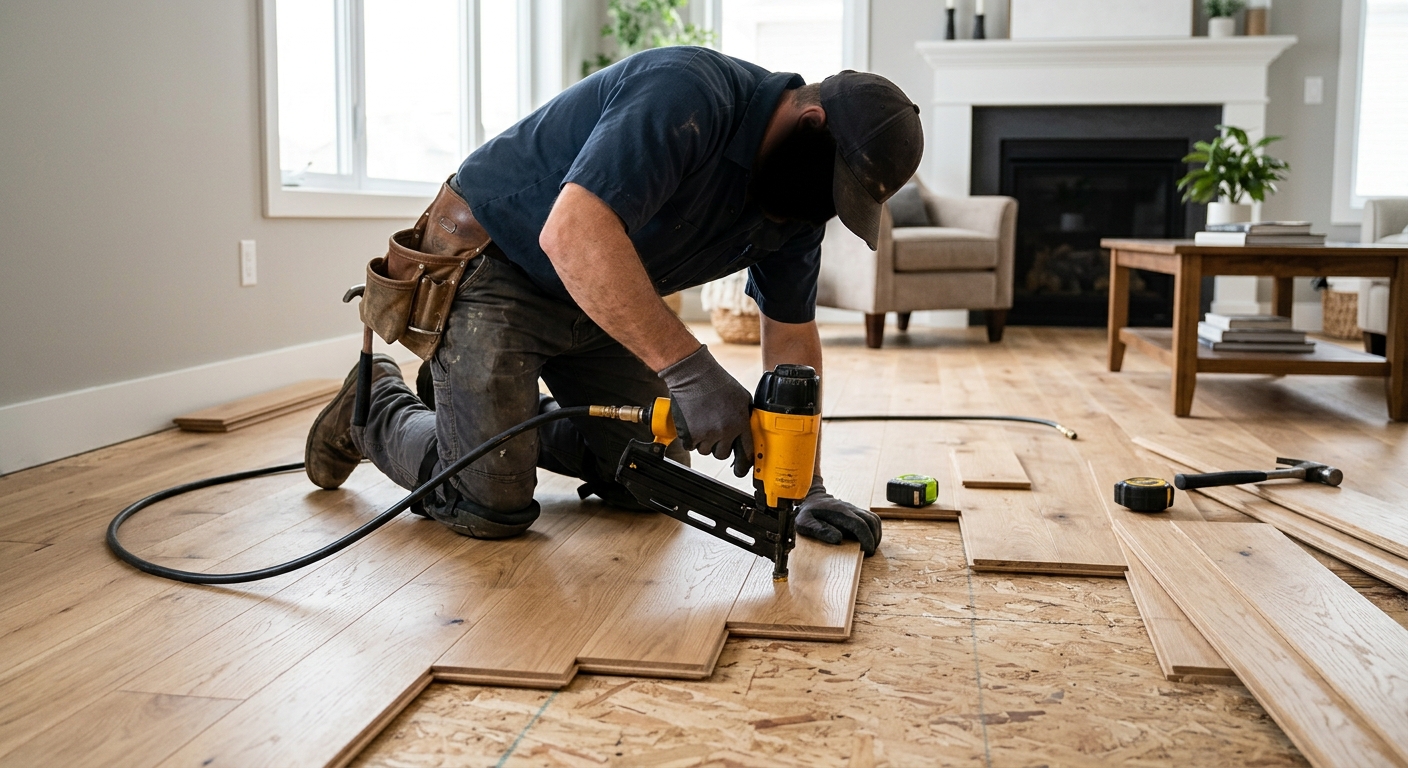
Pemberton Heights homeowners usually start shopping for flooring by price, but the best choice is really about what the Lower Mainland–Southwest climate does to your home. With a population of 2,090 (Statistics Canada, 2021 Census), the area’s contractor pool is smaller than Vancouver’s, so scheduling and site prep quality can swing totals. Another local reality is that many older homes in the Lower Mainland–Southwest housing stock have uneven plywood or concrete surfaces; it’s common to need levelling and, in some cases, a moisture barrier or resurfacing plan before any new floor goes down—often adding roughly $1–$3 per sq ft to project costs.
That same marine climate that keeps winters mild also creates indoor humidity swings in shoulder seasons and winter. Above-grade solid hardwood can still be successful if you control humidity and leave proper expansion gaps, but basements and slab-on-grade areas are a different story. Moisture can wick through concrete, and that’s why we typically avoid solid hardwood below grade and recommend engineered wood or luxury vinyl plank (LVP), which handle humidity far better. If your home has (or you’re adding) radiant heating, it also changes the specification: engineered wood, LVP and tile pair best, while many solid hardwood installs require careful product selection and limits on moisture movement.
In Pemberton Heights, demand is especially steady in the residential pocket near the Lillooet corridor where older stock meets growing renovations—exactly the kind of projects where subfloor prep and moisture planning drive costs. From there, the comparison below will help you budget by room and material.
| Type |
Best Room |
Moisture Resistance |
Lifespan |
Price per sq ft |
| Solid hardwood (nail-down, above grade only) |
Main living areas with stable indoor humidity |
Low—avoid below grade and slab-on-grade |
30+ years with correct conditions |
$9–$18 |
| Engineered hardwood (float or glue, above + on-grade) |
Main living areas, hallways, bedrooms (not bathrooms) |
Medium to high—better with humidity than solid |
25–40 years depending on wear layer |
$10–$16 |
| Laminate (click-lock, above-grade) |
Bedrooms, living rooms (not wet areas) |
Low to medium—edges can swell if exposed |
15–25 years |
$4–$10 |
| Luxury vinyl plank / LVP (waterproof, any level) |
Kitchens, basements (finished), main floors with risk |
High to waterproof—handles moisture vapour better |
15–25 years (product dependent) |
$5–$12 |
| Porcelain / ceramic tile |
Bathrooms, kitchens, entryways |
Very high—excellent for water exposure |
30+ years with proper installation |
$10–$20 |
| Carpet (broadloom or modular tile) |
Bedrooms and stairways (comfort and sound) |
Low to medium—protect from damp subfloors |
8–15 years |
$4–$8 |
Prices are estimates only and vary by project scope, site access and material selection.
What affects the price of flooring in Pemberton Heights
Two quotes for the “same” flooring in Pemberton Heights can differ by 30–50% across the Lower Mainland–Southwest region and the rest of British Columbia because the real cost drivers are rarely the planks or tile—they’re the prep, moisture planning, and how labour is scheduled. In Greater Vancouver and nearby areas, labour demand and specialized subfloor work can push installation time up, especially for levelling and moisture barriers. Add in the fact that homes here are often older, and a floor replacement frequently becomes a subfloor project as much as a finish update.
Technically, indoor humidity swings and below-grade moisture are the key drivers in this region. Solid hardwood expands and contracts with humidity, and it cannot be glued or floated over concrete the way engineered can; it also performs poorly in basements where moisture vapour can rise. Engineered hardwood and LVP are layered products designed to tolerate humidity and minor temperature movement. Tile is dimensionally stable but still depends heavily on correct subfloor flatness and proper underlayment.
Radiant heat compatibility is another pricing lever. If you have in-floor heating (or you’re adding it), many solid hardwood and some laminate specs are restricted, pushing you toward engineered or tile. Finally, older regional housing stock often needs levelling or repair; that’s where you’ll see extras in the $1–$4 per sq ft range. For example, a 600 sq ft main floor might look “similar” on paper at $9–$18 for hardwood, but if levelling adds $2 per sq ft and moisture mitigation is required, the practical budget can move closer to the top end. Conversely, switching to LVP for a basement can reduce risk-driven troubleshooting even if material is only slightly higher than laminate.
| Price Factor |
Why It Matters |
Cost Impact |
| Room area in sq ft |
More square footage increases material quantity and labour time |
Typically scales linearly; big rooms can slightly lower per-sq-ft labour |
| Subfloor condition — levelling or repair needed before install |
Uneven plywood or concrete requires prep to prevent hollow spots and joints opening |
Often adds about $1–$3 per sq ft; can be more for severe repairs |
| Moisture / below-grade install — rules out solid hardwood |
Moisture vapour can ruin solid wood and some edge-jointed products |
May add barriers/mitigation or change the flooring type (engineered/LVP) |
| Material choice — solid vs. engineered vs. LVP vs. tile |
Different materials have different installation complexity and warranty requirements |
Material bands shift overall budget; tile and LVP often cost more installed than laminate |
| Removal and disposal of existing flooring |
Tearing out old underlay, staples, and adhesive can be labour-intensive |
Commonly adds a noticeable per-room charge depending on build-up |
| Stair nosing / transitions — charged per step or per linear foot |
Transitions require trims, mouldings, and precise cuts |
Can add several hundred dollars on typical stair-and-hall layouts |
| Radiant heat compatibility — limits material options |
Heat output affects flooring movement and approved installation methods |
May require specific engineered products or underlay rated for radiant |
| Installation method — float vs. glue-down vs. nail-down |
Glue-down is time-consuming but can improve stability; nail-down needs correct subfloor |
Changes labour hours; glue-down and nail-down often higher labour than click-lock |
Permits & regulations in British Columbia
In British Columbia, the flooring installation itself typically does not require a building permit. However, associated work can trigger permits depending on what else you’re changing. Examples of work that may require permits include electrical work for in-floor heating circuits (especially when wiring, new circuits, or panel changes are involved) and structural or extensive subfloor repairs if they affect load-bearing components. Moisture remediation can also involve specialized measures that contractors should document clearly, even when a permit is not automatically required.
In condominiums across British Columbia (including Pemberton Heights-area buildings with multi-unit layouts), the bigger “rule” is often the corporation’s policies for sound transmission. Many condos require specific underlay, limits on impact noise, and approved installation methods to meet STC/IIC expectations. If you’re installing hardwood or tile above another unit, you should request approval in writing and confirm the required underlay system before work starts.
For verifying a contractor in Pemberton Heights, do it in three steps. First, check their British Columbia contractor licence (or the relevant trade registration if they’re performing scope that falls under a licensed trade). Second, ask for a certificate of insurance showing general liability coverage and confirm the coverage is active for your project dates. Third, confirm they have WSIB/WCB coverage (as applicable for their business). For the paper trail, request clearance letters or proof documents directly; reputable firms will provide them without pressure. Then keep copies with your contract and scope sheet.
Best flooring for each room in your Pemberton Heights home
Choosing flooring room-by-room in Pemberton Heights comes down to moisture exposure, foot traffic, and comfort—especially given the Lower Mainland–Southwest’s wet, marine climate and winter humidity swings. Living and dining rooms generally do best with engineered hardwood or a high-quality laminate, because you get warmth underfoot without the same humidity sensitivity as solid hardwood. For bedrooms, carpet is still a favourite here for comfort and sound absorption, while engineered wood remains a great option if you prefer a cleaner look.
Kitchen performance is where moisture tolerance matters most. LVP (choose a reputable waterproof core) and large-format porcelain tile are the practical winners because they handle spills and frequent wipe-downs. For basements (finished), LVP is usually the clear choice: it’s fully waterproof at the plank level and holds up far better to moisture vapour and below-grade conditions that can ruin solid wood and swell laminate edges. Bathrooms are simple—porcelain or ceramic tile only—because even “water-resistant” surfaces will eventually be challenged by repeated moisture and cleaning agents.
If you have radiant heating, you can still be comfortable, but you need correct material pairing. Engineered wood, LVP and tile tend to be easiest to specify correctly; solid hardwood may be limited by product requirements. A quick budgeting example: upgrading from laminate at about $4–$10 per sq ft to LVP at roughly $5–$12 per sq ft in a 500 sq ft basement might cost an extra $500 to $4,000 installed depending on prep. In most Pemberton Heights basements, that difference is justified because it reduces the risk of cupping, edge swelling, and callback repairs.
| Room |
Best Material |
Why |
Moisture Risk |
Price Band per sq ft |
| Living / dining room |
Engineered hardwood |
Warm feel with better humidity tolerance than solid |
Low to medium (manage indoor humidity seasonally) |
$10–$16 |
| Master bedroom |
Carpet or engineered hardwood |
Carpet adds comfort and sound; engineered stays more durable |
Low (unless there’s known dampness) |
$5–$16 |
| Secondary bedrooms |
Laminate or carpet |
Good value; carpet for comfort if you want quieter rooms |
Low to medium (avoid wet-cleaning spills) |
$4–$10 |
| Kitchen |
Luxury vinyl plank (LVP) or porcelain tile |
Easy cleaning and strong spill resistance |
Medium (daily moisture exposure) |
$5–$20 |
| Basement (finished) |
Luxury vinyl plank (LVP) |
Handles below-grade moisture vapour and stays stable |
High (moisture wicking through concrete is common) |
$5–$12 |
| Bathroom |
Porcelain / ceramic tile |
Best durability for wet areas and cleaning chemicals |
Very high |
$10–$20 |
How to choose a flooring contractor in Pemberton Heights
In Pemberton Heights, the contractor you choose can make or break the job—particularly because Lower Mainland–Southwest moisture conditions mean subfloor prep and correct product specification aren’t optional. Start with licensing and coverage verification. In British Columbia, confirm their business registration/licence that applies to their trade scope, then request a certificate of insurance showing general liability coverage for your project. Next, verify WSIB/WCB coverage (as applicable) and ask for proof that includes your contractor’s account details; if you don’t see it, ask anyway. A contractor who’s confident will provide documents quickly rather than offering vague reassurance.
Then get 2–3 itemised written quotes with a labour + materials breakdown—not a lump sum that hides the difference between prep levels. Make sure the scope clearly states what’s included: subfloor levelling, moisture barrier requirements, underlay, removal and disposal, transition pieces, and stair nosing. Ask whether permits are included for any electrical work related to radiant heating circuits (if applicable). Confirm what’s excluded so you don’t find out later that “prep” wasn’t part of the original price.
Warranties should be spelled out: workmanship coverage length, product/manufacturer warranty terms, and whether the warranty is transferable if you sell your home. Payment scheduling matters too. Never pay more than 10–15% upfront; hold back the remaining balance until the job is complete and you’ve confirmed all transitions, trims, and edge details are finished. Finally, demand a start date and a completion estimate in writing so you can align your move schedule and materials delivery.
- Ask for proof of current insurance (certificate of insurance) naming the correct insured parties.
- Confirm WSIB/WCB clearance/proof, especially if they hire installers or subcontract labour.
- Request the exact floor system: underlay, moisture barrier, and installation method for your room type.
- Get itemised pricing for levelling/patching and moisture mitigation, not just “prep”.
- Ensure removal and disposal are included (or priced separately) so your final cost isn’t surprise.
- Clarify stair nosing and transition pieces: per step and per linear foot pricing should be stated.
- Confirm radiant heat compatibility if you have in-floor heating (approved products and instructions).
- Request a written timeline with delivery lead times and crew schedule expectations.
- Check warranty details: workmanship term, what triggers denial, and whether it’s in writing.
- Confirm how they handle product matching for multi-box installs (batch/lot matching, replacement plan).
- Verify their cleanup plan (dust control, adhesive removal limits, and final inspection checklist).
- Look for a signed contract that includes scope, allowances, and a revision process for extras.
Red flags I see in Pemberton Heights include: vague scope language like “prep as needed” without unit pricing, refusing to show insurance/WSIB/WCB documents, quoting a low price then adding levelling or moisture work after the first day, no written timeline, and offering only a lump-sum figure with no breakdown of transitions, underlay, or disposal.
Frequently asked questions — flooring in Pemberton Heights
How do I fix squeaky floors in my Pemberton Heights home?
Squeaks are usually caused by movement between subfloor layers or between the subfloor and joists. In Pemberton Heights and across the Lower Mainland–Southwest, seasonal humidity can loosen or change the way fasteners sit, so squeaks may worsen in winter or spring. The fix depends on access: if you can reach the underside (crawlspace/basement), contractors often add blocking or additional screws to the subfloor layers to stop vibration. If you only have access from above, the most reliable approach is identifying the squeak location and re-fastening the subfloor through the finish floor (or carefully lifting sections in worst spots). Be cautious with “glue-only” fixes—they can trap moisture. If you’re replacing floors anyway, we can often address squeaks during subfloor levelling, which also helps with joint stability.
What is luxury vinyl plank and is it worth it in Pemberton Heights?
Luxury vinyl plank (LVP) is a layered flooring system with a wear layer on top and a stable core beneath. In British Columbia’s Lower Mainland–Southwest, it’s often worth it because it’s engineered for moisture tolerance—important for humidity swings and the occasional below-grade moisture vapour issues common in older homes. For Pemberton Heights basements, LVP is a frequent top recommendation because it’s waterproof at the plank level, unlike solid hardwood and many laminates that can swell at seams if moisture gets in. Pricing typically lands in the laminate-to-hardwood neighbourhood: roughly $5–$12 per sq ft depending on thickness and brand. The value shows up most where solid wood risk is high—i.e., finished basements, entry areas, and any room with a history of dampness. If you’re careful with subfloor flatness, you’ll also reduce “click” sound issues at seams.
How much does flooring cost in Pemberton Heights?
Costs in Pemberton Heights depend on the flooring type and how much prep your subfloor needs. In the Lower Mainland–Southwest, labour is a major part of the installed price, and older homes often need levelling or patching before new flooring goes down. As a budgeting baseline, solid hardwood typically runs about $9–$18 per sq ft, tile is commonly $10–$20 per sq ft, and laminate/LVP often fall around $4–$10 per sq ft and $5–$12 per sq ft respectively (depending on product). Carpet installation is usually budgeted in the $4–$8 per sq ft range. If you have moisture mitigation, resurfacing, or significant levelling, expect extras that can move the total meaningfully even when materials look “mid-range”. When you get quotes, ask for itemised labour for prep and removal so you can compare apples to apples across contractors.
Hardwood vs laminate vs vinyl plank — which is best?
There isn’t one winner for every Pemberton Heights room, but the decision is straightforward when you match the material to moisture risk. Hardwood (solid) is great for above-grade living areas if you can maintain indoor humidity—solid hardwood is not the best choice for basements or slab-on-grade where moisture vapour can wick up. Engineered hardwood is a middle ground and often performs better in humidity than solid. Laminate is usually the most budget-friendly option in many renovations (often $4–$10 per sq ft), but it’s less forgiving if spills or moisture reach the edges. Vinyl plank (LVP) is often the best “risk-managed” pick for kitchens and basements because it’s waterproof and handles humidity far better; many projects land around $5–$12 per sq ft installed. In homes with radiant heating, engineered wood, LVP and tile are typically easier to specify correctly than solid hardwood. Choose based on where moisture is most likely to get to the floor.
What flooring is best for a Pemberton Heights basement?
For most Pemberton Heights basements, LVP is the practical best option. The Lower Mainland–Southwest climate and older housing stock often mean moisture vapour can rise through concrete, and humidity swings can be more pronounced below grade. Solid hardwood is the least forgiving in these conditions, and many laminate products can swell at seams if moisture gets in. With LVP, the waterproof core is much more tolerant of minor moisture exposure, and it reduces the chance of cupping, joint separation, or long-term musty odours. To make it work properly, you still need a good subfloor assessment: flatness matters, and if there are active moisture issues, the mitigation should be addressed before installation. If your basement also gets radiant heat, LVP still tends to pair well when selected for temperature change. That’s why LVP often costs a little more than laminate, but the total risk-managed value is usually higher.
Can I install hardwood over concrete?
It depends on the type of “hardwood.” In general, solid hardwood is not recommended over concrete in British Columbia because it’s highly sensitive to moisture movement and must be installed with a method that suits wood’s expansion needs; it’s also often not compatible with slab-on-grade conditions where moisture vapour can rise. For concrete slabs, engineered hardwood is commonly the better approach because the layered construction handles humidity movement more reliably and can be installed using the approved method (floating or glue-down, depending on product instructions). If you’re doing this in Pemberton Heights, the subfloor moisture readings and flatness assessment are key—if moisture mitigation or levelling is needed, it should be included in the scope. If you have radiant heat, you’ll need an engineered product specifically approved for that application. Ask your installer to provide the manufacturer’s installation guidelines and the plan for any moisture barriers before you buy.