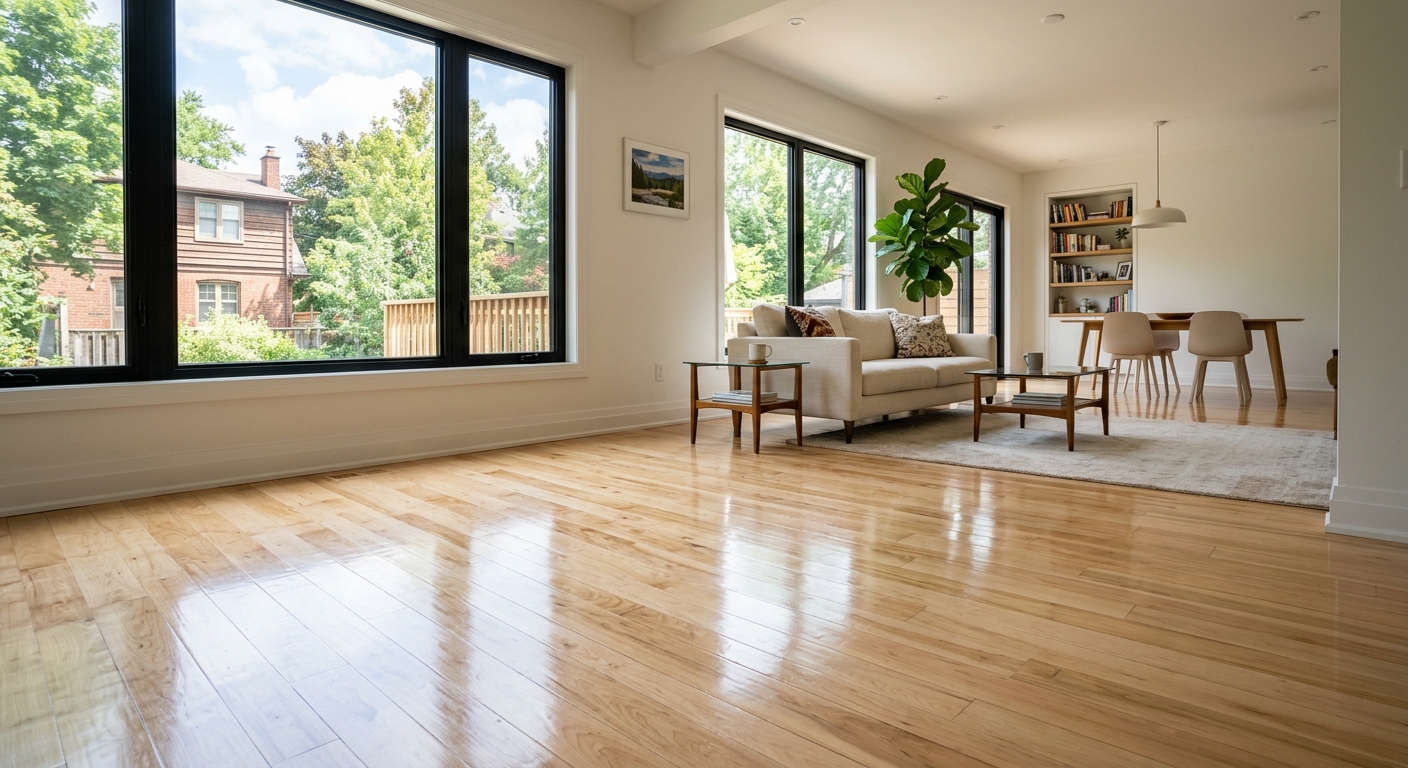
Flooring options and costs in Riley Park
Riley Park homeowners typically start their flooring plans with what looks best, but the Lower Mainland–Southwest market quickly turns the decision into a budget and performance question. With a population of 22,555 (Statistics Canada, 2021 Census), the neighbourhood draws steady demand from long-established contractor crews—yet many of the homes they’re working on are older, and that often means more prep before any finish goes down. In practice, you’ll commonly see uneven plywood or dated concrete subfloors that require levelling, new underlayment, or a moisture-control layer before installation. That preparation step can add roughly $1–$3 per sq ft to project costs in this area.
The region’s wet, marine climate also matters. Winter and shoulder seasons bring indoor humidity swings, and basements and slab-on-grade areas can show moisture wicking through concrete. Because solid hardwood expands and contracts with humidity, it’s generally limited to above-grade installs; below grade it can cup or gap. Engineered hardwood and LVP handle these humidity challenges far better, and they’re also easier to spec over imperfect subfloors. If your home is in the Hastings-Sunrise area (a common pocket for older, character homes), you’ll often find flooring labour is booked quickly because crews are juggling levelling and moisture work for both main floors and basements.
Below are practical options and what they usually cost per square foot in Riley Park, so you can compare apples to apples before you call for an estimate.
| Type |
Best Room |
Moisture Resistance |
Lifespan |
Price per sq ft |
| Solid hardwood (nail-down, above grade only) |
Living / dining |
Low to medium (humidity-sensitive; avoid below grade) |
25–50 years (with proper humidity control) |
$9–$18 |
| Engineered hardwood (float or glue, above + on-grade) |
Main floors |
Medium to high (layered core tolerates humidity better) |
15–35 years |
$10–$17 |
| Laminate (click-lock, above-grade) |
Bedrooms, hallways |
Low to medium (surface water-resistance varies by product) |
10–25 years |
$4–$10 |
| Luxury vinyl plank / LVP (waterproof, any level) |
Kitchen, basement, main floors |
High (PVC core; handles moisture and vapour better) |
15–25 years |
$5–$12 |
| Porcelain / ceramic tile |
Kitchen, bathrooms |
Very high (with proper underlayment and grout maintenance) |
25–50 years |
$10–$20 |
| Carpet (broadloom or modular tile) |
Bedrooms |
Low (can trap moisture; choose moisture-safe underlay) |
7–15 years |
$4–$9 |
Prices are estimates only and vary by project scope, site access and material selection.
What affects the price of flooring in Riley Park
In Riley Park and across the Lower Mainland–Southwest, quotes can swing by 30–50% for the same room size because the true “flooring cost” includes hidden work: subfloor prep, moisture mitigation, transitions, and removal of what’s already there. Two neighbours can both ask for new flooring and end up with very different totals if one home has a flat subfloor and the other has dated, uneven plywood or concrete that needs levelling and a barrier system. Labour is also a major factor here—Greater Vancouver rates tend to be among the highest in Canada—so anything that adds hours (cupping repairs, patching, extra daylighting and cutting) shows up fast on your invoice.
Technically, indoor humidity swings are a key driver. Solid hardwood expands and contracts with seasonal humidity, and it also can’t be reliably glued or floated over concrete in below-grade conditions. That’s why solid hardwood is usually limited to above grade, while engineered hardwood and LVP handle humidity and minor temperature changes far better. Colder inland areas favour radiant heating compatibility, but in the Lower Mainland many homes still have variations in heat sources—so you need the right spec. Older regional housing stock frequently needs levelling or repair, adding about $1–$4 per sq ft. If you’re quoted within the wider hardwood range ($9–$18), ask whether levelling, underlayment, and moisture-control prep are included—those items can shift the price by several dollars per square foot.
Two common Riley Park examples: (1) removing old vinyl sheet and patching low spots before LVP can add labour even though LVP material is budget-friendly (often closer to the $4–$10 laminate / vinyl band); and (2) adding a proper vapour barrier and doing concrete checks before tile or engineered installs can keep your floor warranty-valid, but it adds scope.
| Price Factor |
Why It Matters |
Cost Impact |
| Room area in sq ft |
Directly affects material quantity and labour hours (cutting, trimming, waste) |
Low to high; larger areas reduce per-sq-ft overhead but still increase total cost |
| Subfloor condition — levelling or repair needed before install |
Uneven plywood/OSB or patched concrete increases prep time and may require screeding/patch |
Often adds about $1–$3 per sq ft in older homes |
| Moisture / below-grade install — rules out solid hardwood |
Moisture wicking through concrete increases failure risk for humidity-sensitive floors |
May shift you from $9–$18 hardwood to engineered/LVP pricing |
| Material choice — solid vs. engineered vs. LVP vs. tile |
Different cores and wear layers change longevity and installation method |
Solid and tile typically land at the higher end; LVP/laminate near the lower end |
| Removal and disposal of existing flooring |
Old adhesives, staples, and underlay can be time-consuming to remove |
Often significant; can add several hundred dollars depending on build-up |
| Stair nosing / transitions — charged per step or per linear foot |
Transitions and matching stair details are labour-intensive and need precise measurement |
Can add a noticeable premium versus “simple rectangle” rooms |
| Radiant heat compatibility — limits material options |
Some products tolerate temperature swings better than others |
May require engineered/LVP/tile spec, avoiding expensive mis-matched installs |
| Installation method — float vs. glue-down vs. nail-down |
Method affects labour time, required adhesives/fasteners, and underlayment details |
Can swing totals by multiple dollars per sq ft depending on access and prep |
Permits & regulations in British Columbia
In British Columbia, most flooring installation itself does not require a building permit. That means standard work like installing floating LVP, click-lock laminate, carpet, or nail-down engineered/solid floors above grade typically proceeds without a permit. However, permits can become relevant when flooring work connects to other regulated systems.
Work that may require a permit includes: electrical changes to in-floor radiant heating circuits, any modifications to an electrical panel or thermostats related to the heating system, and certain structural subfloor repairs where there’s more than minor patching (for example, deeper remediation tied to safety or significant structural elements). In condominiums, the big “rules” are often not a building-permit question at all; they’re corporation by-laws on sound transmission. Hard-surface floors on upper levels commonly require specific underlay or proof that the installation meets the condo’s sound-rating expectations (STC/IIC), and you should request written approval before work starts.
Step-by-step for Riley Park homeowners: (1) ask for the contractor’s BC licence and check it on the appropriate provincial registry; (2) request a certificate of liability insurance naming you/your strata (if applicable) where required; (3) verify WSIB/WCB coverage with current clearance information or coverage documents; and (4) keep everything in writing with a signed contract and scope that lists moisture barriers, underlay, transitions, and disposal.
Best flooring for each room in your Riley Park home
Choosing the right material room-by-room is where Riley Park homes win or lose on comfort, maintenance, and how the floor behaves through humid winters and drier stretches. For living and dining areas, engineered hardwood is a strong “Ontario-to-BC logic” upgrade: it still gives you the look of wood, but its layered construction tolerates humidity swings far better than solid hardwood above concrete or in homes that can’t maintain tight humidity levels. If you prefer a budget option for main areas, high-quality laminate can work on above-grade floors, but you need a quality underlay and manufacturer-approved conditions.
For the master bedroom, carpet remains popular because it’s quiet and warm underfoot—use a proper underlay and keep ventilation in mind. In the kitchen, Riley Park’s wet-weather lifestyle makes spills and tracked moisture real: luxury vinyl plank (LVP) with a waterproof core is usually the easiest daily-care choice, and large-format porcelain tile is the other top performer if you want long-term durability and easy mopping. Basements are where climate reality shows: LVP is the clear winner because it handles moisture vapour and below-grade installs better than solid wood and most laminate. Bathrooms are porcelain/ceramic tile only.
If you have radiant heating, you’ll typically want engineered wood, LVP rated for heat, tile, or specific laminate that tolerates higher subfloor temperatures. As a concrete budget example: if your living room is 500 sq ft, moving from laminate (often in the $4–$10 band) to engineered hardwood (often in the $10–$17 range) is commonly justified when you’re paying for less risk of seasonal gapping and fewer callbacks—especially on older subfloors where levelling already adds cost.
| Room |
Best Material |
Why |
Moisture Risk |
Price Band per sq ft |
| Living / dining room |
Engineered hardwood |
Wood look with better humidity tolerance for Lower Mainland conditions |
Low to medium (depends on indoor humidity and subfloor dryness) |
$10–$17 |
| Master bedroom |
Carpet or engineered hardwood |
Carpet adds comfort and sound control; engineered adds easier maintenance |
Low (if the room stays above grade and ventilated) |
$4–$17 |
| Secondary bedrooms |
Laminate (click-lock) or carpet |
Balanced cost and durability for family traffic when installed on level subfloors |
Low (avoid prolonged standing-water exposure) |
$4–$10 |
| Kitchen |
Luxury vinyl plank (LVP) or porcelain tile |
Waterproof performance and easy cleaning in a spill-heavy area |
Medium to high (spills, sink splash, wet coats/boots) |
$5–$20 |
| Basement (finished) |
Luxury vinyl plank (LVP) |
Handles moisture vapour and below-grade conditions far better than solid wood |
High (concrete moisture wicking is common in the area) |
$5–$12 |
| Bathroom |
Porcelain / ceramic tile |
Built for wet conditions with long life when underlayment and grout are done right |
Very high (steam and repeated splash) |
$10–$20 |
How to choose a flooring contractor in Riley Park
Start by verifying credentials the right way—because in British Columbia, the contractor you choose affects everything from flatness to moisture control. Ask for the contractor’s BC licence and check it using the provincial registry; request a current certificate of liability insurance (and ensure it covers your address and project timeframe); and verify WSIB/WCB coverage with clear documentation or clearance. If they can’t provide this quickly, that’s your first signal to pause.
Next, get 2 to 3 itemised written quotes. You want a breakdown that separates labour from materials (including underlayment/vapour barrier, adhesives, transitions, and stair nosing) rather than a vague lump sum. Ask what’s excluded: furniture moving, asbestos testing (if applicable), subfloor patching, levelling/screeding, permit handling (if radiant/electrical is involved), and disposal. A reputable installer should also state how they measure moisture and how they confirm subfloor flatness before installation. Timeline matters too: get the start date and completion estimate in writing, with what happens if materials arrive late.
Warranty and payment structure are where homeowners often get burned. Confirm the workmanship warranty length, whether it’s transferable to a new owner, and what product warranty applies (and under what conditions). Payment should be staged: never more than about 10–15% upfront; keep a holdback until the job is complete and you’ve inspected edges, transitions, and cleanup.
- Check BC licence details and match them to the company name on the contract.
- Request liability insurance and verify the certificate is current (not expired).
- Confirm WSIB/WCB coverage and ask for clearance documentation.
- Get 2–3 itemised quotes (labour vs. materials, not one total).
- Ensure underlayment/vapour barrier is specified for your concrete or plywood subfloor.
- Ask how they handle levelling/repair if the subfloor isn’t flat.
- Verify the scope includes removal and disposal of existing flooring.
- Confirm stair nosing and transitions are quoted per step or per linear foot.
- Ask how they manage indoor humidity during install (especially hardwood).
- Check warranty terms: workmanship length and whether it’s transferable.
- Set a payment schedule with a holdback until you sign off.
- Get a written start date and completion timeline.
Red flags in Riley Park: a contractor who refuses to provide proof of licence or insurance; quotes that don’t include subfloor moisture/levelling scope even when you’re on concrete or have an older home; “too good to be true” pricing that omits stair transitions or disposal; pressure to pay most of the job upfront; and a contract that lacks written product names, thickness, underlay/vapour barrier specs, and clear warranty coverage.
Frequently asked questions — flooring in Riley Park
How do I prepare my subfloor before new flooring?
Preparation is the difference between a floor that looks good for years and one that squeaks, gaps, or lifts. In Riley Park (Lower Mainland–Southwest), start by ensuring the subfloor is clean, dry, and flat—older plywood often needs levelling, and concrete-on-grade can require moisture-control steps. Your contractor should remove old adhesive residue and staples, then check flatness with a straightedge and address low spots with approved patch/screed. For moisture-sensitive installs, ask about moisture testing and the exact vapour barrier/underlay they plan to use. For example, even if you’re targeting a laminate or LVP range (commonly around $4–$10 for laminate/vinyl plank), skipping underlayment and barrier details can add cost later through callbacks. Never install directly over loose flooring—fix first, finish second.
Is cork or bamboo flooring a good choice in Riley Park?
Cork and bamboo can work, but they aren’t my first pick for every Riley Park home because our marine climate can create indoor humidity swings, especially in older houses and any home with moisture-prone basements. Cork is dimensionally more forgiving than solid wood in some cases, but it’s still sensitive to prolonged damp conditions, and many cork products are not intended for below grade. Bamboo behaves more like engineered wood when made as a composite, but some solid or overly rigid formats can still react to seasonal moisture. If you like the look, look for products that are specifically designed for your installation type (above-grade only vs. on-grade) and confirm the manufacturer’s humidity conditions in writing. In many cases, engineered hardwood or LVP in the $10–$17 or $5–$12 bands gives similar aesthetics with fewer humidity surprises in British Columbia. A local installer can also advise on underlay and transition details to reduce cupping or edge lift.
What is the difference between floating and glued-down flooring?
Floating floors are installed to “float” over the subfloor using a click-lock system (common with laminate and many LVP products). They do not use adhesive to bond each plank to the subfloor, so they rely on underlayment for cushioning and sound control. Glued-down floors use adhesive to bond the planks to the subfloor, which can improve stability on slightly uneven surfaces and reduce movement, but it requires careful subfloor prep and correct moisture conditions—particularly over concrete. In Riley Park, floating LVP is popular because it performs well where moisture vapour is present, while glued-down options still need proper moisture-control layers. If you’re comparing budgets, you’ll often see laminate bands around $4–$10, while higher-end engineered or more involved installs can land in the $9–$18 hardwood range depending on material and prep. Ask your contractor to clearly state the installation method and the required underlay/vapour barrier for your specific product and subfloor.
What flooring holds up best to pets in a Riley Park home?
For pets in British Columbia homes, you want a surface that resists scratches, handles occasional puddles, and is easy to clean without trapping moisture. In Riley Park, waterproof LVP is usually the top practical choice—its PVC core and sealed surface reduce swelling risks from the kinds of spills pets cause. Choose a wear layer rated for light-to-heavy residential traffic (your contractor can match it to your pet situation) and use appropriate pads for furniture. Laminate can work, but standing water at seams is where it usually fails. Carpet can be comfortable, but it holds odours and can be harder to dry quickly if a spill goes unnoticed—meaning you must treat accidents fast and use the right underlay. If your home has any basement/grade concerns, steer toward LVP rather than solid hardwood. Budget-wise, it’s common to see LVP totals around $5–$12 per sq ft, depending on product and prep, while solid hardwood typically sits higher in the $9–$18 band and is more humidity-sensitive.
How do I fix squeaky floors in my Riley Park home?
Squeaks are usually caused by movement between the subfloor boards, joists, or underlayment layers—often worsened by age, humidity changes, or loose fasteners. The fix depends on where the squeak is coming from. For some floors, a contractor can locate the affected areas and re-screw subfloor panels into joists, then patch and reinstall the finished surface. In other cases, squeaks come from an underlayment issue or from a surface that wasn’t properly fastened during the last renovation. In Riley Park’s older housing stock, levelling and patching can also reduce flex that creates noise. If you plan to install new flooring, it’s best to address squeaks before the finish goes down, because new floors can “lock in” the noise and make it harder to access later. Ask for an inspection and a short diagnostic plan before quote finalization; a good installer will tell you whether the squeak needs repair, shimming, additional fastening, or only an underlayment change.
What is luxury vinyl plank and is it worth it in Riley Park?
Luxury vinyl plank (LVP) is a multi-layer vinyl floor with a wear layer on top and a core that’s typically more stable than many wood products in humid conditions. In Riley Park and the Lower Mainland–Southwest, it’s often worth it because our wet, marine climate can bring indoor humidity swings, and basements/slab-on-grade areas can see moisture wicking through concrete. LVP’s sealed, waterproof or water-resistant construction generally handles minor moisture conditions better than solid hardwood and most laminates, reducing the risk of cupping, gapping, and edge swelling. It also tends to install faster, which helps control labour costs. Pricing varies widely by wear layer and thickness, but many homeowners see LVP budgets around $5–$12 per sq ft, while tile commonly sits around $10–$20 and solid hardwood often falls within $9–$18. If you want a durable, low-maintenance floor for kitchens or finished basements, LVP is usually one of the best value choices in British Columbia.