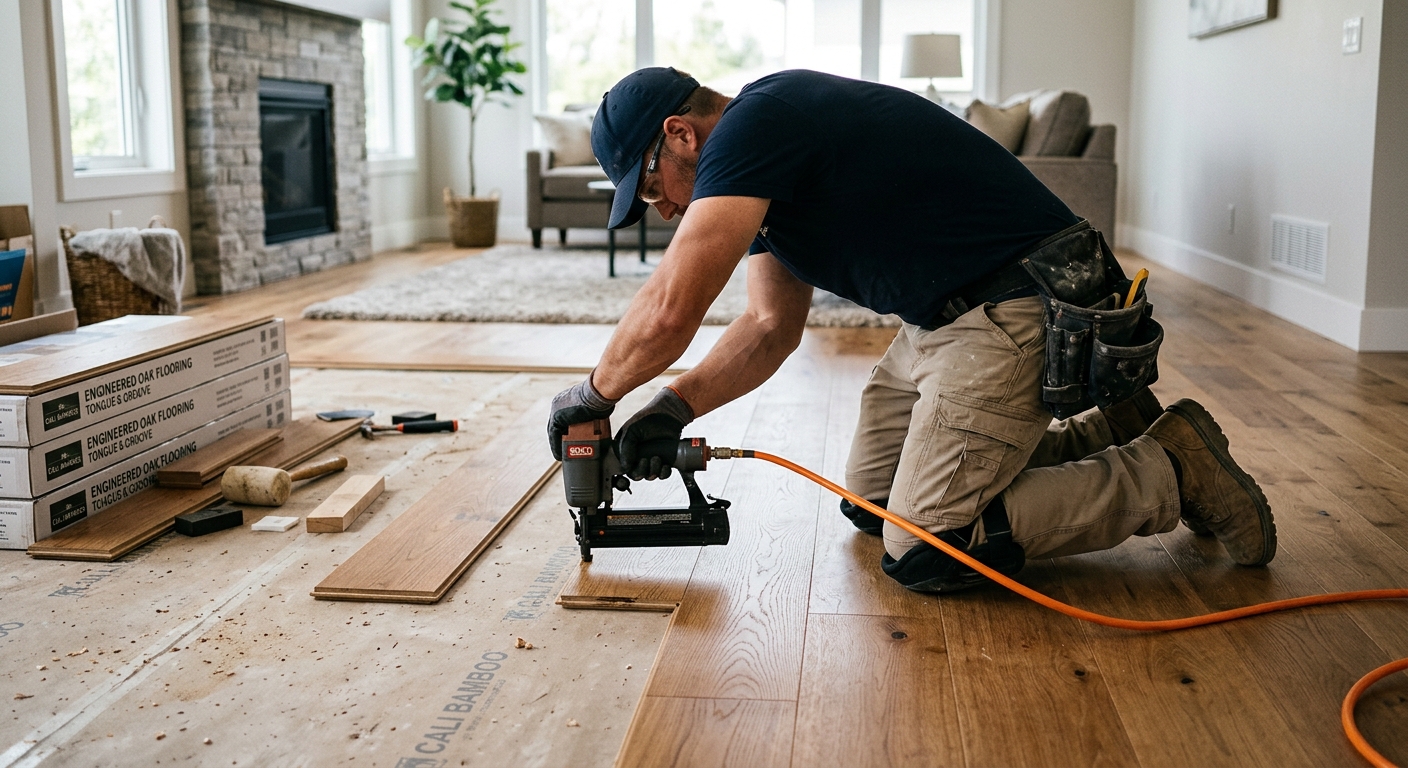
Flooring options and costs in Brampton
Brampton homeowners have plenty of flooring choices, but the “right” option is usually about moisture tolerance and getting the subfloor right the first time. With a population of 656,480 (Statistics Canada, 2021 Census), there’s also a steady demand for renovations—so quotes can reflect both material availability and contractor scheduling. One major cost driver in Brampton is the age of many homes: 23.4% of dwellings were built before 1981 (Statistics Canada, 2021 Census), and that often means you’ll need subfloor levelling and sometimes plywood replacement before a new finish goes down. For many projects, that prep cost becomes the difference between “materials are mid-range” and “the budget is not.”
Toronto-area indoor humidity swings are wide across seasons, and that affects how floors behave. Solid hardwood can look outstanding, but it expands and contracts with humidity; it’s also a poor fit for basements and it’s typically not recommended over concrete. In most Brampton homes (especially where concrete slabs are involved or humidity runs high), engineered hardwood or luxury vinyl plank (LVP) tends to price well against its performance. If you’re in parts of Brampton with more older stock—like near Queen Street West and the older residential pockets around Williams Parkway—this trade is in demand because floors need prep as much as they need finish.
Use the table below as a realistic starting point for product costs, then you can decide how much to allocate to prep and installation.
| Type |
Best Room |
Moisture Resistance |
Lifespan |
Price per sq ft |
| Solid hardwood (nail-down, above grade only) |
Main living areas (not basements) |
Low to moderate (humidity sensitive) |
25–60 years |
$9–$18 |
| Engineered hardwood (float or glue, above + on-grade) |
Main living areas, hallways |
Moderate to high (dimensionally stable) |
15–40 years |
$8–$16 |
| Laminate (click-lock, above-grade) |
Bedrooms, living rooms |
Low to moderate (spills can damage edges) |
10–25 years |
$4–$8 |
| Luxury vinyl plank / LVP (waterproof, any level) |
Kitchen, finished basement |
High (waterproof core) |
15–30 years |
$5–$10 |
| Porcelain / ceramic tile |
Kitchen, bathrooms, entries |
Very high (when installed correctly) |
25–50 years |
$12–$25 |
| Carpet (broadloom or modular tile) |
Bedrooms, stairs |
Low (can hold moisture) |
8–15 years |
$5–$11 |
Prices are estimates only and vary by project scope, site access and material selection.
What affects the price of flooring in Brampton
In Brampton (and across the Toronto region), it’s common to see quotes for the “same” flooring project land 30–50% apart. The biggest reason isn’t just the finish—it’s the technical scope hidden under the surface. Toronto-area homes see wide indoor humidity swings between seasons, and that drives extra subfloor preparation and changes which materials will perform. On top of that, many Brampton neighbourhoods contain older housing stock, so contractor time is often spent levelling, repairing damaged OSB/plywood, and addressing moisture mitigation before any new floor goes in.
Technically, solid hardwood expands and contracts with humidity and it’s not designed to be glued or floated over concrete. That makes it a tough choice for basements and for on-slab installs. Engineered hardwood and luxury vinyl plank are built to handle humidity and below-grade conditions far better, so they reduce risk and callbacks. In colder parts of Ontario and in newer custom builds, radiant floor heating is also common, which can shift the selection away from traditional solid hardwood and some laminate types that don’t like rapid temperature cycling.
Here are typical ways local conditions move the budget: (1) A 1,200 sq ft living space in an older home may need levelling and patching that adds roughly $1–$4 per sq ft to the overall job before you even lay planks. (2) If you’re finishing a basement where moisture vapour is present, switching to LVP that’s truly waterproof often costs more per sq ft than mid-range laminate—often in the $5–$10 band versus $4–$8—but you avoid the high cost of replacing a floor that’s swollen or failing.
| Price Factor |
Why It Matters |
Cost Impact |
| Room area in sq ft |
Material take-off and labour time scale directly with square footage |
Low to moderate; most predictable variable |
| Subfloor condition |
Levelling/repair is often required in older Brampton homes |
Can add $1–$4 per sq ft |
| Moisture / below-grade install |
Rules out solid hardwood; may require vapour control and proper underlayment |
Often adds the most risk-related cost |
| Material choice |
Solid vs engineered vs LVP vs tile have different tolerances and install systems |
Wide spread across the $4–$25 per sq ft bands |
| Removal and disposal of existing flooring |
Demo, haul-away, and subfloor impacts labour days |
Moderate; varies with what’s being removed |
| Stair nosing / transitions |
Stairs require custom nosing, edging, and tighter tolerances |
Adds cost per step or per linear foot |
| Radiant heat compatibility |
Limits material options and affects installation method and expansion planning |
Moderate; can change product and underlay |
| Installation method |
Float, glue-down, and nail-down each require different prep and labour |
Moderate; affects timelines and manpower |
Permits & regulations in Ontario
In Ontario, installing new flooring by itself usually does not require a building permit. That means replacing carpet, installing laminate or vinyl over an existing floor system, or laying tile with standard underlay systems typically falls under contractor scope without permits. However, permits can come up if the project involves associated work that touches electrical or structural elements.
What typically does require a permit (or at least triggers permit requirements through the right trades) includes: installing or modifying radiant floor heating electrical circuits (often tied to electrical permitting), adding new electrical components for floor heat controls, and any work that is considered electrical in nature. If you’re doing structural subfloor repair beyond simple patching—like significant joist repairs or changes to load-bearing assemblies—permissions may be required through the appropriate processes.
In condominiums in Brampton, the corporation’s rules can effectively act like a “restriction,” especially around sound transmission. Even when no permit is needed, boards commonly require specific underlay and installation methods to meet sound ratings (STC/IIC). Before you start, request written approval and follow the condo declaration requirements for underlay thickness, installation floating requirements, and the floor covering limitations if any.
To verify a contractor in Ontario: ask for their Ontario licence details (where applicable to their trade scope), proof of liability insurance, and evidence of WSIB/WCB coverage. You can confirm legitimacy by checking online contractor listings/registries (where available), requesting a current certificate of insurance, and ensuring your quote includes the correct coverage information before work begins.
Best flooring for each room in your Brampton home
Choosing the right flooring in Brampton means thinking about moisture exposure, day-to-day traffic, and how materials react to humidity swings. Living and dining rooms are where many homeowners want warmth and a premium look; engineered hardwood is a strong fit because it handles seasonal humidity better than solid hardwood, while still giving you the “real wood” appearance that suits Brampton’s family-friendly homes. Secondary bedrooms often do well with high-quality laminate or carpet, depending on whether you prioritize easy maintenance or comfort underfoot.
Kitchens are different: water spills, wet shoes, and cleaning products are part of daily life. For most Brampton homes, luxury vinyl plank (LVP) or large-format porcelain tile performs best for day-to-day practicality. For basements, the climate reality matters—below-grade moisture and vapour are common in older housing stock—so LVP is usually the clear winner. Solid hardwood and most laminate are risky in basements and can fail if moisture vapour isn’t controlled. Bathrooms should be porcelain or ceramic tile only, with proper waterproofing and grouting practices. If you have or plan radiant floor heating (increasing in newer Ontario homes), engineered wood, tile, and certain vinyl products are usually more compatible than traditional solid hardwood because of heat and expansion considerations.
Where the price difference is justified: if you compare laminate at $4–$8 per sq ft to LVP at $5–$10, that extra cost often makes sense for basements or entryways with seasonal moisture. For a 500 sq ft finished basement, that can mean roughly a $500 to $1,000 difference in material banding, but it can protect you from premature replacement due to moisture-related swelling.
| Room |
Best Material |
Why |
Moisture Risk |
Price Band per sq ft |
| Living / dining room |
Engineered hardwood |
Warmth and look of wood with better humidity stability |
Low to moderate |
$8–$16 |
| Master bedroom |
Carpet or engineered hardwood |
Comfort and sound absorption for carpet; stable wood feel for engineered |
Low |
$5–$11 |
| Secondary bedrooms |
Laminate |
Easy maintenance, strong everyday durability |
Low |
$4–$8 |
| Kitchen |
Luxury vinyl plank (LVP) or porcelain tile |
Handles spills and frequent cleaning without warping |
Moderate to high |
$5–$25 |
| Basement (finished) |
Luxury vinyl plank (waterproof) |
Best fit for below-grade moisture vapour and practical maintenance |
High |
$5–$10 |
| Bathroom |
Porcelain / ceramic tile |
Impervious surface and long service life when installed properly |
High |
$12–$25 |
How to choose a flooring contractor in Brampton
When you hire a flooring contractor in Brampton, start with proof—not promises. For Ontario projects, ask for their liability insurance certificate and confirmation of WSIB/WCB coverage so you’re not stuck with risk if something goes wrong on-site. You should also confirm their relevant trade authorization for the type of work you’re paying for (especially if the scope includes electrical-related radiant heat adjustments, which ties into permitted work through other trades). You can check coverage documents by verifying dates, named insured, and coverage limits on the certificate of insurance, then confirming WSIB/WCB status through the information they provide.
Next, get 2–3 written, itemised quotes. You want a labour + materials breakdown rather than one lump sum, so you can compare “like for like” scope: exact underlay type, subfloor prep allowances, transition details, and whether floor removal and disposal are included. Read the exclusions carefully—common gaps include not replacing damaged plywood, not leveling beyond a stated tolerance, or not including stair labour. Also confirm whether permits are included if you’re doing radiant heat that requires electrical work by licensed trades.
Warranty matters too: demand the workmanship warranty length, and ask whether it’s transferrable if you sell your home. Payment schedules should be conservative—never more than 10–15% upfront—and hold back payment until key completion points are verified (for example, final installation walkthrough and snag list resolved). Finally, ask for a start date and realistic completion estimate in writing so the schedule is not “best effort.”
- Provide written proof of liability insurance and WSIB/WCB coverage before work starts.
- Use itemised quotes showing labour, subfloor prep, underlay, transitions, and stair work.
- Confirm the exact floor model, thickness, wear layer (if applicable), and underlay specifications.
- Ask what moisture mitigation steps are included for below-grade installs.
- Check whether plywood replacement or levelling is included beyond “patch and go.”
- Verify removal and disposal costs are stated (including haul-away fees).
- Demand clear transition details at doorways, thresholds, and between rooms.
- Get the stair nosing/edging plan quoted per step or per linear foot—no vague “stairs included.”
- Review warranty: workmanship term, product warranty term, and transferability.
- Ensure the quote lists who is responsible for protecting walls/trim and completing trim reinstalls.
- Ask for an installation timeline with start date and estimated completion in writing.
- Confirm payment schedule (10–15% max upfront) and a holdback until the final walkthrough.
Red flags in Brampton: quotes that won’t itemise subfloor prep, vague “moisture handled” wording without specifying vapour control/underlay, contractors asking for large upfront payments, no written warranty terms, or refusal to provide insurance/coverage documentation before you sign.
Frequently asked questions — flooring in Brampton
Engineered vs solid hardwood — what's the difference?
Solid hardwood is one continuous piece of wood, installed typically nail-down on an above-grade subfloor system. It’s more sensitive to indoor humidity swings common in the Brampton/Toronto area, so it’s not a good match for basements or directly over many concrete scenarios. Engineered hardwood uses a wood veneer on top of multiple layers of plywood/fibre, making it more dimensionally stable. That stability usually makes engineered easier to install on-grade or in homes where humidity varies seasonally. It also tends to be a better fit when you want a wood look without the higher risk of movement. As a budget reference, engineered often lands in the $8–$16 band, while solid hardwood commonly falls in the $9–$18 range.
Do I need to level my subfloor first?
In most Brampton renovations—especially in homes built before 1981 where subfloor condition can be uneven—levelling is one of the most important steps. If the surface has dips, high spots, or soft areas, click-lock laminate can flex and joints may separate; LVP can telegraph imperfections; and tile can crack if the base isn’t properly prepared. Engineered hardwood may not fail immediately, but unevenness can still cause gaps and squeaks. Quotes vary because subfloor levelling isn’t “optional prep”—it’s what protects your new floor. Many projects see an added $1–$4 per sq ft when levelling or repairs are required, depending on how much patching/replacement is necessary.
What's the most durable flooring for pets and kids?
For many families in Brampton, luxury vinyl plank (LVP) is the most practical durable choice because it’s waterproof, handles daily messes, and doesn’t react to minor moisture the way wood and some laminate products can. It also typically stands up better to impact than laminate due to its resilient core. If you prefer the hardest-wearing option, porcelain/ceramic tile is extremely durable, but it’s harder underfoot and more prone to chip risk if heavy items are dropped. Carpet can be comfortable and great for sound, but it’s less forgiving for pet accidents and can trap odours if moisture gets absorbed. Budget-wise, LVP is commonly in the $5–$10 per sq ft range, while tile often starts higher at $12–$25 depending on product and layout.
How do I choose flooring for humidity in Brampton?
Brampton’s indoor humidity swings mean you should choose materials that tolerate seasonal changes without excessive movement. Solid hardwood is the most sensitive option and is best kept above grade in well-controlled indoor humidity. If you’re finishing a basement or dealing with a slab installation, engineered hardwood or LVP is typically safer because they handle humidity and below-grade conditions better when installed with correct underlay/vapour control systems. Also pay attention to installation details: expansion gaps, acclimation time, and a properly prepared subfloor all affect performance. If you want “wood look” in a higher-humidity area, engineered in the $8–$16 band is often the middle path between aesthetics and stability. For moisture-prone areas like basements, prioritise LVP in the $5–$10 band.
Do condos restrict hard flooring?
Yes, Brampton condos often restrict or regulate hard flooring through the building’s rules on sound transmission. Even when no building permit is required to install flooring, the condo corporation can require specific underlay or installation systems to meet sound-rating expectations (often STC/IIC-related requirements). Some buildings also require board approval in writing before work starts, especially for hardwood, tile, and other hard surfaces. The risk for homeowners is that a floor installed without the required underlay or without following the condo’s method can trigger a corrective order after the fact. Before you order materials, ask your property manager for the approved underlay list and install method requirements, and keep that approval documentation for your records.
How do I compare flooring quotes?
To compare flooring quotes in Brampton properly, make sure you’re comparing the same scope. Ask for itemised pricing that separates materials, labour, subfloor prep (levelling/repair), removal and disposal, underlay/vapour control, transitions, and stair work. Confirm the exact product names and specifications (wear layer thickness for vinyl/laminate, thickness and construction for engineered, tile format and installation system). A good quote will also state what’s included—and what’s excluded—so you’re not surprised by extra costs later. Verify coverage: request proof of liability insurance and WSIB/WCB coverage, and confirm warranties for both workmanship and product. Finally, compare total installed cost, but also evaluate risk: choosing LVP at $5–$10 can outperform cheaper laminate at $4–$8 if your area has below-grade moisture or humidity swings.