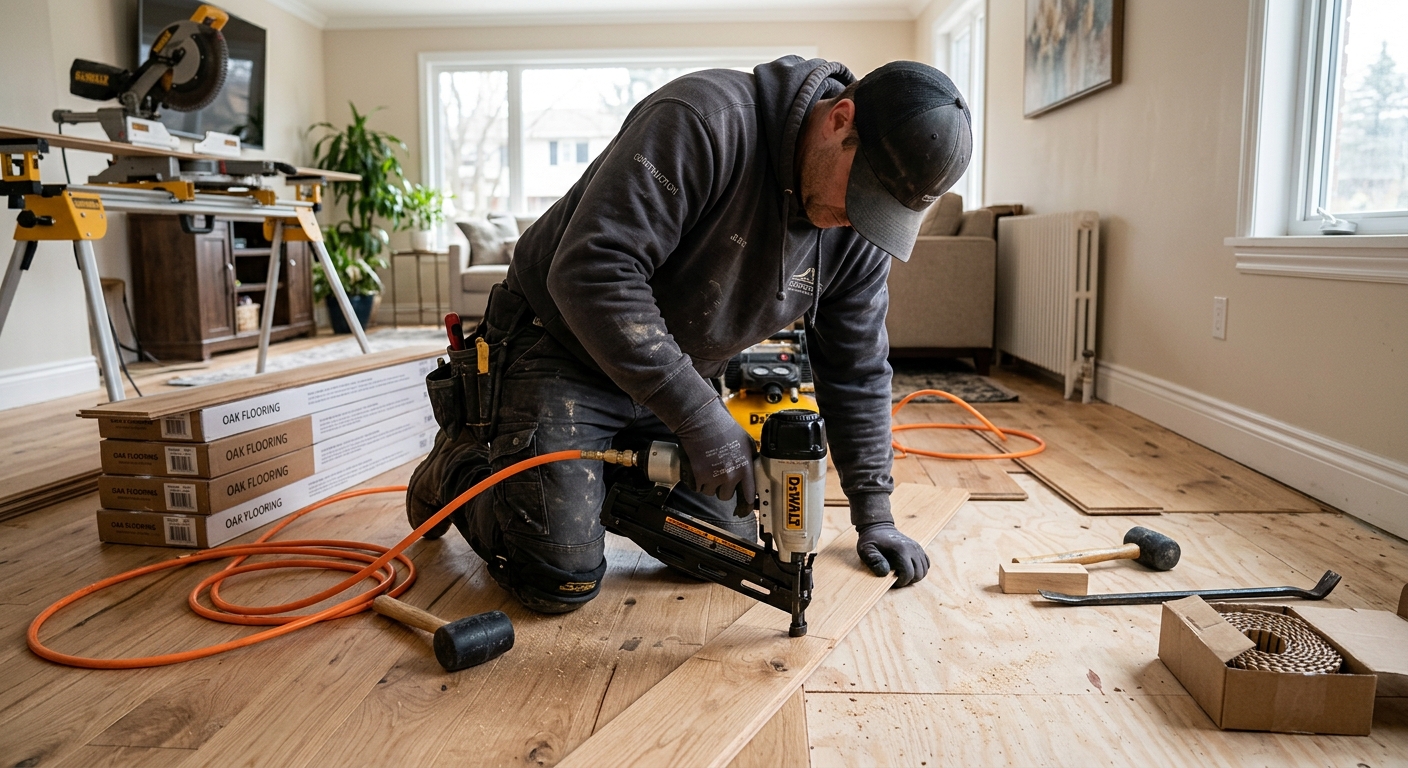
Flooring options and costs in Dufferin Grove
Dufferin Grove, Ontario homeowners usually start their flooring search with three goals: warmth, durability, and something that can handle Toronto’s real-life indoor humidity swings. With Dufferin Grove’s broader Toronto-area housing mix, many properties are older—Statistics Canada’s 2021 Census places the local population at 11,785—so it’s common to uncover subfloor issues during prep. In practice, that prep can mean levelling compounds, plywood patching, or moisture mitigation before any new floor goes down, which is one reason “same materials” quotes can still land far apart.
In the Toronto market, contractor availability and labour demand are also higher than in many other parts of Ontario due to steady renovation activity. That matters because most finished-floor systems are only as good as the install: better underlay, flatness corrections, and proper acclimation typically cost more, but they reduce squeaks, gapping, and premature wear. For most Dufferin Grove homes—especially condos and newer infill builds—engineered hardwood or luxury vinyl plank (LVP) is the safest performance bet when humidity fluctuates and schedules are tight. Solid hardwood looks fantastic, but it moves more with moisture and becomes a risk over concrete and in below-grade areas.
We see especially strong demand from families and condo owners around the Trinity-Bellwoods and Dufferin Grove west-side corridor, where walkability drives renovation urgency. Next, here’s a quick cost comparison to anchor your planning.
| Type |
Best Room |
Moisture Resistance |
Lifespan |
Price per sq ft |
| Solid hardwood (nail-down, above grade only) |
Main living areas (above grade) |
Low to moderate (moves with humidity) |
30–60 years |
$9,00 – $18,00 |
| Engineered hardwood (float or glue, above + on-grade) |
Living, dining, bedrooms (where allowed) |
Moderate to high (more stable) |
20–40 years |
$10,00 – $17,00 |
| Laminate (click-lock, above-grade) |
Living areas, hallways (dry zones) |
Low to moderate (edges can swell) |
10–25 years |
$4,00 – $9,00 |
| Luxury vinyl plank / LVP (waterproof, any level) |
Kitchen, hallways, basements (finished) |
High (waterproof when installed correctly) |
15–25 years |
$6,00 – $12,00 |
| Porcelain / ceramic tile |
Kitchen, bathrooms, entries |
Very high (waterproof surface) |
25–50 years |
$12,00 – $25,00 |
| Carpet (broadloom or modular tile) |
Bedrooms, stairs (comfort/sound) |
Low (needs protection from moisture) |
7–15 years |
$5,00 – $11,00 |
Prices are estimates only and vary by project scope, site access and material selection.
What affects the price of flooring in Dufferin Grove
In Dufferin Grove and the wider Toronto market, it’s not unusual to see quotes for the “same size room” vary by 30–50%. The biggest reasons are technical and install-specific: Toronto homes deal with indoor humidity swings across seasons, and that affects how flooring must be acclimated and what subfloor prep is needed. Labour demand and wage levels in the region also push costs up when renovation schedules are busy, so installer rates and crew availability can change your total even if the product price looks similar.
Solid hardwood is the most sensitive option. It expands and contracts with humidity and is not a good choice for basements or installs over concrete—meaning you often end up paying for extra prep or changing your flooring choice. Engineered hardwood and LVP handle humidity better and are designed for on-grade and many below-grade situations, so they typically reduce “surprise” costs during installation. In colder parts of the region and in newer custom builds where radiant floor heating is increasingly common, solid hardwood is often ruled out or limited; you’ll see more engineered wood, tile, and select vinyl options.
Older regional housing stock frequently needs subfloor levelling or repair before any finish goes in. That can add roughly $1–$4 per sq ft depending on how out-of-flat the surface is and whether plywood replacement is needed. As an example, moving from laminate in the $4–$9/sq ft band to engineered hardwood often adds material cost, but it can be justified if your subfloor requires more robust underlayment/flatness and you want better stability through Ontario’s moisture cycles.
| Price Factor |
Why It Matters |
Cost Impact |
| Room area in sq ft |
More square footage increases material and labour, plus waste |
Directly scales total cost |
| Subfloor condition |
Levelling/patching must be done for a flat, squeak-free install |
Often adds a meaningful line item |
| Moisture / below-grade install |
Rules out solid hardwood; demands vapour control for other systems |
Can add mitigation materials and time |
| Material choice |
Solid vs engineered vs LVP vs tile changes prep, labour technique, and warranty requirements |
Shifts you between typical $4–$18/sq ft bands |
| Removal and disposal of existing flooring |
Old flooring and adhesives can be labour-intensive; disposal fees apply |
Commonly adds cost beyond “materials only” quotes |
| Stair nosing / transitions |
Transitions and stair details require additional components and labour per step |
Usually charged per step or per linear foot |
| Radiant heat compatibility |
Limits choices; some products require specific underlay and temperature protocols |
May require a different product selection |
| Installation method |
Float vs glue-down vs nail-down affects labour time, subfloor prep and equipment |
Different methods can change total by thousands on larger rooms |
Permits & regulations in Ontario
In Ontario, installing new flooring by itself usually does not require a building permit. That said, related work can trigger requirements. For example, if your project includes electrical changes for radiant floor heating, any new circuits, or modifications tied to in-floor heating controls, electrical permits can be required. Structural or building-envelope-adjacent items—like significant subfloor structural repairs, moisture remediation that involves drainage/venting changes, or major alterations—may also need permits depending on scope and assessment by the municipality and/or building consultant.
For condominiums in Dufferin Grove (and across Toronto), the bigger practical rule is often not a permit—it’s the corporation’s policy. Sound transmission requirements (STC/IIC) can restrict or specify underlay for hard surface flooring on upper floors. If you’re installing hardwood or tile above grade in a multi-unit building, you should review the condo declaration and request board approval in writing before work starts.
To protect yourself, verify a contractor’s Ontario credentials and coverage step-by-step. Ask for: (1) proof of Ontario licence/registration where applicable, (2) a Certificate of Insurance showing general liability and any relevant endorsements, and (3) WSIB/WCB clearance (or a clear exemption statement). Then check the certificate expiry dates before the first day of work. For additional peace of mind, confirm the contractor’s standing in the appropriate online registry and retain copies of insurance and clearance letters in your project file.
Best flooring for each room in your Dufferin Grove home
Choosing flooring room-by-room is especially important in Dufferin Grove because Toronto’s indoor humidity swings and frequent wet seasons punish materials differently. For living and dining areas, engineered hardwood or high-quality laminate can balance warmth with durability, as long as the subfloor is level and the installation follows manufacturer requirements. In the master bedroom, homeowners often prioritize comfort and quiet—carpet is great for sound absorption—or choose engineered hardwood if you want a cleaner look.
In kitchens, spills happen and cleaning is constant. Luxury vinyl plank (LVP) is usually the practical win because it’s waterproof when properly installed and can tolerate everyday splashes better than laminate. For a more premium, long-life finish, large-format porcelain tile is also excellent—just remember it’s harder underfoot and may need area rugs for comfort. In bathrooms, porcelain or ceramic tile is the standard because water resistance is non-negotiable.
Basements are where the Toronto climate and building stock show their impact. Solid hardwood is risky over concrete or in below-grade moisture conditions, and most laminate can fail at seams if vapour is present. For finished basements, LVP is the clear winner: fully waterproof flooring systems handle moisture vapour and below-grade installs far better.
Radiant floor heating is increasingly common in new Ontario builds. In rooms over in-floor heating, engineered wood, tile, and select vinyl products tend to be the best fit because they can be used with controlled temperature/expansion guidance. For a simple dollar justification: if your decision is between laminate around $4–$9/sq ft and LVP around $6–$12/sq ft, the extra LVP cost is often worth it once you factor in basement moisture tolerance and reduced risk of edge swelling.
| Room |
Best Material |
Why |
Moisture Risk |
Price Band per sq ft |
| Living / dining room |
Engineered hardwood |
Warm feel, stable through humidity swings |
Low to moderate (manage indoor humidity) |
$10–$17 |
| Master bedroom |
Carpet or engineered hardwood |
Comfort and sound control with carpet; durability with engineered |
Low |
$5–$11 |
| Secondary bedrooms |
Laminate (higher-grade) or LVP |
Good durability for daily use; easier maintenance than carpet |
Low to moderate |
$4–$9 |
| Kitchen |
Luxury vinyl plank (LVP) |
Waterproof, comfortable enough, quick cleanup |
Moderate (spills and wet mops) |
$6–$12 |
| Basement (finished) |
Luxury vinyl plank (LVP) |
Designed for below-grade and moisture vapour exposure |
High |
$6–$12 |
| Bathroom |
Porcelain / ceramic tile |
True water resistance and long-term performance |
High |
$12–$25 |
How to choose a flooring contractor in Dufferin Grove
Start by confirming the contractor’s Ontario compliance and coverage. Ask for proof of licensing/registration where applicable, and request their Certificate of Insurance (general liability) along with WSIB/WCB clearance. How to check: verify the policy effective dates and that the certificate lists your contractor as the insured; then confirm the WSIB/WCB document is current and matches the business name you’re hiring. Don’t accept verbal assurances—get copies before the first materials arrive.
Next, require 2–3 itemised, written quotes rather than a lump sum. A proper quote breaks out labour, underlay, adhesives (if glue-down), levelling/patching, stair work, transitions, and disposal. It should also state what’s excluded—common exclusions include subfloor replacement, hidden moisture remediation, moving appliances, or asbestos/lead testing if old materials are suspected. If radiant heat is involved, ask whether the plan includes manufacturer-required temperature ramp-up and installation conditions.
Review warranty details carefully: workmanship warranty length, product/manufacturer coverage, and whether it’s transferable if you sell your home. For payment, never pay more than 10–15% upfront; keep a holdback until you’re satisfied with completion and the final cleanup. Also get the start date and completion estimate in writing so the timeline is enforceable if delays happen.
- Provides a written contract with labour + materials breakdown
- Shows proof of insurance and WSIB/WCB clearance before work begins
- Insists on subfloor flatness checks and documents findings
- Uses manufacturer-approved underlay and acclimation procedures
- Includes removal, disposal, and patch/levelling scope explicitly
- Lists transition and stair nosing pricing per step or linear foot
- States timeline with start date and a completion window
- Includes warranty terms in writing (workmanship and product)
- Prevents moisture problems with vapour barriers where required
- Communicates dust control and protection for nearby finishes
- Explains how radiant heat compatibility is handled (if applicable)
- Schedules site access and confirms delivery dates to avoid downtime
In Dufferin Grove, a few red flags I see often: quoting “too low” without subfloor prep details, refusing to provide written itemization, vague warranty language (“best effort” instead of coverage terms), asking for large upfront payments, and skipping moisture assessment for basements or below-grade installs.
Frequently asked questions — flooring in Dufferin Grove
Hardwood vs laminate vs vinyl plank — which is best?
In Dufferin Grove, the “best” option depends on where you’re installing. If you’re above grade and the subfloor is flat, engineered hardwood can be a great balance of warmth and stability through Ontario’s humidity swings. Solid hardwood looks high-end, but it’s more sensitive to moisture and is a poor fit for basements or over concrete. Laminate is typically the most budget-friendly route (often $4–$9/sq ft), but it can be vulnerable at seams if moisture vapour gets under it. Luxury vinyl plank (LVP) is usually the safest choice for kitchens and finished basements because it’s waterproof and handles below-grade conditions better than most laminate. If you want one practical rule: choose engineered hardwood for above-grade living areas, and choose LVP wherever moisture risk is higher.
What flooring is best for a Dufferin Grove basement?
For a Dufferin Grove basement, I typically recommend waterproof LVP as the default—especially if you have a concrete slab and seasonal humidity changes. Toronto-area homes can show indoor moisture variation, and below-grade vapour is a common challenge in older stock. Solid hardwood is risky in basements because of movement and moisture sensitivity, and most laminate can fail at joints. Tile can work well too, but it often costs more in labour and requires extra consideration for underlayment and floor heights. With LVP, the key is correct prep: addressing moisture sources, using the right vapour-control approach where required, and keeping the subfloor flat. Budget-wise, LVP often sits around the $6–$12/sq ft range, but it can save money long-term by reducing repair/redo risk.
Can I install hardwood over concrete?
Sometimes, but not with traditional nail-down solid hardwood. Solid hardwood is generally limited to above-grade installations and typically should not be installed over concrete slabs due to moisture and movement. If you’re set on a wood look over concrete, engineered hardwood is usually the more suitable choice because it’s built to be more dimensionally stable. Still, the subfloor must be properly prepared—flatness and moisture conditions matter a lot in the Toronto area. If you do have radiant heat, you’ll need a product that’s explicitly compatible and an installation plan that follows manufacturer temperature requirements. Practically, the “can I” answer is: engineered wood is your pathway; solid hardwood is usually a risk in Ontario basements and over concrete.
How long does flooring installation take?
Most installations in Dufferin Grove run faster than homeowners expect, but only if the site is ready. For a typical one-room job, you might see a couple of days for flooring install once prep is done—preparation (removal, levelling, patching, and acclimation) is often what expands the schedule. Larger areas or multi-room projects can take a week or more depending on transitions, stair work, and whether plywood replacement or moisture mitigation is required. If radiant floor heating is involved, timelines can stretch because installers must coordinate with heat protocols and ensure the substrate meets conditions. For budgeting, don’t just compare $4–$9/sq ft laminate to $6–$12/sq ft LVP—ask your contractor how many days are allocated for subfloor correction and disposal. Those prep days are where delays usually occur.
What flooring works with radiant heat?
Radiant heat compatibility in Ontario usually means choosing products that tolerate controlled temperature changes and expansion without compromising the install. In many Toronto-area renovations, engineered hardwood is commonly paired with radiant floors, and tile is also a proven option because tile tolerates heat well when installed over suitable substrates. Certain LVP products can work too, but only when the manufacturer lists radiant heat compatibility and specifies underlayment rules. Traditional solid hardwood is often restricted because it can expand/contract more under heat cycles, and basements are already moisture-sensitive. If radiant heating is part of your plan, the most important step is to confirm the product listing and to follow the temperature ramp-up process the manufacturer requires. A good contractor will provide this documentation before you sign.
Engineered vs solid hardwood — what’s the difference?
Solid hardwood is a single piece of real wood, which is why it has that classic look, but it’s also more sensitive to moisture and humidity. In Dufferin Grove’s seasonal humidity swings, solid wood can move—so it’s usually best limited to above-grade rooms and avoided in basements or over concrete. Engineered hardwood is made in layers: a real wood veneer on top with stabilizing layers underneath. That construction makes it more dimensionally stable, which is why it’s commonly recommended for on-grade installs and many scenarios where humidity risk is higher. In terms of budget, engineered hardwood often lands in the $10–$17/sq ft range, while solid hardwood may be in the $9–$18/sq ft band depending on grade and finishing. If you want the wood look with better stability through Ontario conditions, engineered is typically the smarter choice.