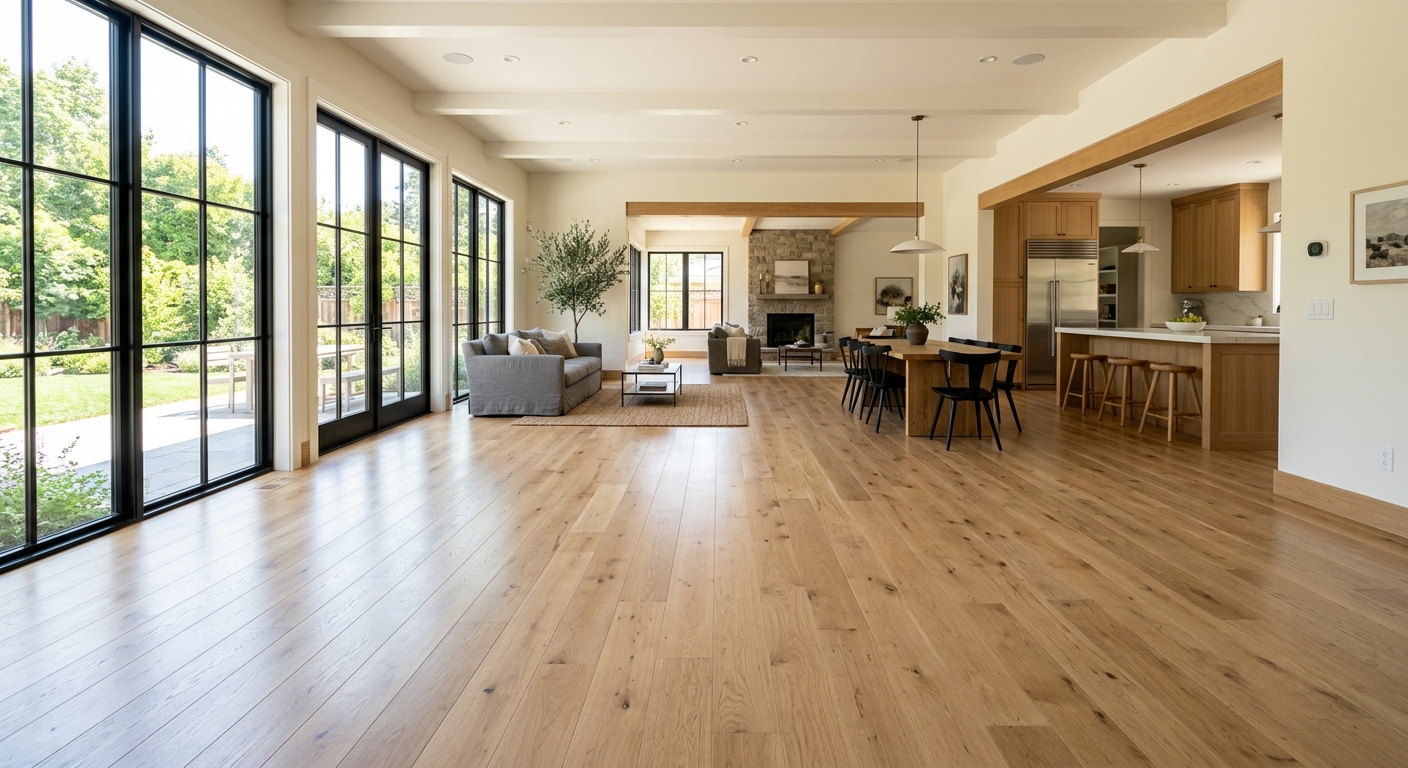
Flooring options and costs in Regent Park
Regent Park, Ontario is a neighbourhood where many homes sit right in the middle of Toronto’s renovation wave, so flooring choices come with very practical budget realities. With a 2021 population of 10,803 (Statistics Canada, 2021 Census), you’ll often see steady contractor availability for interiors in the downtown core—especially around King St and the broader Regent Park redevelopment area—while pricing still reflects intense demand across the Toronto economy region.
In terms of project planning, the biggest cost swing usually isn’t the “flooring” itself—it’s what’s underneath. A lot of the housing stock in the Toronto area dates from the 1960s to 1990s, and it commonly needs subfloor levelling, plywood patching, or moisture mitigation before installs can start. That prep can add roughly $1 to $4 per sq ft, and occasionally more if you’re dealing with significant OSB/ply replacement or drainage issues near slab edges.
Toronto also has wide indoor humidity swings across seasons. That matters because solid hardwood expands and contracts with moisture, so it’s risky over concrete and especially in basements. For most Regent Park homeowners, engineered hardwood and luxury vinyl plank (LVP)—both designed for above-grade and on-grade installs—are the safer play, particularly in condos and newer infill builds. If you’re adding radiant floor heating, engineered wood and many tile or specific vinyl systems are better matched than traditional solid hardwood. As a result, your final quote often lands in a predictable range: hardwood tends to run about $9 to $18 per sq ft, while laminate or vinyl plank usually sits around $4 to $9 per sq ft.
Below is a practical comparison to help you line up expectations before we talk about what drives the final number.
| Type |
Best Room |
Moisture Resistance |
Lifespan |
Price per sq ft |
| Solid hardwood (nail-down, above grade only) |
Living / dining (above grade) |
Low to moderate (humidity sensitive) |
30+ years (if conditions stay stable) |
$9–$18 |
| Engineered hardwood (float or glue, above + on-grade) |
Main floor and bedrooms |
Moderate to high (more stable than solid) |
20–35 years |
$10–$17 |
| Laminate (click-lock, above-grade) |
Living areas (not basements) |
Moderate (surface resists spills; edges can swell) |
10–25 years |
$4–$9 |
| Luxury vinyl plank / LVP (waterproof, any level) |
Kitchen and basement (finished) |
High (waterproof core for spills and humidity) |
15–25 years |
$5–$11 |
| Porcelain / ceramic tile |
Kitchen and bathrooms |
Very high (tile itself is moisture-proof) |
25+ years |
$12–$25 |
| Carpet (broadloom or modular tile) |
Bedrooms and stairs |
Low (needs prompt drying of spills) |
7–15 years |
$4–$10 |
Prices are estimates only and vary by project scope, site access and material selection.
What affects the price of flooring in Regent Park
In Regent Park and across the Toronto area, quotes for the same floor type can swing by 30–50% because the “flooring install” is really a package: subfloor prep, moisture control, removal, underlayment, transitions, and labour efficiency. Two contractors may price the same $9–$18 hardwood project differently simply because one finds additional subfloor repairs once they remove baseboards and flooring, while the other assumes a best-case substrate.
Toronto’s indoor humidity swings are the key technical driver. Solid hardwood expands and contracts with moisture, so it can’t be glued or floated over concrete and it performs poorly in basements. That pushes many homeowners toward engineered hardwood or luxury vinyl plank, which are made to handle humidity and can be installed for more challenging on-grade or below-grade scenarios. Colder stretches of the region and modern renovation patterns also influence material choices—if you’re adding radiant floor heating (in new custom builds or major renos), most owners lean toward engineered wood, tile, or certain vinyl systems rather than traditional solid.
Older regional housing stock also affects cost. It’s common to see plywood replacement, levelling compound, or moisture mitigation before the new floor can go down. In practice, that often adds $1 to $4 per sq ft, and it can climb when joists require correction or when slab flatness is poor. For Regent Park homes, two common “budget changers” are (1) removing existing flooring and discovering damaged OSB/underlayment, and (2) needing additional labour for stair treads, nosing, and transition reducers—especially where you move between carpet and hard surfaces.
The material price band still matters—hardwood tends to sit around $9–$18 per sq ft, while LVP and laminate often land around $4–$9—yet the prep and labour line items are what typically determine whether your final total stays near the low end or approaches the high end.
| Price Factor |
Why It Matters |
Cost Impact |
| Room area in sq ft |
More square footage means more product, more labour hours, and more waste allowance |
Direct: larger areas usually lower cost per sq ft slightly |
| Subfloor condition |
Levelling compound, plywood repair, or joist corrections must be done for a flat, stable base |
Common add: about $1–$4 per sq ft for prep |
| Moisture / below-grade install |
Moisture rules out solid hardwood and can affect laminate; engineered wood and LVP are more forgiving |
May add labour and barrier materials; can increase total 10–25% |
| Material choice |
Solid vs engineered vs LVP vs tile differ in product price and installation complexity |
Hardwood and tile often cost more than laminate/vinyl |
| Removal and disposal of existing flooring |
Old flooring, adhesives, and underlay can be time-consuming—especially with multiple layers |
Often a meaningful add, especially for tile/adhesive systems |
| Stair nosing / transitions |
Stairs require precise cuts, nosing finishing, and careful height matching |
Charged per step or per linear foot; can add hundreds |
| Radiant heat compatibility |
Heat and expansion need a compatible floor system; solid hardwood is typically limited |
May require a different product and underlayment system |
| Installation method |
Float, glue-down, or nail-down affects labour time and subfloor prep standards |
Glue-down and nail-down usually demand higher prep quality |
Permits & regulations in Ontario
In Ontario, installing flooring itself typically does not require a building permit. The work is usually considered finish carpentry—especially when you’re replacing a floor surface without changing structural components. However, related work can trigger permits, depending on what’s being altered. For example, if your project includes electrical work for in-floor radiant heating circuits, that electrical work generally requires electrical permitting and must be done by a qualified electrical contractor. If you’re doing structural subfloor repair that involves major modifications to supports (or significant structural changes), you may also need permits as part of the broader scope.
Condominiums add a separate layer of oversight: the corporation’s rules on sound transmission. Many buildings require specific underlay systems and limit floating hard-surface installations to protect occupants below. Before you install engineered hardwood, laminate, or tile on upper floors, request written approval from the building management and confirm the sound-rated underlay requirements (STC/IIC targets are commonly referenced in condo rules). Keep that approval for your records—regardless of the floor type.
To verify your contractor in Regent Park, start with Ontario licence status (where applicable for the contractor’s business profile), then confirm liability insurance and WSIB/WCB coverage. Ask for a certificate of insurance that lists you as a certificate holder where possible, plus proof of coverage for workers performing the installation. When you’re planning a job that includes demolition, dust control, or any electrical/radiant components, ensure the contractor’s paperwork matches the exact scope being performed. Finally, don’t rely on verbal assurances—request everything in writing, including any condo approvals if you live in a multi-unit building.
Best flooring for each room in your Regent Park home
Choosing flooring in Regent Park is less about trends and more about matching each room to Toronto’s humidity pattern, foot traffic, and cleaning needs. In living and dining areas, engineered hardwood is often the best balance: it gives you the warmth and look homeowners want while tolerating indoor moisture changes better than traditional solid hardwood. High-quality laminate can also work above grade when your subfloor is flat and dry, but it’s not the first choice for areas that see frequent wet mopping.
For master bedrooms, carpet is still a strong comfort option—especially for sound dampening and underfoot warmth—while engineered hardwood is a solid alternative if allergies or vacuum maintenance drive your decision. In kitchens, luxury vinyl plank (LVP) and large-format porcelain tile lead the pack. LVP is waterproof and handles the everyday risks (spills, damp socks, and cleaning), while tile is moisture-proof and ideal where you want crisp cleaning and long-term durability.
Basements in the Toronto market are where materials most often fail, because humidity and below-grade moisture vapour are common. That’s why fully waterproof LVP is usually the clear winner for finished basements: solid wood is risky over concrete and in wet environments, and many laminate products struggle with edge swelling when moisture finds its way in. Bathrooms should be porcelain or ceramic tile only for moisture safety.
If you have radiant floor heating in a room, talk to your installer about compatible systems. Many owners pairing engineered wood or certain vinyl products with radiant heat find fewer expansion headaches than with traditional solid hardwood.
Budget-wise, the difference can be justified. For example, if a tile floor lands around $12–$25 per sq ft versus LVP at about $5–$11, tile can be worth it in bathrooms because it’s built for moisture and long lifespan—whereas LVP’s value is strongest when your priority is waterproof performance in basements and kitchens.
| Room |
Best Material |
Why |
Moisture Risk |
Price Band per sq ft |
| Living / dining room |
Engineered hardwood |
Warm look with better moisture stability for Toronto humidity swings |
Low to moderate |
$10–$17 |
| Master bedroom |
Carpet or engineered hardwood |
Carpet adds comfort and sound control; engineered adds easy upkeep |
Low |
$4–$10 |
| Secondary bedrooms |
Luxury vinyl plank (LVP) |
Resilient for family life; good scratch resistance and easy cleaning |
Low |
$5–$11 |
| Kitchen |
Luxury vinyl plank (LVP) or porcelain tile |
Waterproof spills protection; tile wins for long-term moisture resistance |
Moderate to high |
$5–$25 |
| Basement (finished) |
Luxury vinyl plank (waterproof) |
Designed for below-grade installs and humidity; avoids solid wood failures |
High |
$5–$11 |
| Bathroom |
Porcelain / ceramic tile |
Moisture-proof surface and durable for long service life |
Very high |
$12–$25 |
How to choose a flooring contractor in Regent Park
Start by verifying the essentials for any contractor you’re inviting into your home in Regent Park: licence status where relevant, liability insurance, and WSIB/WCB coverage. Ask for proof upfront before you sign anything. Liability insurance matters because flooring work involves ladders, cutting tools, and debris removal—if something damages your home, you want coverage. For WSIB/WCB, you’re checking that the contractor’s workers are properly covered while on your site. Request the certificate of insurance and evidence of coverage; if they can’t provide it, that’s a major warning.
Next, request 2–3 itemised written quotes. You want a breakdown that separates materials and labour line items, plus clear allowances for underlayment, transitions, and stair work. Avoid “lump sum” quotes that don’t specify what’s included. Make sure the scope is explicit: subfloor prep standards, levelling/repair plan, moisture mitigation steps, underlay type, removal and disposal, and whether baseboards/trim are included or reinstalled.
Warranty matters in Ontario because workmanship failures are common when subfloors weren’t prepared properly. Ask for the workmanship warranty length and whether it covers labour only or labour plus related materials. Confirm the manufacturer warranty and whether it’s transferable to the homeowner. For payment, never pay more than 10–15% upfront; hold back the remainder until the job is completed and you’ve verified transitions, alignment, and clean-up. Finally, get a start date and a completion estimate in writing so you aren’t left waiting while Toronto’s renovation demand stretches schedules.
- Ask for proof of liability insurance and confirm it covers work performed at your address.
- Confirm WSIB/WCB coverage for installers before any demolition begins.
- Get itemised quotes separating labour, materials, underlayment, and prep work.
- Verify what’s included in subfloor levelling/repair (and what isn’t).
- Confirm disposal is included (and whether it includes extra dump fees).
- Ask how they handle moisture mitigation for on-grade and below-grade installs.
- Request a written plan for transitions and stair nosing, including pricing per step/linear foot if applicable.
- Check whether baseboards are removed and reinstalled or replaced.
- Ask for the underlay spec (for LVP click systems or engineered floating floors).
- Confirm warranty terms: workmanship length, product warranty, and transferability.
- Set a payment schedule: 10–15% max upfront; hold back until final walkthrough.
- Get an installation timeline with a written start date and completion target.
Red flags in the Regent Park market: contractors who won’t provide insurance/WSIB proof, quotes that don’t mention subfloor prep (or treat it as “included” without conditions), pressure to pay most of the balance upfront, vague scopes that omit disposal and stair/transition pricing, and crews that refuse a written start date while giving only a “sometime next week” schedule.
Frequently asked questions — flooring in Regent Park
How do I prepare my subfloor before new flooring?
In Regent Park, subfloor prep is where projects succeed or fail because Toronto’s humidity swings can reveal flatness and moisture problems quickly. The goal is a clean, dry, level surface. First, remove existing flooring and any loose underlayment or nails/screws. Sweep and vacuum thoroughly, then check flatness with a straightedge; if you see humps or dips, plan for levelling/patching. If there’s any sign of moisture—musty odours, damp spots, discolouration, or peeling adhesives—address it before you install. Many older Toronto-area homes (often 1960s–1990s builds) need plywood replacement or levelling compound; budget for prep that may add roughly $1–$4 per sq ft. For basements, solid hardwood is risky, while waterproof LVP is commonly chosen because it’s more forgiving for below-grade conditions. (Statistics Canada, 2021 Census)
Is cork or bamboo flooring a good choice in Regent Park?
Cork and bamboo can look great, but in Ontario—including Regent Park—you need to be cautious about moisture stability. Cork is naturally resilient and comfortable, which homeowners like, but it’s not automatically “waterproof,” and it can be sensitive to prolonged dampness at seams or in below-grade settings. Bamboo quality varies widely by hardness and whether it’s engineered; solid bamboo is also typically more humidity-sensitive than engineered options. If you’re installing above grade and your humidity control is good, engineered bamboo or cork flooring can be considered, but you still need a properly prepared, dry substrate and correct underlay. For basements, most homeowners in Regent Park are steered toward engineered hardwood or luxury vinyl plank (LVP) because they’re built for on-grade or below-grade installs and Toronto humidity swings. If your budget is tight, LVP at around $5–$11 per sq ft is often a better risk-managed choice than specialty materials that need stricter conditions.
What is the difference between floating and glued-down flooring?
Floating flooring is installed over an underlay without rigidly fastening the boards to the subfloor. Click-lock laminate and many floating engineered hardwood floors “float,” allowing small movement as humidity changes. That’s helpful in Regent Park where indoor moisture swings can be noticeable season to season. Glued-down flooring is bonded directly to the subfloor (commonly used for certain engineered hardwood installations). Glued-down systems can feel more solid and reduce squeaks, but they require excellent subfloor flatness and the right adhesive/moisture conditions. Over concrete, nailed-down solid hardwood is generally not the right approach, and glue-down decisions depend heavily on moisture testing and slab condition. From a practical pricing view, glued-down or more labour-intensive installs can push the project toward the higher end of hardwood budgets (roughly $10–$17 per sq ft for engineered) versus simpler floating systems. In all cases, confirm the manufacturer’s approved installation method and moisture requirements.
What flooring holds up best to pets in a Regent Park home?
For pets in Regent Park, the best performance usually comes from durable, easy-to-clean surfaces with good scratch and stain resistance. Luxury vinyl plank (LVP) is the most common “pet-friendly” pick because it’s waterproof and handles accidents quickly—especially in kitchens and basements where moisture is more likely. Many LVP products also have strong wear layers designed for claws and daily traffic. Carpet can work for comfort, but it stains and retains odours more easily, and pet messes must be cleaned promptly. Hardwood—especially solid—can scratch and can be more sensitive to moisture and humidity swings; engineered hardwood is often a better compromise than solid, but it still needs protective cleaning habits. If your priority is a low-stress floor that tolerates the realities of pet life, LVP in the $5–$11 per sq ft band often delivers strong value. Pair that with felt pads, regular trimming, and a quick wipe routine for spills.
How do I fix squeaky floors in my Regent Park home?
Squeaks usually come from movement between the subfloor layers, fasteners loosening, or joists rubbing against each other—not from the surface flooring alone. In Regent Park homes, especially older builds, squeaks can be intensified when the floor dries out or swells with humidity changes. The best fix depends on where the squeak originates. Common approaches include tightening or re-fastening subfloor panels to joists, adding screws in a strategic pattern, or addressing gaps between subfloor layers. Sometimes you’ll need to lift a portion of the flooring to properly fix the base; other times you can correct it from below (if you have a crawl space or accessible ceiling area). Avoid “glueing the board” as the first solution because it can trap moisture and create bigger problems. If you’re planning a full flooring replacement anyway, have the contractor evaluate squeak causes during prep—subfloor levelling and secure fastening often reduce future noise. A well-prepared base is also what keeps engineered hardwood or LVP from shifting over time.
What is luxury vinyl plank and is it worth it in Regent Park?
Luxury vinyl plank (LVP) is a multi-layer vinyl flooring with a protective wear layer on top and a stable core beneath. In Regent Park and across Toronto, LVP is often worth it because it handles wide indoor humidity swings better than many wood-based surfaces and it’s built for moisture exposure. The key benefit is that quality LVP is waterproof, which makes it a strong option for kitchens and finished basements where moisture vapour and spills are common. Solid hardwood is risky in basements and over concrete, and many laminate products struggle at seams when humidity is high. With LVP, homeowners generally get a practical combination: easier cleaning, fewer moisture-related call-backs, and durable everyday performance. Price-wise, LVP is commonly budgeted around $5–$11 per sq ft, while tile can run roughly $12–$25 per sq ft and hardwood often starts higher (about $9–$18). If your home has older subfloors that need prep, LVP’s forgiving nature often makes it the most cost-effective choice.