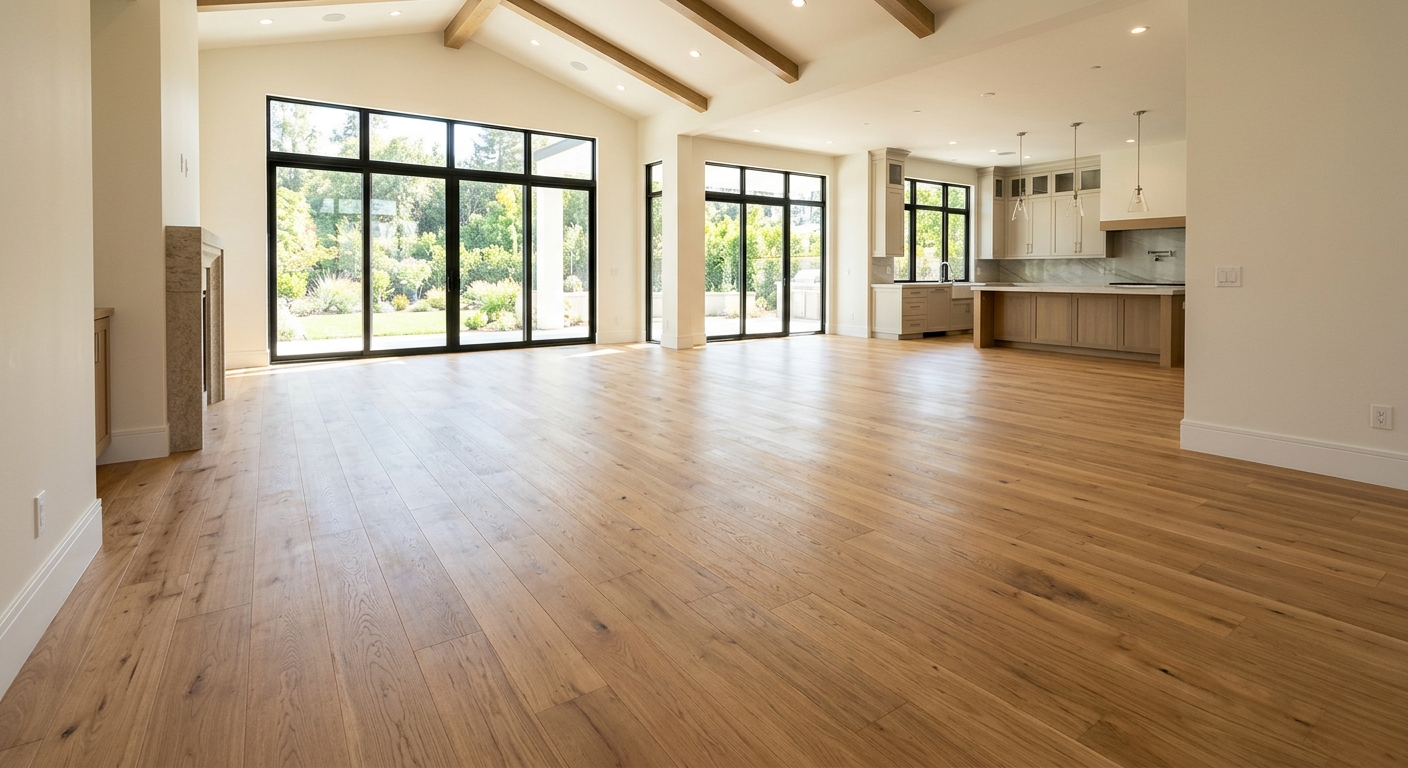
Flooring options and costs in St. Catharines
Flooring costs in St. Catharines tend to follow a pretty predictable pattern: your home’s age, how moisture behaves in your basement, and whether the floor system can handle Ontario’s seasonal swings. With a population of 136,803 (Statistics Canada, 2021 Census), St. Catharines has a steady mix of owner-occupied homes—37,945 homeowner households (Statistics Canada, 2021 Census)—so there’s plenty of repeat demand for upgrades from carpet to hard surface. It also means many projects touch older housing; 71.0% of homes were built before 1981 (Statistics Canada, 2021 Census), so subfloor levelling and repair commonly show up in the estimate before new flooring can go down.
In the Hamilton–Niagara Peninsula, humidity swings and basement moisture are the cost drivers behind “why the same square footage can price differently.” Solid hardwood can move with indoor humidity, and it’s not a good fit for basements or concrete slabs. That’s why engineered hardwood and luxury vinyl plank (LVP) are so common around the Martindale / Merritton and Facer / Glendale areas, especially where homeowners are aiming for a warmer look without battling below-grade vapour. Also, colder-season heating cycles push demand for radiant-heat-compatible flooring—engineered wood, LVP, and many tile systems—while most nail-down solid hardwood options get limited to above-grade use.
Below is a realistic installed-cost benchmark to help you compare quotes apples-to-apples, before we break down what changes pricing in the next section.
| Type |
Best Room |
Moisture Resistance |
Lifespan |
Price per sq ft |
| Solid hardwood (nail-down, above grade only) |
Living / dining, hallways |
Low (not for basements or concrete slabs) |
25–50 years (with refinishing) |
$9–$18 |
| Engineered hardwood (float or glue, above + on-grade) |
Living areas, bedrooms, main floor on wood subfloors |
Medium to high (better dimensionally stable) |
15–30 years |
$10–$17 |
| Laminate (click-lock, above-grade) |
Bedrooms, living rooms (dry areas) |
Low to medium (protect from standing water) |
10–25 years |
$4–$10 |
| Luxury vinyl plank / LVP (waterproof, any level) |
Kitchen, bathrooms (where suitable), finished basement |
High (waterproof core) |
10–25 years |
$6–$12 |
| Porcelain / ceramic tile |
Kitchen, bathrooms, entries |
High (when properly installed) |
25–50 years |
$10–$22 |
| Carpet (broadloom or modular tile) |
Bedrooms, stairs, family rooms |
Medium (can be affected by damp basements) |
8–15 years |
$4–$9 |
Prices are estimates only and vary by project scope, site access and material selection.
What affects the price of flooring in St. Catharines
In the Hamilton–Niagara Peninsula, it’s common to see quote ranges for the same footprint swing by 30–50%. The reason isn’t the flooring you chose—it’s what contractors uncover after they start: subfloor flatness, moisture risk, removals, transitions, and how the installer adapts the system to your home’s build. Ontario labour and site prep also vary by crew availability, which matters in a busy market where many upgrades follow seasonal weather windows.
Technically, indoor humidity swings and below-grade moisture are the key drivers. Solid hardwood expands and contracts with humidity—so it can cup, gap, or fail if you install it over concrete or in a basement. Engineered hardwood and LVP are more dimensionally stable and handle below-grade applications far better. Cold-weather requirements also influence product choice: radiant-heat-compatible flooring is in demand in this region, which typically rules out most solid hardwood and some laminate when a heating system is involved.
Older regional housing stock frequently needs subfloor levelling or repair; that can add roughly $1–$4 per sq ft depending on how far out-of-flat the surface is and whether damaged OSB/plywood sections must be replaced. For example, if you’re converting an older carpeted living room with a wavy subfloor, you may pay toward levelling that pushes you toward the upper end of laminate / LVP pricing (closer to $4–$10 for vinyl plank systems or $4–$10 for laminate, depending on product grade). In comparison, a clean, level above-grade install could land you near the middle of the engineered hardwood band ($10–$17 installed) instead of the top end.
| Price Factor |
Why It Matters |
Cost Impact |
| Room area in sq ft |
Material, underlayment, labour time and waste increase with area |
Small rooms often cost more per sq ft due to minimum labour charges |
| Subfloor condition |
Levelling/repair must meet flatness requirements for click-lock and tile |
Typical add: $1–$4 per sq ft when repair/levelling is required |
| Moisture / below-grade install |
Solid hardwood can’t handle basements and concrete the way engineered/LVP can |
May shift you from solid hardwood ($9–$18) to engineered/LVP ($10–$17 / $6–$12) |
| Material choice |
Core type, thickness, wear layer and warranty drive price |
Hard surfaces (tile $10–$22, hardwood $9–$18) cost more than laminate/LVP |
| Removal and disposal of existing flooring |
Carpet, tack strips, underlay and adhesive removal take time |
Can add a noticeable line item, especially with multiple layers |
| Stair nosing / transitions |
Edge finishing is labour-intensive and sometimes requires special matching parts |
Often charged per step or per linear foot; can materially change the total |
| Radiant heat compatibility |
Some products aren’t rated for heat cycling or require specific installation methods |
May require a higher-grade engineered product or a specific underlayment |
| Installation method |
Float vs. glue-down vs. nail-down affects prep, time and system performance |
Glue-down and nail-down frequently cost more due to prep and precision |
Permits & regulations in Ontario
In Ontario, flooring installation itself usually does not require a building permit. You typically do not need a permit for routine work like removing existing flooring, installing new underlayment, laying tile, or installing laminate/LVP over approved subfloors. However, associated work can trigger permit requirements depending on what you’re modifying—this is where homeowners in St. Catharines should be careful.
What often does require a permit or at least involves regulated trades:
- Electrical work tied to in-floor heating (new circuits, thermostat changes, or modifications to existing wiring), which may require electrical permitting and inspection.
- Structural subfloor repair beyond like-for-like replacement (for example, major framing repairs if the floor structure is compromised).
- Waterproofing and plumbing-adjacent bathroom changes if you’re relocating fixtures or making changes that affect plumbing rough-ins.
What typically does not need a permit:
- Installing approved flooring systems, underlayment, and transitions.
- Replacing damaged subfloor materials in a like-for-like manner to restore soundness and flatness.
- Installing sound-control underlay where allowed (though condo rules may still restrict product choices).
For condominiums in Ontario, the corporation’s rules on sound transmission (often referencing STC/IIC performance) can restrict which underlay and flooring types you can use on upper floors. Before you proceed, review the condo declaration and request board approval in writing, particularly for hardwood and tile installations where impact sound can change.
To verify an Ontario-licensed contractor and their coverage: ask for their Ontario licensing details (where applicable for the trade), request a current certificate of liability insurance, and confirm WSIB/WCB coverage. Most reputable contractors provide clearance letters or proof of coverage without hesitation—if they won’t, that’s a red flag.
Best flooring for each room in your St. Catharines home
Choosing the right flooring for St. Catharines means matching the material to each room’s moisture exposure, foot traffic, and comfort needs—then respecting the Hamilton–Niagara Peninsula climate reality: winter indoor dryness followed by summer humidity, plus the common basement moisture challenges in older homes. In living and dining rooms, engineered hardwood or a high-quality laminate can deliver warmth and durability while staying more stable than solid wood. For bedrooms, carpet still wins for comfort and sound reduction, but an engineered wood option is also popular where allergies or pets are a factor.
In kitchens, LVP is a top choice because it handles spills and frequent mopping with less worry than wood, and it typically installs over a wide range of subfloor conditions. If you prefer a more premium, “forever” look, large-format porcelain tile is an excellent alternative—especially for easy cleaning. For basements (finished), LVP is often the clear winner: waterproof cores and tolerance for below-grade conditions make it far more forgiving than solid hardwood and many laminate products. Bathrooms should be porcelain or ceramic tile only; when installed with the correct underlayment and waterproofing system, it’s the most reliable choice against chronic moisture.
Radiant heat compatibility is also increasingly important in Ontario. Rooms over in-floor heating usually favour engineered hardwood, LVP, or tile systems rated for thermal cycling. Solid hardwood is more restricted due to movement risk.
Here’s a practical cost justification example: if solid hardwood would push you into the $9–$18 per sq ft installed band, switching to engineered hardwood that still looks like wood can keep you in the $10–$17 range—while making basements and concrete slabs more realistic to handle (and avoiding costly repair after movement).
| Room |
Best Material |
Why |
Moisture Risk |
Price Band per sq ft |
| Living / dining room |
Engineered hardwood |
Warm look, better stability through seasonal humidity swings than solid wood |
Low (above-grade, normal indoor conditions) |
$10–$17 |
| Master bedroom |
Carpet or engineered hardwood |
Carpet improves comfort and quiet; engineered supports a cleaner, low-maintenance feel |
Low to medium (depends on basement leak history/condensation) |
$4–$14 |
| Secondary bedrooms |
Laminate (dry rooms) or LVP |
Durable and easier maintenance; LVP is more forgiving if humidity is higher |
Low to medium |
$4–$12 |
| Kitchen |
Luxury vinyl plank (LVP) or porcelain tile |
Handles spills and frequent cleaning; tile offers maximum moisture resistance |
Medium (occasional wet zones near sinks/entry) |
$6–$22 |
| Basement (finished) |
LVP (waterproof) |
Designed to tolerate below-grade moisture and vapour movement better than solid wood |
High (relative to above-grade spaces) |
$6–$12 |
| Bathroom |
Porcelain / ceramic tile |
Most consistent long-term performance when paired with correct waterproofing |
Very high |
$10–$22 |
How to choose a flooring contractor in St. Catharines
Choosing a contractor in St. Catharines is mostly about verifying capability and protection, not just getting a low number. Start by confirming the installer is properly licensed for any trade work they perform and ask for proof of liability insurance with the correct project limits. Then verify WSIB/WCB coverage so you’re not stuck financially if a worker is injured on your property. Reputable flooring companies provide certificates of insurance and clearance letters or proof of coverage as part of their quoting process.
Next, get 2–3 itemised written quotes—not just a lump sum. Look for breakdowns for labour, material supply, underlayment/moisture barrier, transitions, removal/disposal, and stair work. Confirm what’s excluded: subfloor levelling, patching/repairs, baseboard undercutting, vent/trim adjustments, or any permit-related electrical work if in-floor heat is changing. Ask whether disposal of existing flooring is included and how waste is handled.
Warranty matters too. Ask for the workmanship warranty length and whether the manufacturer warranty is tied to using approved installation methods. Also confirm whether warranties are transferable if you sell the home.
Payment schedule should be conservative: never pay more than 10–15% upfront. Hold back the balance until the job is complete and you’ve reviewed transitions, edge finishing, and cleanup.
Finally, insist on a start date and completion estimate in writing—fewer surprises means fewer change orders.
- Ask for certificates: liability insurance and WSIB/WCB coverage (with project dates).
- Get itemised line items: labour, material, underlayment/moisture barrier, transitions, stairs.
- Confirm whether subfloor levelling/repair is included, capped, or “as required.”
- Ask what flatness standard they follow (especially for LVP and tile).
- Verify removal and disposal is included (and how many layers are assumed).
- Check transition pricing (per step or per linear foot) before signing.
- Confirm baseboard trimming/undercut or reinstallation is included.
- Ask who supplies mouldings, reducers, and matching trim pieces.
- Request a workmanship warranty in writing with a clear start date.
- Ask about manufacturer warranty requirements (approved underlayment, acclimation, etc.).
- Set a conservative payment schedule (10–15% maximum upfront, holdback at completion).
- Get timeline details: start date, milestones, and completion estimate in writing.
Specific red flags we see in the St. Catharines market: (1) quotes that omit underlayment/moisture barriers for basements, (2) no proof of WSIB/WCB or liability insurance, (3) refusing to itemise labour vs materials, (4) vague warranty wording (“guaranteed” without a written term), and (5) pushing for a large upfront deposit or cash-only payment.
Frequently asked questions — flooring in St. Catharines
How do I compare flooring quotes?
To compare flooring quotes in St. Catharines fairly, ask for the same scope in writing across all bidders. Start by matching: material grade (wear layer/thickness), underlayment/moisture barrier type, labour, removal and disposal, and transitions/stair nosing. For older homes built before 1981 (Statistics Canada, 2021 Census), confirm whether subfloor levelling or repair is included, because that can swing totals by more than you’d expect. Also compare moisture planning: basement installs should specify vapour control and a waterproof system like LVP. Use installed price bands as a sanity check—tile often lands around $10–$22 per sq ft, while laminate or LVP typically falls into lower ranges. If one quote is far below the others but doesn’t mention subfloor prep or barriers, it’s usually missing something.
Can I install flooring over existing tile in St. Catharines?
Sometimes, but it depends on the tile’s condition and your floor height goals. In St. Catharines, when homeowners want to go over existing porcelain or ceramic tile, contractors usually check that the tile is well-bonded, not loose or cracked, and that the surface is flat enough for the next system. LVP may be possible over properly prepared tile (with grinding/high spots addressed), but you still need the right underlayment and moisture plan—especially if the tile is over a basement slab. For engineered or laminate, there are stricter flatness and underlay requirements, and not all products are approved over tile. If the tile is uneven, the best solution may be removal or levelling compound. Request the exact preparation steps and product ratings in the quote, not just “yes, we can install over it.”
What is the best flooring for a high-traffic area in St. Catharines?
For high-traffic zones in St. Catharines—entries, main halls, and family rooms—LVP and tile are commonly the most resilient because they tolerate moisture and daily wear without the movement risk of solid hardwood. Waterproof LVP is particularly helpful when you’ve got humidity swings and occasional damp tracking from winter boots. If you want maximum durability and easy cleaning, porcelain/ceramic tile is a strong pick, though it costs more; tile is typically around $10–$22 per sq ft installed. If budget is tighter, higher-grade LVP often lands closer to the lower installed band (often $6–$12 per sq ft depending on product and prep). The “best” choice also depends on how your subfloor is performing—if it’s out of flat, levelling may be worth more than upgrading the material.
How do I prepare my subfloor before new flooring?
Subfloor prep is where good installs are won (and failed installs begin). In Ontario homes—especially older St. Catharines properties—prep usually means addressing flatness, soundness and moisture risk before any finish flooring goes down. Contractors should inspect for loose boards, delamination, water staining, and uneven “high spots” that can create joint failure in laminate or click-lock systems. For basements and concrete slabs, you should plan for a moisture barrier/vapour control system and—if required—repairs or levelling compound. Depending on conditions, levelling/repair commonly adds about $1–$4 per sq ft. Ask your contractor to explain their prep method, the flatness target, and which products are approved for your floor type. If the quote doesn’t mention levelling or moisture planning, ask direct questions before work starts.
Is cork or bamboo flooring a good choice in St. Catharines?
Cork and bamboo can work, but they need careful product selection in St. Catharines because of moisture behaviour. Cork is generally better at sound absorption and comfort underfoot, and it can perform well in living spaces. However, most cork products still have limits around humidity and standing water—so they are not ideal for basements unless the specific product is rated for that use and installed with correct vapour control. Bamboo is harder and can look great, but if you’re considering it on a concrete slab or in a basement, you must confirm the exact construction and whether it’s engineered (and rated for below-grade conditions). In many Hamilton–Niagara Peninsula homes, engineered hardwood or LVP is chosen instead because they’re more dimensionally stable through seasonal humidity swings. If you want cork or bamboo, ask for the manufacturer’s warranty terms and installation requirements for Ontario basements or concrete.
What is the difference between floating and glued-down flooring?
Floating flooring is installed so the planks/tiles don’t get fully bonded to the subfloor. Most click-lock laminate and many LVP systems are “floating,” meaning they rely on interlocking joints plus expansion gaps at walls to handle movement from indoor humidity and temperature changes. Glued-down flooring is bonded directly to the subfloor, using an approved adhesive, which can improve stability and reduce minor movement—but it requires a very clean, properly prepared substrate and compatible moisture conditions. In St. Catharines, glued-down systems are more sensitive to moisture and flatness, especially over concrete or in older homes with basement vapour concerns. Floating LVP is often more forgiving in below-grade projects because waterproof cores and the system design handle the environment better. If radiant heat is in play, confirm the product is rated and follow the required installation method.