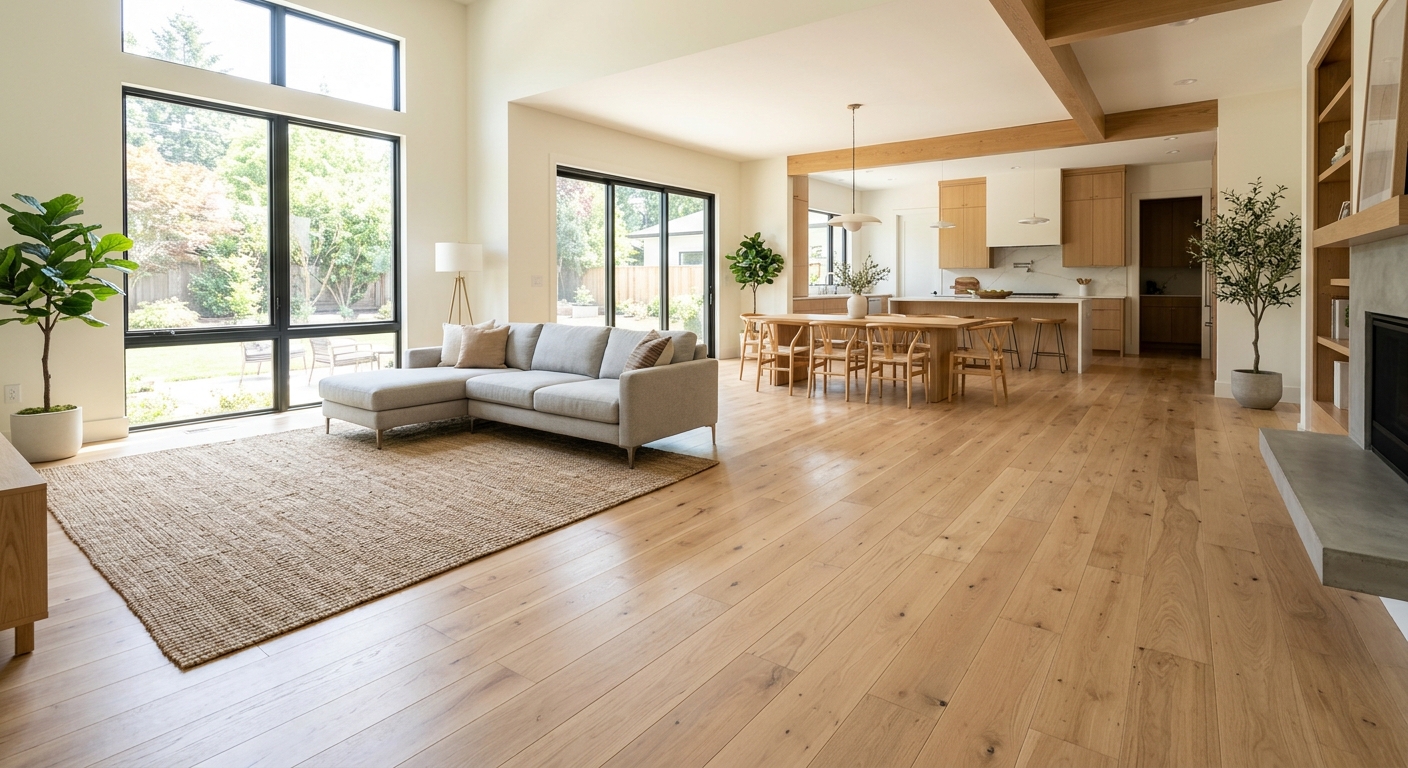
Flooring options and costs in Stouffville
Stouffville homeowners usually have excellent reasons to upgrade flooring—more comfort underfoot, improved resale appeal, and a better match to today’s living style. With a population of 36,753 (Statistics Canada, 2021 Census), the local renovation market stays busy, and that can influence availability and scheduling for installers. A second cost driver is the age of many nearby homes: Toronto-area housing stock is often from the 1960s–1990s, which frequently means your contractor will find uneven subfloors, damaged plywood, or moisture mitigation needs before the new product even goes down. That preparation step commonly adds roughly $1–$4 per sq ft, even if you choose a mid-range option like vinyl plank or laminate.
In the Toronto region, indoor humidity swings across the seasons are real. In practice, that means quotes can vary because solid hardwood expands and contracts with moisture and is higher-risk over concrete and in basements. Engineered hardwood and luxury vinyl plank (LVP) are more dimensionally stable and designed for on-grade and below-grade conditions. Many owners also consider radiant floor heating in newer builds; that steers choices toward engineered wood, tile, or certain LVP products that tolerate heat cycling more predictably than traditional solid hardwood.
Trade demand is especially steady around Old Stouffville and the Main Street corridor, where families often renovate kitchens, living rooms, and finished basements in the same season. Next, here’s a comparison of the flooring types and realistic budget ranges you’ll see for Stouffville projects.
| Type |
Best Room |
Moisture Resistance |
Lifespan |
Price per sq ft |
| Solid hardwood (nail-down, above grade only) |
Living / dining, bedrooms on wood subfloors |
Low–medium (moves with humidity; avoid below grade) |
25–50 years with proper conditions |
$9,00 – $18,00 |
| Engineered hardwood (float or glue, above + on-grade) |
Main floor, hallways, master bedrooms |
Medium–high (more stable than solid) |
20–35 years depending on wear layer |
$10,00 – $17,00 |
| Laminate (click-lock, above-grade) |
Bedrooms, living rooms (dry areas) |
Low–medium (not waterproof; moisture can swell edges) |
10–20 years |
$4,50 – $9,00 |
| Luxury vinyl plank / LVP (waterproof, any level) |
Kitchen, main floor, finished basement |
High (waterproof core; better for humid homes) |
15–25 years |
$6,00 – $12,00 |
| Porcelain / ceramic tile |
Kitchen, bathrooms, entryways |
Very high (water-resistant; grout needs sealing) |
25–50 years |
$12,00 – $25,00 |
| Carpet (broadloom or modular tile) |
Bedrooms, stairs (comfort and sound control) |
Low–medium (not ideal for damp basements) |
8–15 years |
$5,00 – $11,00 |
Prices are estimates only and vary by project scope, site access and material selection.
What affects the price of flooring in Stouffville
In Stouffville and across the Toronto economic region, you can see the same flooring “type” swing in price by 30–50% from one quote to another, even when the square footage looks similar. The biggest reason is not the flooring—it’s the job conditions: subfloor readiness, moisture testing, prep level, and how much labour is required to remove and reinstall transitions. Toronto-area labour rates are also pushed up by strong renovation demand and general construction wage levels, so crews often price higher than in slower markets.
Technically, indoor humidity swings across seasons are a key driver. Solid hardwood expands and contracts with moisture, and it cannot be glued or floated over concrete and performs poorly in basements or any space with persistent dampness. Engineered hardwood and LVP are more tolerant of humidity and are specifically chosen for below-grade or high-moisture installations. In colder parts of the region and in new custom homes, radiant floor heating is increasingly common—this tends to rule out most traditional solid hardwood and some laminate products because of heat-related movement and warranty constraints.
Older regional housing stock (often 1960s–1990s) frequently requires subfloor levelling, plywood replacement, or moisture mitigation before installation. That prep can add about $1–$4 per sq ft. For example, a 600 sq ft living area might land near the laminate/vinyl band (around $4–$9 per sq ft materials) but rise if you need levelling and new underlayment. Conversely, tile (often $12–$25 per sq ft installed materials allowance) can look more expensive upfront; however, it’s justified in kitchens or bathrooms where water resistance and long-term durability reduce the risk of costly floor failures.
| Price Factor |
Why It Matters |
Cost Impact |
| Room area in sq ft |
Materials scale directly, and labour efficiency depends on layout |
Large rooms typically lower cost per sq ft due to fewer start/stop areas |
| Subfloor condition — levelling or repair needed |
Uneven or damaged subfloors require patching, plywood replacement, and grinding |
Commonly adds about $1–$4 per sq ft in older Toronto-area homes |
| Moisture / below-grade install — rules out solid hardwood |
Humidity and vapour issues demand specific products and underlayment systems |
May shift you from solid hardwood (higher risk) to engineered or LVP |
| Material choice — solid vs. engineered vs. LVP vs. tile |
Different products have different price bands and installation requirements |
Ranges can move from roughly $4–$9 (laminate/LVP) up to $12–$25 (tile) |
| Removal and disposal of existing flooring |
Glues, nails, and layers increase labour and disposal fees |
Often adds a separate line item per sq ft or per room; can be a meaningful portion |
| Stair nosing / transitions |
Complex edges take time and may require matching trims |
Charged per step or per linear foot; can add hundreds in a typical staircase |
| Radiant heat compatibility |
Heat cycling and expansion rules restrict material types and underlay |
May require a more expensive compatible product or modified installation method |
| Installation method — float vs. glue-down vs. nail-down |
Different methods require different labour steps and subfloor flatness |
Glue-down and nail-down often cost more than floating, depending on prep needs |
Permits & regulations in Ontario
In Ontario, the flooring installation itself usually does not trigger a building permit. Most homeowners don’t need a permit just to install new hardwood, laminate, LVP, or tile on an existing floor surface. That said, certain related work can require permits—especially anything that touches electrical systems or involves structural changes.
Examples of work that may require permits include electrical work for radiant floor heating circuits (wiring, thermostat connections, or any electrical modifications), and structural subfloor repair that goes beyond minor patching (for example, significant framing adjustments or engineered alterations). If you’re converting a space—like replacing a floor assembly that includes services—or you’re adding in-floor heating, plan for trades coordination and possible permit involvement.
Condominiums add another layer. Even when permits aren’t required, the corporation’s rules on sound transmission (commonly reflected through STC/IIC performance requirements) can restrict underlay choices. For hard surfaces like engineered hardwood or tile on upper floors, you often need the exact underlay system approved by the building. Always review your condo declaration and request board approval in writing before starting.
To verify your contractor in Stouffville, follow a simple step-by-step: (1) confirm the contractor’s Ontario licence/registration status where applicable for the company type; (2) request a clearance letter or proof of coverage; (3) verify WSIB/WCB coverage and that it applies to the specific job site; and (4) check liability insurance by reviewing the certificate of insurance and ensuring it lists the project address and coverage amounts. If a contractor can’t provide current documentation quickly, treat it as a red flag and get a different quote.
Best flooring for each room in your Stouffville home
Choosing the right flooring for Stouffville means matching materials to moisture exposure, traffic, and comfort—because Toronto-area humidity swings and occasional basement dampness can quietly ruin the wrong product choice. Living and dining areas typically benefit from warmth and a solid look: engineered hardwood or high-quality laminate balance comfort with better dimensional stability. Bedrooms often do well with carpet for softness and sound absorption, or engineered hardwood if you want a consistent floor throughout the main level.
Kitchens are the stress test. Water spills, wet shoes, and cleaning routines favour luxury vinyl plank (LVP) with a waterproof core or large-format porcelain tile for easy cleaning and durability. In many finished basements around Stouffville, LVP is the clear winner: it handles moisture vapour risk better than solid wood and most laminate products, and it stays more stable when humidity rises. Bathrooms should be porcelain or ceramic tile only—tile is made for wet areas, and proper installation details (subfloor flatness and correct setting materials) matter as much as the tile itself.
If you have—or plan—radiant floor heating, compatibility becomes the deciding factor. Engineered wood, tile, and certain LVP products pair better because they tolerate heat cycling with fewer movement problems than traditional solid hardwood. For a practical budget example: switching from a laminate floor around $4–$9 per sq ft to engineered hardwood around $10–$17 per sq ft can be justified in hallways with heavy traffic if it reduces future replacement risk in a high-humidity home.
| Room |
Best Material |
Why |
Moisture Risk |
Price Band per sq ft |
| Living / dining room |
Engineered hardwood |
Warm look, more stable under seasonal humidity swings than solid |
Low–medium (generally fine on above-grade subfloors) |
$10,00 – $17,00 |
| Master bedroom |
Carpet or engineered hardwood |
Carpet adds comfort and sound control; engineered keeps a cleaner, modern look |
Low |
$5,00 – $11,00 |
| Secondary bedrooms |
Laminate or carpet |
Laminate for easy upkeep; carpet for comfort and family-friendly acoustics |
Low |
$4,50 – $9,00 |
| Kitchen |
Luxury vinyl plank (LVP) or porcelain tile |
Water resistance and easy cleaning; tile is ideal if you expect frequent splashes |
Medium (spills and wet cleaning) |
$6,00 – $25,00 |
| Basement (finished) |
Luxury vinyl plank (waterproof) |
More tolerant of below-grade humidity and vapour than solid wood or most laminate |
High (condensation and vapour pressure risk) |
$6,00 – $12,00 |
| Bathroom |
Porcelain / ceramic tile |
Designed for wet environments; durable for long-term upgrades |
Very high |
$12,00 – $25,00 |
How to choose a flooring contractor in Stouffville
Hiring the right flooring contractor in Stouffville is less about who has the lowest number and more about who can prove they’ll deliver the details that prevent callbacks—especially in Toronto’s humidity swings and older subfloor conditions. Start with licensing/registration where applicable, then verify liability insurance by requesting a certificate of insurance and confirming it covers the specific project. For WSIB/WCB, ask for proof of coverage and ensure it includes the type of work being done (flooring installation, demolition, subfloor repair). If they can’t provide current paperwork, you’re taking on the risk yourself.
Next, get 2–3 itemised written quotes. You want labour and materials separated (for example: removal/disposal, underlayment, levelling/plywood, and installation method) rather than one lump sum. Read the scope carefully: what’s included and what’s excluded? Clarify disposal of old flooring, whether floor flatness testing is included, and whether transitions/stair work are priced per step or per linear foot. If a quote doesn’t mention transitions, levelling, or moisture prep, it’s often incomplete.
Warranty matters on both sides. Ask for the workmanship warranty length and what it covers, and confirm the product/manufacturer warranty terms, including whether it’s transferable after installation. Keep the payment schedule conservative: never pay more than 10–15% upfront. Hold back a portion until the job is complete and you’ve confirmed all edges, transitions, and finish work. For timing, require a start date and completion estimate in writing so you’re not stuck waiting while crews juggle other jobs.
- Request proof of liability insurance and ensure coverage is active for the job dates.
- Confirm WSIB/WCB coverage with documentation; don’t accept verbal confirmation.
- Ask for an itemised breakdown of labour vs. materials (and subfloor prep separately).
- Verify whether levelling/plywood replacement is included or billed only if discovered.
- Confirm disposal and dust control practices for removal of existing flooring.
- Ask how moisture issues are assessed (and whether they pause if conditions are unsuitable).
- Clarify installation method: floating vs. glue-down vs. nail-down and required subfloor flatness.
- Review underlay and vapour barrier choices for LVP/laminate and whether they match the product system.
- Get the warranty terms in writing: workmanship + manufacturer + exclusions.
- Confirm how stair nosing/transitions are priced (per step vs. per linear foot).
- Use a conservative payment schedule: 10–15% deposit max, with holdback until completion.
- Require a written timeline with start date and estimated completion date.
In Stouffville, common red flags include: a quote that doesn’t address subfloor prep but assumes “perfect” conditions; refusal or delay in providing insurance/WSIB/WCB documentation; vague warranty language (or no written workmanship warranty); and pressure to pay the majority upfront before materials arrive or before you’ve confirmed flatness and moisture readiness.
Frequently asked questions — flooring in Stouffville
How do I fix squeaky floors in my Stouffville home?
Squeaks in Stouffville usually come from movement at the subfloor-to-joist connection, not the finished surface itself. The most reliable fix depends on what’s under your floor: if you have a wood subfloor over joists, contractors typically secure loose boards to the framing using appropriate screws and check for nails that have backed out. If your flooring is already installed and the squeak is localized, we may use a top-down approach in some cases, but often the true cure requires pulling up a section and addressing the joist/subfloor contact points. If you’re planning a flooring replacement anyway, it can be more cost-effective to fix squeaks during the prep phase alongside levelling, because labour overlaps. Avoid DIY “spray foam everywhere” methods, which can worsen movement and trap moisture.
What is luxury vinyl plank and is it worth it in Stouffville?
Luxury vinyl plank (LVP) is a waterproof flooring product made for real-life moisture exposure and humidity swings—exactly the conditions many homeowners deal with in the Toronto area. In Stouffville, where indoor humidity can move a lot by season and basements can have vapour risk, LVP often performs better than laminate and is far safer than solid hardwood. It’s a strong option for finished basements and kitchens because spills and cleaning won’t compromise the core the way they can with click-lock laminate. Cost-wise, LVP commonly sits in the mid-range, roughly $6,00 – $12,00 per sq ft for materials allowance depending on thickness and wear layer, while laminate is often lower (around $4–$9). The “worth it” decision usually comes down to avoiding future replacement—especially if your home needs subfloor levelling or moisture mitigation.
How much does flooring cost in Stouffville?
Flooring cost in Stouffville varies mainly because of subfloor readiness, removal, and moisture-related prep, not just the product itself. For quick budgeting, you can use the typical price bands: laminate or vinyl plank often lands around $4,50 – $9,00 (laminate) and $6,00 – $12,00 (LVP), while tile is commonly $12,00 – $25,00. Carpet installation tends to be about $5,00 – $11,00 depending on pile and underlay. Hardwood ranges higher, with solid hardwood commonly about $9–$18 per sq ft and engineered about $10–$17 per sq ft in this market tier. In older Toronto-area homes, you should also expect possible levelling/repair work adding roughly $1–$4 per sq ft. That’s why two quotes for “1,000 sq ft” can still differ significantly.
Hardwood vs laminate vs vinyl plank — which is best?
The best choice for Stouffville depends on moisture exposure and the room’s risk level. Hardwood looks premium, but solid hardwood is generally above-grade only and moves with humidity, so it’s a higher-risk pick for basements and over concrete. Engineered hardwood is often the best hardwood compromise because it’s more dimensionally stable under Ontario’s seasonal indoor humidity swings. Laminate is usually cheaper (commonly $4,50 – $9,00) and can be a good above-grade option, but it’s not waterproof; moisture at edges can cause swelling. Luxury vinyl plank (LVP) is typically the most forgiving choice in Toronto-area homes—waterproof options make it a safer bet for kitchens and finished basements, with typical pricing around $6,00 – $12,00. If radiant heat is involved, engineered wood, tile, and compatible LVP are usually safer than traditional solid hardwood.
What flooring is best for a Stouffville basement?
For a Stouffville basement, the “best” flooring is the one that can tolerate below-grade moisture vapour and humidity swings without failure. In our experience across the Toronto region, waterproof luxury vinyl plank (LVP) is usually the top recommendation for finished basements because it holds up to damp conditions far better than solid hardwood and most laminate products. For pricing, LVP commonly falls in the $6,00 – $12,00 per sq ft range depending on thickness and wear layer. Carpet in basements is riskier because it can trap moisture against underlay. If you want a long-term, moisture-proof look, porcelain tile is also excellent for wet or challenging areas, often around $12,00 – $25,00. Whichever you choose, ask your contractor to address flatness and vapour management during prep—older housing stock often needs subfloor levelling or mitigation before the final install.
Can I install hardwood over concrete?
In most Stouffville homes, solid hardwood over concrete is typically a problem. Solid hardwood is generally intended for above-grade installs with an appropriate nail-down or engineered method and it needs stable moisture conditions; it also can’t be glued or floated over concrete in the way many people assume. Engineered hardwood is more suitable because it’s built to handle some movement and can be installed with the right system. In practice, whether hardwood works over concrete depends on flatness, moisture readings, and the specific product’s installation requirements. If you’re planning in-floor radiant heat, traditional solid hardwood is usually limited, while engineered wood and certain vinyl/tile assemblies are more compatible. If your concrete is on-grade or below-grade, you’ll also want moisture mitigation done before any hardwood goes down to avoid future buckling, gaps, or failure.