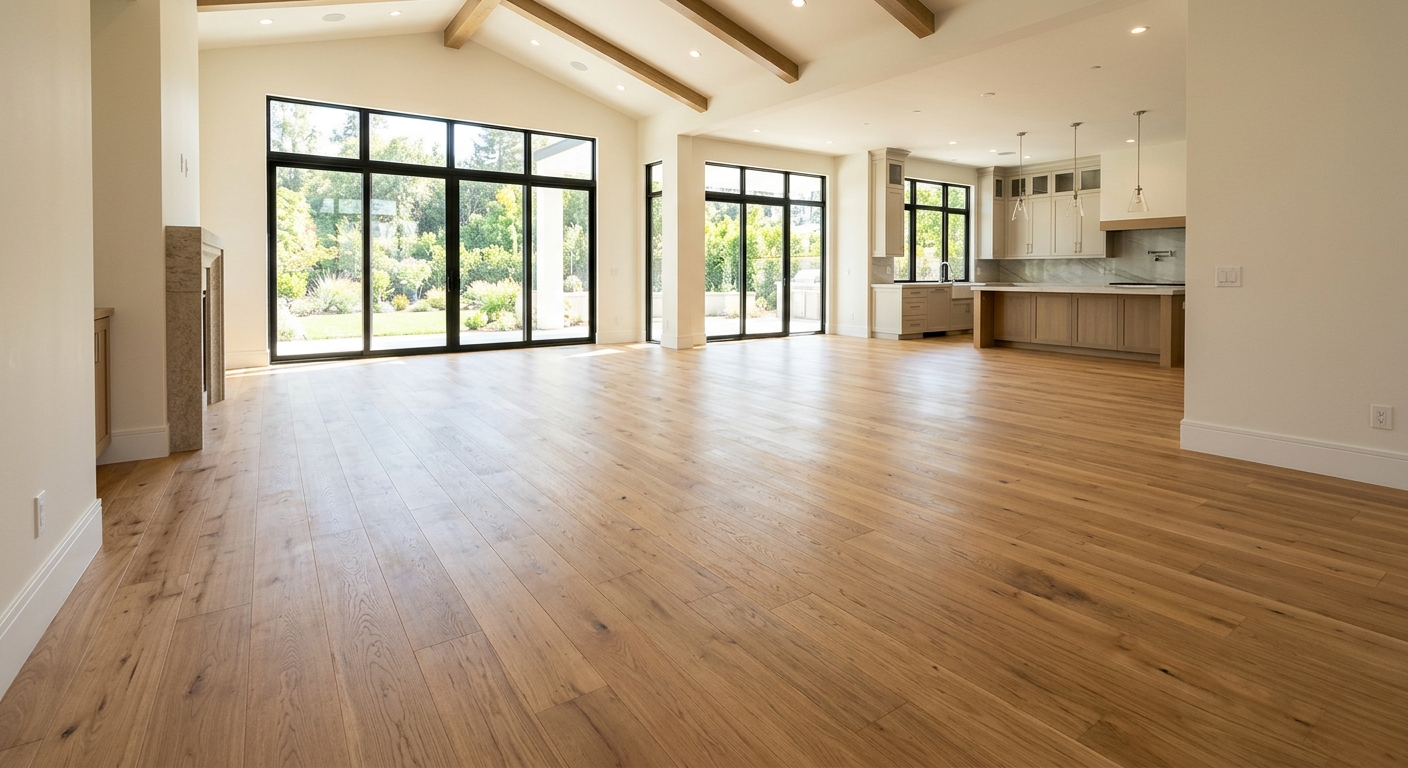
Flooring options and costs in Lang's Farm
In Lang's Farm, flooring choices are mostly about balancing beauty with performance, because moisture levels can swing through the year. The area profile shows Lang's Farm’s population is 5,347 (Statistics Canada, 2021 Census), which corresponds to steady local renovation demand and a competitive contractor market when homeowners are ready to start projects. Just as important: much of the Toronto-area housing stock dates from the 1960s–1990s, and those older layouts often need subfloor levelling or plywood repair before new flooring can sit flat. In practice, that prep can add roughly $1–$4 per sq ft—sometimes more if you also need moisture mitigation or multiple layers removed—before you even pick your finish.
Toronto-area homes also face wide indoor humidity swings across seasons, which directly affects pricing and product selection. Solid hardwood can look stunning, but it expands and contracts with moisture and is a poor fit over concrete or in basements. For most Lang's Farm projects, we steer clients toward engineered hardwood or luxury vinyl plank (LVP), which are more dimensionally stable and specifically designed for below-grade and high-humidity installs. In areas with radiant floor heating in newer custom homes, engineered wood, tile, and certain LVP products pair better than traditional solid hardwood.
Where does this trade run hottest? Around the newer infill and renovation pockets near Toronto-area growth corridors (including the greater GTA communities homeowners commute to daily), we commonly see engineered hardwood and LVP demand rise alongside kitchen and basement refreshes. Below is a quick cost comparison to help you line up material and labour expectations before you request quotes.
| Type |
Best Room |
Moisture Resistance |
Lifespan |
Price per sq ft |
| Solid hardwood (nail-down, above grade only) |
Living / dining (on plywood/wood subfloor above grade) |
Low to moderate; moves with humidity, not for basements or concrete |
25–50 years (with proper RH control) |
$9 – $18 |
| Engineered hardwood (float or glue, above + on-grade) |
Living areas, bedrooms, main floor hallways |
Moderate to high; handles humidity swings better than solid |
20–40 years |
$9 – $16 |
| Laminate (click-lock, above-grade) |
Secondary bedrooms, corridors (not wet areas) |
Low to moderate; not for below-grade/high-vapour conditions |
10–25 years |
$4 – $8 |
| Luxury vinyl plank / LVP (waterproof, any level) |
Kitchen, finished basements, main floor with kids/pets |
High; waterproof surface and tolerant of below-grade installs |
15–25 years |
$5 – $11 |
| Porcelain / ceramic tile |
Bathrooms, mudrooms, entryways, kitchens (where desired) |
Very high; resistant to spills and standing water |
25–50+ years (grout upkeep required) |
$12 – $25 |
| Carpet (broadloom or modular tile) |
Bedrooms, stairs, home offices for comfort |
Moderate; avoid repeated moisture exposure |
8–15 years |
$5 – $11 |
Prices are estimates only and vary by project scope, site access and material selection.
What affects the price of flooring in Lang's Farm
In Lang's Farm and across the Toronto economic region, quotes for the same “square footage of flooring” can vary by 30–50% because the hard costs (materials) are only one piece of the total, while the hidden costs (prep, moisture correction, subfloor repairs, transitions) can swing widely from home to home. Toronto-area humidity swings mean installers must treat moisture and surface flatness as a core part of the job, not an optional add-on. That’s especially true when homeowners are working in older houses—commonly built from the 1960s–1990s—where you might find dips, squeaks, or layered underlayment that needs removal.
Technically, the key drivers are indoor humidity and below-grade moisture risk. Solid hardwood expands and contracts with humidity, and it can’t be glued or floated over concrete; it also performs poorly in basements. Engineered hardwood and LVP handle humidity and below-grade conditions far better. Cold-snap weeks in Ontario also matter: if you have radiant floor heating, that can rule out most traditional solid hardwood and some laminate because of expansion/heat transfer concerns. As a result, labour and material choices shift, which changes the quote.
In Lang's Farm, it’s common to see cost differences like this: (1) a “level subfloor” job might fit within a mid-range laminate or LVP budget (for example, laminate/lvp in the $4–$11 per sq ft band), but (2) once we add levelling compound, plywood replacement, and a moisture plan, many projects move closer to the higher engineered/LVP ranges. Another example: removing old carpet and tack strips can be straightforward, but tile removal can add labour and disposal—and disposal costs alone can be noticeable when you’re hauling heavier demolition waste.
| Price Factor |
Why It Matters |
Cost Impact |
| Room area in sq ft |
Directly drives material quantity, labour hours, and waste factor |
Large rooms can lower per-sq-ft labour due to setup efficiency |
| Subfloor condition |
Levelling/repair affects how long it takes to prep for a flat, stable base |
Typically adds about $1–$4 per sq ft when repair/levelling is needed |
| Moisture / below-grade install |
Determines whether solid hardwood is allowed and whether vapour mitigation is required |
Often increases costs by requiring engineered/LVP and added moisture steps |
| Material choice |
Solid vs engineered vs LVP vs tile varies widely in labour complexity and product cost |
Can shift overall spend from ~$4–$9 to ~$9–$25 per sq ft (material band effect) |
| Removal and disposal of existing flooring |
Old adhesive, underlayments, and tile thinset can be time-consuming to remove |
May add several hundred to over a thousand dollars depending on demolition |
| Stair nosing / transitions |
Edges, reducers, and stair components are measured and installed differently than flat floor |
Charged per step or per linear foot; can noticeably increase total |
| Radiant heat compatibility |
Heat cycles affect expansion and required installation systems |
Can limit options to engineered/tile/certain vinyl, influencing price |
| Installation method |
Float, click-lock, glue-down, and nail-down have different prep and labour demands |
Nail-down/glue-down generally require more precise subfloor work |
Permits & regulations in Ontario
In Ontario, installing new flooring by itself generally does not require a building permit. Where you can run into permitting requirements is with associated work that changes services or building systems. For example, electrical permits may be triggered when you’re adding or modifying in-floor heating circuits, altering wiring, or making electrical changes tied to radiant systems. Structural subfloor repair is another area to be cautious about: minor repairs (like plywood replacement to restore a stable base) are usually part of normal flooring work, but if you’re addressing engineered structural concerns, that may require additional approvals from the appropriate trades or an engineer depending on scope.
Condominiums add another layer. Even when permits aren’t needed for the flooring install itself, condo corporations often restrict hard flooring due to sound transmission. That means upper-floor installs may require specific underlay and may need board approval in writing, especially for engineered hardwood and tile. Always review your condo declaration and confirm what the building requires before ordering materials.
To verify your contractor in Lang’s Farm, follow a simple step-by-step approach: (1) confirm the contractor’s Ontario licence/registration where applicable to the trade; (2) request proof of liability insurance and verify the certificate names the correct legal business and includes adequate coverage limits; (3) ask for WSIB/WCB clearance or coverage documentation for the workers who will be on-site; (4) keep copies of everything with your quote. If they can’t provide documentation promptly, that’s a sign to slow down and ask questions before you sign.
Best flooring for each room in your Lang's Farm home
Choosing the right flooring in Lang’s Farm comes down to moisture exposure, day-to-day traffic, and comfort—then selecting the product that won’t buckle when Toronto-area humidity swings rise and fall. For living and dining rooms, engineered hardwood or a high-quality click-lock laminate are popular because they deliver warmth and a realistic wood look without the same humidity risk as solid. In the master bedroom, many homeowners choose carpet for comfort and sound absorption, or engineered hardwood if allergies and easy cleaning matter more.
Kitchens typically get LVP or large-format porcelain/ceramic tile. LVP wins when spills, dropped dishes, and frequent mopping are part of daily life; tile wins when you want maximum surface resistance and heat-proof performance. In finished basements, LVP is the clear winner: it’s fully waterproof at the surface and tolerates below-grade moisture conditions far better than solid wood and most laminate. For bathrooms, porcelain or ceramic tile only is the safe, long-term approach.
Radiant floor heating is increasingly common in Ontario new construction and custom builds. When you plan to keep a steady temperature, engineered wood, tile, and certain vinyl products tend to work best; traditional solid hardwood often faces heat and expansion limitations. If you’re comparing budgets, consider this: jumping from laminate (often around the $4–$9 per sq ft band) to engineered hardwood (commonly $9–$16) is usually justified when the home has humidity sensitivity or you want a longer service life without the movement issues of solid. In a basement scenario, choosing LVP at the $5–$11 band is often cheaper than correcting moisture damage later.
| Room |
Best Material |
Why |
Moisture Risk |
Price Band per sq ft |
| Living / dining room |
Engineered hardwood |
Warm look, stable through seasonal humidity changes |
Moderate; manage RH for best results |
$9 – $16 |
| Master bedroom |
Carpet or engineered hardwood |
Comfort and sound control; engineered stays steadier than solid |
Low to moderate; avoid damp basements |
$5 – $11 |
| Secondary bedrooms |
Laminate (click-lock) |
Budget-friendly durability with an easy install |
Low to moderate; not for wet or high-vapour areas |
$4 – $9 |
| Kitchen |
Luxury vinyl plank (LVP) or porcelain tile |
Easy cleaning and high tolerance of spills and frequent traffic |
Moderate; frequent wetting from spills |
$5 – $25 |
| Basement (finished) |
Luxury vinyl plank (waterproof) |
Stands up to below-grade moisture vapour better than wood/laminate |
High; plan for vapour conditions |
$5 – $11 |
| Bathroom |
Porcelain / ceramic tile |
Best-in-class water resistance with proper grout and sealing approach |
Very high; standing water risk |
$12 – $25 |
How to choose a flooring contractor in Lang's Farm
Start by confirming your contractor is set up to work safely and responsibly in Ontario. Ask for their Ontario business information/registration where applicable, then request a certificate of liability insurance and verify coverage limits match the scope (and that it lists the correct insured entity). Next, confirm WSIB/WCB coverage for the workers who will be on your site by requesting clearance documentation and ensuring dates are current. In Lang’s Farm’s GTA region, where renovation demand is consistently strong, you want a crew that can handle common subfloor issues like levelling and plywood replacement—not just “laying new product.”
Then get 2–3 itemised written quotes instead of lump sums. A solid quote breaks down labour and materials separately and includes line items for prep work (levelling, underlayment/vapour barrier, plywood replacement), removal/disposal, stair nosing/transitions, and any required moisture mitigation. Read the exclusions carefully: are permits included if radiant heating electrical work is part of the project, and is disposal included in the price? Clarify what happens if additional subfloor repairs are discovered after demolition.
Warranty matters too. Ask about workmanship warranty length, the manufacturer’s product warranty terms, and whether the warranty is transferable to you as the homeowner. For payment schedule, avoid large deposits—generally aim for no more than 10–15% upfront, then hold back funds until the job is complete and items are corrected. Finally, demand a start date and completion timeline in writing so you’re not left waiting mid-project.
- Request proof of liability insurance (and confirm the insured business name is correct).
- Ask for WSIB/WCB clearance or coverage documentation for the workers on your job.
- Get 2–3 itemised quotes (labour + materials), not a single lump sum.
- Ensure the quote lists subfloor prep: levelling compound, plywood replacement, underlayment, vapour mitigation.
- Confirm removal and disposal are included (and whether it includes hauling tile thinset/adhesive).
- Verify stair nosing and transition pieces are quoted separately with quantities.
- Ask who supplies underlay and moisture barrier and whether they match the product warranty requirements.
- Confirm radiants compatibility if you have in-floor heating (and which product lines are allowed).
- Ask for the workmanship warranty term and what it covers (not just the product warranty).
- Clarify payment terms: keep deposits to about 10–15% and hold back until completion.
- Get an install schedule: start date, milestones, and completion estimate in writing.
- Check references for similar Toronto-area homes with subfloor issues (ask specifically about moisture handling).
In Lang’s Farm, common red flags include: contractors who won’t show insurance/WSIB documents, quotes that skip subfloor prep details, no written scope for transitions and stairwork, large upfront deposits without a clear schedule, and ignoring humidity/moisture expectations for basements (especially where LVP or moisture mitigation should be discussed).
Frequently asked questions — flooring in Lang's Farm
How do I choose flooring for humidity in Lang's Farm?
Lang's Farm and the broader Toronto area can see wide indoor humidity swings through the year, so the safest strategy is to match the product to the room’s moisture exposure. For above-grade living spaces, engineered hardwood is usually a safer “wood look” option than solid hardwood because it tolerates humidity changes better. For below-grade spaces like finished basements, choose waterproof luxury vinyl plank (LVP) rather than laminate or solid wood—solid wood moves too much, and most laminate isn’t designed for high-vapour conditions. In budget terms, you’ll often find LVP in the $5–$11 per sq ft band, which is frequently less than repairing moisture-related failures later. If radiant floor heating is part of your plan, stick with products rated for those conditions (engineered, tile, and some vinyl), and confirm installation specs in writing.
Do condos restrict hard flooring?
Yes, in Ontario condominiums it’s very common for the building corporation to restrict hard flooring because of sound transmission. Even if a permit isn’t required just to install flooring, condo rules often require specific underlay and may limit when and where hard flooring can be installed (especially on upper floors). Before you order materials in Lang's Farm, check your condo declaration and ask the board what they require for sound ratings (commonly referenced as STC/IIC) and which underlay systems are approved. Also request written board approval if your project involves engineered hardwood or tile. This step matters because choosing the wrong underlay can void warranty requirements or trigger compliance issues.
How do I compare flooring quotes?
To compare quotes fairly in Lang's Farm, insist on itemised breakdowns for labour and materials and ensure they include the same prep scope. Start by matching: subfloor levelling/repair, underlayment or vapour mitigation, removal and disposal, stair nosing/transitions, and whether edges/trim are included. Many quote gaps that create a 30–50% difference in the Toronto area come from “invisible work,” not the visible finish. Also compare the product bands: for example, laminate and LVP often land around the $4–$9 or $5–$11 per sq ft ranges, while tile typically starts higher around $12 per sq ft and can go into the mid-$20s depending on selections. If one quote is cheaper but omits prep or transitions, it’s not an apples-to-apples comparison.
Can I install flooring over existing tile in Lang's Farm?
Sometimes you can, but it depends on the condition and the install system. If the existing porcelain/ceramic tile is firmly bonded, flat, and properly prepared (cleaned and level), some products like LVP can be installed over suitable hard surfaces using the manufacturer’s approved underlayment approach. However, if the tile has lippage, cracks, loose sections, or hollow-sounding areas, installers should not “skin it over”—you’ll risk transferring movement into the new floor. In Ontario’s humidity swings, a poor base can create failures faster because the subfloor and assembly must stay stable. In many renovation projects, we either level over tile with appropriate methods or remove it—especially where floor height changes are limited or where radiant heating compatibility is involved.
What is the best flooring for a high-traffic area in Lang's Farm?
For high-traffic areas in Lang's Farm—entries, hallways, and busy living zones—choose a surface built for durability and easy maintenance. Luxury vinyl plank (LVP) is often the top practical pick because it’s waterproof and tolerant of everyday spills, with pricing commonly in the $5–$11 per sq ft band depending on wear layer and brand. Engineered hardwood is also strong for traffic while maintaining a natural look, and it typically sits higher (often $9–$16 per sq ft). If the traffic area is near exterior doors or has frequent moisture tracking, LVP or tile tends to be safer than laminate. The biggest performance factor, though, is correct installation: flat subfloor, proper transitions, and underlay that matches the product warranty requirements.
How do I prepare my subfloor before new flooring?
Subfloor prep is where flooring jobs are won or lost in Ontario, especially with older Toronto-area homes that may need repair before any finish goes down. The usual steps are: (1) remove existing flooring and inspect the subfloor for rot, damaged plywood, or failing underlayment; (2) check flatness—most failures are tied to dips or humps rather than “bad luck”; (3) level as required using the correct materials for the existing base; (4) address moisture concerns with appropriate vapour mitigation when below-grade conditions are possible; and (5) confirm the subfloor is clean and dry before installing. For engineered hardwood and LVP, follow product-specific moisture and underlay requirements to protect the warranty. If radiant floor heating is present, verify compatibility before you install anything that could expand or stress under heat cycles.