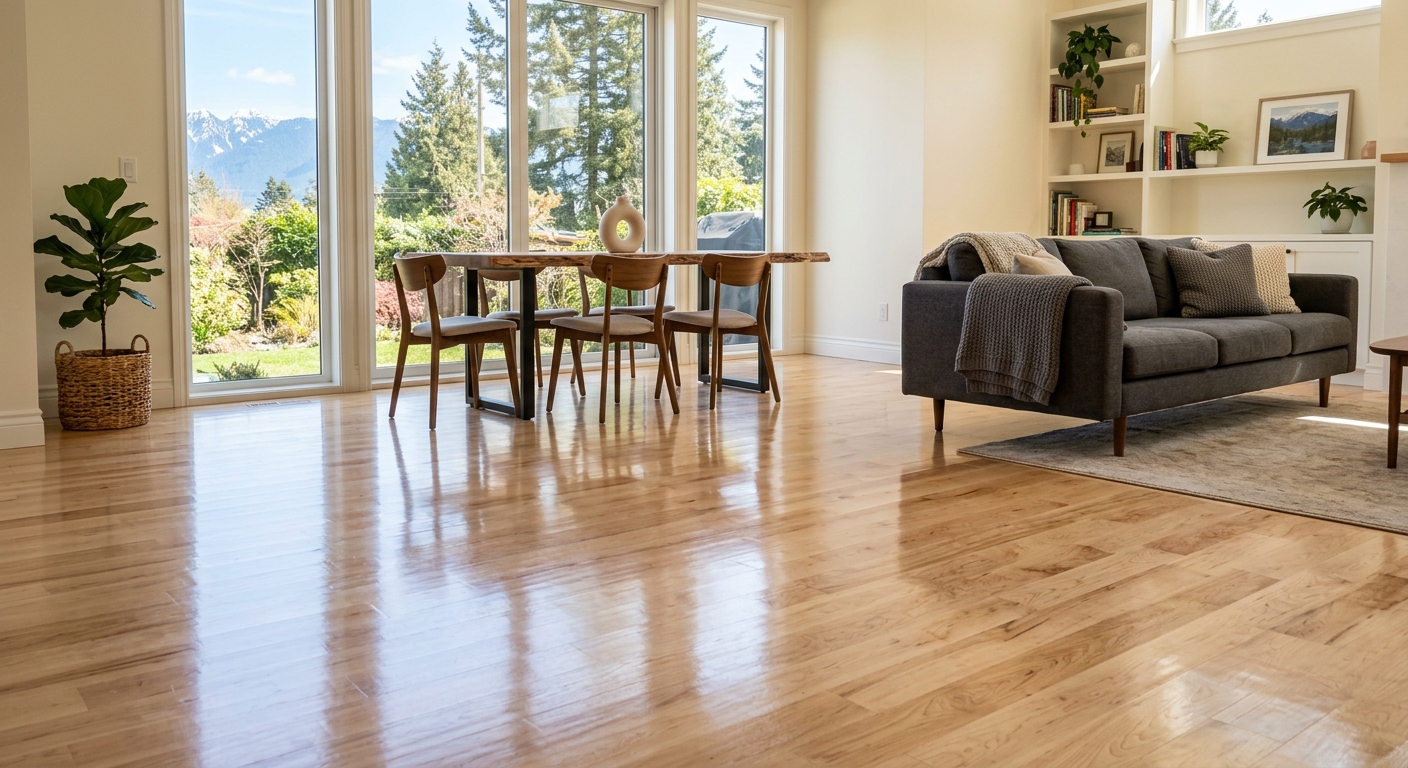
Flooring options and costs in Yonge-St.Clair
In Yonge-St.Clair, flooring decisions start with two things: how your home’s moisture behaves across seasons, and how Toronto-area renovation labour prices are trending. With a population of 12,528 in the local area (Statistics Canada, 2021 Census), we see steady demand for upgrades, from older walk-ups to newer infill. A lot of homes here are older construction, and that often means you may need subfloor levelling or even plywood repair before the new surface goes down. In practical budgeting, that prep can add roughly $1–$4 per sq ft depending on what’s uncovered once we open up the flooring.
Toronto’s climate drives costs in a very specific way. Indoor humidity swings can be wide from winter heating to summer air conditioning, and that cycling affects dimensional stability. Solid hardwood looks premium, but it expands and contracts with humidity, so it’s usually limited to above-grade installations. In basements and over concrete, we steer homeowners toward engineered hardwood or luxury vinyl plank (LVP) because they’re built for higher-humidity environments and easier below-grade performance. If your home includes radiant floor heating (common in newer custom builds), that also shapes the material shortlist—solid hardwood can be a poor fit, while engineered wood, tile, and certain vinyl options work better.
Contractor availability is strongest around high-renovation corridors like Yonge Street itself and the surrounding midtown condo belt, so you can often get competitive scheduling—if your scope is clear. Next, use the table below to compare typical material costs per square foot for your project.
| Type |
Best Room |
Moisture Resistance |
Lifespan |
Price per sq ft |
| Solid hardwood (nail-down, above grade only) |
Living rooms, dining rooms, above-grade bedrooms |
Low to moderate; sensitive to humidity, not for basements or concrete |
30+ years with proper maintenance |
$9–$18 |
| Engineered hardwood (float or glue, above + on-grade) |
Living rooms, dining rooms, bedrooms; can be used on main floor over subfloor |
Moderate to high; better tolerance for Toronto humidity and stable installs |
20+ years (often includes wear layer refinishing limits) |
$10–$16 |
| Laminate (click-lock, above-grade) |
Bedrooms and living areas where spills are cleaned quickly |
Moderate; core can swell if moisture sits at seams |
10–20 years |
$4–$8 |
| Luxury vinyl plank / LVP (waterproof, any level) |
Kitchens, basements (finished), main floors needing extra stability |
High; waterproof surface and generally more forgiving under moisture stress |
15–25 years (varies by wear layer) |
$5–$10 |
| Porcelain / ceramic tile |
Kitchen, bathrooms, entries, mudrooms |
Very high; handles moisture well (grout maintenance still matters) |
25+ years |
$12–$25 |
| Carpet (broadloom or modular tile) |
Bedrooms and stairs for comfort and sound control |
Low to moderate; needs fast drying for spills |
7–15 years |
$5–$11 |
Prices are estimates only and vary by project scope, site access and material selection.
What affects the price of flooring in Yonge-St.Clair
Even when two homeowners request “the same floor,” Toronto-area quotes can land 30–50% apart because the scope hidden inside the quote is often different—especially in Yonge-St.Clair, where older stock meets higher labour demand. Indoor humidity swings are the technical driver that changes how we prep and what materials we can responsibly install. Solid hardwood expands and contracts with humidity, so it can’t be glued or floated over concrete and performs poorly in basements; that limitation steers many projects into engineered hardwood or LVP, which changes both material and labour methods. In colder-season homes (and many infill builds with tighter envelopes), radiant heat compatibility also affects the product list—some traditional solid wood and some laminate options are less ideal with heat cycling.
Older regional housing stock frequently needs subfloor levelling, plywood replacement, or moisture mitigation before new flooring goes in, and that prep can add a meaningful line item even when you choose mid-range materials like laminate or LVP. For example, levelling and patching might push an otherwise $4–$9/sq ft laminate choice upward by $1–$4/sq ft once labour and disposal are accounted for. Conversely, if your subfloor is flat and dry, an engineered hardwood selection (often in the $9–$18/sq ft territory depending on tier) may price closer to your planned budget because install time drops.
Two concrete Yonge-St.Clair scenarios we commonly see: (1) condo conversions on upper floors—sound underlay requirements and careful transition detailing can add time and increase material costs; and (2) main-floor installs over older plywood that’s been exposed to seasonal damp—moisture mitigation and patching can turn a “simple” install into a multi-day job.
With those variables in mind, use the factors below to read quotes the same way—line item by line item.
| Price Factor |
Why It Matters |
Cost Impact |
| Room area in sq ft |
Material quantity and labour hours scale directly with coverage |
Typically the biggest variable; larger areas reduce per-sq-ft labour efficiency losses |
| Subfloor condition |
Levelling and repair determine how smooth and stable the new floor will be |
Commonly adds $1–$4 per sq ft for plywood replacement/patching |
| Moisture / below-grade install |
Rules out solid hardwood and affects underlayment and prep |
Switching to engineered or LVP can help; moisture mitigation can add $2–$6 per sq ft depending on findings |
| Material choice |
Solid vs. engineered vs. LVP vs. tile have different installation systems |
May shift your budget into different bands (e.g., $4–$9 laminate/LVP vs. $12–$25 tile) |
| Removal and disposal of existing flooring |
Old layers add time and may require underlayment removal and debris handling |
Often $500–$1,500 total depending on thickness, access, and disposal requirements |
| Stair nosing / transitions |
Stairs and transitions are detail-heavy and charged per step or linear foot |
Can add several hundred dollars in typical midtown townhomes/condos |
| Radiant heat compatibility |
Heat and expansion considerations limit which materials are appropriate |
May increase product costs if you’re avoiding less-compatible options |
| Installation method |
Float, glue-down, or nail-down affects labour time and subfloor requirements |
Glue-down and nail-down prep usually costs more where floors aren’t perfectly flat/dry |
Permits & regulations in Ontario
In Ontario, installing new flooring by itself typically does not require a building permit. However, related work can trigger permitting. For example, if the project includes electrical work for radiant floor heating controls, you may need an electrical permit and must follow the applicable electrical code requirements. Similarly, if you discover structural subfloor issues (rot, major joist repair, or significant remediation) that goes beyond “repairing the floor surface” and touches structural components, permits can be required depending on scope and how it’s handled.
For condominiums in Yonge-St.Clair and the broader Toronto area, the bigger practical constraint is often the corporation’s rules. Even when no permit is required, sound transmission requirements (STC/IIC expectations) and approved underlay rules can limit what you can install on upper floors. Always review the condo declaration, and request board approval in writing—especially for hardwood or any hard surface that can transmit sound.
To verify your contractor is set up properly in Ontario, follow this checklist: (1) confirm they have an appropriate licence/registration where applicable for the scope they’ll perform; (2) ask for a certificate of liability insurance—verify the policy is current and matches the work address; (3) confirm WSIB/WCB coverage and request clearance documentation; and (4) keep everything in writing (quote, schedule, exclusions, and warranty). Don’t rely on verbal assurances—look for documents and dates before work begins.
Best flooring for each room in your Yonge-St.Clair home
Choosing flooring by room matters in Yonge-St.Clair because Toronto homes can experience humidity swings and frequent seasonal moisture migration from windows, exterior walls, and below-grade areas. For living and dining spaces, engineered hardwood or high-quality laminate typically hits the sweet spot: warm underfoot, good durability, and better dimensional stability than solid hardwood when conditions aren’t perfectly controlled. In the master bedroom, carpet is a strong choice for comfort and sound absorption, while engineered hardwood also works well if you prefer a hard-surface feel and your subfloor is in good shape.
In your kitchen, go waterproof. Luxury vinyl plank (LVP) is usually the practical winner for day-to-day spills, and large-format porcelain tile is an excellent upgrade when you want a rigid surface that cleans easily. Bathrooms should be porcelain or ceramic tile only—moisture and standing water make this category non-negotiable. For basements (especially finished ones), LVP is the clear best bet: fully waterproof surfaces and a more forgiving installation approach are exactly what you want when vapour pressure and seasonal damp can affect subfloors. Finally, if you have radiant floor heating in newer homes, that pairs better with engineered wood, tile, and certain vinyl products; it’s a higher-risk pairing with traditional solid hardwood.
Dollar justification example: If you’re deciding between laminate at about $4–$8 per sq ft and LVP at about $5–$10 per sq ft, the extra $1–$2 per sq ft can be worth it in a Toronto home because the “repairability” and moisture forgiveness are higher—especially in kitchens and basement stairs where spills and humidity are common. Next, use the room-by-room table to align your selection with moisture risk.
| Room |
Best Material |
Why |
Moisture Risk |
Price Band per sq ft |
| Living / dining room |
Engineered hardwood |
Warm look with better stability through Toronto humidity swings |
Low to moderate (main floor; manage indoor RH) |
$9–$16 |
| Master bedroom |
Carpet or engineered hardwood |
Carpet adds comfort and sound control; engineered gives a clean, modern finish |
Low (avoid long-duration spills) |
$5–$16 |
| Secondary bedrooms |
Laminate (click-lock) or LVP |
Laminate balances budget and durability; LVP is safer if kids/treat spills are expected |
Low to moderate |
$4–$10 |
| Kitchen |
Luxury vinyl plank (LVP) or porcelain tile |
Water resistance and easy cleaning for daily use |
Moderate to high (spills, sink splash zone) |
$5–$25 |
| Basement (finished) |
Luxury vinyl plank (LVP) |
Designed for below-grade installs and moisture vapour conditions |
High (vapour and seasonal damp) |
$5–$10 |
| Bathroom |
Porcelain / ceramic tile |
Rigid, long-wearing finish that handles wet conditions |
Very high |
$12–$25 |
How to choose a flooring contractor in Yonge-St.Clair
In Yonge-St.Clair, the contractor you choose affects both your timeline and the final look—especially when Toronto homes need prep work like subfloor levelling or moisture mitigation. Start by verifying Ontario coverage properly: request a current certificate of liability insurance (confirm it matches your address and project dates), then ask for WSIB/WCB clearance or proof of active coverage so you’re not exposed if a worker is injured. If the scope includes specific trade work (like electrical for radiant systems), ensure the contractor coordinates those permits and uses the right licensed trades for that portion.
Next, get 2–3 itemised written quotes rather than lump sums. You want a breakdown that clearly separates materials, removal/disposal, subfloor prep, underlay or moisture systems, labour, and transitions/stair nosing. Read the exclusions carefully: ask whether the quote includes pulling baseboards, moving appliances, or returning furniture, and whether disposal is included. Confirm your warranty details in writing—workmanship warranty length, what product warranties cover, and whether warranties remain valid if a condo board requires specific underlay. For payment, never pay more than 10–15% upfront; hold back the balance until the job is complete and defects are addressed. Finally, require a start date and estimated completion timeline in the contract.
- Ask for insurance and WSIB/WCB documents before signing, not after.
- Confirm the quote includes subfloor assessment and moisture checks where needed.
- Get a labour + materials breakdown (no “one price for everything”).
- Verify the underlayment/moisture barrier listed matches your flooring type and room conditions.
- Confirm who does the leveling work (and the plan if more prep is found).
- Ask whether stair transitions and stair nosing are priced per step/linear foot.
- Check if removal of existing flooring and disposal are included.
- Require details on how transitions to tile/carpet/doorways will be finished.
- Review the workmanship warranty in plain language (duration, exclusions, claim process).
- Ask whether the product warranty is transferable to you and what conditions void it.
- Set a payment schedule with a holdback until inspection and punch list completion.
- Require a written timeline and a clear start date tied to material delivery.
Red flags I see in Yonge-St.Clair: vague quotes with no itemisation; contractors who won’t provide insurance/WSIB proof; no written warranty terms; refusal to do a subfloor/moisture plan for basements or on concrete; and asking for large upfront payments beyond 10–15% without a signed schedule and scope.
Frequently asked questions — flooring in Yonge-St.Clair
What's the most durable flooring for pets and kids?
For most Yonge-St.Clair families, luxury vinyl plank (LVP) is the most durable “all-around” choice because it’s waterproof and handles everyday spills better than laminate. If you’re comparing budgets, laminate often lands around $4–$9 per sq ft, while LVP is commonly in a $5–$10 per sq ft range—many homeowners find that extra cost is justified when kids spill and pets have accidents. For high-traffic homes, prioritize a higher wear layer and a thicker plank for better dent resistance. If you prefer a warm feel and can keep the humidity stable, engineered hardwood can work too, but I’d still treat it as an above-grade/main-floor option and avoid basements and concrete slabs unless the system is specifically rated for your conditions (Statistics Canada, 2021 Census).
How do I choose flooring for humidity in Yonge-St.Clair?
Start by matching the floor to the moisture realities of Toronto: indoor humidity swings can be significant across seasons, and basements are especially exposed to vapour and seasonal damp. In Yonge-St.Clair, solid hardwood is the most sensitive option—its expansion/contraction makes it risky over concrete and in basements, and it generally should be kept above-grade only. Engineered hardwood and LVP are more tolerant, which is why we recommend them for homes where humidity isn’t tightly controlled. If you’re on radiant heating, that further narrows options: tile, some engineered systems, and certain vinyl products handle heat cycling more responsibly than traditional solid wood. Also plan for subfloor levelling—an uneven surface can amplify movement and squeaks, even when the material itself is stable.
Do condos restrict hard flooring?
Often, yes—condos in Ontario commonly restrict hard flooring through sound transmission rules and approved underlay requirements. In Yonge-St.Clair, the corporation may require specific underlay products and can restrict where you can install hardwood or tile to protect neighbours’ units. Even when no building permit is required for flooring alone, you should request board approval in writing before work begins, especially for hard-surface upgrades on upper floors. Practical tip: ask your contractor to supply documentation on the underlay’s acoustical performance (as required by the building) so you can submit it to the board. This is one reason LVP with the right underlay can be easier logistically than solid wood—though your condo’s rules still govern the final choice.
How do I compare flooring quotes?
In Ontario, quotes should be comparable on scope, not just price. For a fair comparison in Yonge-St.Clair, insist on itemised pricing that separates materials from labour, and clearly lists subfloor prep, moisture mitigation, removal/disposal, underlay/moisture barrier, and transitions/stair nosing. If one quote includes levelling and the other doesn’t, you can easily see a 30–50% difference in total. Also compare material tiers: for instance, laminate might be in the $4–$9 band, while tile commonly runs $12–$25 per sq ft—so a “similar look” quote can be apples-to-oranges if the spec isn’t identical. Finally, confirm warranties (workmanship and product) and the payment schedule, including how much upfront is requested and how much is held until completion.
Can I install flooring over existing tile in Yonge-St.Clair?
Sometimes, but not as a blanket rule. Over existing tile in Yonge-St.Clair, the feasibility depends on the condition, flatness, and the flooring system you choose. If the tile is stable and well-adhered, we may be able to install over it using the manufacturer-approved method for that product—but you’ll need to confirm your subfloor height transition details and whether additional height causes door/jamb issues. In many renovation projects, we find that levelling or smoothing is still required, which can add labour and preparation cost. Also note that moisture and bond strength are critical: if grout is crumbling or tiles are loose, you’ll want remediation first. For waterproof LVP, it’s often more forgiving than hardwood, but always follow the specific installation requirements for the product and your floor’s underlayment system.
What is the best flooring for a high-traffic area in Yonge-St.Clair?
For high-traffic areas—entries, main hallways, and open-concept living—the best choice is usually LVP or tile, depending on your comfort preference and moisture exposure. LVP offers waterproof durability and typically lands around $5–$10 per sq ft, while porcelain/ceramic tile is commonly $12–$25 per sq ft but excels at resisting wear and moisture. If you’re shopping for pets and wet boots, LVP’s waterproof surface is a big advantage. If you need a cooler, harder-wearing surface and don’t mind grout maintenance, tile is excellent. What matters most is the wear layer (for LVP) or the tile grade and installation quality (for tile), plus good subfloor prep so the floor doesn’t flex and crack over time. In Toronto’s humidity swings, stable installs matter as much as the surface finish.