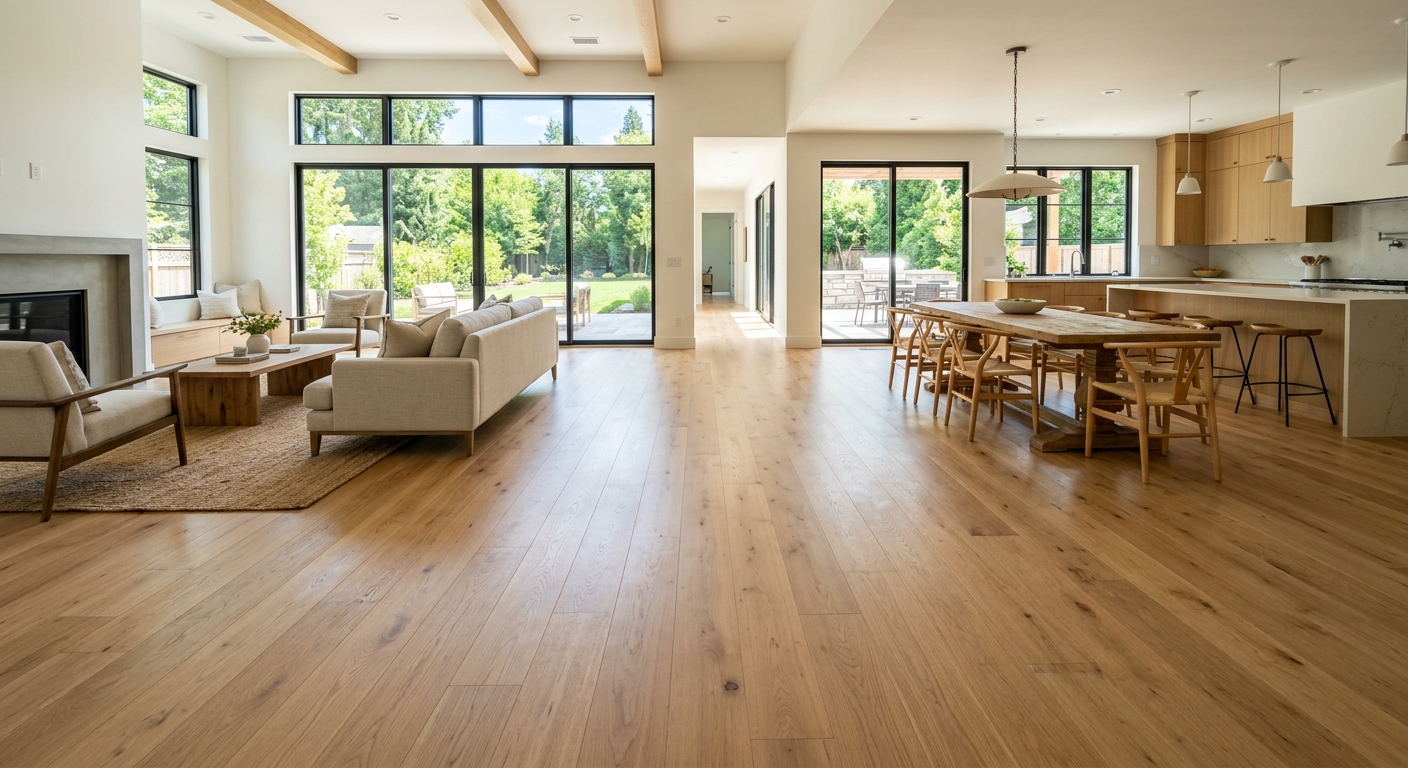
Flooring options and costs in York University Heights
York University Heights homeowners typically have a lot of great flooring choices, but the best value depends on what your home is made of and how Toronto humidity behaves through the year. In York University Heights, the population is 27,593 (Statistics Canada, 2021 Census), and that steady demand keeps many trades active—so you’ll often get competitive availability for renovations, especially in the areas around the York University/Glendon corridor. That said, a large share of older housing in the broader Toronto area means many jobs begin with subfloor levelling or repair before the “finished floor” stage can start.
Even when you choose a mid-range product, prep can move the needle. For many 1960s–1990s homes, plan for plywood replacement, levelling compounds, or moisture mitigation when new flooring is installed over concrete or older subfloors. That prep can add roughly $1–$4 per sq ft, and in some cases more if there’s widespread moisture or failed underlayment. Toronto’s indoor humidity swings are also real: solid hardwood expands and contracts with moisture and isn’t a great fit for basements or direct concrete installs. Engineered hardwood and luxury vinyl plank (LVP) are more dimensionally stable, and they’re designed for below-grade and high-humidity conditions.
In neighbourhoods near the university and in nearby condo-heavy pockets, we often see requests for engineered wood, LVP, and waterproof tile systems because owners want comfort, durability, and fewer installation risks. The next step is comparing the typical costs by flooring type, including moisture tolerance and expected lifespan.
| Type |
Best Room |
Moisture Resistance |
Lifespan |
Price per sq ft |
| Solid hardwood (nail-down, above grade only) |
Living room, dining room (above grade) |
Low to moderate; sensitive to humidity swings |
25–60 years (with correct acclimation) |
$9 – $18 |
| Engineered hardwood (float or glue, above + on-grade) |
Living room, hallways, bedrooms (above/on grade) |
Moderate to high; better for humidity |
20–40 years |
$9 – $15 |
| Laminate (click-lock, above-grade) |
Bedrooms, living rooms (dry areas) |
Moderate; not ideal for wet areas |
10–25 years |
$4 – $9 |
| Luxury vinyl plank / LVP (waterproof, any level) |
Kitchen, main floor, basement (finished) |
High; waterproof core |
15–30 years |
$5 – $12 |
| Porcelain / ceramic tile |
Kitchen, bathrooms, entryways |
Very high; handles spills and humidity |
25–50+ years |
$12 – $25 |
| Carpet (broadloom or modular tile) |
Bedrooms, media rooms |
Low to moderate; sensitive to moisture |
8–15 years |
$5 – $11 |
Prices are estimates only and vary by project scope, site access and material selection.
What affects the price of flooring in York University Heights
In Toronto and the surrounding GTA—where York University Heights sits—quotes for the “same” flooring can vary by 30–50% because the scope isn’t identical from one home to the next. Labour rates are higher due to strong renovation demand, and many installs include hidden variables like subfloor condition, moisture mitigation, and the amount of demolition/cleanup needed. Add in that Toronto-area homes can experience wide indoor humidity swings, and you’ll see why an inexpensive-looking product can become more expensive once proper prep and correct installation method are included.
Technically, the key drivers are moisture and how your home manages it. Solid hardwood expands and contracts with humidity, so it can’t be glued or floated over concrete and performs poorly in basements and other below-grade spaces. Engineered hardwood and LVP handle humidity and below-grade applications far better, which reduces the risk of call-backs and repairs. In colder stretches of the region and especially in new builds, radiant floor heating is becoming common; that can limit certain materials and installation systems, which affects labour and product selection. If your older subfloor needs levelling or repair, budget an added $1–$4 per sq ft, sometimes more when plywood replacement is required.
Here are a few York University Heights–style examples we see often: (1) Replacing worn plywood and levelling a living-room floor can add 2–4 days of labour; the finished floor might still land in the mid band, but the total can shift closer to the $9–$15 range for engineered hardwood. (2) Choosing tile in a small kitchen may cost more per sq ft—often $12–$25—yet it can still be cheaper than repeating a moisture-damaged laminate install after a few wet seasons. (3) Basements that were previously unfinished or have vapour issues are where LVP’s waterproof construction can be the most cost-effective choice versus products that require strict dryness.
| Price Factor |
Why It Matters |
Cost Impact |
| Room area in sq ft |
Material quantity and labour time scale directly with square footage |
Low for small rooms; proportionally larger on small-job minimums |
| Subfloor condition |
Levelling compound, plywood replacement, or patching must be done before installing |
Often adds $1–$4 per sq ft on older Toronto-area floors |
| Moisture / below-grade install |
Moisture limits product choices; vapour mitigation may be required |
Can eliminate solid hardwood; may push you to engineered or LVP |
| Material choice |
Solid vs engineered vs LVP vs tile have different price bands and installation requirements |
Solid/higher-end engineered often land in $9–$18 range; LVP commonly $5–$12 |
| Removal and disposal of existing flooring |
Existing underlay and adhesives affect demolition time and disposal weight |
Can add a noticeable labour and hauling line item |
| Stair nosing / transitions |
Complex edges and thresholds are labour-intensive and often priced per step/linear foot |
Increases total cost even when floor area is modest |
| Radiant heat compatibility |
Heat cycling influences movement tolerances and restricts certain products |
May require specific underlay and installation method |
| Installation method |
Float, glue-down, or nail-down changes prep, adhesives, and time |
Nail-down and glue-down typically cost more than basic click-lock in many cases |
Permits & regulations in Ontario
In Ontario, flooring installation itself usually does not require a building permit. That means a standard install of engineered hardwood, LVP, laminate, carpet, or tile over an existing subfloor typically falls into “finish” work. However, associated work can trigger permits—especially when you touch electrical systems, structural elements, or in-floor heating circuits. For example, if you are adding, altering, or rewiring radiant heat, you may need an electrical permit and the work must be done by a licensed electrician. Similarly, significant subfloor replacement or structural changes (beyond straightforward levelling/patching) can require additional oversight depending on the scope.
Condominiums are another regulatory layer. Even when a permit isn’t required, the corporation’s rules around sound transmission (commonly using STC/IIC expectations) often restrict hard flooring on upper floors or require specific underlay systems. Always review the condo declaration and ask for board approval in writing before installing hardwood or tile in a multi-unit building.
To verify your contractor in York University Heights, start with their Ontario licence/registration status and whether their trade is properly qualified for any electrical or specialized work. Then request: (1) a certificate of liability insurance with your address listed, (2) WSIB/WCB clearance or coverage proof (as applicable), and (3) a detailed written scope. You can verify commonly through the relevant public online registry checks and by reviewing the dates and certificate numbers directly on the documents they provide.
Best flooring for each room in your York University Heights home
Choosing flooring room-by-room matters in York University Heights because Toronto-area homes see wide indoor humidity swings, and many properties are older enough that subfloor prep is often part of the project. For living and dining areas, engineered hardwood or high-quality laminate gives you the look and comfort people want while staying more dimensionally stable than solid hardwood. For master bedrooms, carpet remains a comfort and sound-absorption winner, but engineered hardwood is also a strong choice if you want easier maintenance.
Kitchens need a surface that laughs at spills and frequent wet-cleaning. Luxury vinyl plank (LVP) is usually the most forgiving option—especially when you want waterproof performance without the higher install time of tile. If you want a “forever” finish, large-format porcelain tile is excellent for water resistance and durability, but it comes with higher material and labour. Basements (finished) are where product selection becomes non-negotiable: LVP is the clear winner because it handles moisture vapour and below-grade conditions that can cause solid wood and many laminate installs to fail over time.
Bathrooms should be porcelain or ceramic tile only, with proper waterproofing layers where required. And if you’re installing over radiant floor heating—which is increasingly common in new Ontario builds—pair it with materials that tolerate heat cycling well, such as engineered wood, tile, and many LVP systems. Solid hardwood is often a risk where heat and expansion are involved.
To put costs in perspective: if your kitchen or main floor is trending toward $12–$25 per sq ft for tile, LVP can often come in lower (commonly $5–$12), and the savings can help cover levelling or moisture mitigation—especially if your home is due for subfloor repairs.
| Room |
Best Material |
Why |
Moisture Risk |
Price Band per sq ft |
| Living / dining room |
Engineered hardwood |
Warm, durable look; better stability for Ontario humidity |
Low to moderate (above grade) |
$9 – $15 |
| Master bedroom |
Carpet or engineered hardwood |
Comfort and sound control; engineered handles moisture swings better than solid |
Low (typical use) |
$5 – $15 |
| Secondary bedrooms |
Laminate or carpet |
Good value; easier upkeep for kids/guests |
Low |
$4 – $11 |
| Kitchen |
Luxury vinyl plank or porcelain tile |
Spill-friendly and easy maintenance; tile is ultra-durable |
Moderate to high (spills and cleaning) |
$5 – $25 |
| Basement (finished) |
Luxury vinyl plank |
Waterproof core; designed for below-grade installations |
High (vapour and accidental water) |
$5 – $12 |
| Bathroom |
Porcelain / ceramic tile |
Impervious surface; supports wet-area cleaning |
Very high |
$12 – $25 |
How to choose a flooring contractor in York University Heights
To choose a flooring contractor in York University Heights, verify Ontario coverage and qualifications before you sign. First, ask for their Ontario business registration and any trade-specific credentials if your project includes work beyond basic flooring (like electrical for radiant systems or specialty subfloor work). Second, request proof of liability insurance—this should include your address and be current for the project dates. Third, ask for WSIB/WCB coverage proof or a clearance letter where applicable so you’re not exposed if a worker is injured onsite. Good contractors provide these documents quickly and clearly, not after repeated follow-ups.
Then, get 2–3 itemised written quotes—not lump sums. You want a labour + materials breakdown that shows the floor type, underlay/base details, levelling/repair scope, transition pieces, and disposal/hauling. Read what’s excluded: for instance, does levelling include plywood replacement or only patching? Is moisture mitigation included if test results show elevated readings? If permits are needed for related electrical or radiant floor work, confirm whether the permit and any inspection fees are included.
Warranty matters too. Look for a workmanship warranty (often covering labour and installation defects) and confirm the manufacturer warranty for product defects, plus whether it’s transferable to future owners. Finally, protect your cash flow: never pay more than 10–15% upfront, and hold back a portion until the job is complete and cleaned. In Ontario’s active renovation market, timelines can slip—so get a start date and completion estimate in writing.
- Provide a written scope with subfloor prep details (levelling/patching vs plywood replacement).
- List the exact floor product, thickness, wear layer (if applicable), and underlay specification.
- Confirm moisture mitigation steps if the basement or on-grade slab has vapour concerns.
- Show a line item for removal and disposal of existing flooring and underlayment.
- Include transitions, stair nosing, and finishing (not “allowance” only).
- State who provides and who installs any radiant-compatible underlay/membrane (if applicable).
- Confirm warranty coverage: workmanship duration, product warranty terms, and transferability.
- Provide proof of liability insurance with your project address.
- Provide WSIB/WCB clearance or coverage proof (as applicable) before work starts.
- Never accept a quote with major sections missing (prep, underlay, disposal, transitions).
- Use a payment schedule capped at 10–15% upfront and hold back until completion.
- Get start/completion dates and change-order rules in writing.
In York University Heights, the most common red flags we see are contractors who (1) won’t show insurance or WSIB/WCB proof, (2) give only a single lump-sum with no labour/material breakdown, (3) downplay moisture risks in basements without a prep plan, (4) refuse to provide a written timeline, or (5) won’t specify underlay/membrane and transition details in the contract.
Frequently asked questions — flooring in York University Heights
Engineered vs solid hardwood — what's the difference?
Solid hardwood is a single piece of wood engineered for nail-down installs and it’s best for above-grade, consistent indoor conditions. In York University Heights, where Toronto-area humidity can swing through the seasons, solid can move (especially if the space gets too dry or too humid) and it’s generally not the right choice for basements or direct concrete applications. Engineered hardwood is made with a wood veneer on top of layered cores, so it’s more dimensionally stable. That stability is why we often recommend engineered for main floors and sometimes on-grade areas, and it aligns well when homeowners also want options that pair better with radiant heat systems. In cost terms, solid hardwood commonly sits around $9–$18 per sq ft, while engineered is often in the $9–$15 range depending on grade and install method.
Do I need to level my subfloor first?
Usually, yes—at least to the degree required for the specific flooring system. In older Toronto-area housing stock around York University Heights, it’s common to see uneven sections, old adhesive ridges, or localized dips that can cause click-lock joints to fail (laminate) or create squeaks and gaps (hardwood). Levelling compound and sanding can handle minor irregularities, but if plywood is damaged or moisture has affected it, you may need repair or replacement before installation. That prep step is one reason quotes can differ by 30–50% across the GTA: a contractor who includes levelling and repairs properly will cost more up front, but you typically avoid issues that show up after the seasonal humidity changes. Plan for levelling/repair scope that can add roughly $1–$4 per sq ft on older floors.
What's the most durable flooring for pets and kids?
For pets and kids in Ontario, the most durable option is often LVP with a waterproof core, because it resists everyday spills, accidents, and easy cleaning—an important advantage in homes with indoor humidity swings. If you’re considering hardwood, engineered hardwood is typically the safer choice than solid when moisture is a concern, but it still isn’t as forgiving as LVP for repeated wet messes. Tile (porcelain/ceramic) is also extremely durable, especially in kitchens and entryways, but it can be harder underfoot and usually costs more (often $12–$25 per sq ft). Carpet can be comfortable and sound-dampening, but it’s not the first pick if you expect frequent accidents. If budget is a driver, LVP often fits the $5–$12 per sq ft range and offers a practical balance of durability and moisture tolerance.
How do I choose flooring for humidity in York University Heights?
Start with the location and basement risk. Toronto-area indoor humidity swings mean solid hardwood can expand/contract, so we usually steer it toward above-grade rooms where conditions are stable and the subfloor is prepared correctly. For areas with higher moisture risk—especially basements or slabs—engineered hardwood and luxury vinyl plank are more reliable because they’re designed to handle humidity and below-grade installations better than traditional solid wood. LVP’s waterproof core is particularly useful where vapour and accidental water are concerns. If you’re installing tile, it generally performs well in humid conditions, but you still want correct underlayment/waterproofing details for wet areas. In short: choose moisture-stable products for high-risk zones, and allocate budget for subfloor prep because uneven or moisture-compromised surfaces can drive failures regardless of the surface price. For example, LVP commonly lands in the $5–$12 per sq ft range versus solid hardwood around $9–$18 per sq ft.
Do condos restrict hard flooring?
Yes, often. In Ontario condominium buildings near York University Heights, hard flooring can be restricted or require specific underlay because the corporation must meet sound transmission expectations (commonly referenced via STC/IIC). That means even if flooring installation itself doesn’t require a building permit, you may still need board approval and the correct acoustic underlay system before you start work. We recommend homeowners check the condo declaration and ask for approval in writing—especially for hardwood/engineered wood and tile on upper floors. It’s also smart to confirm whether moisture barriers are needed under certain products and whether the condo requires any specific installation method. The right approach avoids complaints, rework, and delays. When planning your budget, remember that any required underlay and transitions can change your total cost even if the top flooring material seems similar.
How do I compare flooring quotes?
Compare quotes line-by-line, not just by the total. Ask each contractor to itemize labour and materials: what exact product is included (brand/model, thickness, wear layer where relevant), what underlay/membrane is specified, and what subfloor prep is included (levelling, plywood replacement, moisture mitigation). Confirm removal and disposal costs, transitions/stair nosing pricing, and whether the quote includes acclimation time and correct installation method (float, glue-down, nail-down, click-lock). Also check warranty terms: workmanship duration, product warranty coverage, and whether the warranty is transferable. In York University Heights, we also recommend verifying documentation—liability insurance and WSIB/WCB coverage proof before work begins. If one quote is much lower, it may be missing critical prep or using allowances instead of exact materials, which can lead to cost increases mid-project.