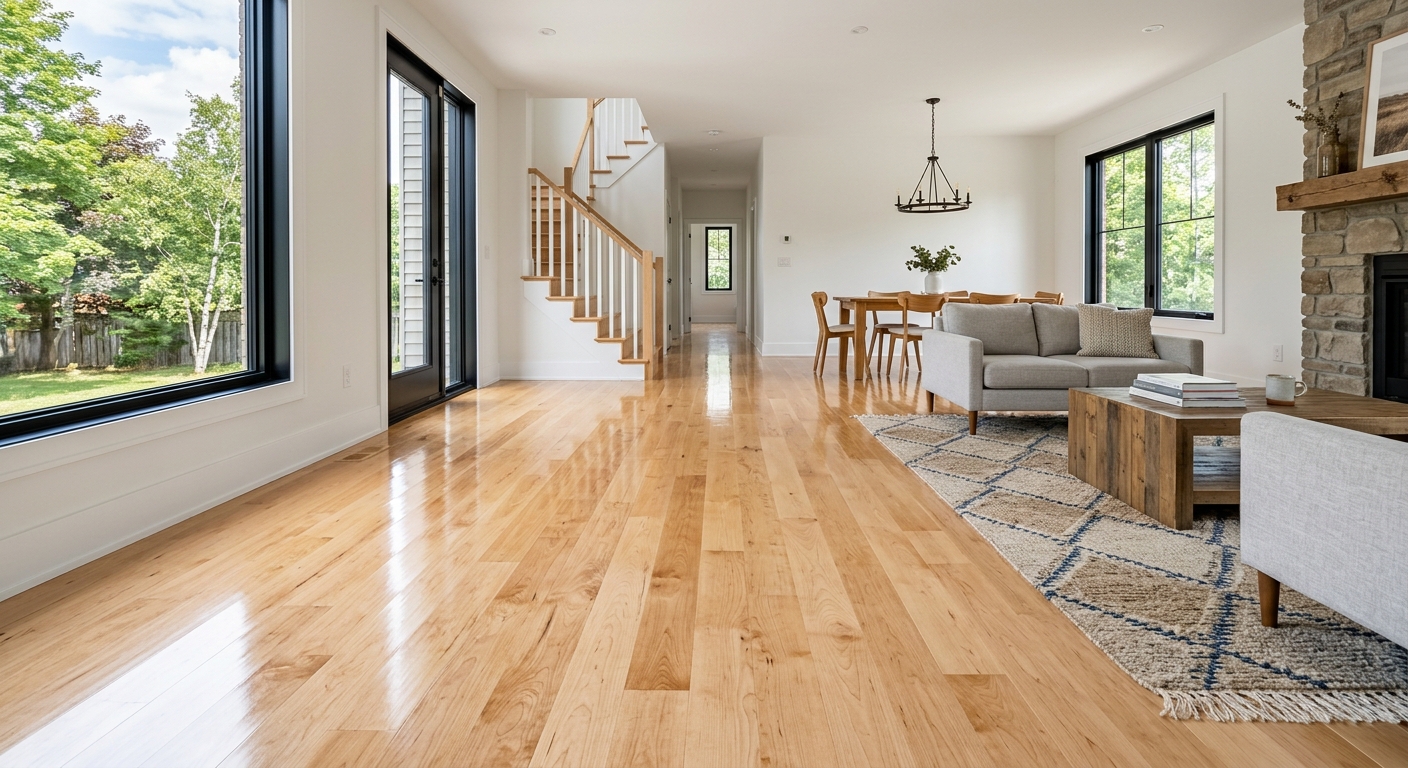
Flooring options and costs in Royal Gardens
In Royal Gardens, Alberta, choosing the right flooring is partly a style decision and partly a climate and subfloor reality check. With a population of 3,481 (Statistics Canada, 2021 Census), the local housing mix is often neighbourhood-style and, in many cases, includes older basements and main floors that need preparation before any “new” look can last. In Calgary-area homes, that preparation commonly shows up as subfloor levelling or repair—especially where aged plywood is uneven or where concrete can have moisture migration. Depending on how out-of-flat the surface is, levelling and patching typically add cost (often roughly $1–$3 per sq ft, and sometimes more in problem areas).
Calgary and surrounding communities also see big seasonal swings in indoor humidity in a dry, cold prairie climate. That’s why contractor quotes for the “same” square footage can vary by a lot: solid hardwood moves with humidity, and below-grade installs can be risky over concrete. Engineered hardwood and luxury vinyl plank (LVP/SPC) are more stable and are frequently chosen for main levels and basements. If you’re in an area with more older homes—especially around Royal Gardens where many renovations cluster—demand for prep work and stair/trim adjustments tends to be steady, so scheduling and labour rates can be affected.
Below are typical cost ranges homeowners use as a baseline in Royal Gardens, then we’ll break down what drives the differences in quotes and what to watch for in contractor estimates.
| Type |
Best Room |
Moisture Resistance |
Lifespan |
Price per sq ft |
| Solid hardwood (nail-down, above grade only) |
Living / dining |
Low to moderate (sensitive to humidity) |
20–40 years |
$8–$15 |
| Engineered hardwood (float or glue, above + on-grade) |
Living / dining, bedrooms |
Moderate to high (more stable than solid) |
15–30 years |
$9–$14 |
| Laminate (click-lock, above-grade) |
Living, bedrooms |
Moderate (edges can swell if water sits) |
10–25 years |
$3–$7 |
| Luxury vinyl plank / LVP (waterproof, any level) |
Kitchen, basement, main level |
High (waterproof core, good over minor moisture) |
10–25 years |
$4–$10 |
| Porcelain / ceramic tile |
Kitchen, bathroom, entries |
Very high (with correct underlayment and setting) |
25–50 years |
$6–$12 |
| Carpet (broadloom or modular tile) |
Bedrooms |
Low to moderate (needs dry-up discipline) |
7–15 years |
$3–$8 |
Prices are estimates only and vary by project scope, site access and material selection.
What affects the price of flooring in Royal Gardens
In Royal Gardens and the wider Calgary economic region, two quotes for the same room can land 30% to 50% apart because the “real” work is usually preparation and detailing, not just laying boards. Labour pricing also changes with seasonal demand and the amount of subfloor correction needed—older Calgary-area housing stock is a common driver. Add in Calgary’s dry, cold prairie climate with large indoor humidity swings, and you get a technical ripple effect: solid hardwood can expand and contract, so it’s generally limited to above-grade installs. Basements and in-slab areas are where homeowners often switch to engineered hardwood, LVP/SPC, or tile because these materials tolerate humidity changes and below-grade moisture migration better.
Colder-region compatibility matters too. If you have (or plan for) radiant heat—more common in Alberta new construction and renovations—most solid hardwood is restricted by product-specific installation requirements, and some laminate lines aren’t approved. That can nudge homeowners toward engineered hardwood or certain LVP/S-PC systems, which affects both material selection and labour methods. When surfaces are out of flat, levelling and repair can add about $1–$4 per sq ft depending on how far the floor is from flatness, and tile jobs can be especially sensitive to flatness (and may require crack isolation measures).
Here are a few practical examples that show up in Royal Gardens bids: (1) a basement with moisture-prone concrete often costs more upfront because waterproof LVP/SPC is safer than solid oak, but the savings come from fewer risky repairs later; (2) replacing carpeting with tile may look “similar” per square foot, yet tile requires careful prep and crack isolation for long-term performance; (3) if you’re choosing a mid-range LVP at roughly $4–$10 per sq ft versus laminate at $3–$7, the extra cost is often justified by basement suitability and day-to-day spill tolerance.
| Price Factor |
Why It Matters |
Cost Impact |
| Room area in sq ft |
Material quantities and labour time scale with square footage. |
Lower per-sq-ft pricing on larger areas; higher minimum charges on small rooms. |
| Subfloor condition |
Levelling, patching, or replacing weak plywood/concrete affects prep time. |
Typically adds about $1–$4 per sq ft depending on flatness and repair needs. |
| Moisture / below-grade install |
Limits materials; drives underlay, vapour control, and method selection. |
Solid hardwood is generally not the right call below grade; waterproof LVP/SPC may increase material cost but reduce risk. |
| Material choice |
Solid hardwood, engineered, LVP/SPC, laminate, and tile have different installation requirements. |
Can move the budget from mid-range laminate (~$3–$7) to hardwood (~$8–$15) or tile (~$6–$12). |
| Removal and disposal of existing flooring |
Demo labour, hauling, and subfloor clearing take time. |
Often significant for tile, thick carpet padding, or multi-layer builds. |
| Stair nosing / transitions |
Stair work and thresholds require extra materials and careful measuring. |
Charged per step or per linear foot; can add meaningful labour. |
| Radiant heat compatibility |
Restricts which products can be installed and the required underlayment/adhesives. |
May increase material cost and require specific approved systems. |
| Installation method |
Float, glue-down, nail-down each respond differently to subfloor and moisture. |
Glue-down often increases labour and adhesive prep; nail-down requires above-grade stability. |
Permits & regulations in Alberta
In Alberta, installing flooring itself typically does not require a building permit. The project may, however, trigger permits when the scope expands into other building systems. For example, if your job includes structural subfloor repair that changes load-bearing components, moisture remediation that involves engineered procedures, or work that ties into in-floor heating circuits (hydronic wiring/controls or electrical connections), permit requirements may apply. If electrical work is involved, that’s usually where permits come in.
In condominiums in the Calgary region, there are additional practical constraints. Sound transmission expectations (STC/IIC) often limit how hard flooring can be installed on upper floors. Many condo corporations require specific underlay thickness/type or a manufacturer-approved assembly. Before you start, review the condo declaration and ask for board approval in writing—especially if you’re installing hardwood, tile, or other hard-surface flooring over occupied levels.
To verify your contractor in Royal Gardens, ask for three things and check them before you sign: (1) their Alberta business/licence details (as applicable) and proof they’re in good standing via public online resources; (2) a current liability insurance certificate showing the right business name and coverage limits; and (3) confirmation of WSIB/WCB coverage for their workers—request a clearance letter or account verification. Always confirm dates and that the insured party matches the contract. This protects you if something goes wrong during demo, levelling, or stair/trim work.
Best flooring for each room in your Royal Gardens home
Choosing flooring in Royal Gardens works best when you start with each room’s moisture risk, foot traffic and comfort needs, then match the material to Calgary’s dry, cold prairie climate and humidity swings. For living and dining areas, engineered hardwood or high-quality laminate are common because they deliver a warmer feel than vinyl while still handling seasonal movement better than traditional solid hardwood. In master bedrooms, many homeowners like carpet for softness and sound absorption—yet it must be installed over a clean, dry subfloor to avoid odours and premature wear.
Kitchens and entries see frequent spills and snow-tracking. Luxury vinyl plank (LVP/SPC) or large-format porcelain tile performs best here because it’s easy to clean and tolerates day-to-day moisture. For basements (especially in Calgary-area homes with concrete slabs and occasional moisture migration), LVP is the clear winner in most renovations: it’s waterproof, dimensionally stable, and typically a safer long-term choice than solid wood or standard laminate. Bathrooms should be porcelain or ceramic tile only, with the right waterproofing/underlayment system to protect the substrate.
If you’re installing over radiant heat—more common in Alberta builds—verify product approval for that system. Many solid hardwood options won’t be compatible unless they’re specifically designed for in-floor heating; engineered hardwood and approved LVP assemblies usually have fewer restrictions.
Concrete budgeting example: if your main floor option is laminate around $3–$7 per sq ft but your basement is where spills and moisture are likely, choosing LVP (often $4–$10 per sq ft) can cost more on paper, yet it usually avoids the higher risk and potential rework associated with basement-unsafe materials.
| Room |
Best Material |
Why |
Moisture Risk |
Price Band per sq ft |
| Living / dining room |
Engineered hardwood |
Looks like hardwood, handles humidity swings better than solid, and wears well for daily traffic. |
Low to moderate (above grade, typical wipe-down only) |
$9–$14 |
| Master bedroom |
Carpet or engineered hardwood |
Carpet adds comfort and quiet; engineered hardwood suits those who prefer hard floors without solid’s humidity limits. |
Low (keep humidity stable and address any leaks quickly) |
$3–$8 |
| Secondary bedrooms |
Laminate (click-lock) or carpet |
Laminate is cost-effective and quick to install; carpet offers softness and sound control for kids/room sharing. |
Low (above grade) |
$3–$7 |
| Kitchen |
Luxury vinyl plank (LVP) or porcelain tile |
LVP is waterproof and forgiving for everyday spills; tile is the most durable and water-resistant for heavy use. |
Moderate to high (spills, standing water risk) |
$4–$12 |
| Basement (finished) |
Luxury vinyl plank (waterproof) |
Best match for concrete slabs and moisture migration risk; stable through humidity changes. |
High (below grade and vapour concerns) |
$4–$10 |
| Bathroom |
Porcelain / ceramic tile |
Accepts wet conditions when installed correctly with proper underlayment and waterproofing details. |
Very high (frequent splashes and humidity) |
$6–$12 |
How to choose a flooring contractor in Royal Gardens
Picking the right flooring contractor in Royal Gardens is mostly about verification and clarity. Start by confirming Alberta coverage and credentials: request proof of liability insurance (certificate of insurance should list the correct business name and coverage limits), and verify workers’ coverage through WSIB/WCB (ask for a clearance letter or current account confirmation). Don’t rely on “we’re covered” statements—get the documents.
Next, get 2–3 itemised written quotes, not just a lump sum. You want labour and materials broken out (including prep/levelling, underlay, adhesives or fasteners, stair labour, and transitions). Ask what’s included: disposal of old flooring, protection for stairs and doors, patching materials, and whether a permit is included when the scope triggers one (for example, electrical work for in-floor heating circuits). If your home has uneven concrete or aged plywood, insist the quote addresses flatness correction and notes what happens if additional levelling is discovered after demo.
Warranty and payment terms matter in Alberta’s freeze-thaw and humidity swings. Ensure there’s a workmanship warranty in writing and confirm the product warranty terms. Ask whether the warranty is transferable if you sell the home. For payment schedule, never pay more than about 10%–15% upfront; use a holdback until the job is complete and any punch-list items are resolved. Finally, get a start date and completion estimate in writing so you can plan around winter access and material lead times.
- Provide a written scope with measurement method and subfloor flatness approach.
- List each material brand/line (plank/tile, underlay, adhesives) and quantities.
- Separate labour, materials, and “prep/levelling” as distinct line items.
- Confirm disposal/hauling is included (or not) before you sign.
- Specify stair work scope: treads, risers, nosing, and matching transitions.
- Detail underlayment or vapour-control plan for basements and on concrete.
- Ask how they handle floor expansion gaps at walls and around columns/vents.
- Show how they protect your home during demo (dust containment, door protection).
- Confirm radiant heat compatibility for your specific product and assembly.
- Request warranty documents: workmanship terms and product warranty exclusions.
- Use a payment schedule with a holdback until completion and punch-list sign-off.
- Get a jobsite start date and a realistic timeline for materials and curing/adhesive waits.
In Royal Gardens, red flags include: (1) quotes that only list “flooring” without levelling/prep line items; (2) no mention of vapour control or moisture-safe products for basements; (3) refusing to provide insurance or WSIB/WCB clearance; (4) vague warranty wording like “we stand behind it” without written terms; and (5) asking for large upfront payments or giving no completion date in writing.
Frequently asked questions — flooring in Royal Gardens
How do I fix squeaky floors in my Royal Gardens home?
Squeaks in Royal Gardens are usually a subfloor-to-joist movement issue, not the top layer itself. First, identify where the noise occurs (by walking with a helper and marking spots). If you have hardwood or laminate above, the repair may require lifting sections or accessing from below (if you have a basement ceiling open). Common fixes include adding screws into the subfloor at the squeak location, fastening loose plywood/OSB layers together, or replacing damaged sheathing. When moisture has been an issue in an older basement (condensation/vapour migration can happen in Calgary’s climate swings), boards can warp, which worsens squeaks. A reliable flooring contractor should assess flatness and stability before installing new product so the squeak doesn’t come back.
What is luxury vinyl plank and is it worth it in Royal Gardens?
Luxury vinyl plank (LVP) is a waterproof, multi-layer flooring that’s typically built with a stable core and a wear layer on top. In Royal Gardens and the Calgary region, LVP is often “worth it” because it’s far more forgiving than laminate or solid hardwood when indoor humidity swings and below-grade moisture migration are part of your reality—especially with basements on concrete. Homeowners commonly choose LVP for its clean-up ease and because it can handle day-to-day spills without swelling at the edges. In budget terms, many mid-range LVP projects land around the $4–$10 per sq ft range, which is competitive versus tile (often $6–$12 per sq ft) and generally safer than trying to push solid hardwood below grade. The key is correct prep and the right vapour/control plan when installing on concrete.
How much does flooring cost in Royal Gardens?
In Royal Gardens, your total cost depends on material type, prep/levelling, and whether you’re removing old flooring or doing stair work. As a quick baseline, laminate often runs about $3–$7 per sq ft, while solid hardwood is typically higher at about $8–$15 per sq ft. Tile commonly falls in the $6–$12 per sq ft range. For basements, LVP is frequently chosen at a mid-range budget (commonly around $4–$10 per sq ft) because it’s waterproof and more stable over concrete. Labour can also shift with how out-of-level the subfloor is—levelling in older homes can add roughly $1–$4 per sq ft. If you share your room sizes and whether it’s a basement or main floor, a contractor can give a more accurate itemised estimate for Royal Gardens.
Hardwood vs laminate vs vinyl plank — which is best?
“Best” in Alberta depends on where you’re installing and how moisture will behave. Solid hardwood is beautiful and durable above grade, but it expands and contracts with humidity; it’s generally not the right choice for basements or concrete-slab installs in Calgary-area homes. Laminate is budget-friendly (commonly $3–$7 per sq ft) and works well for above-grade rooms with stable conditions, but it’s not truly waterproof—edges can swell if water sits. Vinyl plank (LVP) is usually the most practical for Alberta’s temperature and humidity swings, and it’s often a better match for kitchens and finished basements because it’s waterproof. In many Royal Gardens renovations, the decision comes down to risk: if there’s any below-grade moisture concern, LVP typically beats both laminate and solid hardwood on long-term performance.
What flooring is best for a Royal Gardens basement?
For a Royal Gardens basement, LVP/SPC is usually the top pick because it’s waterproof and more dimensionally stable when moisture vapour migrates through concrete. In Calgary’s dry, cold prairie climate, basements still experience humidity swings, and older regional housing stock often has more inconsistent concrete or older subfloors—conditions that can cause solid hardwood to move or fail over time. Tile can work in basements too, but it’s more sensitive to flatness and often requires more prep (including levelling and sometimes crack isolation), which can raise labour costs. Laminate is typically a higher risk choice below grade. A contractor should confirm the subfloor condition, manage vapour control where needed, and verify the installation method. Budget-wise, LVP often lands around $4–$10 per sq ft, which can be a smart trade for basement reliability in Alberta.
Can I install hardwood over concrete?
It depends on the type of hardwood and the concrete condition, but in Royal Gardens the safest general rule is: solid hardwood is usually not approved directly over concrete. Solid wood requires a controlled environment and is typically installed nail-down over an appropriate above-grade subfloor system. Engineered hardwood is more compatible because it’s built for greater dimensional stability and can be installed using approved methods (often glue-down or floating over the right underlayment/primer system). Even with engineered products, concrete moisture must be managed; if there’s ongoing moisture migration, you need a proper vapour-control plan before any hardwood system goes in. Also, if your concrete slab has radiant heat circuits, installation approvals become stricter. For any hardwood-over-concrete proposal in Alberta, ask your contractor to specify the exact product, the approved method, and how they’ll address moisture testing and vapour control—don’t rely on assumptions.