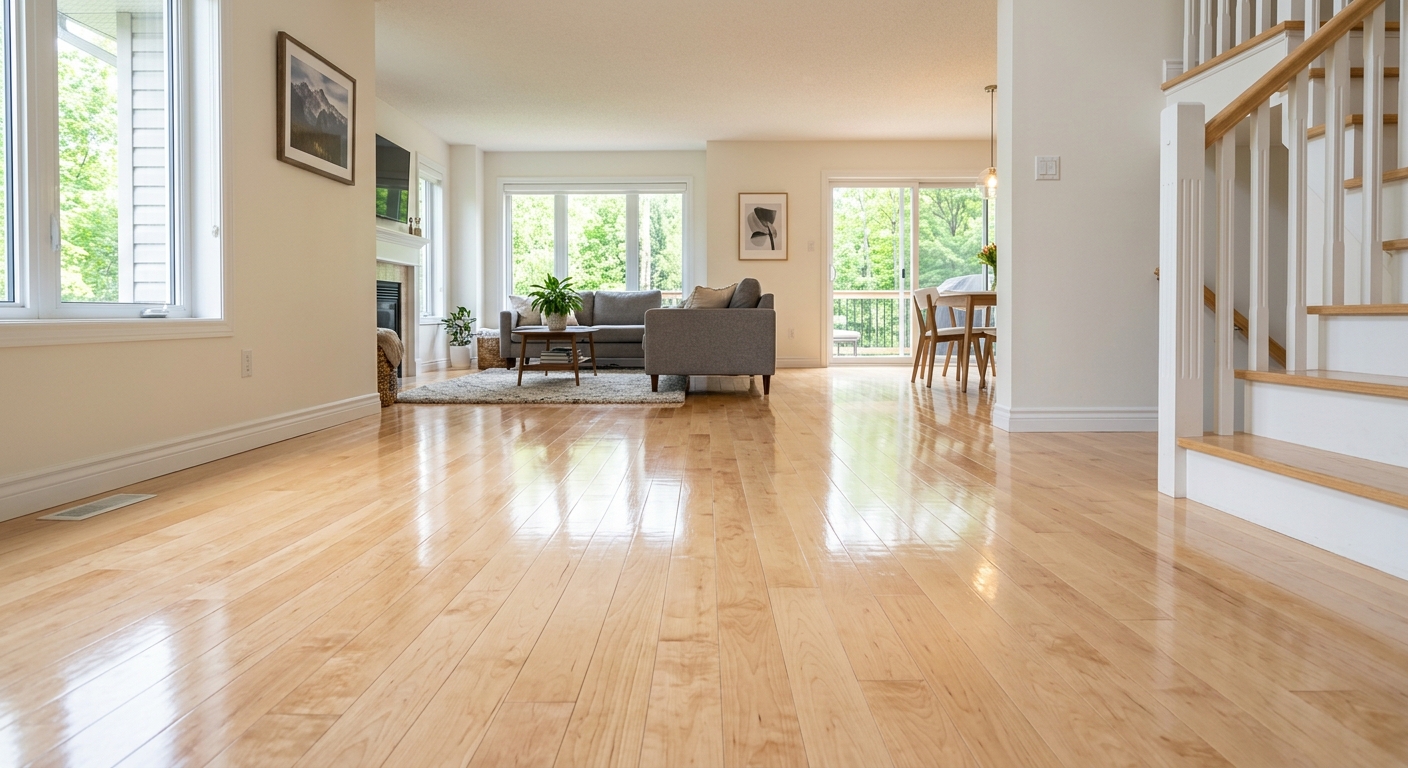
Flooring options and costs in Chilliwack
In Chilliwack, your flooring choices have to work with a wet, marine climate that can swing indoors through winter and the shoulder seasons. With 93,203 residents and a homeowner majority (25,790 homeowner households, 72.1% of households own) (Statistics Canada, 2021 Census), many properties are upgraded in occupied homes—so dust control, schedule certainty, and fast drying timelines matter. It also matters that 33.8% of homes were built before 1981 (Statistics Canada, 2021 Census): older subfloors often need levelling, spot repairs, and sometimes an underlayment or moisture barrier before any new surface can go down, which commonly adds roughly $1–$3 per sq ft to the overall project. In the Lower Mainland–Southwest, moisture can wick through concrete in basements and slab-on-grade areas, and that’s why we avoid solid hardwood below grade and most “one-size-fits-all” laminate solutions in those zones. Material and labour costs also reflect the region’s strong competition among installers and higher Greater Vancouver labour rates—installation is a significant portion of your final number, especially for tile, stairs, and extensive subfloor prep.
Contractor demand is especially high around Chilliwack Proper and the Chilliwack Lake / Ryder Lake area where older housing stock mixes with renovations and family upgrades. The next step is comparing realistic product performance and typical per-square-foot pricing so you can align your budget with the room’s moisture risk and traffic.
| Type |
Best Room |
Moisture Resistance |
Lifespan |
Price per sq ft |
| Solid hardwood (nail-down, above grade only) |
Main living areas |
Low (avoid below grade and slab) |
25–50 years |
$9–$18 |
| Engineered hardwood (float or glue, above + on-grade) |
Living rooms, bedrooms, hallways |
Medium–high (better humidity tolerance) |
20–40 years |
$10–$16 |
| Laminate (click-lock, above-grade) |
Bedrooms, living areas |
Low–medium (not for wet basements) |
10–25 years |
$4–$10 |
| Luxury vinyl plank / LVP (waterproof, any level) |
Basements, main floors, kitchens |
High (handles spills and vapour risk better) |
15–25 years |
$4–$10 |
| Porcelain / ceramic tile |
Bathrooms, entryways, kitchens |
High (surface waterproof; grout needs care) |
30–60 years |
$10–$20 |
| Carpet (broadloom or modular tile) |
Bedrooms, stairs, family rooms |
Low–medium (use moisture-safe spec in basements) |
8–15 years |
$5–$12 |
Prices are estimates only and vary by project scope, site access and material selection.
What affects the price of flooring in Chilliwack
In Chilliwack and across the Lower Mainland–Southwest, you can see quotes for the “same” flooring that vary by 30–50% once you account for moisture conditions, subfloor work, and the amount of labour required. The big reason is that the region’s climate and older housing stock aren’t uniform: some homes have flat, dry subfloors ready for installation, while others need levelling, underlayment upgrades, and moisture controls before we can even start. Solid hardwood is especially sensitive—solid planks expand and contract with indoor humidity. That means it performs poorly in basements and it can’t be installed over concrete in the way engineered or LVP can. Engineered hardwood and luxury vinyl plank are engineered for humidity tolerance and are typically far more practical for below-joist and on-grade conditions.
Cold snaps inland pockets and radiant heating choices also affect material fit. In homes with in-floor radiant heat, most solid hardwood specs must be very carefully matched (and many projects simply avoid solid hardwood). Older regional construction frequently needs subfloor repair or levelling; in practice, this often adds about $1–$4 per sq ft depending on how much self-levelling, plywood work, or spot replacement is needed. Lower Mainland–Southwest pricing can also swing because labour availability and scheduling influence how quickly crews can mobilize—tile and multi-room installs can bring crews in faster when you’re flexible on timing.
Concrete examples from Chilliwack: (1) a 600 sq ft main-floor replacement with minimal subfloor correction can land near the laminate/vinyl band (often $4–$10 per sq ft for that material line), while (2) the same 600 sq ft with concrete moisture wicking under a proposed “hardwood” plan typically forces engineered wood or LVP and can push levelling + moisture barrier work higher—sometimes enough to close the gap versus solid hardwood. If your home is older (33.8% built before 1981) (Statistics Canada, 2021 Census), plan for more time and an allowance for uneven plywood or patchwork.
| Price Factor |
Why It Matters |
Cost Impact |
| Room area in sq ft |
Materials and labour scale directly with square footage; waste factors matter more at small sizes. |
Typically low-to-moderate variability per project; waste can add 5%–15% depending on layout. |
| Subfloor condition — levelling or repair needed before install |
Older Chilliwack floors can be uneven; underlayment alone won’t fix severe dips. |
Often adds roughly $1–$4 per sq ft to project totals when levelling/repair is required. |
| Moisture / below-grade install — rules out solid hardwood |
Lower Mainland basements and slab areas can have vapour/moisture transfer through concrete. |
May shift you from $9–$18 solid hardwood territory to engineered/LVP (often $4–$16 depending on product). |
| Material choice — solid vs. engineered vs. LVP vs. tile |
Hardness, thickness, wear layer, and underlayment requirements change labour and material pricing. |
Hardwood and tile usually cost more per sq ft than laminate/LVP; tile also adds setting/curing time. |
| Removal and disposal of existing flooring |
Tear-out can include underlay, nails, and floor patches; disposal fees apply. |
Can add a noticeable line item; complexity rises with glued carpet, vinyl, or tiled surfaces. |
| Stair nosing / transitions — charged per step or per linear foot |
Transitions and stair work drive labour detail and material waste. |
Often increases overall cost even when room square footage looks small. |
| Radiant heat compatibility — limits material options |
Not all products tolerate heat cycling; solid hardwood often requires strict spec and humidity control. |
May require switching products (or adding an allowance for additional prep/spec labour). |
| Installation method — float vs. glue-down vs. nail-down |
Prep and labour intensity differ, and glue-down systems demand flatter, more stable subfloors. |
Nail-down and glue-down typically cost more labour than basic click-lock installs. |
Permits & regulations in British Columbia
In British Columbia, installing flooring itself typically does not require a building permit—whether it’s engineered hardwood, LVP, laminate, carpet, or even tile. Where you need to pay attention is the “associated work” around the flooring. For example, structural subfloor repair (significant joist/substructure work), moisture remediation systems that involve major changes to building assemblies, or in-floor heating circuit work can trigger permit requirements and trades involvement under electrical rules.
In condominiums, the bigger constraint is usually not a permit—it’s sound transmission and the building’s rules. Many condo corporations restrict hard flooring on upper floors, or they require specific underlay that supports STC/IIC targets. Before you start in a multi-unit building, review your unit’s declaration/bylaws and request board approval in writing if the document indicates hard-floor restrictions. This is common when switching to engineered hardwood, tile, or other sound-transmitting surfaces.
To verify your contractor in Chilliwack, do this step-by-step: (1) confirm their BC licence status (and whether they’re operating under the correct registration for their trade scope) using the appropriate BC government/business registry listings; (2) ask for a certificate of insurance showing general liability—make sure it lists your address as a job site and includes adequate coverage; (3) request proof they have WCB/WSIB equivalent coverage for workers (commonly handled through provincial coverage in BC)—get the clearance or proof document so you’re not left holding risk. If they can’t produce documents promptly, treat that as a red flag.
Best flooring for each room in your Chilliwack home
Choosing the right floor in Chilliwack starts with matching material to moisture exposure, traffic, and comfort—because Lower Mainland–Southwest homes deal with indoor humidity swings, and many basements/sunken areas experience vapour risk. In living and dining areas, engineered hardwood or a high-quality laminate often gives the warmth homeowners want without the same risk of cupping and gapping you can see with solid hardwood when humidity shifts. In the master bedroom, carpet is still a top comfort choice (softer underfoot and better sound absorption), while engineered hardwood works well if you maintain indoor humidity.
In kitchens, choose LVP (fully waterproof) or large-format porcelain/ceramic tile. Both handle water from sinks, cooking, and mopping far better than solid wood. For basements (finished), LVP is the clear winner in most Chilliwack projects: it’s waterproof, tolerates minor movement, and is far more forgiving where moisture can wick up through concrete. Bathrooms should be porcelain/ceramic tile only—humidity and occasional standing water are normal there.
For homes with radiant heating (increasingly common in newer British Columbia construction), engineered wood and LVP typically pair well when selected for heat cycling, while solid hardwood often requires very careful specification. As a budget example: if your living area is 500 sq ft, moving from laminate at roughly $4–$10 per sq ft to engineered hardwood in the mid-range can be a smart spend when you factor long-term wear and fewer replacement cycles—but you’d avoid solid hardwood below grade regardless of budget.
| Room |
Best Material |
Why |
Moisture Risk |
Price Band per sq ft |
| Living / dining room |
Engineered hardwood |
Warm look with better humidity tolerance than solid; stable in the Lower Mainland’s winter/shoulder swings. |
Low–medium (main floor), depends on how well the home controls indoor humidity |
$9–$16 |
| Master bedroom |
Carpet or engineered hardwood |
Carpet improves comfort and sound; engineered maintains a natural finish without the same risk of gapping. |
Low |
$5–$12 |
| Secondary bedrooms |
Laminate (good-quality) or carpet |
Laminate gives easier maintenance; carpet is great for comfort and noise control for kids/guests. |
Low |
$4–$10 |
| Kitchen |
Luxury vinyl plank (LVP) or porcelain tile |
Water-resistant surfaces that handle spills and routine cleaning without swelling. |
Medium (sink/splash zone) |
$10–$20 |
| Basement (finished) |
LVP (waterproof) |
Designed for moisture-prone areas; tolerates vapour risk better than solid wood and most laminate setups. |
High (vapour/moisture transfer through concrete common) |
$4–$10 |
| Bathroom |
Porcelain / ceramic tile |
Best-in-class for humidity and wet areas; durable for steam and splash. |
Very high |
$10–$20 |
How to choose a flooring contractor in Chilliwack
To choose a flooring contractor in Chilliwack, start with verification and documentation. In British Columbia, confirm the contractor’s licensing/registration relevant to their scope, then ask for a certificate of general liability insurance (coverage amount and policy dates), and request proof of WCB/WSIB-equivalent worker coverage for their employees. If they’re subcontracting, ask whether the subcontractors carry their own coverage and whether they’ll be reflected on your project paperwork.
Next, get 2–3 itemised written quotes that break labour and materials separately. Avoid “all-in” numbers without line items. Your quote should clearly state what’s included for subfloor prep (levelling, moisture barrier if needed), removal and disposal, underlayment, transitions, and stair nosing. Ask whether a permit is expected for any associated scope, and whether the cost to pull permits is included or excluded. Then look at warranty details: you want both a workmanship warranty (how long, what’s covered) and the manufacturer warranty for the product. Confirm whether the manufacturer warranty is transferable if you sell the home.
For payment, use a controlled schedule—never more than 10–15% upfront, and request a holdback until the job is complete and you’ve confirmed materials match the proposal. Finally, insist on a written start date and completion estimate so you can manage daily life during install and curing times.
- Ask for licence/registration details and confirm they match the job scope.
- Verify they can provide current proof of general liability insurance.
- Request proof of WCB/WSIB-equivalent coverage for workers.
- Use itemised quotes: labour, materials, underlay/moisture barriers, and disposal.
- Confirm waste factor and how cuts/odd angles are handled in the calculations.
- Check what’s excluded: patching, moulding/scribing, stair work, and transitions.
- Ask whether they include subfloor levelling specs (flatness targets) and how they measure.
- Clarify installation method: nail-down, glue-down, click-lock, and any required acclimation.
- Confirm moisture testing or moisture evaluation steps for basements/slabs.
- Review warranty terms in writing, including workmanship length and exclusions.
- Set a payment schedule with minimal deposit and a holdback until completion.
- Get a written schedule and who your day-to-day contact is during the job.
Red flags in Chilliwack: (1) quotes that don’t mention subfloor prep or moisture barriers even for basement installs; (2) skipping documentation for insurance and worker coverage; (3) offering “solid hardwood everywhere” over concrete or in below-grade rooms; (4) no written warranty terms for workmanship; and (5) wanting large deposits up front with no completion milestones.
Frequently asked questions — flooring in Chilliwack
How do I choose flooring for humidity in Chilliwack?
Chilliwack’s wet, marine climate means indoor humidity can swing in winter and shoulder seasons, and basements/slab areas can see moisture transfer. For main floors, solid hardwood can work if you keep indoor conditions stable and allow proper expansion gaps, but it’s still sensitive. For below-grade projects, we typically steer homeowners toward engineered hardwood or luxury vinyl plank (LVP), because layered construction and waterproof cores handle humidity changes far better than solid wood or typical laminate. If you’re budgeting, note that LVP often sits in the $4–$10 per sq ft band, while solid hardwood commonly falls in the $9–$18 range—so the “cheaper” look can become costly if the wrong product is installed in a moisture-prone area. (Statistics Canada, 2021 Census)
Do condos restrict hard flooring?
In British Columbia condos, restrictions are usually about sound transmission and building rules, not because flooring needs a permit. Many corporations limit hard flooring on upper levels unless you use approved underlay and meet specific STC/IIC targets. Before installing engineered hardwood, LVP, or tile in a condo, review your unit’s declaration and ask for board approval in writing if the rules require it. If you don’t, you may face extra costs to correct the installation or remove flooring. Also remember that Chilliwack has a mix of owner-occupied homes and multi-unit properties, so condo-specific requirements can vary from building to building even when the product is the same.
How do I compare flooring quotes?
When comparing quotes in Chilliwack, don’t start with the total number alone—compare line by line. You want an itemised breakdown for materials and labour, including subfloor prep (levelling/patching), moisture barrier or underlayment, removal and disposal, transitions, and stair nosing. Quotes that omit moisture preparation can look “better” at first but cost more later. Also confirm the installation method: click-lock laminate, glue-down engineered, or nail-down solid have different labour requirements. Finally, check warranty terms and payment schedule. If one quote is near the $4–$10 per sq ft material band and another is closer to $10–$20 for tile, make sure the same scope is included—tile often includes extra setting/prep and longer curing considerations.
Can I install flooring over existing tile in Chilliwack?
Often, yes—but it depends on the existing tile condition and the height buildup. In many Chilliwack homes, tile subfloors are stable, but grout lines, unevenness, and loose tiles can create a bumpy surface that prevents proper flooring adhesion or locking. For LVP or laminate, we’d typically assess flatness first and may require grinding/patching. For engineered hardwood, glue-down systems may demand additional prep, while click systems usually require a very smooth substrate. If the tile is cracked or uneven, the correct move is sometimes full removal—especially if you also need moisture control. The “can we install over it?” question should be answered after a site check and measurement, not from photos alone.
What is the best flooring for a high-traffic area in Chilliwack?
For high-traffic zones (entries, hallways, family rooms) in Chilliwack, LVP and tile are common winners because they resist everyday wear and are easier to maintain. Waterproof LVP is especially useful where you might track in wet boots during rain or muddy seasons, and it’s a strong choice where humidity/vapour risk exists. Porcelain/ceramic tile is also durable and stands up well to frequent cleaning. Solid hardwood can be beautiful, but it requires more attention to indoor humidity and should not be used below grade. Pricing helps set expectations: many LVP projects land in the $4–$10 per sq ft band, while tile is commonly $10–$20 per sq ft, with tile labour influenced by substrate prep and layout complexity.
How do I prepare my subfloor before new flooring?
Subfloor prep is where good results are made in Chilliwack. Start by addressing the cause of problems: moisture, unevenness, or damaged panels. For basements and slab-on-grade areas, we evaluate moisture risk and use appropriate barriers—because solid hardwood and many laminate setups aren’t designed for vapour transfer. For uneven plywood, we level or repair before installing anything, especially for glue-down or click-lock systems that require a smooth surface. Homeowners can also help by clearing the space, confirming access to power, and discussing pets or dust sensitivity. If your home is older (33.8% built before 1981) (Statistics Canada, 2021 Census), plan for extra time and an allowance for subfloor repair because older floors often need spot replacement and levelling before installation.