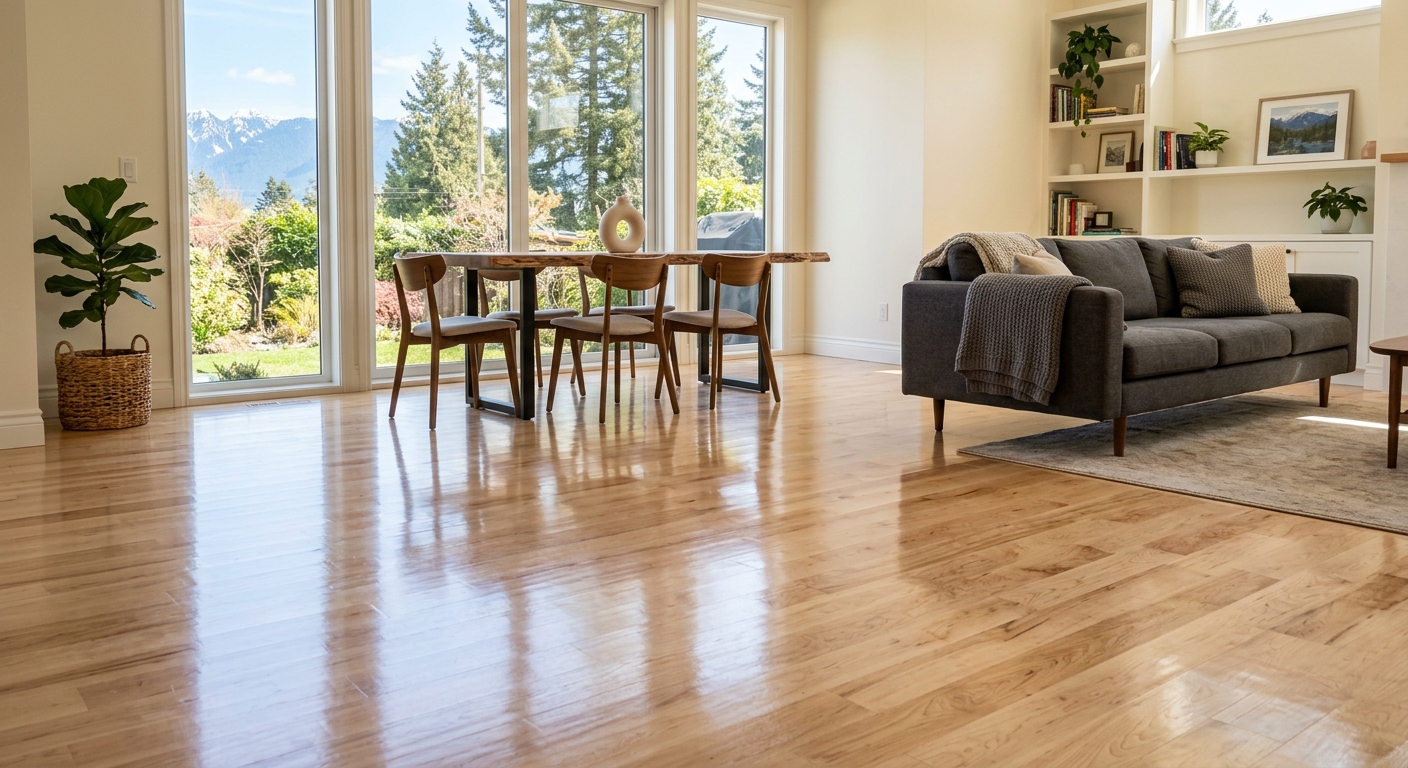
Flooring options and costs in Grandview-Woodlands
Flooring in Grandview-Woodlands is all about pairing the right material with the Lower Mainland–Southwest’s wet, marine climate. With 29,175 residents (Statistics Canada, 2021 Census), there’s steady demand for renovations in older housing pockets where subfloors can be uneven, and many projects need levelling before the finish goes down. In practice, that often adds work such as plywood repair, patching, or an overlay system—commonly in the range of about $1–$3 per sq ft—before you even choose the final surface.
Locally, the biggest cost and performance driver is moisture movement. Basements and slab-on-grade areas in this part of Metro Vancouver frequently show moisture wicking through concrete, especially in winter and shoulder seasons. That’s why we typically avoid solid hardwood below grade and recommend engineered wood or luxury vinyl plank (LVP) in those locations. Even above grade, humidity swings can cause cupping or gapping in solid wood if the home’s indoor conditions aren’t kept stable.
Contractors are especially busy around the Commercial Drive corridor and nearby residential streets where character homes and older renos are common. If you’re considering upgrades this year, it’s worth comparing options line-by-line, because labour and subfloor preparation can change the final number as much as the material choice. The table below gives realistic ranges you can use to sanity-check quotes before you ask for an itemised breakdown.
| Type |
Best Room |
Moisture Resistance |
Lifespan |
Price per sq ft |
| Solid hardwood (nail-down, above grade only) |
Main living areas (above grade) |
Low to moderate (humidity sensitive) |
25–50 years (with stable indoor humidity) |
$9,000–$18,000 |
| Engineered hardwood (float or glue, above + on-grade) |
Living areas, bedrooms (above + on-grade) |
Moderate (better tolerance for humidity) |
20–35 years |
$7,000–$13,000 |
| Laminate (click-lock, above-grade) |
Bedrooms, hallways, living areas |
Low to moderate (needs careful leak management) |
10–25 years |
$4,000–$10,000 |
| Luxury vinyl plank / LVP (waterproof, any level) |
Kitchens, basements, main floors |
High (PVC core, waterproof surface) |
15–30 years |
$4,000–$10,000 |
| Porcelain / ceramic tile |
Bathrooms, kitchens, entries |
Very high (surface and grout choice matters) |
30+ years |
$10,000–$20,000 |
| Carpet (broadloom or modular tile) |
Bedrooms, stairs, TV rooms |
Low (avoid below grade unless moisture is addressed) |
8–15 years |
$4,000–$8,000 |
Prices are estimates only and vary by project scope, site access and material selection.
What affects the price of flooring in Grandview-Woodlands
It’s common to see quotes for the “same” flooring project differ by 30–50% across the Lower Mainland–Southwest and other parts of British Columbia, because the real cost drivers are often not the finish itself. Labour availability, how much preparation your subfloor needs, and how the installer handles moisture and transitions can swing the total just as much as the material choice. In Grandview-Woodlands, you’re also working against a wet marine climate that brings indoor humidity swings in winter and shoulder seasons—conditions that directly affect solid hardwood and, to a lesser degree, laminate.
Technically, solid hardwood expands and contracts with humidity. For that reason, solid wood can’t be glued or floated over concrete and typically performs poorly in basements. Engineered hardwood and luxury vinyl plank (LVP) handle humidity and minor temperature changes far better, which is why they’re common in Lower Mainland renos. Colder inland pockets sometimes favour radiant heating, but that comes with stricter material selection: many homeowners end up with engineered wood, LVP, tile, or only laminate products that are rated for higher temperatures.
Local housing stock adds another layer. Many older homes in the area have uneven plywood or older concrete conditions, so levelling, moisture barrier installation, or partial resurfacing is often required—commonly adding roughly $1–$4 per sq ft. For example, if you’re choosing hardwood from a typical $9–$18 per sq ft backbone band, you may still pay for prep that pushes the job closer to the upper end; meanwhile, a well-installed waterproof LVP option from the $4–$10 per sq ft band can stay closer to budget when the subfloor is “good but not perfect.” In basements, that same logic is even stronger because solid hardwood often needs to be ruled out altogether by moisture.
| Price Factor |
Why It Matters |
Cost Impact |
| Room area in sq ft |
Directly determines material quantity, cutting, waste, and labour hours |
Low to very high; larger areas usually improve unit economics |
| Subfloor condition — levelling or repair needed before install |
Older plywood or concrete often needs patching, flattening, or a new underlayment layer |
Typically adds material and labour; often around $1–$4 per sq ft |
| Moisture / below-grade install — rules out solid hardwood |
Moisture wicking and humidity swings dictate which products can be warranted |
May require LVP/tile + moisture barrier; can eliminate solid hardwood options |
| Material choice — solid vs. engineered vs. LVP vs. tile |
Different products have different install methods, underlay needs, and tolerances |
Typically shifts you between the local $4–$10 (vinyl/laminate) and $10–$20 (tile) bands |
| Removal and disposal of existing flooring |
Tear-out takes time and may require haul-away fees |
Can add several hundred dollars depending on layers and debris |
| Stair nosing / transitions |
Complex edge details and matching heights require extra labour and materials |
Charged per step or per linear foot; commonly meaningful on multi-level homes |
| Radiant heat compatibility |
Only certain products tolerate in-floor heating temperatures and cycling |
May limit you to engineered wood, LVP, and tile; can change both material and labour |
| Installation method — float vs. glue-down vs. nail-down |
Method determines subfloor prep, adhesives/underlay, and labour time |
Nail-down and glue-down often cost more than click/float when prep is required |
Permits & regulations in British Columbia
In British Columbia, a typical flooring installation does not require a building permit by itself. Most projects—like installing carpet, floating click-lock laminate, or laying LVP—fall under routine renovation work. However, associated work can trigger permits, and this is where homeowners in Grandview-Woodlands should be careful.
Work that may require a permit includes: electrical changes for in-floor heating circuits (thermostat wiring, power feed upgrades, and any modifications to electrical panels), and certain structural subfloor repairs if they involve engineered/structural elements. Moisture remediation can also be permit-adjacent depending on how invasive it becomes (for example, if it includes substantial alterations or involves approved assemblies).
For condominiums, the “regulation” is often internal: the strata corporation’s rules on sound transmission and underlay. Hard flooring can be restricted or required to use specific underlay and installation methods to meet STC/IIC targets. Always review the condo declaration and ask for board approval in writing before you install hardwood or tile on upper floors.
To verify a contractor’s BC standing step-by-step: (1) confirm their licence status and any applicable trade registration through the appropriate provincial registry; (2) ask for a current certificate of insurance showing general liability with coverage suited to flooring work; (3) obtain proof of worker coverage (WSIB/WCB clearance letter or equivalent coverage status). A reputable installer will provide these documents before quoting and will list them in your contract package.
Best flooring for each room in your Grandview-Woodlands home
Choosing flooring room-by-room in Grandview-Woodlands is how you protect your investment against the Lower Mainland–Southwest’s damp winters and indoor humidity swings. For living and dining areas, homeowners usually want warmth and a natural look without fuss—engineered hardwood or a high-quality laminate are the practical sweet spot because they tolerate humidity better than solid wood. If your home has in-floor radiant heating (more common in newer builds), engineered products and LVP/porcelain tile generally pair more easily than standard solid hardwood, which requires very careful specification.
In bedrooms, comfort and sound matter. Carpet is popular for reduced noise and underfoot warmth, while engineered hardwood also works well if you’re keeping indoor humidity controlled. In kitchens, where spills happen and wet feet are common, waterproof luxury vinyl plank (LVP) or large-format porcelain tile are usually the most dependable. For basements (especially slab-on-grade or areas with moisture wicking), LVP is typically the clear winner: it’s waterproof at the surface and suited to below-grade conditions where solid wood and most laminate struggle.
Bathrooms should be porcelain or ceramic tile only. Tile handles water exposure and heat better, and it’s easier to maintain with proper grout and sealing practices.
Here’s a concrete example: if you’re comparing tile at the $10–$20 per sq ft band versus LVP at the $4–$10 per sq ft band in a finished basement, the price difference can be justified only if you need the tile’s feel and maximum water tolerance. In most basements, LVP gives you the performance you need without overpaying.
| Room |
Best Material |
Why |
Moisture Risk |
Price Band per sq ft |
| Living / dining room |
Engineered hardwood |
Warm look, more stable with humidity than solid |
Medium (above grade humidity swings) |
$7,000–$13,000 |
| Master bedroom |
Carpet or engineered hardwood |
Comfort and sound control; engineered still looks premium |
Low (if properly ventilated) |
$4,000–$13,000 |
| Secondary bedrooms |
Laminate or LVP (if kids/pets) |
Durable, easy-clean; LVP adds waterproof tolerance |
Low to medium |
$4,000–$10,000 |
| Kitchen |
Luxury vinyl plank (LVP) or porcelain tile |
Slip-resistant options and easy spill cleanup |
Medium to high (spills and splash zones) |
$4,000–$20,000 |
| Basement (finished) |
Luxury vinyl plank (LVP) |
Waterproof, handles moisture vapour better than wood/laminate |
High (below-grade moisture wicking risk) |
$4,000–$10,000 |
| Bathroom |
Porcelain / ceramic tile |
Best tolerance for wet conditions and long-term durability |
Very high |
$10,000–$20,000 |
How to choose a flooring contractor in Grandview-Woodlands
For Grandview-Woodlands homeowners, picking the right contractor is less about flashy photos and more about proof: licensing where applicable, liability insurance, and worker coverage. Start by asking for the contractor’s British Columbia documentation before work begins. For insurance, request a certificate of insurance and confirm it names the right parties for the project. For worker coverage, ask for a WSIB/WCB clearance letter or coverage proof—your invoice and contract should clearly reflect coverage status.
Next, get 2–3 itemised written quotes. You want a breakdown that separates labour from materials (flooring, underlay, adhesives, levelling compound, moisture barrier, stair nosing, transitions, and any disposal). Avoid “one number” lump sums unless it’s accompanied by a detailed scope and inclusions list. Pay attention to what’s excluded: moisture testing, subfloor repair, levelling to a certain flatness standard, subfloor underlayment type, and the details of transitions. Disposal should be explicit—take-away fees add up in older Vancouver-area buildings where access rules are stricter.
Warranties also matter. Confirm workmanship warranty length (often tied to proper subfloor prep) and whether the product warranty is valid for your installation method and level (above grade vs. on-grade vs. below grade). Ask if warranties are transferable if you sell the home. For payment scheduling, never pay more than 10–15% upfront; hold back the remainder until the job is complete and you’ve received the final documentation.
- Request BC licence/registration info and confirm the contractor matches the legal entity on your contract.
- Verify general liability insurance certificate and project-specific coverage details.
- Ask for WSIB/WCB clearance letter or coverage proof for workers.
- Get itemised quotes: labour line items, material quantities, and underlayment/moisture barrier inclusions.
- Confirm subfloor prep scope (patch/level, flatness target, and whether they’ll resurface concrete).
- Ask who supplies and installs transitions, stair nosings, and wall base/trim.
- Ensure removal and disposal of old flooring is stated (and what layers are included).
- Require a moisture plan for basements and slab-on-grade (vapour barrier/underlayment system).
- Ask for a written timeline: start date, duration, and completion estimate.
- Confirm warranty terms in writing: workmanship + product, including transferability.
- Use a progressive payment schedule: 10–15% max deposit; hold back until punch list complete.
- Confirm you’ll get documentation like leftover material notes, installation date, and warranty receipts.
Common red flags in Grandview-Woodlands include contractors who won’t provide insurance/coverage proof, quotes that omit moisture barrier or underlayment specifics, “hardwood in a basement” proposals without a moisture plan, vague scopes that exclude levelling/repair, and aggressive payment requests (especially deposits beyond 15% or demands for full payment before materials arrive).
Frequently asked questions — flooring in Grandview-Woodlands
What flooring holds up best to pets in a Grandview-Woodlands home?
For pet households in Grandview-Woodlands and across the Lower Mainland–Southwest, the most forgiving choices are usually waterproof luxury vinyl plank (LVP) and, in some layouts, certain laminate products with strong wear layers. LVP’s waterproof surface helps if accidents happen, and it’s typically the best match for basements where moisture wicking through concrete can be an issue. If you’re comparing budgets, LVP often falls in the $4–$10 per sq ft range (with installation and prep affecting the final number). Solid hardwood can scratch and also reacts to humidity swings; it’s not ideal below grade. If you want hardwood look with pet practicality, consider engineered hardwood above grade, paired with protective mats and regular claw trimming.
How do I fix squeaky floors in my Grandview-Woodlands home?
Squeaks usually come from movement between subfloor layers, fasteners loosening, or gaps around framing. The first step is to identify where the sound originates—press on boards, walk in patterns, and check for bounce. In older Grandview-Woodlands homes, squeaks can be made worse by uneven plywood and gaps that develop over time. Before new flooring goes in, installers often need to stabilise the subfloor—like re-fastening loose panels or adding appropriate patching/levelling systems. If you’re already planning a flooring replacement, it’s smart to treat squeaks as a subfloor prep issue, not a “finish” problem. Otherwise, the new surface can look perfect while the squeaks return.
What is luxury vinyl plank and is it worth it in Grandview-Woodlands?
Luxury vinyl plank (LVP) is a layered, PVC-based flooring designed for durability and water resistance. In British Columbia’s Lower Mainland–Southwest climate—especially with indoor humidity swings and below-grade moisture—LVP is often a “high confidence” choice because it can handle occasional wetting without the swelling and warping you’d see in wood and many laminates. In basements and on slab-on-grade areas common around Vancouver-area neighbourhoods, it’s usually the best practical match. Cost-wise, you’ll commonly see LVP projects land in the $4–$10 per sq ft backbone band, depending on product thickness, underlayment, and subfloor levelling needs. If your quote includes moisture protection and levelling, LVP is often worth it.
How much does flooring cost in Grandview-Woodlands?
In Grandview-Woodlands, the typical price bands align with the Lower Mainland–Southwest market: hardwood often runs about $9–$18 per sq ft, tile about $10–$20 per sq ft, and laminate/LVP often about $4–$10 per sq ft, with carpet installation commonly around $4–$8 per sq ft. Your real total depends heavily on subfloor condition—levelling, repair, and moisture barrier work. Many older homes need patching/overlay systems that add roughly $1–$4 per sq ft before the final material even starts. Also expect installation to be a significant portion of the quote because Greater Vancouver labour rates are among the highest in Canada. Get itemised quotes so you can compare labour, levelling, transitions, and disposal, not just the surface cost.
Hardwood vs laminate vs vinyl plank — which is best?
In British Columbia, “best” depends on where you’re installing. For above-grade living spaces in Grandview-Woodlands, engineered hardwood or laminate can be excellent, with engineered generally handling humidity better than solid hardwood. If you’re comparing solid hardwood, remember it’s humidity-sensitive and generally not recommended below grade. For kitchens and basements, vinyl plank (LVP) is usually the safest bet because it’s waterproof and tolerant of moisture vapour conditions. Budget-wise, LVP often sits in the $4–$10 per sq ft range, while hardwood typically starts higher (about $9–$18 per sq ft). Laminate can be cost-effective, but it dislikes standing water. If you want one choice that fits most rooms, LVP is often the most practical.
What flooring is best for a Grandview-Woodlands basement?
For basements in Grandview-Woodlands, the best choice is usually waterproof luxury vinyl plank (LVP), because Lower Mainland–Southwest basements and slab-on-grade areas can experience moisture wicking through concrete, especially during wet seasons. LVP’s layered construction and waterproof surface help prevent swelling and allow more reliable installation when a vapour control approach is required. Solid hardwood is generally a poor fit below grade due to humidity-driven expansion and contraction, and laminate can also fail when exposed to prolonged damp conditions. Carpet can work only if moisture is truly controlled and the assembly is correct, but it’s riskier. If you want a stable, budget-friendly direction, LVP in the $4–$10 per sq ft backbone band is commonly the best balance of performance and cost.