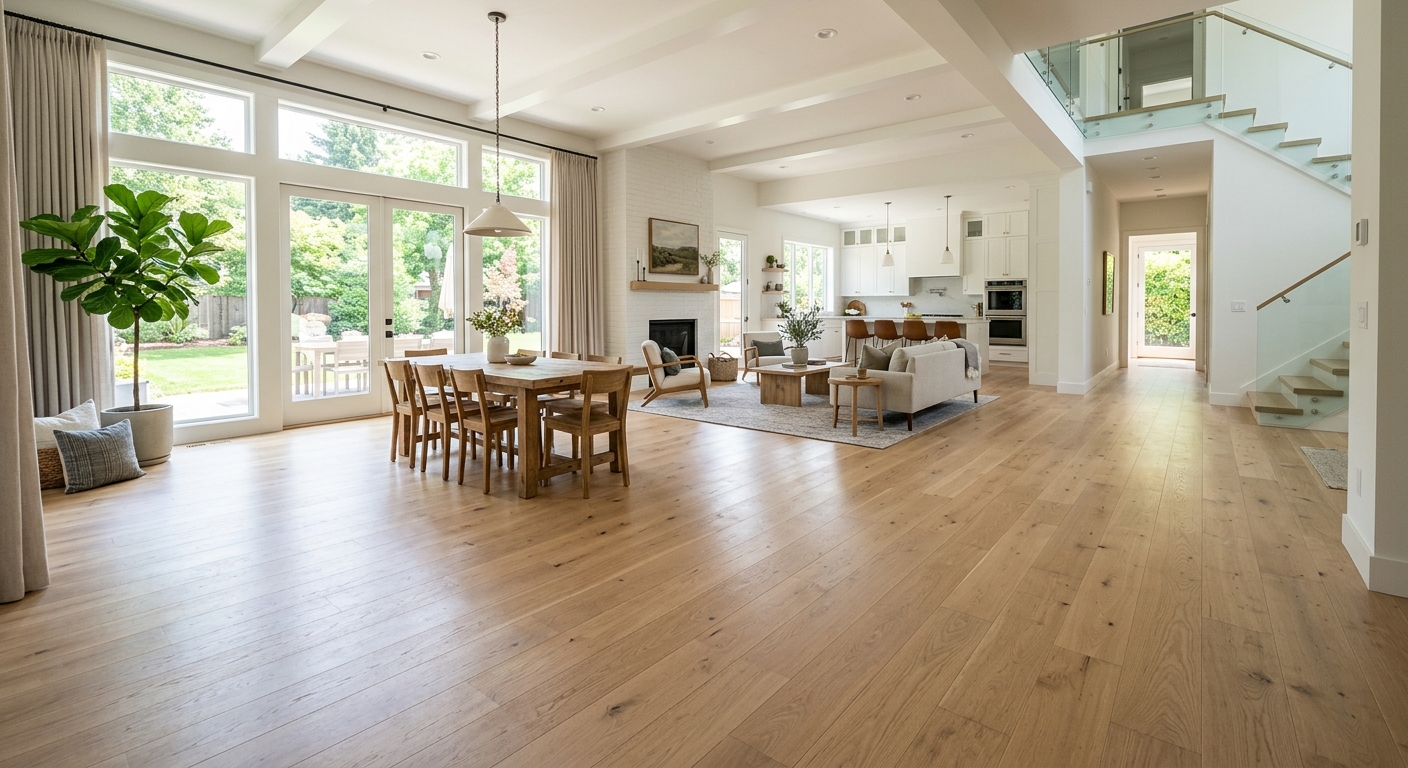
Flooring options and costs in Caledon
Caledon homeowners usually start with a simple question—“What will it cost?”—but the right comparison depends on how your home is built and how the Toronto-area climate behaves indoors. In Caledon, a meaningful share of housing was built before 1981 (30.0% of dwellings), and older basements and crawlspaces often come with subfloor unevenness, worn plywood, or moisture mitigation needs before you can lay any new flooring. Even if you pick a mid-range finish, that prep commonly pushes the total budget up by roughly $1–$4 per sq ft in many projects. (Statistics Canada, 2021 Census).
On top of age, the Toronto market adds pressure to labour and material lead times. Contractors are busy because renovation demand stays strong around the GTA, so you’ll often see wider quote spreads when crews are booked out or when a job requires extra levelling, heavier underlay, or specialty moisture barriers. The region also sees indoor humidity swings across seasons, which matters because solid hardwood moves with moisture and is a riskier choice over concrete or in basements. In most Caledon living areas, engineered hardwood or luxury vinyl plank (LVP) wins on stability and day-to-day resilience, especially with that humidity cycling.
If you’re in a high-renovation pocket like the Palgrave area, you’ll typically find more installers comfortable with levelling older subfloors and matching transitions around entryways and open-concept living spaces. From there, use the table below to estimate typical per-square-foot ranges for the main flooring types.
| Type |
Best Room |
Moisture Resistance |
Lifespan |
Price per sq ft |
| Solid hardwood (nail-down, above grade only) |
Living / dining, main floors (no basement) |
Low to moderate (needs stable indoor humidity) |
25–60 years (with proper humidity control) |
$9 – $18 |
| Engineered hardwood (float or glue, above + on-grade) |
Living / dining, bedrooms (often main + upper floors) |
Moderate to good (better dimensional stability) |
20–40 years |
$10 – $17 |
| Laminate (click-lock, above-grade) |
Living areas, bedrooms, hallways |
Moderate (protect seams; avoid standing water) |
10–25 years |
$4 – $9 |
| Luxury vinyl plank / LVP (waterproof, any level) |
Main floor, kitchens, finished basements |
High (waterproof core for spills and vapour exposure) |
15–25 years |
$5 – $9 |
| Porcelain / ceramic tile |
Kitchen, bathrooms, entryways |
Very high (best for wet zones) |
30+ years |
$12 – $25 |
| Carpet (broadloom or modular tile) |
Bedrooms, stairs (comfort/sound control) |
Low to moderate (needs good moisture management) |
7–15 years |
$5 – $11 |
Prices are estimates only and vary by project scope, site access and material selection.
What affects the price of flooring in Caledon
In Caledon and the broader Toronto area, two quotes for what sounds like the same flooring can differ by 30–50% because the “hidden work” varies. The biggest technical drivers are indoor humidity swings and below-grade moisture conditions—both are common in Ontario homes and directly influence which floor assemblies are safe. For example, solid hardwood expands and contracts with humidity; it cannot be installed over concrete and it performs poorly in basements. That’s why, for many Caledon homeowners, engineered hardwood or LVP is chosen: these systems handle humidity cycling far better and are designed for on-grade and below-grade applications.
Cold-season comfort also changes pricing decisions. In colder parts of the region and in new custom homes, many owners add radiant floor heating. That pushes you toward engineered wood, tile, and certain vinyl products, while it can eliminate most traditional solid hardwood options because of heat-driven expansion and the risk of gapping or cupping. Finally, older regional housing stock frequently needs subfloor levelling or repair; that prep alone can add $1–$4 per sq ft, and it’s a common reason budgets climb into the higher end of the laminate/vinyl or hardwood bands.
Concrete examples we see in Caledon: (1) a main-floor install on an older 1960s–1970s subfloor where plywood is soft at seams—labour rises and material waste increases; (2) a finished basement where vapour management is required—LVP may cost more per sq ft than laminate, but it prevents callbacks linked to moisture damage. When you compare $4–$9 laminate/vinyl plank projects against $9–$18 solid hardwood, the difference often reflects stability needs and how much subfloor correction the installer must do, not just the finish appearance.
| Price Factor |
Why It Matters |
Cost Impact |
| Room area in sq ft |
More floor area means more material, more underlay, more cutting and time |
Direct; larger jobs spread fixed mobilization but still increase labour/material totals |
| Subfloor condition |
Levelling compounds, plywood replacement, or repairs are often needed in older homes |
Commonly adds material + labour, roughly $1–$4 per sq ft in many cases |
| Moisture / below-grade install |
Moisture vapour can ruin solid wood and many laminate seams |
Can shift you from solid hardwood to engineered/LVP plus vapour control systems |
| Material choice |
Solid vs engineered vs LVP vs tile changes both product cost and installer technique |
Moves the project into different price bands (e.g., $9–$18 hardwood vs $5–$9 LVP) |
| Removal and disposal of existing flooring |
Tear-out time and hauling fees vary by floor type and underlayment |
Often a meaningful line item on older renovation work; can add several hundred dollars |
| Stair nosing / transitions |
Transitions at thresholds, doorways, and stairs require extra pieces and precision cuts |
Charged per step or per linear foot; can materially increase total labour time |
| Radiant heat compatibility |
Heat cycling affects materials differently |
May require approved products only (engineered/tile/vetted vinyl), which can raise material cost |
| Installation method |
Float, glue-down, and nail-down each take different prep time and risk management |
Nail-down and glue-down typically cost more when prep is intensive; float is often faster |
Permits & regulations in Ontario
In Ontario, installing new flooring by itself typically does not require a building permit. That said, Caledon homeowners still need to think about permits when the flooring project includes associated work—especially when electrical circuits or structural subfloor repairs are involved. For example, adding or modifying in-floor heating wiring, changing electrical circuits, or connecting new radiant control components may trigger electrical permit requirements through the applicable electrical permitting process. Similarly, if your scope includes structural subfloor work beyond simple repair—such as major re-framing or changes that affect load-bearing elements—check with your contractor and municipality before proceeding.
In condominiums, the issue is often not a permit, but board rules. Sound transmission requirements (STC/IIC targets) can restrict what underlay you’re allowed to use and may require specific products to reduce impact noise, particularly on upper floors. Always review the condo declaration and request written board approval before installing hardwood or tile above grade in a multi-unit building.
To verify your contractor in Caledon step by step: (1) confirm their Ontario business licensing where applicable in your area; (2) ask for a current certificate of insurance showing general liability with adequate limits; (3) request WSIB/WCB clearance or coverage confirmation—your contractor should provide this before work starts; and (4) if they’re using subcontractors, ensure coverage is in place for every trade on site. Many homeowners also check online listings/registries for business details and confirm the clearance letter directly matches the legal name on the quote.
Best flooring for each room in your Caledon home
Choosing flooring by room helps you avoid paying twice in Caledon’s humid-season reality. Living and dining areas take daily traffic but don’t usually face standing water, so engineered hardwood or a quality laminate often delivers the look you want with better stability than solid wood. In a Toronto-area home where indoor humidity swings can be noticeable, engineered planks tend to keep their shape longer and reduce gapping risk compared with solid hardwood. Bedrooms are a comfort-first zone: carpet is hard to beat for warmth and sound absorption, but engineered hardwood is a great alternative if you want easier cleaning.
In kitchens, the winning criteria are spills, cleaning tolerance, and water resistance around sinks, dishwashers, and mud areas. Luxury vinyl plank (LVP) with a waterproof core is usually the most forgiving choice, and large-format porcelain tile is the other top option when you want maximum wear resistance and wet-zone performance. For basements, LVP is typically the clear winner: it’s designed for below-grade moisture vapour and doesn’t behave like solid hardwood over concrete. Bathrooms should be porcelain or ceramic tile only—tile’s surface and grout system are built for frequent wet conditions.
If your home has (or will add) radiant floor heating—common in new builds and cold-weather custom projects—engineered wood, tile, and certain vinyl products are usually the safe match. Solid hardwood and some laminate set-ups can be problematic because of heat-driven expansion. As a dollar example, moving from $4–$9 laminate to $5–$9 waterproof LVP in a finished basement can cost you only a small increase, but it often prevents costly moisture-related failures that laminate can’t handle.
| Room |
Best Material |
Why |
Moisture Risk |
Price Band per sq ft |
| Living / dining room |
Engineered hardwood |
Warm look with better humidity tolerance than solid wood |
Low (avoid extreme wetting; control indoor humidity) |
$10 – $17 |
| Master bedroom |
Carpet or engineered hardwood |
Comfort and quieter living; engineered option simplifies cleaning |
Low to moderate (keep humidity stable; address any dampness) |
$5 – $17 |
| Secondary bedrooms |
Laminate (quality click-lock) or carpet |
Good durability for kids/pets; carpet adds sound comfort |
Low (above-grade; manage spills promptly) |
$4 – $11 |
| Kitchen |
Luxury vinyl plank (LVP) or porcelain tile |
Waterproof performance and easy cleaning around daily spills |
Moderate to high (frequent water exposure) |
$5 – $25 |
| Basement (finished) |
Luxury vinyl plank (LVP) |
Designed for below-grade moisture vapour and on/off seasons |
High (vapour and occasional leaks are common) |
$5 – $9 |
| Bathroom |
Porcelain / ceramic tile |
Best wet-zone reliability; long-lasting surface performance |
Very high (showers, splashes, standing water) |
$12 – $25 |
How to choose a flooring contractor in Caledon
When you’re hiring a flooring contractor in Caledon, verify the basics before you compare prices. Start with Ontario licensing/biz registration details where applicable, then confirm liability insurance—ask for a certificate of insurance and make sure the named insured matches the company on the quote. Next, confirm WSIB/WCB coverage (and clearance letter where required). This matters because flooring installs often include subfloor repair, demolition, and carrying materials—without proper coverage, homeowners can be exposed if something goes wrong on site.
Then request 2–3 itemised written quotes. You want a breakdown that separates labour, materials, underlayment/vapour barrier (where needed), subfloor prep, transitions, and stair labour. Avoid lump-sum-only quotes that don’t specify what’s excluded: removal/disposal, levelling scope, material allowances, and whether you’re paying extra for cutting around vents or replacing damaged subfloor sections.
Warranty should be clear on two layers: workmanship (how long the installer stands behind labour) and manufacturer coverage (product defects and conditions of use). Ask whether the warranty is transferable to you as the homeowner. On payment, never pay more than 10–15% upfront and hold back until the job is complete and you’ve reviewed transitions, flush edges, and how the floor performs along thresholds. Finally, get a start date and completion timeline in writing.
- Confirm insurance certificate and ensure the legal company name matches the contract.
- Request WSIB/WCB clearance/coverage proof before work begins.
- Ask whether they will move furniture and who handles it (labour should be specified).
- Insist on itemised labour and material pricing—not a single blended number.
- Clarify what subfloor prep is included (levelling only vs repair/replacement).
- Require moisture testing/assessment for basements or any below-grade prep.
- Specify underlay/vapour barrier products and whether they’re included in the quote.
- Confirm removal and disposal are included (or state a separate cost).
- Get details on transitions and stair nosing (charged per step/linear foot).
- Review warranty terms in writing (workmanship + manufacturer, and conditions).
- Agree on a payment schedule with a holdback until completion and walkthrough.
- Ensure the quote includes a timeline and start/finish dates.
Red flags we see in the Caledon market: they won’t provide insurance/WSIB proof; their quote is not itemised and changes only “after you approve”; they dismiss basement moisture concerns or skip vapour barriers; they pressure you for a large upfront deposit; or they won’t put warranty details and exclusions in writing.
Frequently asked questions — flooring in Caledon
How much does flooring cost in Caledon?
In Caledon, most homeowners budget based on per-square-foot material plus installation and prep. For typical projects, laminate or vinyl plank often lands around $4 – $9 per sq ft, while engineered and solid hardwood generally price higher depending on product tier—hardwood material-and-install estimates commonly fall in the $9 – $18 band. Tile is usually the priciest common choice, around $12 – $25 per sq ft. Real totals change with subfloor work: older homes (30.0% built before 1981 in the local profile) frequently need levelling or plywood repair before installation, which can add $1–$4 per sq ft to the project scope. (Statistics Canada, 2021 Census).
Hardwood vs laminate vs vinyl plank — which is best?
There isn’t one winner for every Caledon room, but your home’s moisture exposure and the installation location decide the answer. Solid hardwood looks great, but because Toronto-area homes see indoor humidity swings and solid wood can be risky over concrete or in basements, engineered hardwood is often the better “hardwood” choice. Laminate is a budget-friendly option around $4 – $9 per sq ft for above-grade rooms, but it’s not meant to tolerate moisture the way vinyl is—avoid it where leaks or vapour are concerns. Luxury vinyl plank (LVP) is designed to be waterproof and works well in kitchens and finished basements, commonly within $5 – $9 per sq ft.
What flooring is best for a Caledon basement?
For basements in Caledon, the best-performing options are those built for below-grade moisture vapour and occasional damp conditions. In most cases, LVP is the practical choice because it’s waterproof and handles the humidity cycling common in the region better than solid hardwood and most laminate. If your basement has had any history of moisture, the prep step matters too—your installer should assess vapour control needs and make sure the subfloor is sound and properly level. Tile can also work in basements, but it typically costs more and adds labour because of underlayment and mortar bed considerations. The value case is often that LVP at roughly $5 – $9 per sq ft costs less than redoing a failed laminate install after moisture intrusion.
Can I install hardwood over concrete?
In most Ontario situations, you should treat solid hardwood over concrete as a no-go. Solid nail-down hardwood is intended for above-grade installs on an appropriate wood subfloor structure, and it cannot be floated or glued on concrete the way engineered products can. Engineered hardwood is the more suitable hardwood option over concrete because the construction is designed for greater dimensional stability, assuming the correct moisture mitigation and approved installation method are used. In Caledon homes with humidity swings and many older basements, skipping moisture assessment is where problems start—gapping, cupping, and failure around edges. If you’re doing concrete work, confirm the installer’s plan for vapour control and the exact hardwood type and method before any floor goes down.
How long does flooring installation take?
Timelines depend on room count, total square footage, and how much prep your subfloor needs. A straightforward above-grade laminate or LVP install can move quickly once materials arrive, but older Caledon homes often require levelling, plywood repairs, or moisture mitigation before the new surface goes down. Removal and disposal of the existing flooring also affects duration—tear-out and clean-up can add significant time on renovation sites. For more complex jobs with stairs, transitions, and radiant heat considerations, plan for longer lead times and a tighter schedule for walkthroughs and approvals. A realistic approach is to request a written schedule that includes prep, installation, and finishing/cure times, not just “installation day.”
What flooring works with radiant heat?
Radiant heat compatibility is important in Ontario because heat cycling changes how flooring expands and contracts. In Caledon, many new builds and colder-climate renovations include radiant floor heating, and that typically rules out most traditional solid hardwood installations. Engineered hardwood is often the go-to wood option because it tolerates temperature changes better when installed to the manufacturer’s requirements. Tile is also very compatible with radiant heating and is commonly used in bathrooms and kitchens. For vinyl, not all LVP is radiant-approved—only certain products are rated for heat with specific installation methods and underlayment rules. If radiant heat is part of your project, ask your contractor to list the exact approved flooring models and the required installation steps in writing before you finalize the quote.