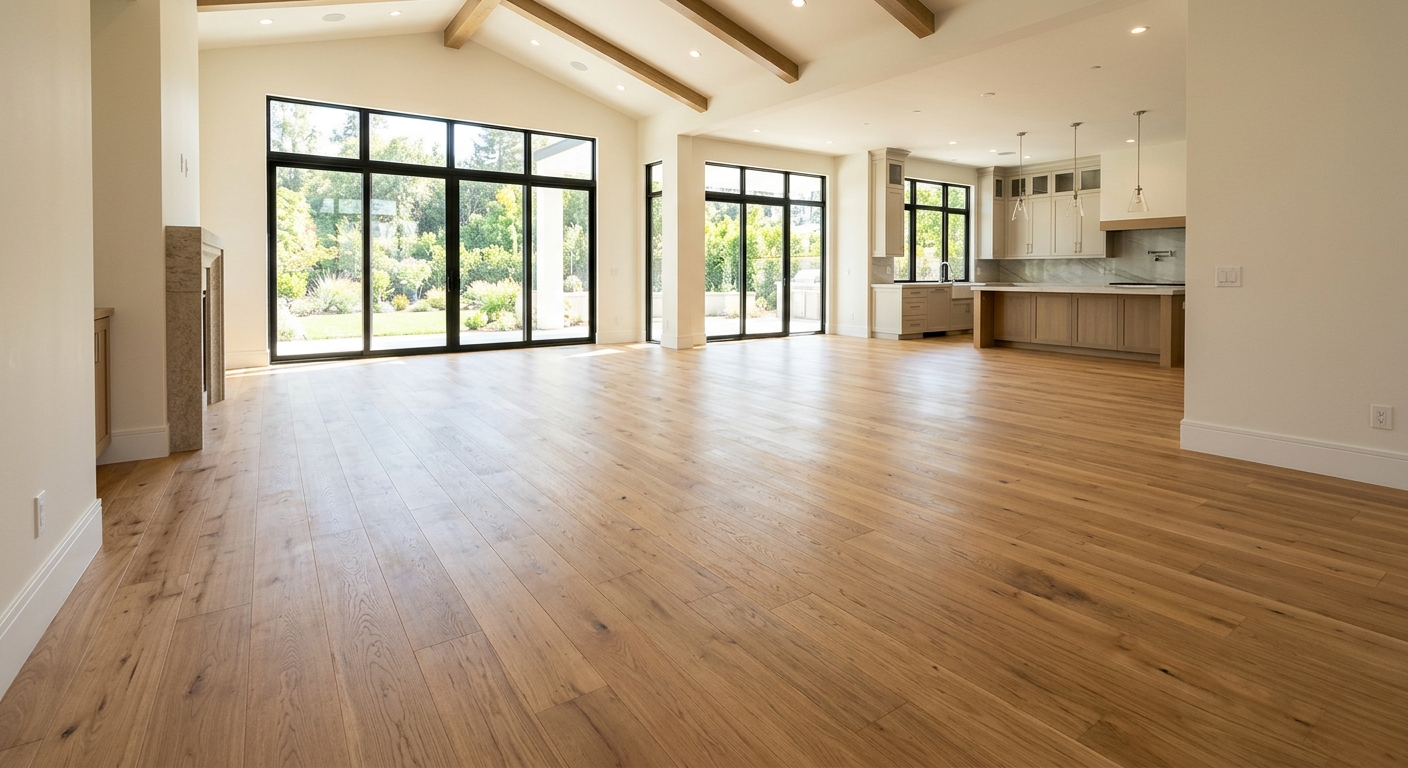
Flooring options and costs in Tillsonburg
Tillsonburg homeowners typically have a clear path when choosing flooring: start with the room’s moisture reality, then match the product to London-area temperature and humidity swings. With 49.3% of homes built before 1981 (Statistics Canada, 2021 Census), many projects begin after decades of wear, which often means uneven subfloors, patching, or at least an additional levelling step before any finish can be installed. In practice, that preparation time is one reason budgets can creep beyond the headline material cost. Homeowners also tend to live in a mixed-humidity, cold-climate zone where indoor moisture can drift outside ideal ranges during winter and shoulder seasons, stressing traditional solid hardwood through gapping and seasonal movement. For basements and slab-on-grade spaces common around Tillsonburg, Woodstock, and Middlesex Centre, that same moisture risk is exactly why engineered wood and luxury vinyl plank (LVP) are so often recommended. They’re more dimensionally stable when humidity changes and they tolerate below-grade conditions better than solid boards.
Contractors in Tillsonburg also see steady demand in the northeast part of town—near the growing residential pockets around Tillson Avenue and the Ingersoll Street corridor—because many of these homes are older and benefit from moisture-managed upgrades. Once you’ve identified your likely moisture profile, it’s easier to compare options side-by-side using realistic per-square-foot ranges.
| Type |
Best Room |
Moisture Resistance |
Lifespan |
Price per sq ft |
| Solid hardwood (nail-down, above grade only) |
Main floors (dry conditions) |
Low (not for basements or high-moisture areas) |
25–50 years |
$9–$15 |
| Engineered hardwood (float or glue, above + on-grade) |
Living, dining, bedrooms |
Medium–high (designed for humidity swings) |
20–40 years |
$10–$18 |
| Laminate (click-lock, above-grade) |
Living rooms, hallways, bedrooms |
Medium (use care with standing water) |
10–25 years |
$4–$9 |
| Luxury vinyl plank / LVP (waterproof, any level) |
Kitchen, finished basements, main floor areas near entries |
High (waterproof surface) |
15–25 years |
$5–$12 |
| Porcelain / ceramic tile |
Bathrooms, kitchens, entries |
Very high (water-ready) |
25–50 years |
$12–$25 |
| Carpet (broadloom or modular tile) |
Bedrooms, stairs, cozy family rooms |
Low–medium (avoid below-grade without strict moisture control) |
7–15 years |
$4–$9 |
Prices are estimates only and vary by project scope, site access and material selection.
What affects the price of flooring in Tillsonburg
In Tillsonburg and the wider London-area market, two quotes for the “same” floor can differ by roughly 30–50% because the expensive part is often the hidden prep: moisture management, subfloor repair, and labour complexity. Material pricing moves too, but those swings are usually easier to predict than the site conditions in older neighbourhoods. That matters in this region because humidity and temperature shifts are the technical drivers. Solid hardwood expands and contracts with indoor moisture, so it can’t be glued or floated over concrete and it performs poorly in basements. Engineered hardwood and luxury vinyl plank handle humidity and below-grade applications far better, so they’re commonly priced with fewer “risk adders” in lower levels. Colder Southwestern Ontario winters also push many homeowners toward radiant heat. Radiant heat compatibility can rule out traditional solid hardwood and some laminate underlays, which influences both product choice and installation method.
Older housing stock is another cost driver. When a home has been renovated multiple times, or the floor framing has settled, subfloor levelling and repair are frequently needed before install. In practical terms, that step can add about $1–$4 per sq ft depending on how far out-of-level the substrate is. For example, a finished basement that would suit LVP around $5–$12 per sq ft may avoid the additional moisture restrictions that come with solid wood. Conversely, a living room floor targeting solid hardwood in the $9–$15 per sq ft band may still require extra prep if the subfloor is uneven—cost that doesn’t show up in the material-only comparison.
| Price Factor |
Why It Matters |
Cost Impact |
| Room area in sq ft |
Directly drives material quantities and labour hours |
Varies by size; bigger jobs spread mobilization and waste |
| Subfloor condition — levelling or repair needed before install |
Older floors often need patching, flattening, or underlayment upgrades |
Common add: about $1–$4 per sq ft depending on condition |
| Moisture / below-grade install — rules out solid hardwood |
Basements and slab areas require vapour control and stable products |
Can add moisture barrier/underlay labour and materials |
| Material choice — solid vs. engineered vs. LVP vs. tile |
Different products come with different installation systems and specs |
Material band differences often dominate the final number |
| Removal and disposal of existing flooring |
Tile thinset, glued carpet, and heavy underlays increase labour |
Can add noticeable labour and disposal fees |
| Stair nosing / transitions — charged per step or per linear foot |
Stairs are labour-intensive and require matching trims |
Usually adds a line-item beyond “square feet” |
| Radiant heat compatibility — limits material options |
Not all products perform well over heat without warranty conditions |
May increase material cost or remove cheaper options |
| Installation method — float vs. glue-down vs. nail-down |
Substrate requirements and labour time differ by method |
Glue-down and tile are often more labour- and prep-heavy |
Permits & regulations in Ontario
In Ontario, installing new flooring by itself typically does not require a building permit. However, permit requirements can appear when your flooring project overlaps with work that affects structure, electrical systems, or moisture remediation that goes beyond simple underlay changes. For Tillsonburg homeowners, the most common “yes, permit may be needed” situations are (1) electrical work tied to in-floor radiant heat circuits (new circuits, modifications, or thermostat wiring), and (2) structural subfloor changes—such as replacing damaged joists, major subfloor framing repairs, or engineered modifications—where a contractor may need to coordinate with an electrical or building permit process depending on the scope. If the work includes moving plumbing vents or significant penetration changes for moisture control, it can also become permit-linked depending on how extensive it is.
Condominiums are another area where rules matter. The corporation can restrict or require specific products to manage sound transmission (STC/IIC). On upper floors, hard flooring like tile or engineered wood often has strict underlay requirements, and approvals are usually required before installation. Step-by-step, verify your Tillsonburg condo rules by reviewing the declaration/bylaws, then asking the board or property manager for written approval—before you order materials. For licensing, request proof that the contractor holds the required Ontario licence for their trade activities, carries liability insurance, and has WSIB/WCB coverage (or a clearance letter). You should be able to see documents before work begins: ask for the contractor’s Ontario licence reference, request a current certificate of insurance showing your address as a job site, and obtain WSIB/WCB status paperwork (often provided as a clearance certificate).
Best flooring for each room in your Tillsonburg home
Choosing flooring room-by-room is the quickest way to keep your project comfortable and within budget in Tillsonburg’s cold, mixed-humidity climate. Living and dining areas usually benefit from warmth underfoot and good durability: engineered hardwood or high-quality laminate are popular because they tolerate indoor moisture swings better than solid wood. For master bedrooms, carpet remains a favourite for comfort and sound absorption, but it needs sensible humidity control—especially in homes with damp basements. In kitchens, spills and wet-foot traffic are normal, so luxury vinyl plank (LVP) or large-format porcelain tile is the better match. Basements are where the climate really shows: fully waterproof LVP is the clear winner for many finished basements because it can handle moisture vapour and below-grade conditions far more reliably than solid hardwood and most laminate. Bathrooms should be porcelain or ceramic tile only due to direct water exposure and long-term cleanability.
Radiant heat is increasingly common in Ontario builds and renovations, and it changes what “works best.” Over radiant systems, properly rated engineered wood, tile, and some compatible laminates perform well, while traditional solid hardwood is often limited by warranty and movement requirements. A concrete example: if you’re deciding between carpet in secondary bedrooms and LVP in a partly damp lower level, it’s common to see a difference that justifies itself quickly—carpet might sit in the $4–$9 per sq ft range, while basement LVP might be closer to $5–$12 per sq ft. The extra cost is typically worth it to avoid warranty issues and premature replacement caused by moisture.
| Room |
Best Material |
Why |
Moisture Risk |
Price Band per sq ft |
| Living / dining room |
Engineered hardwood |
Warm feel with better stability through seasonal swings |
Low to medium (depends on ventilation and seasonal humidity) |
$10–$18 |
| Master bedroom |
Carpet |
Comfort and sound control; ideal for quieter, cooler seasons |
Low (avoid if basement-linked moisture is present) |
$4–$9 |
| Secondary bedrooms |
Laminate (above grade) |
Easy maintenance and good durability for family traffic |
Low to medium (standing-water intolerance) |
$4–$9 |
| Kitchen |
Luxury vinyl plank (LVP) or porcelain tile |
Handles spills; cleans quickly; good underfoot comfort |
Medium (spills and occasional high moisture) |
$5–$25 |
| Basement (finished) |
Luxury vinyl plank (waterproof) |
Designed for moisture-prone environments and below-grade installs |
High (vapour and occasional dampness) |
$5–$12 |
| Bathroom |
Porcelain / ceramic tile |
Water-ready performance; long service life with proper grout |
Very high (direct splash and wet zones) |
$12–$25 |
How to choose a flooring contractor in Tillsonburg
Choosing the right flooring contractor in Tillsonburg starts with verification, not promises. First, confirm Ontario licensing if their scope includes regulated trade activities, then request liability insurance and proof of WSIB/WCB coverage. Ask for documents before work starts: (1) licence proof/registry information tied to their business, (2) a current certificate of insurance showing general liability with the correct business name and job-site information, and (3) WSIB/WCB status paperwork—commonly provided as a clearance letter or similar proof. If a contractor can’t provide these, treat it as a scheduling and cost risk.
Next, get 2–3 written quotes that are itemised with labour and materials broken out, not just a lump sum. A fair quote should list prep work (levelling/underlayment/vapour barrier where needed), installation method (float, glue-down, or nail-down), stair nosing and transition pieces, and disposal. Read what’s excluded: for example, subfloor repairs beyond minor patching, floor heating integration, or additional levelling if the substrate is out of tolerance. Warranty should be clear: workmanship coverage length, product/manufacturer warranty terms, and whether warranties transfer to a new owner. Payment schedule matters too—never pay more than 10–15% upfront, and hold back a portion until the job is complete and you’ve confirmed transitions, cuts, and moulding. Finally, ask for a written start date and completion estimate so your flooring ties into your renovation timeline.
- Provide licence proof and a reference you can verify online (Ontario licensing info).
- Show current general liability insurance (certificate of insurance).
- Confirm WSIB/WCB coverage via clearance letter/status proof.
- Quote is itemised: labour, underlay/vapour barrier, levelling compounds, transitions, and disposal.
- Installation method is stated (float vs glue-down vs nail-down) and matches the product warranty.
- Moisture plan is documented for basements (vapour barrier/underlay recommendations).
- Includes stair nosing and transition trims with counts (per step / per linear foot).
- Prep scope is explicit: what they’ll level/repair and what triggers extra charges.
- Waste factor and cutting allowances are reasonable for the room layout.
- Workmanship warranty is written with duration and coverage details.
- Payment schedule stays at 10–15% upfront maximum, with a holdback to completion.
- Start date and completion estimate are in writing.
Red flags to watch for in Tillsonburg: quotes that don’t mention moisture barriers for lower levels, no mention of installation method requirements, “cash only” or unwillingness to provide insurance/WSIB proof, an unexplained lump-sum price with no itemised labour/material line items, and a vague warranty statement that doesn’t separate workmanship from manufacturer coverage.
Frequently asked questions — flooring in Tillsonburg
Do condos restrict hard flooring?
Yes, many Tillsonburg-area condominiums restrict or control hard flooring on upper levels to manage sound. Even when a product is water-resistant or durable, the building may require specific underlay thickness or a system that meets STC/IIC targets. Before you buy, review your condo declaration/bylaws and ask the board or property manager for written approval—especially if you’re installing tile or engineered hardwood that creates more impact noise. This matters because older London-area buildings can be sensitive to vibration through framing, and replacing the underlay after the fact can increase cost. If your quote assumes a standard underlayment, request the contractor update the proposal to match the condo’s approved sound package. If you’re shopping for pricing, engineered hardwood may land in the $10–$18 per sq ft range depending on the system, while laminate or LVP may be priced lower—yet still need the correct underlay to satisfy condo rules (Statistics Canada, 2021 Census).
How do I compare flooring quotes?
Start by comparing the exact scope, not just the final total. Ask each Tillsonburg contractor to break out material, labour, and prep: subfloor levelling, underlayment or vapour barrier, transition pieces, stair nosing, and disposal. Ensure they list the installation method that matches the product warranty (for example, whether engineered wood is floating or glue-down, or whether LVP is truly waterproof with the correct underlay). Quotes can vary by 30–50% in the London area because older floors need different prep, and moisture plans can be included or omitted. If one quote uses a cheaper laminate price band (like $4–$9) but doesn’t include flattening a wavy subfloor, it can end up costing more after revisions. Finally, confirm timelines and warranty details in writing—workmanship coverage, manufacturer warranty terms, and what is considered excluded work.
Can I install flooring over existing tile in Tillsonburg?
Sometimes, but it depends on the condition of the tile and what type of finish you’re installing. In Tillsonburg, many older homes have tile that’s still solid, but the surface may be uneven or rocking, and grout lines can telegraph through softer floors. For floating laminate or some engineered systems, contractors may install over tile only if the tile is firmly bonded, flat within tolerance, and the right underlayment is used. For LVP, you still need a stable, flat substrate—LVP is waterproof, but it can’t fix lippage or movement underfoot. If the tile is cracked, loose, or too high/low, you may need grinding, patching, or removal. Also consider moisture: tile floors over a basement slab may already be acting like a moisture barrier, but you still need to confirm there’s no ongoing dampness. The cleanest comparison is to have a contractor check flatness and bonding and then include the solution in the quote—whether that’s patching or underlayment.
What is the best flooring for a high-traffic area in Tillsonburg?
For high-traffic areas in Tillsonburg—entries, hallways, and living spaces—the best choice is usually what balances durability with moisture stability. LVP is often a top recommendation because it’s waterproof, handles everyday spills, and performs better in mixed-humidity conditions than solid hardwood. If you’re staying on the main floor and want a natural wood look, engineered hardwood can be a strong option, but you still need appropriate acclimation and correct installation specs. In terms of pricing, LVP commonly sits around $5–$12 per sq ft, while solid hardwood is typically higher at $9–$15 per sq ft and is best kept above grade only. For very active households, tile can also work well in entries, but it’s harder underfoot and more expensive due to labour and materials. Whichever you choose, make sure the contractor includes transitions and stair/edge details—those are frequent wear points in busy homes.
How do I prepare my subfloor before new flooring?
Preparation is where many problems start—or get avoided—in Tillsonburg. The goal is a flat, sound, properly dry substrate that matches your flooring system. A good contractor will check flatness (not just “it looks okay”), then identify what’s needed: levelling compound for low spots, sanding/grinding for high areas, repair of soft or damaged OSB/plywood, and moisture management for below-grade spaces. In older homes built before 1981 (Statistics Canada, 2021 Census), it’s common to find uneven boards, patchwork, or prior renovations that need correction before any finish goes down. For basements, expect a moisture plan such as vapour barrier and a suitable underlayment—especially if you’re installing LVP or tile. Solid hardwood is generally not a basement choice, because seasonal humidity swings can cause gapping and warping when the product isn’t designed for those conditions. Ask your contractor to document prep scope in the written quote, including what they will test and how they’ll protect your warranty.
Is cork or bamboo flooring a good choice in Tillsonburg?
Cork and bamboo can be good for comfort and some sound reduction, but in Tillsonburg you have to be selective about installation type and moisture tolerance. Cork is often considered “springy” and warm underfoot, and bamboo is a durable flooring option in drier conditions. The challenge here is the region’s mixed-humidity, cold-climate swings: seasonal indoor moisture changes can move natural materials, and below-grade installations are where warranties and performance are most likely to be questioned. If your home has a finished basement or slab-on-grade lower level, engineered products designed for humidity stability (and waterproof systems like LVP) are typically the safer route. Also note that product construction matters—floating systems with an appropriate underlayment may perform differently than glue-down versions, and radiant heat compatibility can limit what’s acceptable. Before choosing cork or bamboo, ask the contractor for the manufacturer’s installation requirements in writing and confirm acclimation conditions. If the quote doesn’t address moisture and flatness requirements, it’s a sign the installation plan isn’t built for Tillsonburg’s climate.