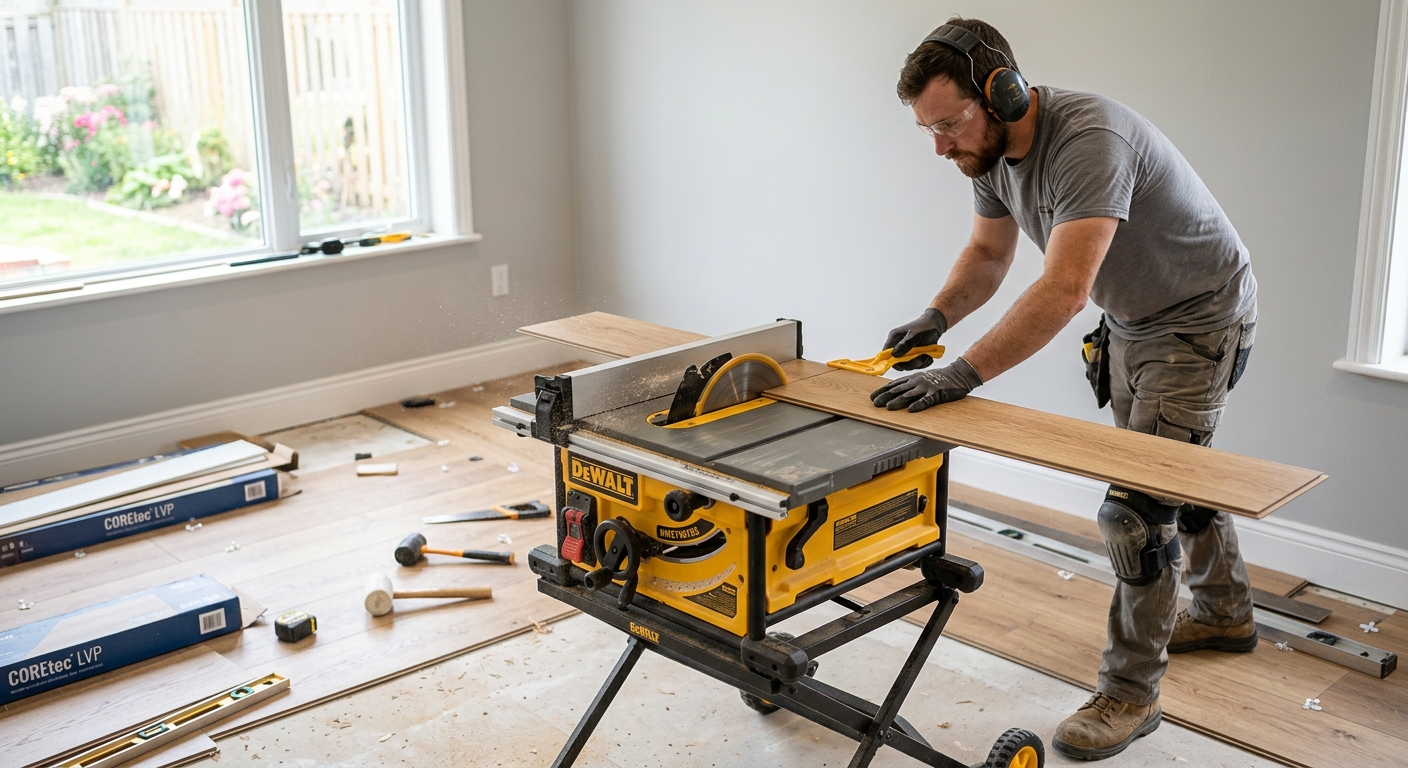
Flooring options and costs in Virgil
Flooring costs in Virgil, Ontario can vary a lot because the GTA trades need to manage wide indoor humidity swings year-round. In a small local community (Virgil’s population was 2,937 in the 2021 Census, Statistics Canada), the supply of installers is still shaped by Toronto-area renovation demand—so labour can be busy and scheduling windows can affect your quote. Another common cost driver is housing age: many GTA homes were built in the 1960s–1990s, and those older layouts often arrive with uneven subfloors, patchy plywood, or moisture mitigation needs. That prep work isn’t “part of the finish”—it’s the foundation of the job, and it can add roughly $1–$4 per sq ft before the new material even goes down.
In Toronto-area basements and ground-level situations, we steer most homeowners away from traditional solid hardwood over concrete or in below-grade spaces because it can move with moisture. Engineered hardwood and luxury vinyl plank (especially waterproof LVP) are more dimensionally stable in high-humidity installs and are designed for below-grade applications. If you’re in a newer build where radiant floor heating is present, engineered wood, certain vinyl systems, and tile are typically the safest pairings; traditional solid hardwood is usually more limited due to heat and expansion considerations.
For many Virgil residents, demand is especially strong around newer infill pockets and nearby St. Catharines/commuter corridors, where renovations and upgrades coincide with busier work schedules. Use the table below to compare the typical material-and-install pricing bands, then we’ll break down what makes quotes differ.
| Type |
Best Room |
Moisture Resistance |
Lifespan |
Price per sq ft |
| Solid hardwood (nail-down, above grade only) |
Living room, dining room (above grade) |
Low to moderate; not for basements or concrete slabs |
25–60 years with proper humidity control |
$9–$18 |
| Engineered hardwood (float or glue, above + on-grade) |
Living room, bedrooms (and some main-floor kitchens) |
Moderate to high; generally safer with GTA humidity swings |
20–40 years |
$9–$17 |
| Laminate (click-lock, above-grade) |
Bedrooms, hallways, living areas |
Low to moderate; avoid standing water and below-grade installs |
10–25 years |
$4–$9 |
| Luxury vinyl plank / LVP (waterproof, any level) |
Kitchens, main floor, basements, rec rooms |
High; waterproof and more tolerant of moisture vapour |
15–30 years |
$5–$12 |
| Porcelain / ceramic tile |
Bathrooms, kitchens, entries, sunrooms |
Very high; suitable for wet areas |
25–50+ years (with proper grout and substrate) |
$12–$25 |
| Carpet (broadloom or modular tile) |
Bedrooms, stairs, lower-traffic comfort zones |
Moderate; sensitive to spills and prolonged dampness |
8–20 years |
$5–$11 |
Prices are estimates only and vary by project scope, site access and material selection.
What affects the price of flooring in Virgil
If you get three quotes for the “same” flooring, it can still come in 30–50% apart across the Toronto area. The reason is usually not the finish—it’s the hidden scope: subfloor prep, moisture handling, demolition, transitions, and whether the installer is using an engineered system that won’t fail with GTA indoor humidity swings. In Virgil and the wider Toronto region, indoor relative humidity can swing dramatically between seasons, and basements can trap moisture vapour. Those conditions matter because solid hardwood expands and contracts with humidity and cannot be glued or floated over concrete; it performs poorly in basements where moisture is more difficult to control.
That’s why engineered hardwood and luxury vinyl plank are often the smarter “whole-home” solutions. They handle humidity better and are built for below-grade tolerance. Labour is also a factor: Toronto-area renovation demand pushes construction wages up, so a job with extra hours for levelling and careful installation costs more than it would in lower-demand regions. Older regional housing stock frequently needs plywood replacement or levelling, and that can add $1–$4 per sq ft before your chosen material is even installed.
Here are a few concrete examples we see in Virgil. Example one: a 600 sq ft living/dining install over an uneven 1960s–1990s subfloor may require patching and levelling, which can shift your project from the mid laminate band (often around $4–$9 per sq ft all-in) toward the higher-engineered range (commonly $9–$17 per sq ft all-in). Example two: finishing a finished basement with solid hardwood may be priced similarly on paper, but when you include moisture mitigation and the risk of movement, most budgets end up better aligned with waterproof LVP (often $5–$12 per sq ft) instead. Example three: if you’re installing over in-floor radiant heat, you may need specific underlay/fastener specs; that can change both labour time and compatible product choices, especially when comparing solid wood against engineered or tile.
Next, let’s break down the specific line items that push costs up or down so you can compare quotes fairly.
| Price Factor |
Why It Matters |
Cost Impact |
| Room area in sq ft |
Material consumption and hours scale directly with square footage |
Small rooms can feel “expensive” because fixed costs spread less |
| Subfloor condition |
Levelling/repair is required for flatness and locking systems or tile bonding |
Often adds $1–$4 per sq ft in older homes |
| Moisture / below-grade install |
Determines acceptable products and whether vapour barriers or mitigation are required |
Can rule out solid hardwood and increase prep labour |
| Material choice |
Solid vs engineered vs LVP vs tile have different material and labour complexity |
May swing the project from ~$4–$9 (laminate/LVP mid) to ~$12–$25 (tile) |
| Removal and disposal of existing flooring |
Concrete dust, underlay stripping, and landfill fees add cost |
Commonly a noticeable line item, especially with multiple layers |
| Stair nosing / transitions |
Custom details require measuring, cutting, and extra finishing |
Charged per step or per linear foot; can add hundreds |
| Radiant heat compatibility |
Heat changes how materials expand; not all products are rated |
May increase material price and restrict product options |
| Installation method |
Float vs glue-down vs nail-down affects prep time and labour skill requirements |
Glue-down and tile work are typically higher labour than click-lock |
Permits & regulations in Ontario
In Ontario, installing new flooring by itself typically does not require a building permit. A permit becomes more likely when your project includes work that touches wiring, structural components, or in-floor heating systems. For example, replacing or adding electrical circuits, modifying in-floor radiant heating controls, or any changes that involve electrical permit requirements may trigger electrical approvals through the proper channels. Similarly, if your floor prep becomes structural (like significant subfloor framing repairs), the scope may drift into work that needs additional review depending on the exact changes.
Condominiums add a separate layer of “rules,” even when there’s no permit: the building often restricts hard-surface installations on upper levels due to sound transmission. Many condo corporations manage this through specific sound ratings (commonly discussed as STC/IIC performance) and by requiring particular underlay systems under hardwood, engineered wood, or tile. Before work starts in Ontario condos, check the unit’s declaration and request board approval in writing—especially for floating engineered floors and tile systems.
Step-by-step: verify your contractor’s legitimacy in Virgil by (1) confirming their Ontario licensing details as applicable to their trade scope, (2) requesting proof of liability insurance and checking certificate dates, and (3) confirming WSIB/WCB coverage (or proper coverage status) so you’re not exposed if a worker is injured. Ask for certificate PDFs or clearance letters, and match the certificate holder name to the company doing the work. Then get everything—scope, exclusions, and start date—in writing.
Best flooring for each room in your Virgil home
The “best” flooring in Virgil comes down to how each room behaves with moisture, traffic, and comfort—then matching that to Toronto’s seasonal indoor humidity swings and the region’s common housing conditions (often older subfloors that need levelling or repair). For living and dining areas, many homeowners choose engineered hardwood or a high-quality laminate because they offer a warm feel while tolerating normal humidity better than solid wood. In master bedrooms, carpet is still a top pick for comfort and sound absorption, but engineered hardwood is a great alternative if you want less maintenance and a cleaner look.
In kitchens, waterproof luxury vinyl plank (LVP) or large-format porcelain tile tends to outperform “softer” options because spills and frequent wipe-downs are guaranteed. For basements (especially finished ones), LVP is usually the clear winner: it’s waterproof, designed for any level, and is more tolerant of below-grade moisture vapour than laminate or solid hardwood. Bathrooms should stay with porcelain or ceramic tile only—water resistance and grout/underlayment detailing are what protect the substrate.
If you’re adding radiant floor heating, plan on materials engineered (or rated) for heat movement. In Ontario new construction and renovated custom homes, that typically pushes owners toward engineered wood, tile, and certain vinyl systems rather than traditional solid hardwood.
Cost-wise, paying more can be justified. For example, upgrading from laminate at roughly $4–$9 per sq ft to engineered hardwood at roughly $9–$17 per sq ft often pays back in better dimensional stability and fewer callback issues in humidity-prone seasons—especially when your subfloor needs careful levelling first.
| Room |
Best Material |
Why |
Moisture Risk |
Price Band per sq ft |
| Living / dining room |
Engineered hardwood |
Warm look with better GTA humidity tolerance than solid wood |
Low to moderate (mostly controlled indoor conditions) |
$9–$17 |
| Master bedroom |
Carpet or engineered hardwood |
Comfort and sound control for carpet; easy maintenance for engineered |
Low (avoid if there’s chronic dampness or leaks) |
$5–$16 |
| Secondary bedrooms |
Laminate (good mid-range) or LVP |
Laminate is cost-effective; LVP if kids/spills are frequent |
Low to moderate |
$4–$12 |
| Kitchen |
Luxury vinyl plank (waterproof) or porcelain tile |
Handles spills and frequent cleaning; strong performance under daily use |
Moderate (wet mopping and quick wipe-downs) |
$5–$25 |
| Basement (finished) |
Luxury vinyl plank (waterproof) |
Best match for below-grade moisture vapour and concrete subfloors |
High (vapour and seasonal dampness) |
$5–$12 |
| Bathroom |
Porcelain / ceramic tile |
Non-negotiable water performance and long service life |
Very high (direct splash and wet conditions) |
$12–$25 |
How to choose a flooring contractor in Virgil
Choosing the right flooring contractor in Virgil starts with verification and clear documentation. In Ontario, ask for proof of liability insurance (so you’re covered if there’s property damage), and confirm WSIB/WCB coverage so injuries on-site aren’t your responsibility. Request certificates and check that the coverage is active during the job dates. Licensing requirements can vary depending on scope and trade involvement—so also confirm they’re eligible for the work they’ll perform, and that subcontractors (if used) are covered under the same insurance umbrella.
Next, get 2–3 itemised written quotes rather than a single lump sum. You want labour broken out from materials, and a line for subfloor prep (levelling/repair), removal/disposal, underlay/vapour control, transitions, and stair work if applicable. Read the scope carefully: what’s excluded (baseboards, painting touch-ups, moving appliances), is permit administration included if needed for radiant/electrical work, and is disposal covered? A good contract spells out what happens if subfloor flatness doesn’t meet the installer’s requirements.
Warranty matters too: ask for the workmanship warranty length, whether it’s transferable to future owners, and the manufacturer warranty terms (and required installation specs). For payment, never pay more than 10–15% upfront; hold back a portion until the job is complete and cleaned. Finally, ask for a written timeline with a start date and an estimated completion window—flooring projects in the GTA can shift if scheduling is tight.
- Provide insurance certificates for liability (and confirm active dates).
- Provide WSIB/WCB clearance or coverage letter showing workers are protected.
- Give an itemised quote: labour, materials, underlay/vapour items, and disposal.
- Include a subfloor prep plan (levelling, plywood repair/replacement, moisture mitigation steps).
- State the product SKUs and warranty terms (manufacturer + workmanship separately).
- Confirm whether baseboards are removed and reinstalled, and whether caulking/touch-ups are included.
- List transitions and stair details per step/linear foot so costs aren’t “estimated later.”
- Specify installation method (float, glue-down, nail-down) and product suitability for your basement/on-grade conditions.
- Require start date and completion estimate in writing.
- Include protection during the job (doorways, walls, dust control) and final cleanup expectations.
- Set payment schedule: 10–15% maximum deposit; holdback until final walkthrough.
- Put change-order rules in writing (what triggers extra costs and approval process).
Red flags I see in Virgil include contractors who won’t provide written scopes, vague “allowances” with no product SKUs, missing insurance/coverage documentation, quotes that skip subfloor prep (yet assume everything is level), and workmanship promises that aren’t tied to a clear warranty document.
Frequently asked questions — flooring in Virgil
How do I choose flooring for humidity in Virgil?
In Virgil and the Toronto area, humidity swings can be significant between seasons, and basements can hold moisture vapour even if the space feels dry. For above-grade rooms, engineered hardwood is usually the safer “warm and natural” option compared with solid hardwood because it’s more dimensionally stable when indoor conditions shift. If you have any below-grade rooms or you’re worried about concrete moisture, luxury vinyl plank (especially waterproof LVP) is typically the most forgiving choice—designed for any level. Solid hardwood can look amazing, but it’s the riskiest pick over concrete slabs and in basements, particularly in older homes where subfloors may need additional prep. If you’re comparing budgets, laminate often lands in the ~$4–$9 per sq ft band, while engineered hardwood commonly runs about ~$9–$17 per sq ft, and the stability difference is often worth it.
Do condos restrict hard flooring?
Yes—many Ontario condo corporations restrict hard flooring not because of building permits for the flooring itself, but due to sound transmission requirements (often handled through STC/IIC targets and approved underlay systems). In Virgil, even when a flooring job doesn’t require a building permit, condo board rules can still require written approval before you install engineered hardwood, tile, or other hard surfaces on upper floors. The building may specify a particular underlay thickness, type, or test documentation. Flooring installers should be able to recommend products that match condo requirements, but you still need to request approval in writing and keep copies. If you plan to add tile, check whether the condo has additional requirements for underlayment and vibration control—especially over suites below.
How do I compare flooring quotes?
Compare quotes like-for-like, not just by total price. Ask each contractor for an itemised breakdown: materials (with product SKUs), labour hours/rate assumptions, subfloor prep scope (levelling/plywood repair or moisture mitigation), underlay/vapour barrier details, removal/disposal, transitions, and stair pricing. Make sure the installation method matches the product—click-lock laminate shouldn’t be quoted with the same labour assumptions as glue-down engineered. In Virgil’s older housing stock, the quote should clearly state how they’ll handle uneven floors; otherwise you’ll get surprises. It’s also smart to compare warranty terms separately: workmanship versus manufacturer. If one quote sits at the laminate/vinyl band (around $4–$9 per sq ft) but another comes closer to engineered or tile (around $9–$25 per sq ft), the difference should be explainable by prep and product suitability, not just “because we’re higher.”
Can I install flooring over existing tile in Virgil?
Sometimes, but it depends on the condition and the type of new flooring. If you’re installing new vinyl plank (LVP) or certain underlay-supported systems, a tile surface can work if it’s fully bonded, flat, and free of loose grout/tiles. However, tile is rarely perfectly flat, so levelling compounds or surface preparation may be required before you install click-lock laminate or floating floors—otherwise you risk joint failure or hollow spots. For tile-over-tile with more tile, the job often becomes a full substrate and waterproofing review because the existing surface affects bond and thickness. A qualified installer should check flatness, evaluate lippage, and confirm whether any moisture issues exist beneath the tile. In a basement scenario, we’re especially cautious—below-grade moisture can trap problems under new finishes even if the floor looks intact.
What is the best flooring for a high-traffic area in Virgil?
For high-traffic areas in Virgil, durability and surface performance matter more than cost alone. Engineered hardwood is a strong choice where humidity is controlled and the subfloor is properly prepped, and it holds up well with the right finish. If the area includes the basement, mudroom-like traffic, or frequent spills, waterproof LVP is often the practical winner because it’s more tolerant of moisture and easier to maintain. Laminate can work in high-traffic zones if it’s a quality click-lock product and installed over a well-levelled substrate, but it’s more sensitive to moisture at seams. In kitchens and entry corridors where water exposure is common, porcelain tile can also be excellent—though it’s typically pricier (often in the ~$12–$25 per sq ft band) and requires substrate prep for a long-lasting bond.
How do I prepare my subfloor before new flooring?
Subfloor prep is where most flooring problems are prevented, especially in Virgil’s older Ontario housing stock. Start with an inspection: check for level/flatness, identify loose or squeaky areas, and look for signs of moisture (dark spots, musty odours, or dampness in crawlspaces/basements). Common prep steps include scraping off old adhesive residue, removing any failing underlay, repairing damaged plywood/OSB, and doing levelling (often with patch/feather finish systems). If you’re installing over concrete, the installer may require moisture testing and the correct vapour mitigation plan for below-grade conditions. For vinyl, the surface usually must be clean and smooth—tile ridges or high spots can telegraph and cause wear. For engineered hardwood, proper underlayment and flatness are critical, and for laminate, many failures trace back to insufficient levelling. A good contractor will explain these steps in the quote instead of leaving them as “later” work.