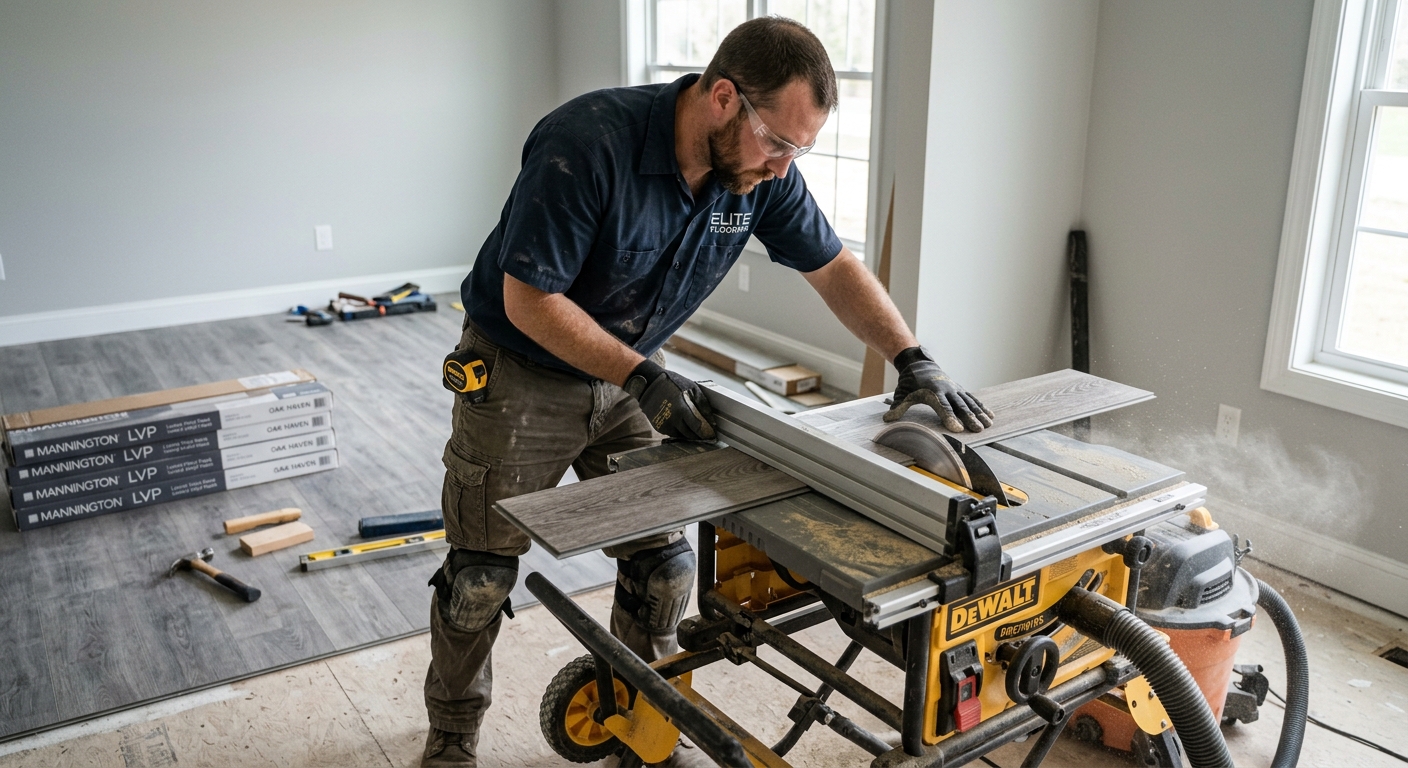
Flooring options and costs in Yonge-Eglinton
In Yonge-Eglinton, choosing new flooring is rarely “one-size-fits-all” because the neighbourhood’s busy retail-and-commuter lifestyle comes with frequent wear, and Toronto-area weather delivers indoor humidity swings that push materials to their limits. (Statistics Canada, 2021 Census) reports a population of 11,817 in Yonge-Eglinton, which helps explain why renovation demand stays strong and why flooring contractors tend to book out faster than in smaller Ontario markets. In older pockets of the broader Toronto area, many homes are from the 1960s–1990s, and it’s common to find subfloor levelling needs, plywood replacement, or moisture mitigation before the finish floor can go down—prep work that can meaningfully affect the total budget.
Because Toronto’s humidity can rise and fall across seasons, we usually steer most homeowners toward engineered hardwood or luxury vinyl plank (LVP) for above-grade rooms, especially in condos and newer infill builds where the building envelope and HVAC behaviour can create fast moisture changes. Solid hardwood looks classic, but it expands and contracts more with humidity and is higher risk on concrete or in basements—so it’s typically limited to above-grade, stable subfloors. If your home includes radiant floor heating (more common in newer custom builds), that also shifts the best choices.
Contractor demand is particularly steady around Yonge Street and the mid-rise corridor near Eglinton, where many owners are updating kitchens and main-floor living spaces. With those realities in mind, here’s a practical comparison of the most common flooring types and what they typically cost per square foot in this tier—so you can use the table as a starting point for budgeting and quote review.
| Type |
Best Room |
Moisture Resistance |
Lifespan |
Price per sq ft |
| Solid hardwood (nail-down, above grade only) |
Main floor living areas (dry, above grade) |
Low to moderate (not for basements; sensitive to humidity) |
25–50 years |
$9–$18 |
| Engineered hardwood (float or glue, above + on-grade) |
Living/dining, bedrooms, hallways |
Moderate to high (handles normal humidity swings better) |
20–35 years |
$10–$16 |
| Laminate (click-lock, above-grade) |
Bedrooms, living rooms (where spills are managed) |
Low to moderate (water can damage edges if not cleaned quickly) |
10–25 years |
$4–$9 |
| Luxury vinyl plank / LVP (waterproof, any level) |
Kitchen, main floor, finished basement |
High to waterproof (designed for below-grade moisture conditions) |
15–25 years |
$6–$12 |
| Porcelain / ceramic tile |
Kitchen, bathrooms, entryways |
Very high (resists moisture and daily cleaning) |
25–50 years |
$12–$25 |
| Carpet (broadloom or modular tile) |
Bedrooms, family rooms |
Low (can trap moisture; not ideal for basements without control) |
7–15 years |
$5–$11 |
Prices are estimates only and vary by project scope, site access and material selection.
What affects the price of flooring in Yonge-Eglinton
In Yonge-Eglinton, it’s not unusual to see two quotes for the “same” flooring run 30–50% apart once you include prep, removals, and site conditions. Toronto-area labour and overhead are higher than many other parts of Ontario, and the supply/demand cycle is real—renovation traffic is strong, so scheduling and crew availability can influence pricing. Even when the room size is identical, the technical differences matter: Toronto’s indoor humidity swings and below-grade moisture risks drive which products perform—and which subfloor repairs you need before install.
Solid hardwood is the most sensitive to moisture. It expands and contracts with humidity, and it cannot be glued or floated over concrete in the way engineered and vinyl can. That’s why it’s typically restricted to above-grade nail-down installs on properly prepared subfloors. Engineered hardwood and luxury vinyl plank handle humidity and below-grade applications far better, so they often avoid expensive “do it again” issues in basements and on moisture-prone slabs. In colder parts of the Toronto region and in new custom homes, radiant floor heating also becomes a deciding factor; we often see homeowners swap away from traditional solid hardwood or some laminate options because heat and expansion behaviour need compatible flooring and underlayment.
For concrete examples: if your contractor finds a cupped or uneven subfloor, levelling/plywood repair can add roughly $1–$4 per sq ft, and that can quickly move a mid-range floor into a higher total. If you’re replacing old flooring in an older condo or townhouse where the underlay is glued down, removal and disposal can add material-handling time and add-ons that are rarely reflected in a quick phone estimate. Meanwhile, a waterproof LVP choice can lower risk in finished basements even if the initial material is similar to laminate—because it’s designed for below-grade moisture conditions and typically doesn’t require the same moisture mitigation steps.
Bottom line: when you compare $4–$9 laminate/vinyl budgets to $9–$18 hardwood budgets, you’re usually also comparing “how much prep” and “how much risk” your specific home has—not just the finish product.
| Price Factor |
Why It Matters |
Cost Impact |
| Room area in sq ft |
Directly drives material quantities, underlay needs, and installation hours |
Typically the biggest driver; small rooms can feel expensive per sq ft |
| Subfloor condition |
Levelling, patching, or plywood replacement must be done before flooring goes down |
Common add: about $1–$4 per sq ft depending on repairs |
| Moisture / below-grade install |
Rules out solid hardwood and limits laminate in basements; requires moisture-ready systems for vinyl/tile |
May add vapour barrier or mitigation; can increase labour and materials |
| Material choice |
Solid vs engineered vs LVP vs tile changes product cost, prep sensitivity, and install method |
Hardwood often tracks $9–$18; LVP/laminate often $4–$12 |
| Removal and disposal of existing flooring |
Old adhesive, underlay, and subfloor residue take time and generate disposal volume |
Can materially increase the project total in older builds |
| Stair nosing / transitions |
Per-step labour and custom trim work increases complexity |
Often charged per step or per linear foot; adds up quickly |
| Radiant heat compatibility |
Some materials underperform with heat expansion and may need specific underlay |
May reduce product options, sometimes increasing material spend |
| Installation method |
Float, glue-down, or nail-down each require different labour time and preparation |
Nail-down often needs stable conditions; glue-down increases prep precision |
Permits & regulations in Ontario
In Ontario, installing a new floor covering by itself generally does not require a building permit. However, associated work may cross into permit territory. For example, if your project includes electrical changes tied to radiant floor heating circuits, that electrical work typically requires permits and must be completed to Ontario electrical requirements by a qualified person. Similarly, if flooring removal exposes structural deficiencies that require engineered repairs or significant subfloor rebuilds beyond cosmetic patching, you may need additional approvals depending on the scope and the building’s rules.
In condominiums around Yonge-Eglinton, the bigger practical constraint is often the condo corporation’s policies, not a municipal permit. Sound transmission requirements (STC/IIC expectations) can restrict underlay selection and may dictate which products and underlays are permitted on upper floors. Always review your condo declaration and ask for board approval in writing before installing hardwood or tile where impact noise is a concern, and keep the approval documents for the project file.
To verify your contractor before you sign, homeowners in Ontario should do four checks step-by-step: (1) confirm they’re a legitimate business with the right trade experience for your type of install; (2) request a current certificate of insurance that shows liability coverage; (3) ask for proof of WSIB/WCB coverage (or a valid exemption where applicable); and (4) verify any product warranties are issued in your name where needed and that the workmanship warranty is documented in writing. Start with the certificate they provide, then cross-check details where available through public business and insurance verification resources.
Best flooring for each room in your Yonge-Eglinton home
Choosing the right flooring for each room in your Yonge-Eglinton home comes down to moisture tolerance, daily traffic, and comfort under Ontario’s seasonal humidity swings. For living and dining areas, engineered hardwood or high-quality laminate is the usual sweet spot: you get warmth and a natural look with better dimensional stability than solid wood in variable indoor conditions. In bedrooms, carpet is still a strong option for comfort and sound absorption—especially if you want quieter upstairs living—while engineered hardwood can be a smart upgrade when you prefer a hard surface.
The kitchen is where spills and cleanup habits matter most. Luxury vinyl plank (LVP) is often the most forgiving choice for everyday water exposure, and large-format porcelain tile is ideal when you want maximum water resistance and a long service life. In basements, Toronto moisture realities typically make LVP the clear winner: it’s designed for below-grade installs, tolerates vapour and humidity better, and avoids the movement issues that can plague solid hardwood. Bathrooms should be porcelain or ceramic tile only.
If your home has radiant floor heating, compatibility becomes critical—engineered wood, tile, and certain vinyl systems handle heat cycles more predictably than traditional solid hardwood. For a dollar example: if a contractor quotes $10–$16 per sq ft engineered hardwood for your main floor but $4–$9 laminate for the same footprint, the higher engineered price can be justified when you’re avoiding repeat repairs from moisture-edge swelling or when the subfloor prep needs are already being addressed.
Use the table below to align material to each room’s risk profile in this part of Toronto and to pressure-test any quote you receive.
| Room |
Best Material |
Why |
Moisture Risk |
Price Band per sq ft |
| Living / dining room |
Engineered hardwood |
Warm look, more stable through seasonal humidity changes |
Low to moderate |
$10–$16 |
| Master bedroom |
Carpet or engineered hardwood |
Carpet adds comfort and sound; engineered keeps a cleaner, durable surface |
Low |
$5–$16 |
| Secondary bedrooms |
Laminate or carpet |
Laminate is cost-effective; carpet improves acoustics and comfort |
Low |
$4–$11 |
| Kitchen |
Luxury vinyl plank (LVP) or large-format porcelain tile |
LVP handles everyday spills; tile maximizes cleaning and water resistance |
Moderate (spills and mopping) |
$6–$25 |
| Basement (finished) |
Luxury vinyl plank (LVP) |
Dimensionally stable for below-grade moisture conditions |
High |
$6–$12 |
| Bathroom |
Porcelain / ceramic tile |
Best moisture performance for wet areas and splash zones |
Very high |
$12–$25 |
How to choose a flooring contractor in Yonge-Eglinton
When you’re choosing a flooring contractor in Yonge-Eglinton, I’d focus on proof and paperwork before price. In Ontario, verify their liability insurance and ask for documentation of WSIB/WCB coverage (or a proper exemption where applicable). Don’t just accept a verbal “we’re insured”—request certificates and keep copies in your file. Then ask what specific crew will be on site, and whether they’ll follow the product manufacturer’s installation instructions for underlay, acclimation (when required), expansion gaps, and subfloor flatness.
Get 2–3 itemised written quotes rather than one lump sum. A good quote breaks out labour versus materials, and it clearly lists what’s included (subfloor levelling/patching, underlay/vapour barrier, stair labour, transitions, moulding, and removal/disposal). Watch for exclusions such as moving appliances, replacing damaged plywood, or handling floor flattening beyond a basic patch. Permit pull is typically not needed for the flooring itself, but confirm whether any related work (like radiant heating electrical components) is handled separately.
Warranty matters in real life. Ask for the workmanship warranty length and whether it covers labour for lifting/replacement after problems like gapping or failed prep. Confirm product/manufacturer warranty terms, and whether warranties are transferable if you sell the home. On payment schedule, never pay more than 10–15% upfront; hold back a meaningful amount until completion and final walkthrough. Finally, insist on a start date and completion estimate in writing so your schedule isn’t left to chance.
- Provide a written scope that lists subfloor prep requirements and who handles moisture mitigation if found.
- Include an itemised labour + materials breakdown (don’t accept a single blended number only).
- Confirm underlay/vapour barrier type and thickness, especially for vinyl and engineered hardwood.
- Ask how the contractor measures subfloor flatness and what they do if it’s out of tolerance.
- Request details on transitions and stair nosing (charged per step/linear foot if applicable).
- Verify they’ll protect adjacent finishes and manage dust control during removal/levelling.
- Confirm disposal is included (and whether it’s drywall/trim or only flooring debris).
- Ask about acclimation requirements for hardwood and some laminate/vinyl products.
- Get a clear schedule: start date, work hours, and target completion date.
- Require the workmanship warranty in writing and ask what “service call” covers.
- Verify liability insurance certificate and WSIB/WCB coverage before work begins.
- Use a payment plan with a holdback until after final cleanup and walkthrough.
Common red flags in the Yonge-Eglinton market: (1) quotes that don’t mention subfloor prep or moisture testing when you’re on a slab or basement level; (2) vague “includes everything” language with no itemisation of removals, transitions, and levelling; (3) no proof of WSIB/WCB or outdated insurance certificates; (4) missing written workmanship warranty terms; and (5) pressure to pay a large deposit (more than ~15%) before any measurable work is completed.
Frequently asked questions — flooring in Yonge-Eglinton
How much does flooring cost in Yonge-Eglinton?
In Yonge-Eglinton, pricing depends heavily on prep and the flooring type you choose. For budgeting, homeowners commonly see hardwood flooring land around $9–$18 per sq ft in this tier, while laminate or vinyl plank often comes in closer to $4–$9 (with LVP typically higher than basic laminate but more reliable for moisture). If your home is in an older Toronto housing stock pocket, subfloor levelling or plywood repair can add about $1–$4 per sq ft, which is why two quotes for the same square footage can differ by 30–50%. The safest way to compare is to require itemised labour + materials and confirm whether disposal, transitions, and moisture mitigation are included.
Hardwood vs laminate vs vinyl plank — which is best?
There isn’t one “best” for every room, especially in Ontario where humidity swings affect materials. Solid hardwood looks great but is the most moisture-sensitive—so it’s usually limited to above-grade and dry conditions. Engineered hardwood is often the better hardwood option because it tolerates seasonal indoor changes more reliably. Laminate can be a cost-effective choice above grade, but it’s more vulnerable at seams and edges if liquid gets underneath. Luxury vinyl plank (LVP) is usually the most forgiving across Ontario homes because it’s designed to be waterproof and handles below-grade moisture conditions far better than laminate and far more safely than solid wood. In practice, many Yonge-Eglinton homeowners choose engineered hardwood for living areas and LVP for kitchens and basements.
What flooring is best for a Yonge-Eglinton basement?
For basements in the Yonge-Eglinton area, I generally recommend luxury vinyl plank (LVP) because it’s built for below-grade moisture realities, including vapour exposure and humidity swings. Solid hardwood is risky in basements due to expansion and contraction and its higher sensitivity to moisture; laminate is also less dependable when edges or seams see moisture. Tile is another strong option for wet areas, but it’s more expensive in labour and downtime. If your basement needs levelling or moisture mitigation beforehand, ask your contractor to clearly spell out what’s required—because that prep can be a meaningful line item even when your finished floor is mid-range. If you compare price bands, LVP often lands around $6–$12 per sq ft, while laminate is often closer to $4–$9 but may not be the best choice if you have any moisture history.
Can I install hardwood over concrete?
Sometimes, but it depends on the product and installation method. Traditional solid hardwood is generally not recommended over concrete in the way people imagine; it typically requires conditions that stay stable and is commonly limited to above-grade nail-down installs on properly prepared wood subfloors. Engineered hardwood is the more practical option over concrete because it can be installed using appropriate methods (often glue-down or float systems depending on the product) and it’s designed to tolerate normal humidity swings better. Before any hardwood goes on a slab, a good contractor will check moisture conditions and confirm the concrete flatness and cure status. In Ontario, if the slab is part of a below-grade system or shows moisture issues, you may be better off with engineered wood, tile, or LVP to reduce movement risk.
How long does flooring installation take?
Typical timelines in the Toronto market vary by room count, removal scope, and subfloor prep needs. A single room over an already-flat subfloor can be a one-day job for removal and installation, but many Yonge-Eglinton projects extend to several days once levelling, plywood repair, or moisture mitigation is required. If stair transitions and multiple adjoining rooms are included, expect more time for trim, transitions, and careful fitting around doorways and toe-kicks. Drying/curing time for some patching compounds can also affect scheduling. Your contractor should provide a start date and a realistic completion estimate in writing, with contingency time for discovered subfloor issues—because older housing stock in the region often needs repair before any finish floor can be installed.
What flooring works with radiant heat?
In Ontario homes with radiant floor heating, compatibility is crucial because heat cycling changes how materials expand. Tile and certain engineered wood products are generally the most reliable pairings since they manage heat transfer predictably and have installation instructions for hydronic or electric radiant systems. Many homeowners also successfully use compatible LVP products, provided the manufacturer explicitly states radiant heat compatibility and specifies the correct underlay (if any). Traditional solid hardwood is often limited or avoided because of movement and temperature-driven expansion considerations, especially if the system runs hot or if acclimation and subfloor stability aren’t perfect. If radiant heat is part of your Yonge-Eglinton project, ask your contractor to name the exact product model and provide the manufacturer’s radiant compatibility details before you commit.