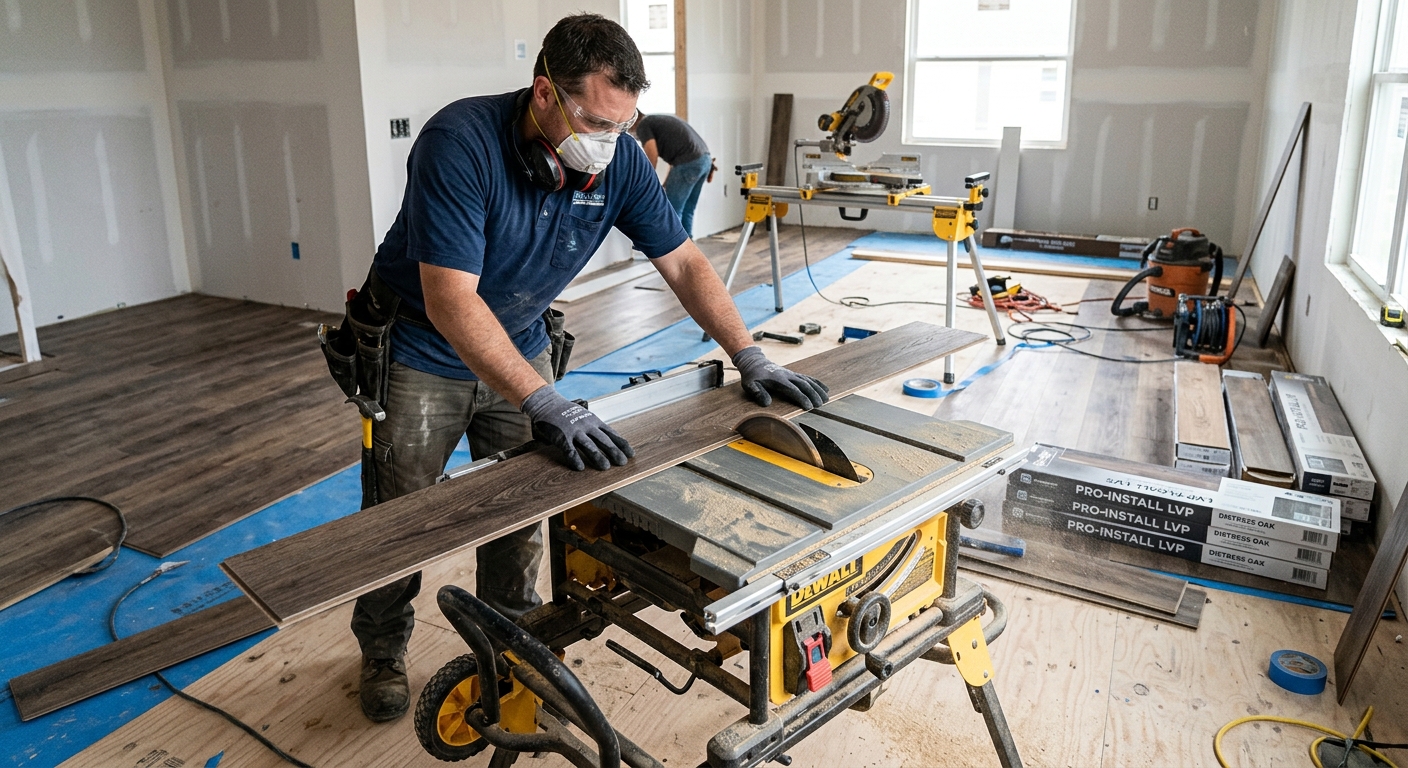
Flooring options and costs in Twin Creeks
Twin Creeks homeowners have a lot of flooring choices, but costs and performance in this part of the Lower Mainland–Southwest are heavily shaped by moisture. With a local population of 2,577 (Statistics Canada, 2021 Census), demand is steady, yet scheduling can be tight when a few larger jobs hit at once—especially for detailed subfloor prep. Twin Creeks also has plenty of older housing stock (common across the region), and older homes frequently need subfloor levelling or patching before new flooring can be installed; that prep work often adds roughly $1–$3 per sq ft to the total project. In a wet, marine climate, indoor humidity swings in winter and shoulder seasons can move up through concrete and seams, so the “same” flooring quote can differ by material system and site prep. That’s why below-grade or slab-adjacent areas are where contractors in the Lower Mainland–Southwest typically steer clients away from solid hardwood. Even when a room is technically “above grade,” basements and slab-on-grade zones nearby can drive moisture migration, which increases the importance of vapour management and good underlayment selection. Neighbourhood demand: in and around the more established family areas of Twin Creeks, engineered wood and LVP are especially popular because they’re warm underfoot, easier to maintain, and better suited to humidity changes.
The comparison table below uses typical Twin Creeks pricing ranges to help you sanity-check quotes before you talk with installers.
| Type |
Best Room |
Moisture Resistance |
Lifespan |
Price per sq ft |
| Solid hardwood (nail-down, above grade only) |
Main living areas |
Low to moderate (humidity sensitive) |
25–50 years |
$9 – $18 |
| Engineered hardwood (float or glue, above + on-grade) |
Main living areas, bedrooms |
Moderate to high (layered core) |
20–35 years |
$8 – $16 |
| Laminate (click-lock, above-grade) |
Bedrooms, hallways |
Low to moderate (can swell if flooded) |
10–25 years |
$4 – $10 |
| Luxury vinyl plank / LVP (waterproof, any level) |
Kitchens, basements, main level |
High (waterproof core) |
15–25 years |
$5 – $12 |
| Porcelain / ceramic tile |
Bathrooms, kitchens, entries |
Very high (with correct installation) |
25–50 years |
$10 – $20 |
| Carpet (broadloom or modular tile) |
Bedrooms, stairs, media rooms |
Moderate (avoid basements) |
7–15 years |
$4 – $9 |
Prices are estimates only and vary by project scope, site access and material selection.
What affects the price of flooring in Twin Creeks
In Twin Creeks (and across the Lower Mainland–Southwest), it’s common to see quotes for the “same” flooring look differ by 30–50% once you account for prep, moisture mitigation, and labour availability. Indoor humidity swings are the technical driver that changes the install plan: solid hardwood expands and contracts with moisture, and it cannot be installed over concrete like a floating floor and performs poorly in basements. Engineered hardwood and luxury vinyl plank handle humidity and minor temperature changes far better, which is why they’re often recommended for slab-on-grade and finished lower levels. If your home uses radiant heat, colder-region design logic also matters—radiant heat compatibility can rule out some solid hardwood specs and many low-cost laminates. Labour is another local cost driver: Greater Vancouver is among Canada’s higher labour-cost markets, so installation scope makes a big difference. Older regional housing stock also frequently needs levelling or subfloor repair before install, adding roughly $1–$4 per sq ft depending on how uneven the substrate is.
Concrete examples I see in Twin Creeks: (1) a “basic” LVP job in a 600 sq ft main floor can jump if the subfloor has dips and you need self-levelling compound—material changes might be small, but prep labour increases. (2) tile and grout floors can appear expensive, but if you’re already paying for backer board, waterproofing and careful layout, the cost difference versus vinyl may shrink when you factor in longevity. (3) solid hardwood pricing can start in the $9 – $18 band, yet become closer to the upper end when moisture control measures and careful gaps/conditioning are required. When you plan around moisture and choose the right material for the slab, you avoid rework later and keep your project within the expected $4 – $10 laminate/vinyl ranges where appropriate.
| Price Factor |
Why It Matters |
Cost Impact |
| Room area in sq ft |
More square footage increases both materials and labour hours. |
Directly scales your total cost; small jobs often cost proportionally more. |
| Subfloor condition — levelling or repair needed |
Uneven plywood or patchy concrete must be corrected for a flat, quiet, long-lasting floor. |
Often adds about $1–$4 per sq ft in older homes. |
| Moisture / below-grade install — rules out solid hardwood |
Concrete moisture wicks up; humidity swings can move wood floors. |
May require vapour barrier, different underlay, and switching from solid to engineered/LVP. |
| Material choice — solid vs. engineered vs. LVP vs. tile |
Different systems have different material and installation complexity. |
Can change price bands substantially (e.g., LVP/vinyl vs. tile vs. solid hardwood). |
| Removal and disposal of existing flooring |
Demo time, haul-away, and any damage repair add work beyond material replacement. |
Often a notable line item, especially with glued-down or thick underlay. |
| Stair nosing / transitions — charged per step or per linear foot |
Transitions and nosings require detailing and specific trim pieces. |
Costs rise quickly with stairs and multiple room changes. |
| Radiant heat compatibility — limits material options |
Heat can affect dimensional stability for some wood and laminate products. |
May require premium engineered products or different underlay specifications. |
| Installation method — float vs. glue-down vs. nail-down |
Each method needs different labour steps and sometimes different prep. |
Nail-down prep and glue-down flatness requirements can increase labour costs. |
Permits & regulations in British Columbia
In British Columbia, installing new flooring is typically a no-permit scope by itself. Flooring replacement generally doesn’t trigger building permits because it’s considered finish work. However, permit requirements can come up when flooring projects include associated work that touches building systems. For example, if you’re doing electrical work for an in-floor radiant heating system, that portion may require electrical permitting through the appropriate licensed trades. If the job involves structural subfloor repair beyond cosmetic patching (for instance, significant framing repairs), it may require additional approvals depending on the extent of the work. Moisture remediation that involves plumbing-like interventions can also change the approval pathway.
In condominiums, the rules are different: the corporation often restricts underlay and sound transmission. Many condo policies require specific underlay or documented performance to meet sound standards (STC/IIC). That means even when the flooring doesn’t require a building permit, the condominium may require board approval in writing before you install hardwood or tile on upper floors.
Step-by-step verification in Twin Creeks: (1) ask the contractor for their BC licence details and company information, then confirm it using the online professional registry search; (2) request a certificate of insurance (liability coverage) and verify the policy is active for the project dates; (3) ask for proof of WSBC/WCB coverage (and that it matches the contractor’s legal business name). Finally, keep copies of the certificate and any clearance letters with your contract paperwork—if something changes mid-project, those documents matter.
Best flooring for each room in your Twin Creeks home
Choosing the right flooring by room is the fastest way to keep your project both comfortable and cost-effective in Twin Creeks’ wet, marine climate. In living and dining areas, many homeowners want a warm, natural surface, but humidity swings can be unforgiving: engineered hardwood or high-quality laminate is often the balanced choice. For bedrooms, carpet is still a strong option—especially if you want sound absorption and comfort on cold mornings—while engineered hardwood can work well where spills are less likely. Kitchens are where water and tracked-in moisture happen most: luxury vinyl plank (LVP) is a practical go-to, and large-format porcelain tile is excellent when you want an easy-clean surface that stands up to wet mopping.
Basements are the deciding factor. Finished basements in the Lower Mainland–Southwest can experience moisture migration through concrete, and that’s where LVP usually wins. Solid hardwood and many laminates can struggle in basement conditions, especially when humidity rises and falls seasonally. Bathrooms should be porcelain or ceramic tile only because the system can be properly waterproofed and maintained. If your home has radiant heat, it’s increasingly common in newer builds; that generally pairs better with engineered wood, LVP, tile, and some heat-rated laminates. Solid hardwood over radiant heat needs very careful product specification and installer conditioning schedules.
For a clear budget example: if solid hardwood lands in the $9 – $18 range but LVP is in the $5 – $12 range, the “extra” upfront often makes sense in living rooms where you can control humidity and enjoy the look long-term. In basements, that same solid hardwood premium typically isn’t worth the risk—LVP’s waterproof performance better justifies the investment.
| Room |
Best Material |
Why |
Moisture Risk |
Price Band per sq ft |
| Living / dining room |
Engineered hardwood |
Warm look with better humidity tolerance than solid wood. |
Low to moderate (manage indoor humidity) |
$8 – $16 |
| Master bedroom |
Carpet or engineered hardwood |
Carpet adds comfort and sound control; engineered keeps a cleaner maintenance profile. |
Low (avoid heavy moisture exposure) |
$4 – $14 |
| Secondary bedrooms |
Laminate (higher-grade) or carpet |
Laminate balances cost and durability; carpet suits noise reduction. |
Low (typical daily living) |
$4 – $10 |
| Kitchen |
Luxury vinyl plank (LVP) or porcelain tile |
LVP handles splashes and cleaning; tile offers maximum water resistance. |
Moderate to high |
$5 – $20 |
| Basement (finished) |
Luxury vinyl plank (LVP) |
Fully waterproof and better suited to moisture migration from slab-on-grade/concrete. |
High (vapour and humidity swings) |
$5 – $14 |
| Bathroom |
Porcelain / ceramic tile |
Can be properly waterproofed and is durable under wet conditions. |
Very high |
$10 – $20 |
How to choose a flooring contractor in Twin Creeks
Picking the right flooring contractor in Twin Creeks comes down to verification, clarity, and proof of workmanship. Start with British Columbia coverage: ask for (1) licence/business credentials and confirm them through the appropriate online registry search for the contractor type; (2) a certificate of liability insurance and ensure it covers flooring work for your project dates; and (3) WSBC/WCB coverage for their workers—your request should be in writing if needed, and you should confirm the certificate matches the legal business name. If a contractor can’t provide documentation quickly, treat that as a major red flag.
Next, get 2–3 itemised written quotes rather than a single lump sum. A good quote breaks out labour and materials by scope (demo, subfloor levelling, underlay, installation method, transitions, and disposal). Read the exclusions carefully: ask what’s included for moisture testing (if applicable), whether permit handling is required for any electrical/radiant work, and whether disposal is included. For warranties, separate workmanship warranty from manufacturer warranty, confirm if they’re transferable, and ask how claims are handled.
For payment, don’t agree to large up-front amounts—generally keep deposits around 10–15% and use a holdback until completion and punch-list items are finished. Also request a start date and completion estimate in writing, including when materials will be ordered so you’re not delayed by inventory gaps.
- Confirm their BC licence/registration details before signing.
- Request certificate of liability insurance and check dates match your timeline.
- Verify WSBC/WCB coverage for employees/crew.
- Ask for a written scope that lists demo, prep, underlay/vapour barrier, and install method.
- Get moisture-related tasks clearly defined (especially for basements/on-grade).
- Ensure levelling/repair scope is included with a clear allowance for self-levelling compounds.
- Confirm transitions (thresholds, stair nosing, mouldings) and how they’re priced.
- Ask whether disposal and recycling/haul-away fees are included.
- Check underlay details match the product and climate needs.
- Demand manufacturer names and model numbers for the flooring and underlayment.
- Confirm warranty terms, duration, and whether the workmanship warranty is transferable.
- Review payment schedule and keep a holdback until final walkthrough.
Red flags in Twin Creeks: vague quotes that don’t mention subfloor prep; refusing to show insurance/WCB paperwork; pricing that changes after you commit because “levelling wasn’t included”; inconsistent details on underlay/vapour barrier (or no plan for basement moisture); and contractors who won’t put start/completion dates in writing.
Frequently asked questions — flooring in Twin Creeks
What flooring holds up best to pets in a Twin Creeks home?
For most pet owners in British Columbia, luxury vinyl plank (LVP) is the practical winner because it’s waterproof and doesn’t mind minor accidents or frequent cleaning. In Twin Creeks’ wet, marine climate, humidity swings can also be hard on wood floors—especially if your home has a basement or on-grade slab—so LVP’s stability helps reduce warping risk. If you’re shopping by price, many homeowners find LVP lands in the $5 – $12 range, which often feels like good value compared with solid hardwood in the $9 – $18 band. For pets with claws, choose LVP or laminate with a thicker wear layer and a textured surface. Consider area rugs only with breathable underlay and keep nails trimmed to protect any floor finish.
How do I fix squeaky floors in my Twin Creeks home?
Squeaks usually aren’t “fixed” by new flooring—they’re caused by movement between joists, subfloor layers, or fasteners. In Twin Creeks, where older subfloors are common in the region, squeaks often trace back to loose boards, minor deflection, or poor original fastening. Before you replace any floor covering, ask your contractor to diagnose and propose a prep plan: tightening subfloor screws, adding shims, or correcting unevenness. If you’re installing over an existing subfloor, a flat, properly prepared surface is essential; otherwise, the squeak can telegraph through underlay. If the squeak is severe or tied to structural movement, you may need carpentry work first (which can change timelines and cost). A good quote should include subfloor assessment steps, not just a flooring install.
What is luxury vinyl plank and is it worth it in Twin Creeks?
Luxury vinyl plank (LVP) is a multi-layer floor with a wear layer on top and a core built to handle moisture far better than wood or laminate. In Twin Creeks, that matters because the Lower Mainland–Southwest has indoor humidity swings and, in many homes, moisture migration through concrete in basements and some on-grade areas. LVP’s waterproof performance makes it a safer choice for these conditions, and it’s also forgiving underfoot compared with tile. Cost-wise, many typical installed projects for LVP sit in the $5 – $12 range, while tile can be higher at $10 – $20 and solid hardwood often runs $9 – $18. LVP is “worth it” when you need durability, easy maintenance, and confidence in wet-season stability.
How much does flooring cost in Twin Creeks?
Twin Creeks flooring costs depend mainly on the type of material, the size of the area, and how much prep is required (levelling, moisture control, and disposal). As a benchmark for the city tier: laminate or vinyl plank often lands around $4 – $10 per sq ft, while solid hardwood typically sits in the $9 – $18 band. Tile tends to be higher at $10 – $20 per sq ft because installation is labour-intensive and requires careful surface prep and grouting. Carpet installation for bedrooms usually falls in a $4 – $9 range. For many older homes in this region, subfloor levelling and repair can add roughly $1–$4 per sq ft, which is why itemised quotes matter. Always compare like-for-like scope, not just the final total.
Hardwood vs laminate vs vinyl plank — which is best?
There isn’t one “best” for every Twin Creeks room. Solid hardwood can be beautiful and long-lasting, but in British Columbia’s humidity swings it must be specified carefully and is best kept to above-grade areas; it also isn’t the right choice for basements over concrete. Engineered hardwood is often the better wood compromise for main levels. Laminate is budget-friendly (often around $4 – $10 per sq ft) and works well above grade, but it’s not ideal if you expect frequent water exposure or basement-level humidity. Vinyl plank (LVP) is usually the safest overall when moisture is a concern because it’s waterproof and performs well on any level. If your priority is confidence in rainy-season conditions—especially with basements—LVP typically edges out laminate and hardwood.
What flooring is best for a Twin Creeks basement?
In Twin Creeks and across the Lower Mainland–Southwest, finished basements often face moisture vapour and humidity swings coming from concrete. Because of that, luxury vinyl plank (LVP) is usually the clear best option: it’s waterproof, handles minor subfloor movement better, and reduces the risk of cupping/gapping that can happen with wood systems. Most homeowners choose LVP in the $5 – $12 range depending on thickness and wear layer, while solid hardwood (often $9 – $18) is typically avoided below grade due to moisture sensitivity. If you’re choosing carpet for a basement, many contractors avoid it unless the space is fully conditioned and truly dry. For any basement install, insist on a prep plan that addresses vapour control and subfloor flatness—those two steps are often what separate a one-time upgrade from future callbacks.