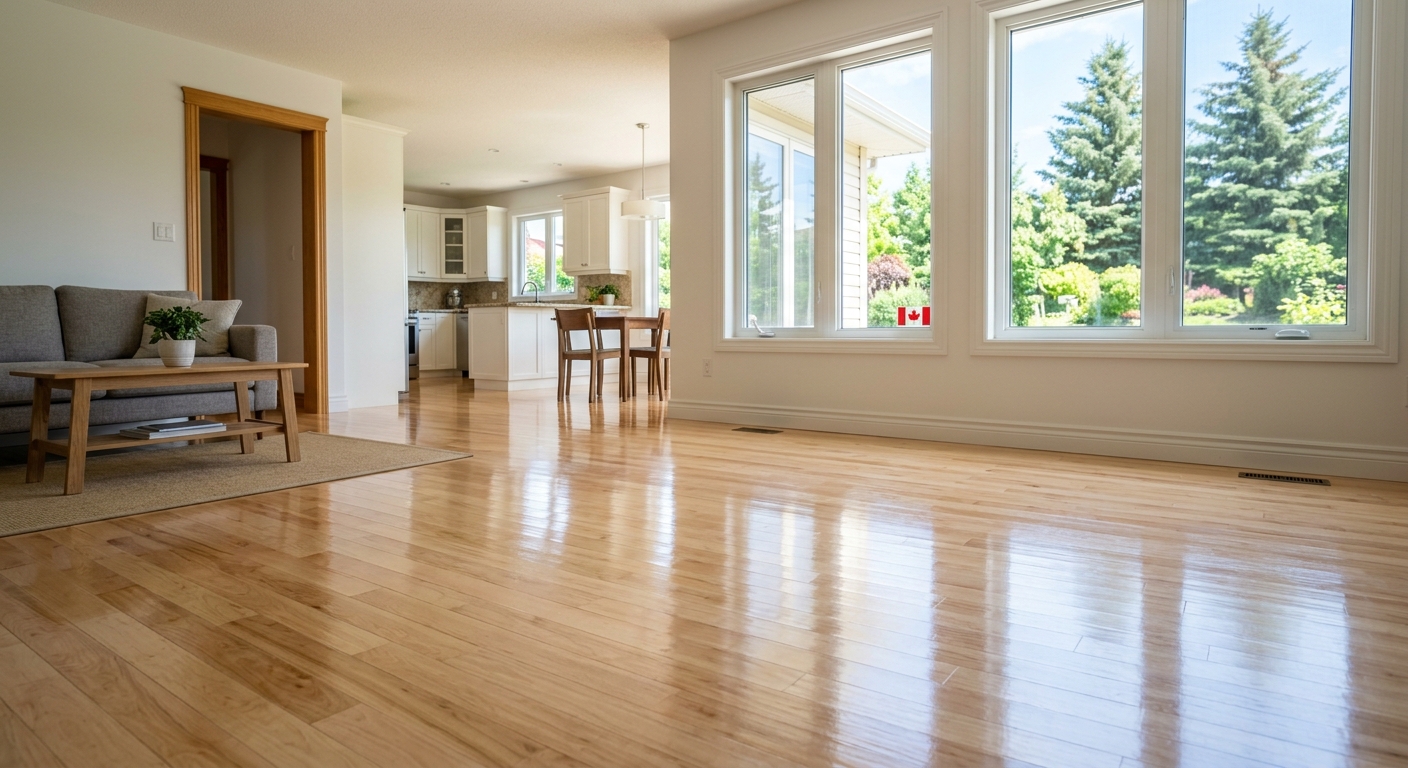
Flooring options and costs in Smooth Rock Falls
In Smooth Rock Falls, flooring costs usually start with the same question—what’s in your house right now and where will the new material live—but the answers are shaped by local housing age and moisture behaviour. According to the 2021 Census, 87.1% of homes in the area were built before 1981, so it’s common to find older subfloors that need levelling, patching, or repair before any new finish goes down. Also, with 80.2% of households owning their homes, many projects are full renos (not quick refreshes), which increases labour for removal, disposal, and prep. In a cold Northern climate, indoor humidity swings can be significant; that matters because solid hardwood expands and contracts more than homeowners expect. It also typically isn’t the right choice for basements where below-grade moisture risk is higher.
In the Northeast Ontario market, contractor availability and material pricing can vary with project scope. Even within the same home, a basement install can cost more than the main floor because moisture testing, underlayment choices, and subfloor remediation are often required. That’s why engineered wood and luxury vinyl plank (LVP) are common practical upgrades: they tolerate humidity changes and work better on challenging subfloors. Hardwood still remains a premium look—especially on main floors—but it’s usually targeted to tighter, above-grade areas with better moisture control. If you’re near the more established residential pockets around town (where older homes are more typical), you’ll often see higher demand for moisture-proofing prep and levelling work.
Below is a realistic cost comparison to help you transition into the right material category for your project.
| Type |
Best Room |
Moisture Resistance |
Lifespan |
Price per sq ft |
| Solid hardwood (nail-down, above grade only) |
Main floor living areas |
Low to moderate (avoid basements) |
20–30 years |
$11–$18 |
| Engineered hardwood (float or glue, above + on-grade) |
Main floor & some on-grade spaces |
Moderate to high (better tolerance) |
15–25 years |
$10–$16 |
| Laminate (click-lock, above-grade) |
Living areas, bedrooms (dry spaces) |
Moderate (protect from standing water) |
10–20 years |
$4–$10 |
| Luxury vinyl plank / LVP (waterproof, any level) |
Kitchen, entry, basement (finished) |
High (waterproof core) |
15–25 years |
$6–$12 |
| Porcelain / ceramic tile |
Kitchen, bathrooms, foyers |
Very high (water tolerant) |
25–50 years |
$12–$22 |
| Carpet (broadloom or modular tile) |
Bedrooms (comfort-first) |
Low to moderate (avoid high-moisture basements) |
8–15 years |
$3–$8 |
Prices are estimates only and vary by project scope, site access and material selection.
What affects the price of flooring in Smooth Rock Falls
In Smooth Rock Falls and across the Northeast/greater Ontario region, quotes for the same “room and product” can swing by 30–50% once you include the real drivers: subfloor condition, moisture risk, preparation, and installation method. Two homes can both measure 800 sq ft, yet one may need full levelling and moisture remediation while the other only needs a quick skim—those differences change labour hours and materials fast. Cold winters and indoor humidity swings also influence installation tolerances. Solid hardwood expands and contracts with humidity, so contractors must follow strict above-grade practices; once basements or on-grade slabs are involved, solid wood is often ruled out, and engineered or LVP becomes the practical route.
In practice, older housing stock (87.1% built before 1981) commonly means you’ll deal with uneven subfloors, old nails, damaged OSB, or patchy surfaces. That typically adds $1–$4 per sq ft in prep for levelling/repair alone, before you even talk about new flooring. If radiant heat is present (or planned), many homeowners can’t use solid hardwood in heated zones, and some laminate choices get eliminated, pushing you toward radiant-compatible engineered wood or appropriate LVP. For budgets anchored around the $4–$10 range for laminate/LVP, the fastest way to stay near that band is to keep the subfloor “clean and level.” If your project needs significant prep, you should expect the overall spend to drift toward higher-end flooring installs, similar to the $11–$18 hardwood band when prep is combined with premium materials.
Concrete examples from Northeast-style homes: (1) a basement finished in phases usually costs more because edges and transitions get handled in multiple pours of work; (2) a kitchen floor replacement that includes tile removal and underlayment replacement often exceeds a living-room laminate job because tile prep and setting labour are higher.
| Price Factor |
Why It Matters |
Cost Impact |
| Room area in sq ft |
Drives materials quantity and labour time |
Typically the biggest baseline cost; linear scaling across the project |
| Subfloor condition — levelling or repair needed before install |
Old homes often require patching and flattening |
Commonly adds about $1–$4 per sq ft depending on severity |
| Moisture / below-grade install — rules out solid hardwood |
Humidity swings can damage dimensional wood products |
May shift you from solid hardwood pricing ($11–$18) to engineered/LVP pricing (often lower overall for basements) |
| Material choice — solid vs. engineered vs. LVP vs. tile |
Materials behave differently and require different installs |
Solid hardwood usually sits higher; LVP/laminate can keep you in the $4–$10 band; tile often lands higher due to labour |
| Removal and disposal of existing flooring |
Old adhesives, underlayment, and haul-away add time |
Can add a meaningful chunk to labour, especially with tile and glue-down flooring |
| Stair nosing / transitions — charged per step or per linear foot |
Custom trim is labour-intensive and not “included by default” |
Costs rise quickly if you have many doorways and stairs |
| Radiant heat compatibility — limits material options |
Heat output affects flooring expansion and performance |
May add the cost of a compatible product and specific underlayment |
| Installation method — float vs. glue-down vs. nail-down |
Method changes labour time, subfloor demands, and materials |
Glue-down typically costs more than float; nail-down requires stable, above-grade conditions |
Permits & regulations in Ontario
In Ontario, flooring installation itself typically does not require a building permit. However, associated work can trigger permit requirements. For example, if your project includes in-floor heating circuit work (electrical connection, thermostat installation, or modifications to existing wiring), an electrical permit may be required because that’s regulated electrical work. Similarly, if you discover that the project needs structural subfloor repair—like correcting damage that affects the integrity of the floor framing—or moisture remediation that changes concealed conditions, your contractor may need to coordinate additional permits or inspections depending on what’s being altered.
For condominiums in Ontario, the corporation’s rules on sound transmission (often addressed through STC/IIC expectations) can restrict which underlay is allowed and may require specific products for hardwood or tile on upper floors. Before you install hard flooring above another unit, always review your condo declaration/bylaws and request board approval in writing.
To verify a contractor in Smooth Rock Falls: start by confirming they are licensed/registered where applicable for flooring-related work (Ontario contractors should provide their business information clearly). Next, request a certificate of liability insurance and WSIB/WCB coverage evidence—then confirm the policy is active and matches the contracting business name. Finally, ask for a clearance letter (if applicable to their situation) and keep the paperwork with your quote and contract. If they hesitate or provide certificates that don’t match the invoicing entity, that’s a serious warning sign.
Best flooring for each room in your Smooth Rock Falls home
Choosing the right flooring in Smooth Rock Falls comes down to three things: moisture exposure, foot traffic, and comfort needs. For living and dining rooms, engineered hardwood is often the best balance of warmth and stability, especially in older homes where humidity swings are part of daily life. High-quality laminate can also work well above grade when you want a cleaner look at a lower cost, but it still shouldn’t be treated like waterproof flooring. In bedrooms, carpet remains popular because it’s quiet and comfortable—just make sure the space stays dry; basements are a different story.
For kitchens, luxury vinyl plank (LVP) or large-format porcelain tile tend to be the most homeowner-friendly choices. LVP handles splashes and everyday spills better with less maintenance than grout, while porcelain is the long-term “set it and forget it” option, particularly if you expect heavy wet mopping. In finished basements, LVP is usually the clear winner because it tolerates moisture vapour and below-grade conditions far better than solid hardwood and most laminate products. Bathrooms should be porcelain or ceramic tile only, because these surfaces are designed for ongoing water exposure and easier sanitation.
If you’re considering radiant heat (common in newer Ontario builds and renovations), plan for radiant-compatible products. This often rules out most solid hardwood in heated zones and pushes you toward engineered wood or appropriate LVP. As a real-world budgeting example: if your main floor is 600 sq ft, moving from laminate in the $4–$10 band to engineered hardwood may be justified where you want a longer service life and more natural look—while keeping basements in the LVP range helps avoid the higher costs and risks that come with solid wood over below-grade areas.
| Room |
Best Material |
Why |
Moisture Risk |
Price Band per sq ft |
| Living / dining room |
Engineered hardwood |
Warm look with better tolerance to humidity swings than solid |
Low to moderate (above grade) |
$10–$16 |
| Master bedroom |
Carpet or engineered hardwood |
Carpet adds comfort and sound control; engineered keeps a cleaner look |
Low (if dry/above grade) |
$3–$16 |
| Secondary bedrooms |
Laminate or carpet |
Laminate for easier maintenance; carpet for warmth and noise reduction |
Low (above grade) |
$4–$8 |
| Kitchen |
Luxury vinyl plank (LVP) or porcelain tile |
Both handle spills; LVP is simpler, porcelain is the most durable |
Moderate (spills and wet cleaning) |
$6–$22 |
| Basement (finished) |
Luxury vinyl plank (LVP) |
Waterproof performance where below-grade moisture is a concern |
High (vapour and incidental leaks) |
$6–$12 |
| Bathroom |
Porcelain / ceramic tile |
Designed for wet environments and easy cleaning |
High (direct water exposure) |
$12–$22 |
How to choose a flooring contractor in Smooth Rock Falls
Hiring the right flooring contractor in Smooth Rock Falls is less about fancy ads and more about proof and process. Start with Ontario business verification: ask for their Ontario business registration details, then request a certificate of liability insurance and evidence of WSIB/WCB coverage. Confirm the insurance certificate matches the exact legal business name that will appear on your invoice, and check that coverage is active for the project dates. If they can’t provide documents promptly, assume risk yourself and move on.
Next, get 2–3 itemised written quotes. You want a breakdown that separates labour from materials, and clearly identifies what’s included: removal, subfloor prep/levelling, underlayment (if needed), transition pieces, and disposal/haul-away. A quote should also specify whether any permits are included (for example, electrical work related to radiant heating circuits) and what’s excluded if unexpected moisture remediation is discovered. Workmanship warranty matters—ask how long they stand behind the installation and whether their warranty is transferable if you sell the home. Also clarify the product/manufacturer warranty coverage and who handles claims.
For payment schedule, never pay more than 10–15% upfront. Hold back the remainder until the job is complete and you’ve confirmed the floor is properly installed and cleaned. Finally, get a start date and completion estimate in writing, including lead times for material delivery—especially for engineered wood, LVP, or tile runs.
- Confirm liability insurance and WSIB/WCB status with active certificates (match the invoicing business name).
- Ask for a clear, itemised labour + materials quote (no “lump sum” only).
- Require written scope for subfloor levelling/repairs and who pays if additional patching is discovered.
- Make sure removal and disposal are explicitly included.
- Ask whether transitions/stair nosing are included or charged per step/linear foot.
- Confirm underlayment details for laminate/carpet and vapour/water protection for LVP.
- Verify acclimation requirements for wood and how they’ll handle temperature/humidity on site.
- Request the workmanship warranty term and what specific issues it covers (gapping, buckling, transitions).
- Ask if manufacturer warranty is voided by wrong underlayment or installation method.
- Get start date and completion timeline in writing, including material lead times.
- Use a payment schedule with 10–15% maximum deposit; holdback at completion.
- Check for a clean site plan: dust control, protection of trim, and post-install vacuum/cleanup.
In Smooth Rock Falls, I watch for these red flags: contractors who won’t provide insurance/WSIB paperwork, quotes that don’t mention subfloor prep explicitly, “free” disposal that later becomes an added charge, vague warranty wording with no term in writing, and payment requests that exceed 10–15% upfront before any site work begins.
Frequently asked questions — flooring in Smooth Rock Falls
Hardwood vs laminate vs vinyl plank — which is best?
In Smooth Rock Falls, “best” depends on moisture and where the floor is going. Solid hardwood looks great, but in colder Ontario homes with indoor humidity swings it can expand and contract, and it’s usually not the right choice for basements. Laminate is a practical value option for above-grade rooms; it’s often priced in the $4–$10 range, but it still shouldn’t be treated as waterproof. Luxury vinyl plank (LVP) is typically the most forgiving choice across levels because it’s waterproof and handles below-grade moisture vapour far better. For kitchens and finished basements, LVP is often the cost-effective path because you’re less likely to face edge swelling or costly replacement after moisture events. If you want the natural hardwood look, engineered hardwood is usually the compromise that offers better tolerance than solid while staying closer to hardwood aesthetics.
What flooring is best for a Smooth Rock Falls basement?
For basements in Smooth Rock Falls, the biggest factor is below-grade moisture risk. Because your home housing stock is older (87.1% built before 1981), it’s common to encounter uneven subfloors, patchy surfaces, or moisture-vapour movement that can’t be ignored. In that situation, luxury vinyl plank is usually the clear best option: it’s waterproof, works well in below-grade installs, and avoids the humidity-sensitivity issues that make solid hardwood a poor basement choice. Laminate can work only if the basement is consistently dry and well-prepared, but that’s not always realistic in Northern conditions. Porcelain tile is also excellent in wet-ready areas, but it’s often more labour-intensive due to prep and setting work. Practically, LVP often keeps you closer to the $6–$12 range for many projects, while still protecting you from the failures that wood products can have in moisture-prone basements.
Can I install hardwood over concrete?
Sometimes, but it depends on the type of concrete and the exact hardwood product. Solid hardwood generally isn’t recommended over concrete slabs, especially if there’s any chance of moisture vapour or if the slab is part of a basement installation. Solid wood needs stable humidity and is typically installed as a nail-down system for above-grade areas only. If you’re working over concrete and you still want a wood look, engineered hardwood is often the better fit because many engineered products can be installed floating or glued with more tolerance for moisture variation—when the installer follows the manufacturer’s required underlayment and moisture guidelines. In Smooth Rock Falls, where older homes are common, you’ll also want the contractor to check the slab condition and plan for levelling/repairs if the concrete is uneven. If the basement is in play, engineered or LVP is usually safer than solid hardwood.
How long does flooring installation take?
Timing varies with floor type, prep, and subfloor condition—especially in older Smooth Rock Falls homes (87.1% built before 1981) where levelling and patching may be needed. For an above-grade room with decent subfloor conditions, many installations can be completed in a few days once materials arrive. More time is required for tile because of layout, setting, curing time, and grout; it can extend the timeline compared to laminate or LVP. Basement work often takes longer due to moisture considerations and the chance of additional prep once the existing flooring comes up. The most important thing is that contractors acclimate the flooring (for wood and laminate) and stage the job to avoid delays. Ask your contractor for a written schedule with start and completion dates. If moisture remediation or significant levelling is discovered, it can add days and should be described in your scope before work begins.
What flooring works with radiant heat?
Radiant heat compatibility matters in Ontario, particularly as homeowners renovate older houses or install heat systems in colder zones. In general, solid hardwood is the most restrictive option over radiant heat because heat cycles can increase movement and dimensional change. Many installers steer homeowners toward radiant-compatible engineered hardwood or specific LVP products designed to handle heat output. Laminate can work if it’s rated and installed with the manufacturer’s approved underlayment, but not every laminate is suitable for radiant systems. When quotes compare materials, ask the contractor to confirm the product’s radiant heat rating in writing and to use the correct underlay so heat transfers efficiently. In the Northeast climate, performance issues often show up as gapping, or poor comfort due to poor heat transfer—so compatibility is not optional. It also affects cost: radiant-compatible options may push you toward higher-end pricing, but it prevents expensive failure and rework.
Engineered vs solid hardwood — what's the difference?
Solid hardwood is one piece of wood and is typically installed nail-down for above-grade areas only. It’s sensitive to humidity swings, so in basements or below-grade settings it can perform poorly. Engineered hardwood is built in layers (a stable core with a hardwood top), which makes it better at handling humidity changes and makes it more practical for installations that include on-grade and some concrete scenarios. In Smooth Rock Falls, where many homes are older (87.1% built before 1981) and moisture conditions can be variable, engineered is often the safer hardwood-style choice. Pricing often reflects this tradeoff: homeowners who want a hardwood look but need better stability may find engineered comes in around the $10–$16 range per sq ft, while solid hardwood typically sits closer to the $11–$18 band. If you’re aiming for the longevity of hardwood with fewer humidity-related risks, engineered is usually the better fit for real-life Northern homes.