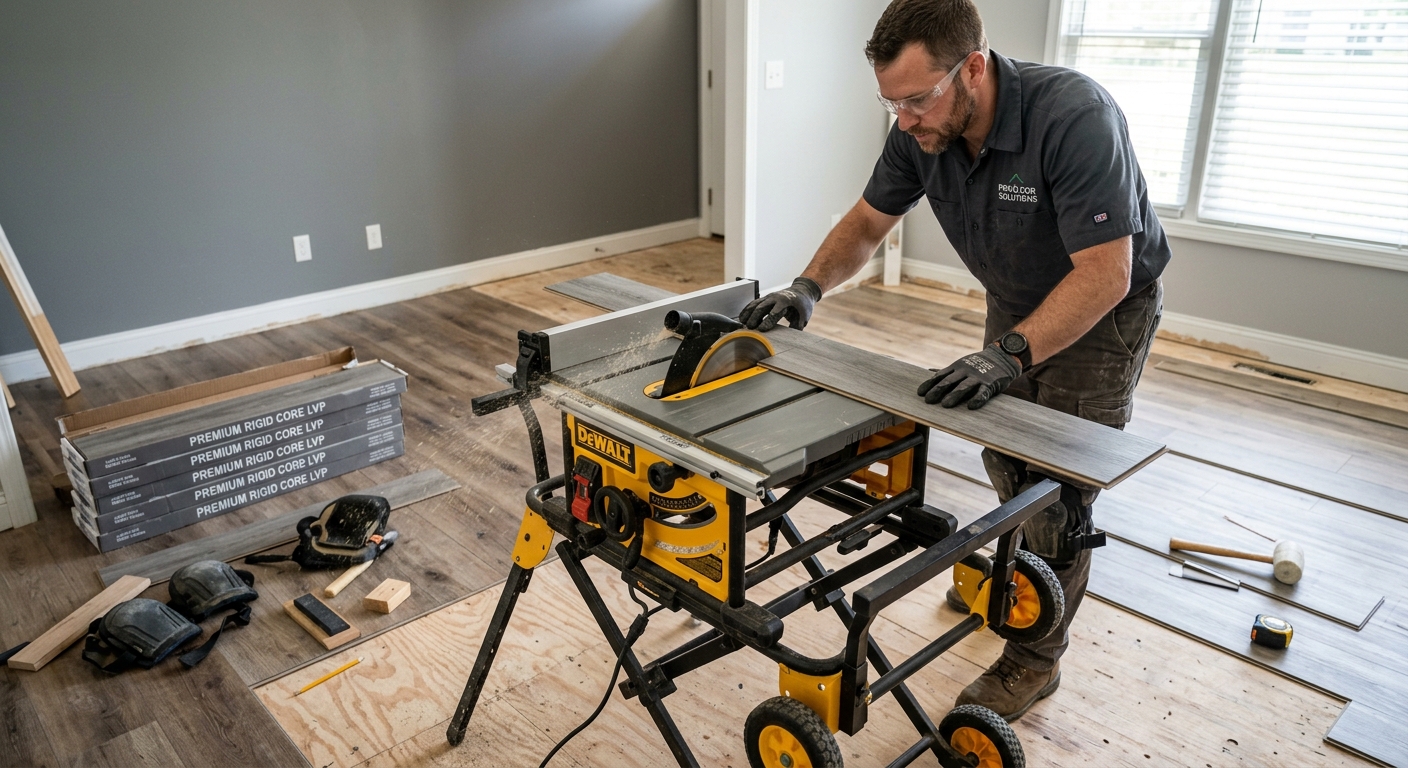
Flooring options and costs in North Riverdale
North Riverdale, Ontario is a classic Toronto neighbourhood where flooring choices have to handle real seasonal swings—cool winters, humid summers, and frequent indoor humidity variation. With a 2021 population of 11,916 (Statistics Canada, 2021 Census), the area sits in the wider Toronto renovation market, where demand keeps contractor availability tight during peak seasons. That matters because rushed scheduling can change labour pacing and change-order risk, which is one reason quotes can vary even when the materials look similar.
Toronto-area homes—especially many of the older stock around the neighbourhood—often need prep work before “new floor” can go down. On older subfloors, it’s common to find unevenness that requires levelling, patching, or plywood repair so your finish floor doesn’t rock. In practice, that prep can add roughly $1–$4 per sq ft in many North Riverdale projects, and it’s a major driver of the total installed cost, not just the floor covering price. If you’re working over concrete or a basement slab, solid hardwood also becomes a risk because it moves with moisture and typically isn’t intended for below-grade conditions.
For most North Riverdale homes, we steer owners toward engineered hardwood or luxury vinyl plank (LVP) in humidity-prone areas, while reserving porcelain/ceramic tile for kitchens and bathrooms. Basements over concrete are where LVP and certain engineered products often win on stability. You can then match the best material to each room based on moisture exposure, traffic, and comfort—starting with the cost ranges below.
| Type |
Best Room |
Moisture Resistance |
Lifespan |
Price per sq ft |
| Solid hardwood (nail-down, above grade only) |
Living / dining (above grade) |
Low–medium (sensitive to humidity) |
25–40 years |
$9 – $18 |
| Engineered hardwood (float or glue, above + on-grade) |
Living / bedrooms (above or on-grade) |
Medium–high (more stable than solid) |
20–35 years |
$9 – $16 |
| Laminate (click-lock, above-grade) |
Living areas, bedrooms (above grade) |
Medium (surfaces resist spills; seams matter) |
10–25 years |
$4 – $9 |
| Luxury vinyl plank / LVP (waterproof, any level) |
Kitchen, basement (including below grade) |
High (waterproof core) |
15–25 years |
$6 – $12 |
| Porcelain / ceramic tile |
Kitchen, bathroom, entry |
Very high (if installed correctly) |
25–50 years |
$12 – $25 |
| Carpet (broadloom or modular tile) |
Bedrooms, stairs (comfort) |
Low–medium (can be affected by moisture) |
8–15 years |
$7 – $14 |
Prices are estimates only and vary by project scope, site access and material selection.
What affects the price of flooring in North Riverdale
In North Riverdale, it’s normal to see quotes for the “same” flooring spread by 30–50% across Toronto and other Ontario markets—even when the material line looks comparable. The biggest reasons are technical (moisture, subfloor condition, and installation method) and scheduling-driven (labour availability in a high-renovation market). Toronto-area labour demand is strong, and higher general construction wages push installation costs up compared with many other regions.
Here’s the key technical driver: Toronto-area homes see wide indoor humidity swings across seasons, so solid hardwood can expand and contract more noticeably. That’s why solid hardwood is mainly an above-grade product and is risky in basements or over concrete. Engineered hardwood and luxury vinyl plank handle humidity and below-grade applications far better, and specific products are designed for slab and moisture-vapour conditions. If you’re planning radiant floor heating, many owners find that engineered wood, tile, and certain vinyl products pair better than traditional solid hardwood because of heat and expansion considerations.
Older housing stock in and around North Riverdale frequently needs subfloor levelling, plywood replacement, or moisture mitigation before the finish goes down. In budget terms, levelling and repair often adds $1–$4 per sq ft, while major plywood replacement and moisture remediation can push higher on harder-to-fix floors. For example, choosing LVP at roughly $6 – $12 per sq ft may still land you lower overall than solid hardwood when your concrete or basement slab needs extra moisture prep. Conversely, upgrading from laminate around $4 – $9 to engineered hardwood around $9 – $16 can be worth it when the job requires a better underlayment plan and a more stable board for Toronto humidity.
Two common North Riverdale cost examples: (1) a 600 sq ft main floor with uneven subfloor may require levelling before any “floating” installation, and (2) a basement with a slab that shows moisture signs often drives you toward waterproof LVP because remediation and product choice reduce failure risk.
| Price Factor |
Why It Matters |
Cost Impact |
| Room area in sq ft |
Directly affects material quantity and labour time |
Major: larger jobs are often priced more efficiently per sq ft |
| Subfloor condition |
Levelling/repair prevents gaps, squeaks and premature wear |
Common add: about $1–$4 per sq ft in many North Riverdale homes |
| Moisture / below-grade install |
Determines whether solid hardwood is allowed and what underlay is required |
Can materially increase prep; solid hardwood may be ruled out in basements |
| Material choice |
Solid vs engineered vs LVP vs tile changes price and installation complexity |
Shifts the budget by several bands (e.g., laminate/LVP vs hardwood/tile) |
| Removal and disposal of existing flooring |
Old adhesive, underlay and waste disposal affect labour |
Moderate to high if removal is over concrete or involves multiple layers |
| Stair nosing / transitions |
Stairs need edge profiles and often custom transitions |
Usually charged per step or per linear foot; adds up quickly |
| Radiant heat compatibility |
Heat changes expansion behaviour; not every floor system works well |
May require specific products/underlay and slower acclimation |
| Installation method |
Float vs glue-down vs nail-down affects substrate prep and labour time |
Glue-down and tile typically cost more labour than simple floating systems |
Permits & regulations in Ontario
In Ontario, installing a new floor covering by itself typically does not require a building permit. Where homeowners get tripped up is the related work that sometimes comes with flooring projects. If your scope includes structural subfloor repair, moisture remediation that involves adding ventilation systems, or in-floor heating circuit work, you may need permits depending on the exact scope and the trades involved. Electrical work for radiant heating is the usual trigger for an electrical permit.
In condominium buildings (very common across Toronto), the rules are often about sound transmission and underlay. Even when a permit isn’t required, the condo corporation may require a specific underlay and an installation method that matches their STC/IIC requirements. Before you start, review the declaration and request board approval in writing—especially if you’re installing hardwood, engineered wood, or tile on upper floors.
To verify your contractor in North Riverdale, follow these steps:
- Check their Ontario business presence and licensing status where applicable via online registries (start with their listed company details, then confirm any trade authorization tied to their work).
- Request a certificate of liability insurance and confirm coverage limits and that it lists you/your property protection if required.
- Verify WSIB/WCB coverage (ask for proof; don’t rely on verbal confirmation).
- Ask for a recent clearance letter or coverage verification document.
- Confirm they carry coverage for removal/disposal risks and subcontractors if they bring in electricians or other trades.
Best flooring for each room in your North Riverdale home
Choosing the right flooring in North Riverdale is less about “best overall” and more about matching each room’s moisture, traffic and comfort needs to Toronto’s indoor humidity swings. In living and dining areas, owners usually want warmth and an upscale look without the movement risk of solid wood—so engineered hardwood or high-quality laminate is the practical balance. For the master bedroom, comfort and sound matter most; carpet is a favourite for softness and noise reduction, while engineered hardwood is still a good option if you prefer a cleaner surface.
In the kitchen, you’re dealing with water exposure from sinks, leaks, and wet mopping. That’s where luxury vinyl plank (LVP) shines, or where large-format porcelain/ceramic tile provides the most robust cleanability. Basements in this region are the make-or-break zone: LVP is the clear winner for finished basements because it’s designed for below-grade moisture vapour conditions, while solid hardwood and most laminate are higher risk over concrete and damp basements.
Bathrooms should be tile only (porcelain/ceramic), installed with proper waterproofing and grouting practices. If you have—or plan—radiant floor heating (increasingly common in Ontario new custom homes), engineered wood and tile are typically the safest pairings, while traditional solid hardwood can be limited due to heat-driven expansion and contraction.
A concrete budget example: if your main floor is 500 sq ft, moving from laminate at about $4 – $9 per sq ft to engineered hardwood at about $9 – $16 per sq ft can add roughly $2,500 to $3,500 in materials alone. That upgrade usually pays back when your subfloor needs careful prep and you want long-term stability in Toronto humidity rather than frequent edge/peaking issues.
| Room |
Best Material |
Why |
Moisture Risk |
Price Band per sq ft |
| Living / dining room |
Engineered hardwood |
Stable feel through seasonal humidity; upscale look |
Low (above grade), moderate if windows/condensation issues exist |
$9 – $16 |
| Master bedroom |
Carpet or engineered hardwood |
Comfort and quiet (carpet); stability with hardwood look (engineered) |
Low |
$7 – $14 |
| Secondary bedrooms |
Laminate or carpet |
Laminate is cost-effective; carpet improves comfort for kids/guests |
Low |
$4 – $9 |
| Kitchen |
Luxury vinyl plank (LVP) or porcelain tile |
LVP handles spills and frequent wet cleanup; tile resists water long-term |
Moderate–high (spills, sink leaks) |
$6 – $12 |
| Basement (finished) |
Luxury vinyl plank (waterproof) |
Designed for below-grade moisture vapour and slab conditions |
High (vapour/moisture in many basements) |
$6 – $12 |
| Bathroom |
Porcelain / ceramic tile |
Best long-term water resistance; easy to clean and reworkable |
High |
$12 – $25 |
How to choose a flooring contractor in North Riverdale
Start by verifying Ontario coverage and professionalism. Ask your flooring contractor for three proof items before you sign: (1) their Ontario trade/contracting authorization if required for their scope, (2) a certificate of liability insurance showing they’re insured for property damage and jobsite risks, and (3) WSIB/WCB coverage for workers. Where to check: you’ll typically find company status and contact details online, and for coverage you should request documentation—don’t accept only a letterhead email. Look for a current certificate and, when available, a clearance/coverage verification letter.
Next, get 2–3 itemised written quotes. You want a breakdown that separates materials and labour, and ideally lists allowance items (underlayment, levelling compound, transitions, mouldings, and disposal). A lump-sum quote can hide cost drivers like plywood replacement, moisture mitigation, or stair nosing. Confirm whether removal and disposal are included, and whether permits (if they’re triggered by electrical/radiant work or other scope) are handled.
Warranty matters in Ontario because seasonal movement can reveal installation issues. Ask for the workmanship warranty length, whether it’s transferable, and what it covers (subfloor prep, installation method, and delamination/peaking related failures). Also confirm product warranties and acclimation requirements. For payments, never pay more than about 10–15% upfront; hold back the remainder until the job is complete and walkthrough items are addressed. Finally, require a written timeline with start date and completion estimate.
- They provide their insurance certificate and WSIB/WCB proof before scheduling.
- Quote is itemised: labour, materials, underlayment/level-systems, transitions, and disposal are separated.
- Scope clearly states what’s included/excluded (stairs, trims, door adjustments, baseboards).
- They mention moisture checks and discuss how Ontario indoor humidity swings will be managed.
- They confirm whether your subfloor is level/flat and how they’ll correct it.
- They include transition details (thresholds, stair nosing) with pricing method per step/linear foot.
- They specify installation method (float vs glue-down vs nail-down) and why it’s chosen.
- They provide a written workmanship warranty and explain claim process.
- They state acclimation requirements for hardwood/engineered products.
- Payment schedule is conservative (10–15% upfront max) with a holdback for completion.
- You receive a written start date, duration estimate, and contact for day-of coordination.
- They don’t pressure you; they answer questions about basements and concrete slabs specifically.
Red flags in North Riverdale: (1) a contractor who won’t show WSIB/WCB or liability insurance documentation, (2) quotes that ignore subfloor levelling/repairs despite photos showing unevenness, (3) “solid hardwood everywhere” assurances for basements over concrete, (4) vague warranty language or no workmanship warranty, and (5) no written scope about transitions, disposal, or stair work.
Frequently asked questions — flooring in North Riverdale
Is cork or bamboo flooring a good choice in North Riverdale?
In North Riverdale and across Ontario, cork and bamboo can look great, but they need the right product type and correct installation method. The main concern is Toronto’s wide indoor humidity swings: natural materials respond to moisture and can move or fade if conditions swing too far. If you’re considering cork or bamboo, look for products designed for your install situation (above grade only in many cases) and confirm they’re compatible with your subfloor and underlayment system. For basements, I generally steer clients toward engineered systems or waterproof LVP instead, because below-grade moisture vapour can undermine natural floors. Cost-wise, natural floors often land above basic laminate bands, so you may be closer to engineered hardwood pricing rather than $4 – $9 laminate budgets. A good contractor should discuss acclimation and humidity control before you commit.
What is the difference between floating and glued-down flooring?
Floating floors are installed so the boards/tops don’t get bonded to the subfloor; they “float” over an underlayment, with boards locking together (common with click-lock laminate and many engineered products). Glued-down flooring is bonded directly to the subfloor using an approved adhesive, which can improve stability on certain subfloors but requires flatter, properly prepared surfaces and strict adhesive specifications. In Toronto’s humidity-driven environment, both methods can perform well when installed correctly, but your subfloor condition matters: if the floor is uneven or has minor movement, the wrong system can telegraph issues. For basements and concrete slabs, waterproof products and the correct vapour plan are crucial; that’s why many homeowners choose LVP rather than solid hardwood. If you’re comparing costs, glued-down and high-prep jobs often sit closer to the higher midrange bands (for example, engineered around $9 – $16), while simpler floating setups can look more like $4 – $9 depending on material selection.
What flooring holds up best to pets in a North Riverdale home?
For most North Riverdale households with pets, luxury vinyl plank (LVP) is the top choice because it’s waterproof and forgiving during everyday accidents. It handles spills and cleanup better than laminate, and it’s typically more resistant to minor moisture events than traditional hardwood systems. Look for thicker wear layers and a quality core designed for residential traffic. Carpet can still work in bedrooms, but consider stain resistance and realistic cleaning—Toronto humidity can also impact drying time if accidents happen. Solid hardwood is beautiful, but claw marks and moisture sensitivity can make it higher-maintenance than homeowners expect. Budget-wise, LVP commonly fits around $6 – $12 per sq ft, whereas laminate can be lower in the $4 – $9 range but tends to be less forgiving if water gets into seams. If you have pets and a basement, LVP is usually the most practical and safest direction for below-grade conditions.
How do I fix squeaky floors in my North Riverdale home?
Squeaks are usually a subfloor movement issue, not the finish flooring itself. In many older Toronto homes, squeaks come from underlayment gaps, loose nails/screws, moving joists, or worn fasteners—sometimes made worse when the subfloor is uneven. The best approach is to identify the squeak source before replacing flooring. Your contractor should be able to walk the area, press-test for movement, and discuss whether it’s a nail/fastener problem or a structural/joist issue. If the squeak is coming from the subfloor layer, repairs like re-screwing into joists, patching loose sections, or adding fastener schedules can be effective. However, if you’re already planning new flooring, some systems can help reduce minor squeaks (proper underlayment and correct fastening), but they won’t fix true structural movement. Addressing this upfront can also prevent future edge gaps, which can show up more in Toronto’s humidity swings. Don’t just “cover it up”; ask for a plan and cost for diagnosing and correcting the root cause.
What is luxury vinyl plank and is it worth it in North Riverdale?
Luxury vinyl plank (LVP) is a resilient flooring made for durability and—when you choose waterproof products—high moisture tolerance. In North Riverdale, where basements and on-concrete installs are common and indoor humidity swings are real, LVP is often worth it because it’s less vulnerable to moisture vapour problems than solid hardwood and many laminate floors. LVP is also practical for kitchens and entry areas because spills wipe up quickly. The “worth it” part comes down to product quality: a thicker wear layer and a reputable waterproof core reduce dents, protect against everyday scuffs, and better handle accidents. Many homeowners find LVP lands around $6 – $12 per sq ft, which is competitive compared with engineered hardwood (often roughly $9 – $16). If you have a finished basement, the value is even clearer because the alternative can require more moisture mitigation and higher-risk materials.
How much does flooring cost in North Riverdale?
Flooring cost in North Riverdale depends on room size, subfloor condition, and whether you’re dealing with above-grade versus below-grade moisture. As a quick budgeting reference for Toronto-area pricing, laminate/vinyl plank projects often land in the $4 – $9 range (laminate) and commonly $6 – $12 for quality waterproof LVP. Engineered hardwood tends to sit around $9 – $16, while solid hardwood is commonly higher in the $9 – $18 range because of product handling and installation approach. Tile is typically higher—often around $12 – $25—mainly due to labour intensity. Don’t forget the prep line item: older Toronto homes frequently need levelling or subfloor repair, which can add roughly $1–$4 per sq ft in many cases. For accurate pricing, request an itemised quote that includes removal/disposal and transitions, and confirm moisture checks for basements or concrete slabs.